The email arrives three weeks before summer break: "Chiller replacement project approved—work must be completed before fall semester." Your facilities team begins planning the 6-week shutdown of Building C's mechanical systems, only to discover that Housing assigned 200 summer conference guests to that building, Athletics scheduled basketball camp in the connected gymnasium, and Research has three labs with experiments that cannot tolerate temperature fluctuations. The project that seemed straightforward in a budget meeting becomes a political nightmare requiring dozens of stakeholder meetings, emergency relocations, and a compressed timeline that doubles overtime costs. Every summer, the same chaos repeats—not because maintenance teams lack capability, but because shutdown planning happens in isolation from the academic calendar that governs campus life.
Educational facilities operate under scheduling constraints that industrial plants never face. The "shutdown window" isn't determined by production schedules—it's dictated by academic calendars, athletic seasons, residential occupancy, research protocols, and community events that transform buildings from maintenance opportunities into occupied spaces without warning. A residence hall that appears empty for summer becomes a conference center. A classroom building scheduled for HVAC work hosts summer enrichment programs. The gymnasium needed for roof replacement becomes graduation overflow seating.
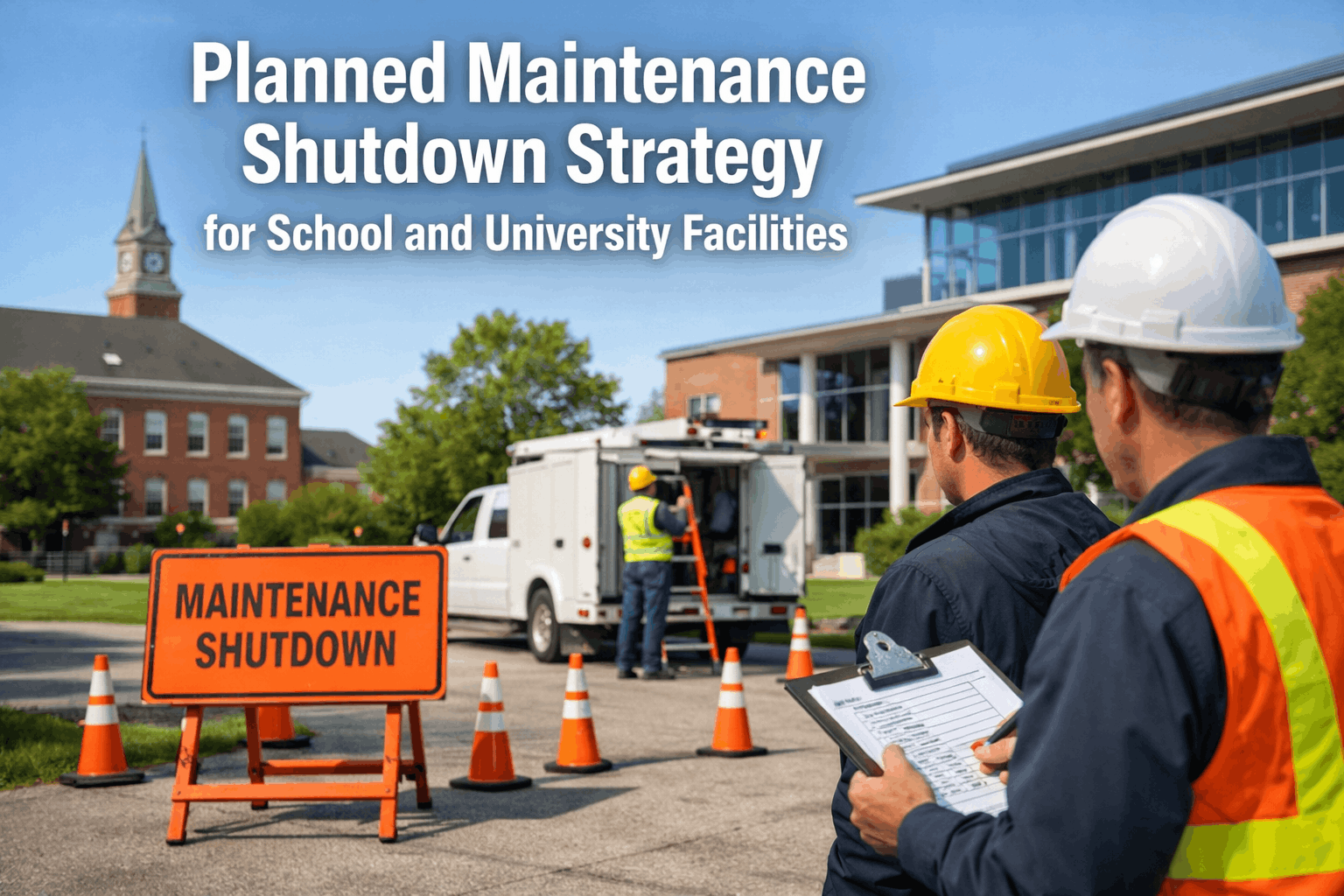
This executive brief establishes shutdown planning frameworks that align maintenance execution with academic operations. Institutions implementing structured shutdown management achieve 40% reduction in project delays while eliminating the stakeholder conflicts that derail summer maintenance programs. Teams ready to transform shutdown chaos into coordinated execution can sign up free to centralize shutdown planning and scheduling.
What if every summer shutdown was planned 12 months in advance, with all stakeholders aligned before the first work order was issued?
The Academic Calendar Constraint
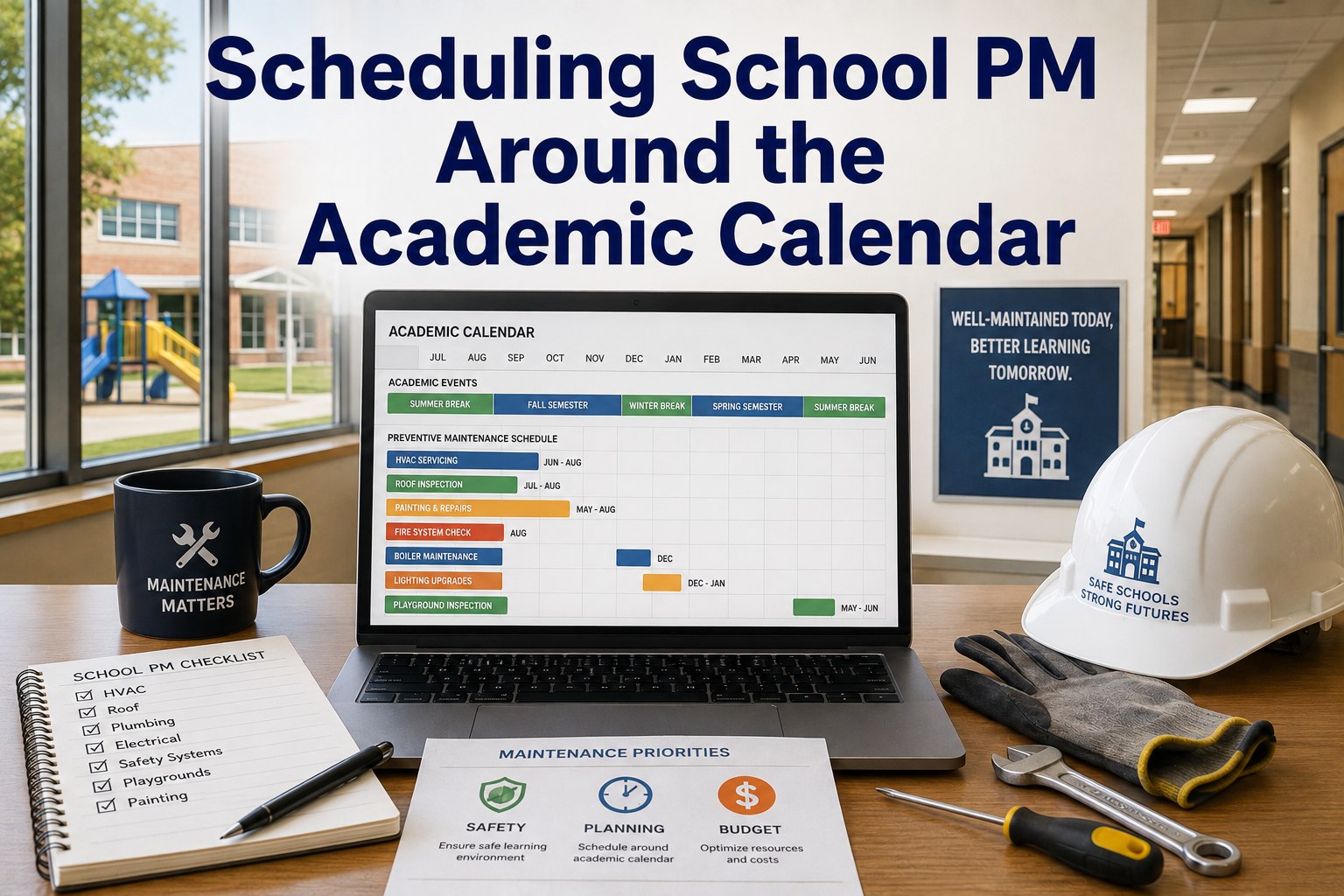
Unlike manufacturing facilities that can schedule shutdowns based purely on production economics, educational institutions must navigate a complex calendar of competing demands. Understanding these constraints is essential for realistic shutdown planning that doesn't collapse under stakeholder pressure.
The True Cost of Uncoordinated Shutdowns
Shutdown planning failures create compounding costs that extend far beyond direct project expenses. Understanding the full impact helps executives prioritize investment in structured planning processes. Institutions using Oxmaint's free shutdown planning tools eliminate these preventable costs entirely.
Building Classification for Shutdown Planning
Not all campus buildings present equal shutdown complexity. Classifying buildings by their operational constraints enables appropriate planning rigor for each project. Teams that sign up free to classify assets by shutdown complexity allocate planning resources effectively.
12-Month Shutdown Planning Cycle
Effective shutdown planning operates on a continuous 12-month cycle, not a reactive scramble when budget approval arrives. This timeline ensures stakeholder alignment before commitments are made. Organizations implementing this cycle with Oxmaint's free planning tools eliminate last-minute conflicts entirely.
Ready to eliminate the annual summer shutdown scramble? Start planning next year's projects while this year's are still fresh.
Stakeholder Coordination Framework
Shutdown success depends on early engagement with stakeholders who control building access and use. Field teams managing shutdowns require clear authority and communication channels. Teams using Oxmaint's free stakeholder tracking maintain alignment throughout project execution.
Map all departments, programs, and external users with claims on affected buildings during shutdown window
Formal request for all planned summer activities, conferences, camps, research needs, and special events
Facilitated sessions to negotiate building access, relocations, schedule adjustments, and priority ranking
Provost/VP level approval of final schedule with authority to enforce building access restrictions
Weekly status updates during execution, escalation protocols for emerging conflicts or delays
Shutdown Execution KPIs
Measuring shutdown performance creates accountability and enables continuous improvement. These KPIs demonstrate operational excellence while identifying process gaps. Organizations tracking these metrics with Oxmaint's free KPI dashboards improve performance year over year.
All planned shutdown work completed before building returns to service
Actual costs vs. approved budget including contingency
No unplanned relocations or schedule changes after approval
Deviation from planned completion date
Zero recordable incidents during shutdown work
Post-shutdown survey rating from affected departments
Risk Management for Campus Shutdowns
Every shutdown carries risks that can derail timelines and budgets. Proactive risk identification and mitigation planning prevents surprises during execution. Teams implementing risk management with Oxmaint's free project tracking maintain control even when unexpected issues arise.
Expert Perspective
"The institutions that excel at summer shutdowns aren't necessarily the ones with the biggest budgets—they're the ones that start planning earliest and communicate most effectively. I've seen $50 million capital programs fail because facilities and academic affairs weren't aligned, and I've seen $500,000 projects transform buildings because everyone understood the plan and protected the timeline. The difference isn't money—it's process. Digital planning tools have fundamentally changed what's possible. When I can show the provost a dashboard with every stakeholder commitment, every contractor milestone, and every risk factor, the conversation shifts from 'can we trust facilities?' to 'how can we support this plan?'"
Ready to transform your shutdown planning from reactive chaos to proactive excellence? Join institutions achieving 98%+ on-time completion.
Implementation Timeline
Transitioning from ad-hoc shutdown planning to structured management follows a phased approach. This timeline reflects typical institutional deployments achieving coordinated execution within one planning cycle.
Map current shutdown planning workflow, identify stakeholders, document pain points and failure modes from recent projects.
Set up CMMS shutdown module, create building classifications, establish stakeholder communication templates and approval workflows.
Present new planning process to academic affairs, housing, athletics, and research leadership. Establish calendar for annual planning cycle.
Execute 12-month planning calendar for next summer's shutdowns. Refine process based on stakeholder feedback and emerging needs.
Conclusion
Shutdown planning in educational facilities demands coordination that informal processes cannot reliably deliver. Digital planning tools transform summer maintenance from annual chaos into predictable execution—protecting projects from stakeholder conflicts while demonstrating operational excellence to administration. The investment in structured planning pays for itself with the first major project that completes on time and on budget.
Start planning your next shutdown today. Sign up free to build your shutdown planning foundation and eliminate the scramble before next summer arrives.