A custodian in a New Jersey elementary school scraped a damaged ceiling tile during routine cleanup. He didn't know the tile contained chrysotile asbestos. Within hours, disturbed fibers had become airborne in two classrooms. Air monitoring confirmed contamination levels requiring emergency abatement—classrooms were sealed, students relocated, and the school spent $186,000 on professional remediation. The district's AHERA management plan hadn't been updated in seven years. The triennial re-inspection was four years overdue. The custodian had never received asbestos awareness training. The ceiling tile was documented as asbestos-containing material in the original 1988 inspection report—filed in a binder no one had opened since. Every finding was a documentation failure. Every finding was preventable.
The Asbestos Hazard Emergency Response Act (AHERA) requires every K-12 school in the United States to maintain a comprehensive asbestos management program—inspections, management plans, periodic surveillance, and custodial training—all documented and available for review. Yet compliance failures remain the most common EPA enforcement action against schools, because the systems managing asbestos documentation are typically paper binders last updated years ago. Digital asbestos management transforms AHERA compliance from a forgotten filing cabinet into a living, auditable, enforceable program. Schools ready to close their compliance gaps can start tracking asbestos documentation digitally.
Oxmaint's CMMS digitizes your entire AHERA management plan—tracking every ACM location, inspection schedule, and custodial training record in one audit-ready platform. Districts still managing asbestos with paper binders can sign up free to digitize their compliance program.
Common AHERA Compliance Failure Modes
Understanding the primary compliance failure categories helps facilities teams focus their corrective efforts on the most common and consequential gaps. Each failure mode creates a distinct legal, financial, and health exposure for the district.
AHERA requires re-inspection by an accredited inspector every three years. Missed deadlines mean ACM condition changes go undetected—deteriorating material releases fibers without anyone knowing.
Management plans must include ACM locations, condition assessments, response actions, and O&M procedures. Plans that haven't been updated after renovations or abatement create dangerous gaps between documentation and reality.
AHERA requires two-hour awareness training for all custodial and maintenance staff who may contact ACM. New hires, transfers, and summer workers are frequently missed—the exact personnel most likely to disturb material unknowingly.
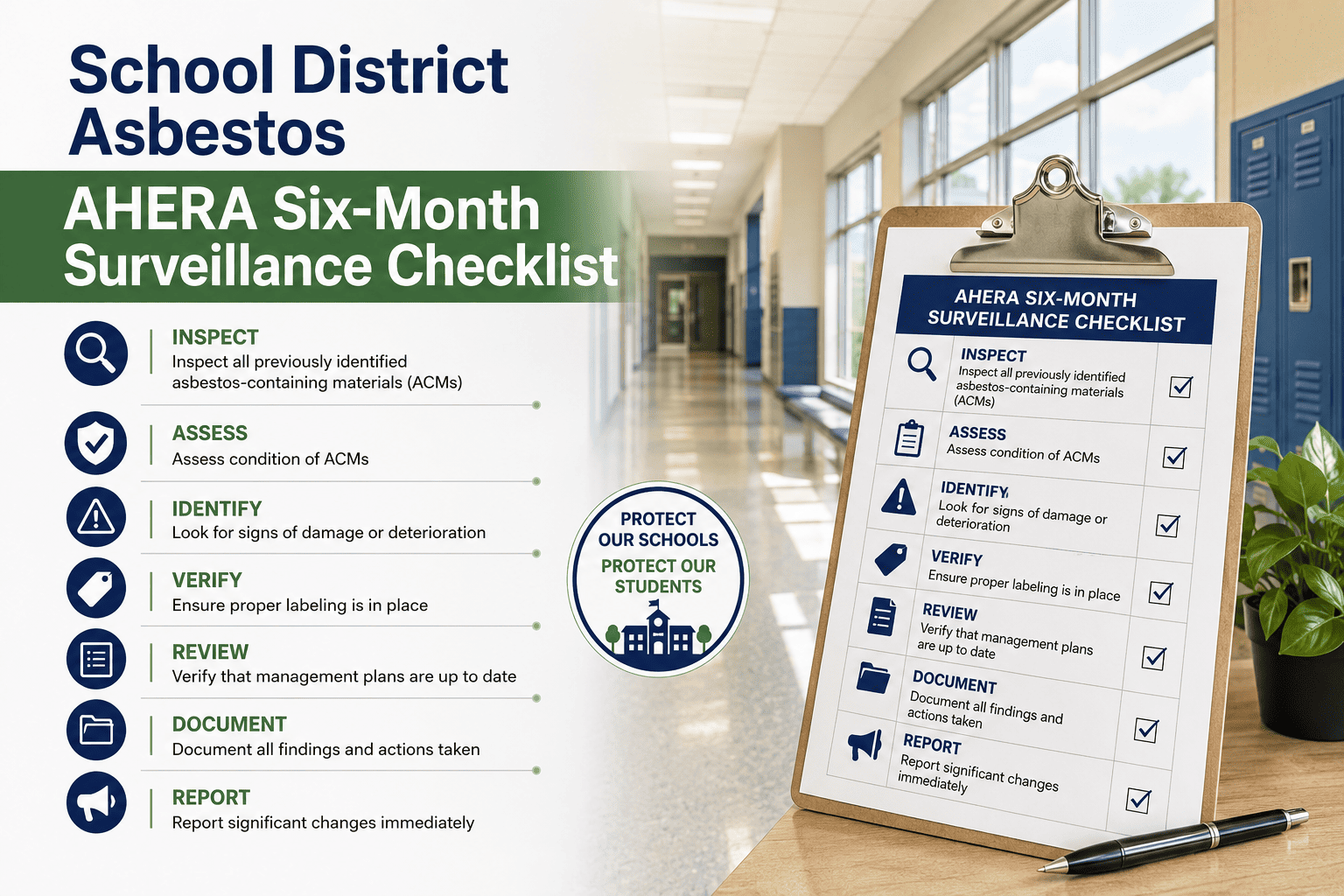
Six-month periodic surveillance by trained staff must visually assess every identified ACM location for condition change. Without digital scheduling, these walkthroughs are the first obligation to slip—leaving deteriorating materials unmonitored between triennial inspections.
Root Cause Analysis: Why Schools Fall Out of Compliance
When districts receive EPA citations or discover compliance gaps, the surface-level explanation is usually "we forgot" or "the person responsible left." The 5-Why analysis reveals the systemic failures that actually cause AHERA non-compliance.
| Problem | EPA cites district for expired AHERA triennial re-inspection at 4 schools |
| Why 1 | Re-inspections were not scheduled before the 3-year deadline expired |
| Why 2 | No one in the current facilities team knew the deadline or the requirement |
| Why 3 | The designated person (former facilities director) retired 18 months ago without transition |
| Why 4 | All AHERA compliance tracking was managed in a personal calendar and paper binders by that one individual |
| Root Cause | No institutionalized system for AHERA compliance—all knowledge and scheduling resided with a single person, not a digital platform |
The root cause is always the same: compliance that depends on a single person's memory instead of an institutionalized system. When that person leaves, everything leaves with them. Digital platforms make compliance survive any staff turnover—book a demo to see how Oxmaint automatically schedules triennial re-inspections, periodic surveillance, and training renewals independent of any individual.
AHERA Compliance Requirements by Category
The Ishikawa framework organizes AHERA compliance into six categories that facilities teams must manage simultaneously. Failure in any single category constitutes a violation—comprehensive digital tracking is the only way to ensure nothing is missed across all buildings.
AHERA Compliance Tracking Checklist
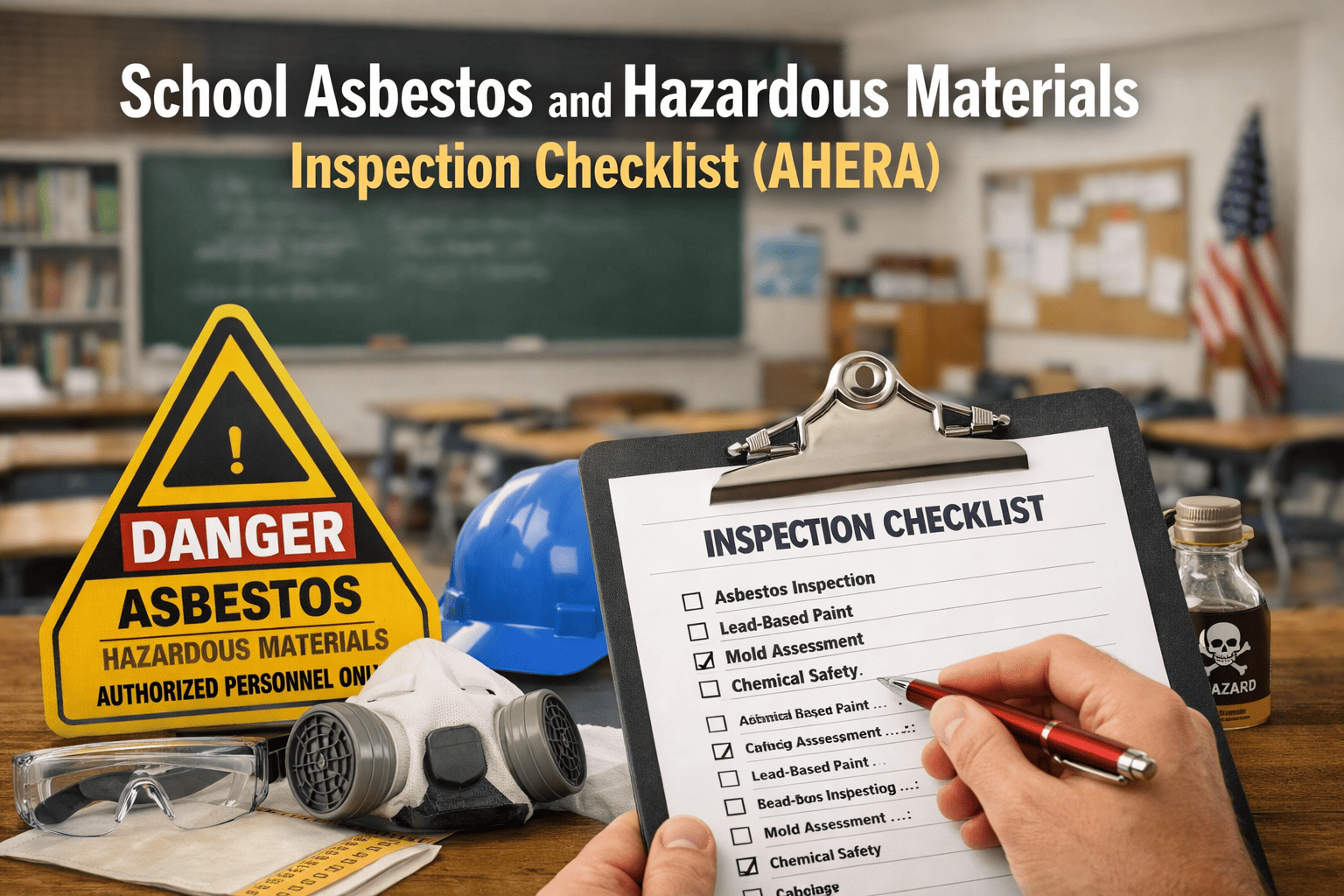
A systematic checklist ensures facilities teams maintain all AHERA obligations across every building in the district. Each requirement has specific frequencies and documentation standards that digital tracking automates.
| AHERA Requirement | Frequency | Responsible Party | Documentation Required |
|---|---|---|---|
| Triennial Re-Inspection | Every 3 years | Accredited AHERA inspector | Written report with ACM condition assessment, sample results, response action recommendations |
| Periodic Surveillance | Every 6 months | Trained in-house staff | Visual assessment of all ACM locations, condition notes, photos of changes, date/inspector name |
| Custodial Awareness Training | Initial + annual refresher | Designated person / trainer | Training certificates, attendance records, curriculum documentation, new hire completion dates |
| Annual Notification | Annually (before school year) | LEA designated person | Written notification to parents, staff, and PTO; distribution records; plan availability notice |
| Management Plan Update | After any change (abatement, renovation, re-inspection) | LEA designated person | Updated ACM location maps, revised response actions, abatement records, contractor documentation |
| Pre-Renovation Assessment | Before any renovation or demolition | Accredited inspector | Inspection results for work area, clearance air monitoring, contractor NESHAP compliance |
Corrective Actions by Compliance Gap Category
When compliance gaps are identified—through EPA inspection, internal audit, or incident investigation—matching each gap to proven corrective actions ensures systematic closure and prevention of recurrence.
Once corrective actions are implemented, the CMMS tracks completion and effectiveness—building an institutional knowledge base that prevents the same gaps from recurring. Districts ready to centralize their management plans, inspection records, and training documentation can create a free Oxmaint account to get started.
CMMS-Driven AHERA Compliance Benefits
Digitizing asbestos management transforms AHERA from a dreaded compliance burden into a streamlined operational workflow. The return extends beyond avoiding fines—it protects students, satisfies parents, and demonstrates institutional responsibility.