A high school principal in suburban Atlanta received a call from the fire marshal's office on a Tuesday morning: three buildings failed inspection. Not because fire extinguishers were missing or sprinklers were broken—the equipment was fine. The inspection tags were expired, emergency lighting test logs were incomplete, and fire drill records for two months couldn't be located. Total cost: $8,400 in reinspection fees, a mandatory board notification, and a parent email chain that dominated the district's communications for six weeks. Every finding was a documentation failure. Every finding was preventable. Digital fire safety inspection management eliminates this entire category of risk by automating schedules, capturing timestamped evidence, and keeping documentation audit-ready at all times. Schedule a demo to see digital fire checklists in action.
73%
Of School Fire Violations Are Documentation Gaps
94%
First-Pass Inspection Rate with Digital Tracking
85%
Reduction in Compliance Admin Time
$8.4K+
Average Reinspection Cost per District
Why Fire Safety Documentation Fails in Schools
- Schools manage more fire safety devices per building than most commercial properties
- Maintenance staff split between plumbing, HVAC, grounds, and safety—fire inspections compete for time
- Contractor-performed inspections (fire alarm, sprinkler, kitchen hood) generate reports that live in email inboxes
- Fire drills require coordination with principals, teachers, and campus police—missed months go undocumented
- Staff turnover means institutional knowledge of inspection schedules and filing systems walks out the door
This checklist covers every fire safety component in a K-12 school building, organized by system type with NFPA-required frequencies. Use it to ensure no inspection cycle is missed and every check produces a documented record. Sign up free to digitize these checklists with photo capture and automated scheduling.
Different fire safety systems require different inspection frequencies mandated by NFPA codes. Digital compliance software auto-schedules each at the correct interval and escalates overdue items:
Monthly — Internal Staff
- Fire extinguisher visual checks
- Emergency lighting 30-sec tests
- Exit sign illumination check
- Fire drill (during sessions)
- Sprinkler valve & gauge check
- Kitchen hood visual inspection
- Egress door & panic hardware
Quarterly — Internal Staff
- Sprinkler waterflow alarm test
- FDC accessibility check
- Alarm panel detailed review
- Stairwell door compliance audit
Semi-Annual — Mixed
- Smoke detector sensitivity (50%)
- Pull station testing (all)
- Kitchen hood suppression service
- Grease duct cleaning verification
Annual — Licensed Contractors
- Full fire alarm system test
- Sprinkler NFPA 25 inspection
- Extinguisher professional service
- Emergency lighting 90-min test
- Fire-rated door inspection (NFPA 80)
Multi-Year Intervals
- 5-Year: Sprinkler pipe inspection
- 6-Year: Extinguisher internal exam
- 10-Year: Sprinkler FDC flow test
- 12-Year: Extinguisher hydrostatic test
Academic Calendar Aligned
- Summer: Annual contractor inspections
- Pre-school: Startup verification walk
- Winter break: Deferred items addressed
- Spring break: Mid-year compliance audit
A Fire Marshal at the Front Door or a Green Dashboard—Your Documentation Decides
Automate every fire safety inspection schedule, run mobile checklists with photo capture, and generate audit-ready reports for any building in under five minutes. Every extinguisher tag, lighting test, sprinkler check, and drill record flows into one system—organized by building, tracked by deadline, and ready the moment a fire marshal walks in.
These are the citations fire marshals issue most frequently in school inspections. Every one is preventable with digital tracking:
Expired Extinguisher Tags
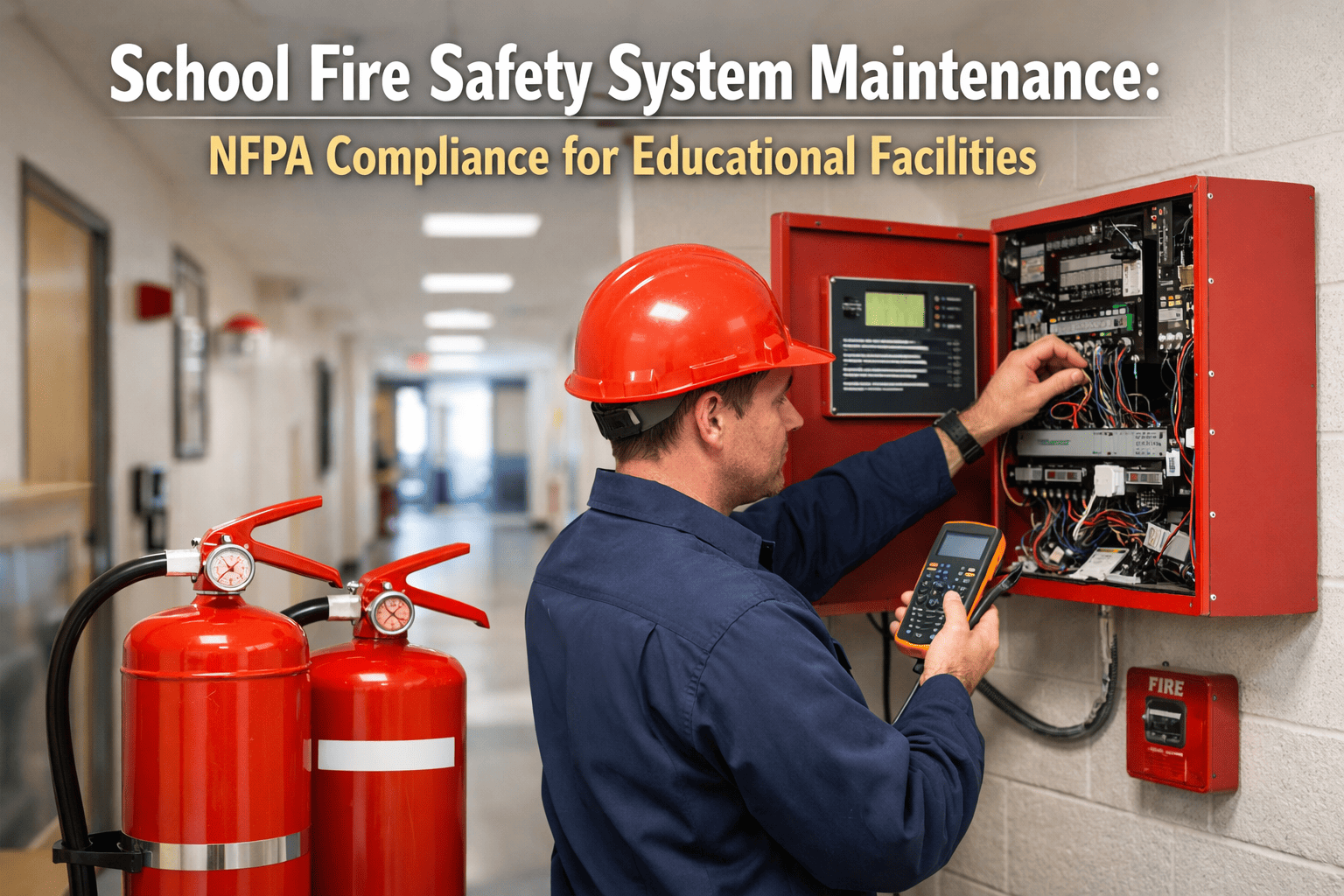
Annual service tags lapse because paper schedules depend on someone remembering. Across 10+ buildings with 200+ units, gaps are inevitable without automated alerts.
Missing Lighting Test Logs
Monthly 30-second and annual 90-minute tests get done but paper records are lost or misfiled. Digital capture creates permanent, searchable documentation.
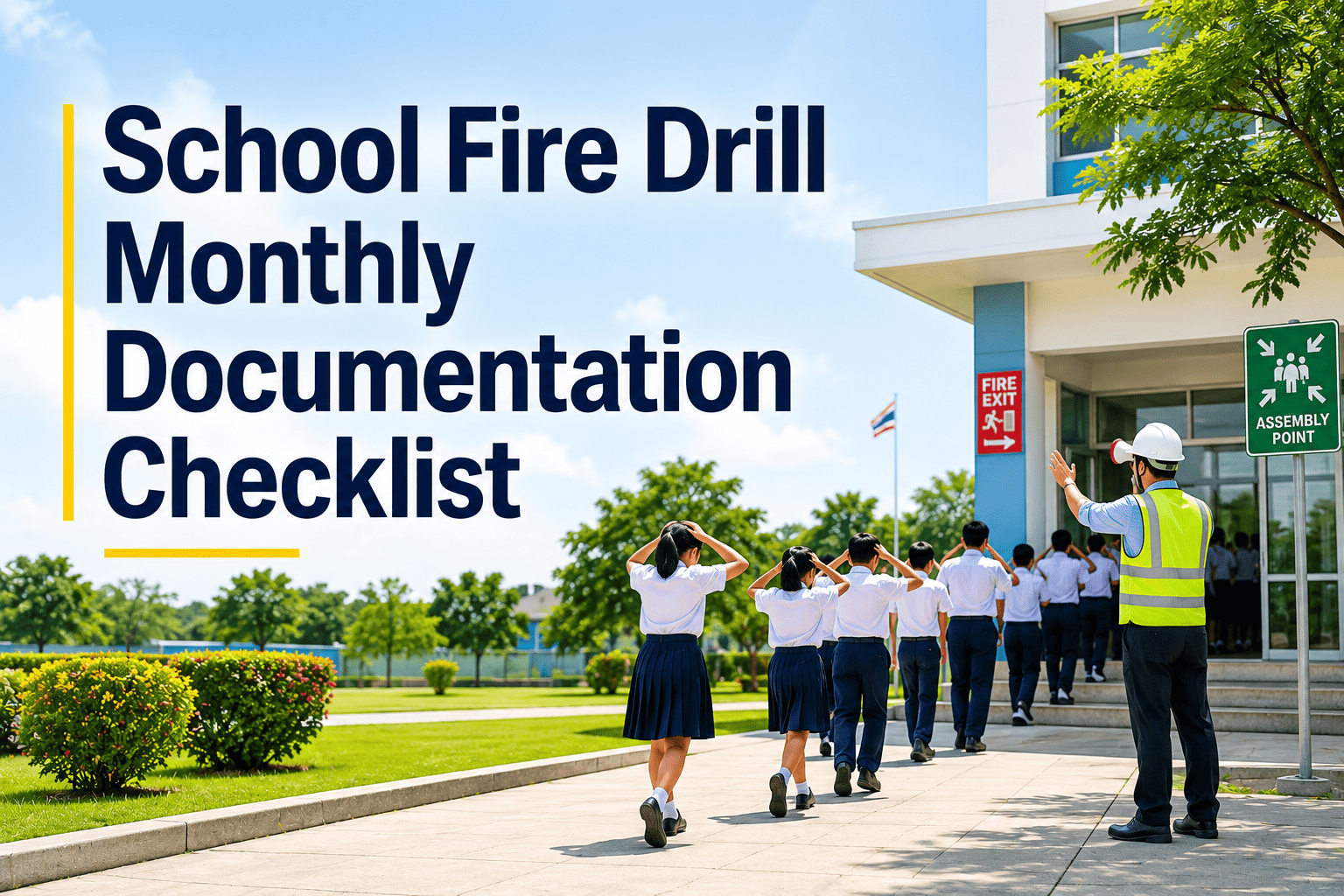
Incomplete Drill Records
Fire drills happen but evacuation times, headcounts, and observer notes aren't recorded completely. One missing month creates a compliance gap.
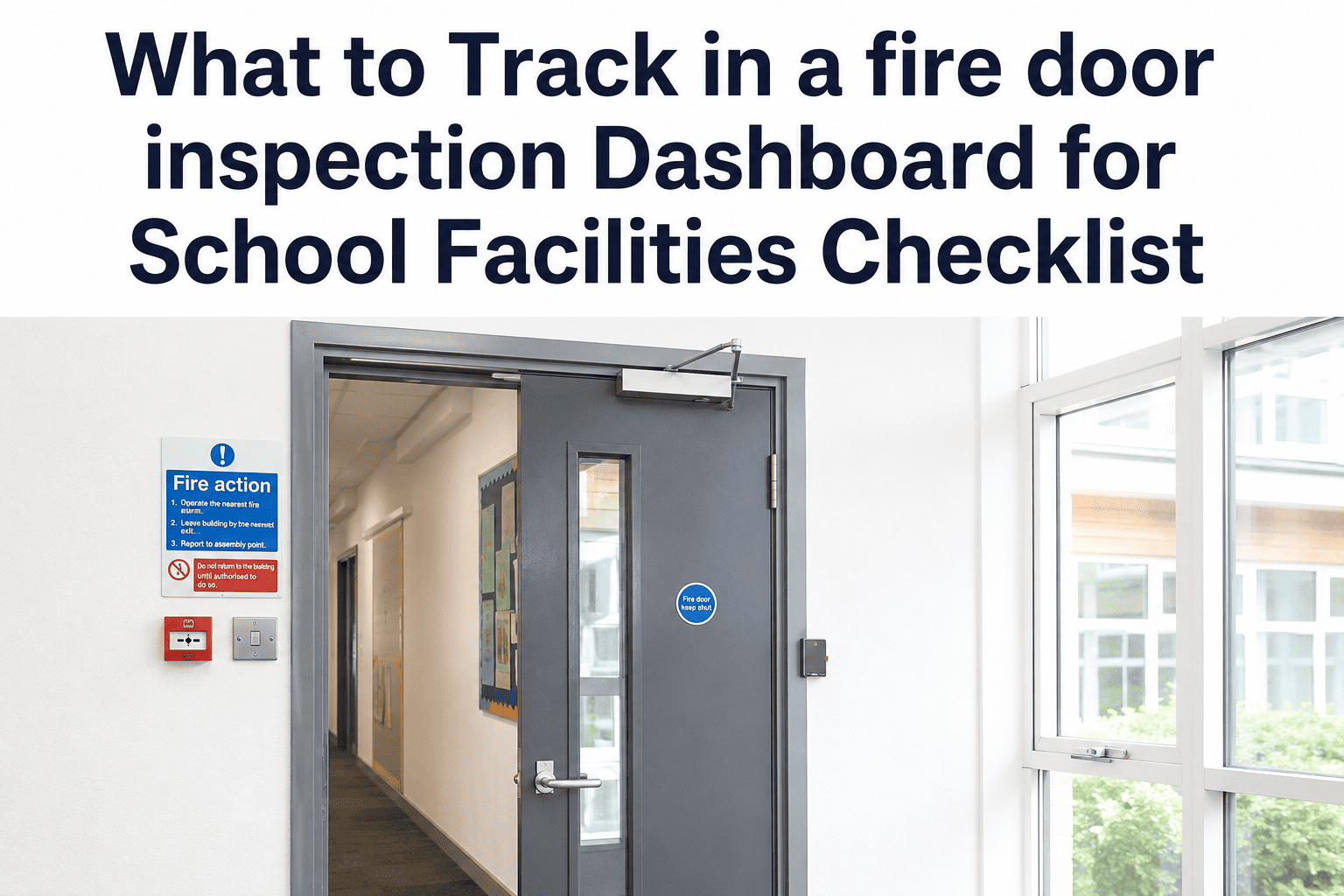
Propped-Open Fire Doors
Teachers and staff wedge open stairwell and corridor fire doors for convenience. Without regular checks and documented walkthroughs, violations persist.
Blocked Exit Paths
Storage, furniture, and temporary setups obstruct required egress clearances. Monthly egress walkthroughs with photo documentation prevent these findings.
Contractor Report Gaps
Annual fire alarm, sprinkler, and kitchen hood reports filed by contractors sit in email or vendor offices instead of your compliance records.
6 Keys to Audit-Ready Fire Safety Documentation
1. Digitize Every Checklist
Replace paper inspection forms with mobile checklists that guide technicians through each requirement, capture timestamped photos, and sync to your CMMS in real-time. This single step eliminates 73% of fire code violations.
2. Automate Scheduling with Escalation
Configure every inspection frequency for every system. When a check goes overdue, auto-escalate from technician to supervisor to facilities director. Critical fire safety items should escalate to the superintendent if unresolved within 48 hours.
3. Align Major Service with Academic Calendar
Schedule annual contractor inspections (fire alarm, sprinkler, kitchen hood) during summer break. Use winter and spring breaks for deferred items and mid-year compliance audits.
4. Track Contractor Certifications
Monitor contractor license expiration dates and insurance certificates. Auto-alert 60 days before expiration so you never discover a lapsed credential during an audit. Require contractors to submit reports directly into the system.
5. Integrate Fire Drill Management
Schedule monthly fire drills linked to the academic calendar so they auto-skip non-session months. Digital drill forms capture evacuation times, headcounts, and observer notes—making drill records instantly accessible for any inspection.
6. Run a District Compliance Dashboard
Give facilities directors and administrators a real-time view of compliance status across every building. Red/yellow/green indicators flag which schools need attention before the next inspection cycle.
94% First-Pass Rate
Buildings pass fire marshal inspections without citations on first visit—eliminating reinspection fees and the disruption of repeated marshal visits
85% Less Admin Time
Automated scheduling, digital checklists, and instant reports eliminate the 8-15 hours per week districts spend on manual compliance tracking
Liability Protection
Timestamped, photo-verified inspection records create an affirmative defense in litigation and satisfy insurance carrier documentation requirements
$71K+ Annual Value
Avoided fines, eliminated reinspections, labor savings, insurance credits, and reduced liability exposure for a typical 10-building district
School fire safety doesn't fail because equipment breaks—it fails because documentation breaks. When a fire marshal walks through your door, the question isn't whether your staff did the work. It's whether you can prove it. Digital fire safety inspection management makes the answer always yes: every schedule automated, every check documented, every record accessible in under five minutes. Start with this checklist, digitize the process, and build the compliance discipline that protects your students, your staff, and your district. Sign up free to get started.
How often do schools need fire safety inspections?
Fire safety inspections in schools operate on multiple overlapping schedules. Internal staff should perform monthly checks on fire extinguishers, emergency lighting, exit signs, sprinkler valves, egress doors, and kitchen hood systems. Quarterly checks cover sprinkler waterflow alarms and fire department connections. Semi-annual inspections include smoke detector sensitivity testing and kitchen hood suppression service. Annual inspections by licensed contractors are required for fire alarm systems (NFPA 72), sprinkler systems (NFPA 25), fire extinguisher professional service (NFPA 10), emergency lighting 90-minute battery tests, and fire-rated door assemblies (NFPA 80). Multi-year intervals include 5-year sprinkler pipe inspections, 6-year extinguisher internal exams, and 12-year hydrostatic tests.
What are the most common fire code violations in schools?
The most frequently cited violations are documentation-related rather than equipment failures. These include expired fire extinguisher service tags, missing emergency lighting test logs, incomplete fire drill records (missing evacuation times, headcounts, or observer notes), propped-open fire-rated stairwell and corridor doors, blocked egress paths from stored furniture or equipment, and contractor inspection reports that were never filed into the school's compliance records. According to industry data, 73% of school fire code violations are documentation gaps—meaning the work was done but the proof was missing when the fire marshal arrived.
How many fire drills are required per year in K-12 schools?
Most states require monthly fire drills during occupied school sessions, which typically means 9–10 drills per academic year. Each drill must be documented with the date, time, alarm activation method, total evacuation duration, student and staff headcount, observer name, assembly point verification, and any issues or delays. At least one annual drill should simulate a blocked exit to test alternate evacuation routes. All drill records must be maintained for a minimum of 3 years and be accessible within 5 minutes if requested by a fire marshal during an inspection.
What NFPA codes apply to school fire safety inspections?
Several NFPA codes govern fire safety systems in schools. NFPA 10 covers portable fire extinguisher maintenance, inspection, and testing. NFPA 25 addresses inspection, testing, and maintenance of water-based fire protection systems including sprinklers. NFPA 72 governs fire alarm and signaling systems. NFPA 80 sets standards for fire-rated door and window assemblies. NFPA 96 applies to kitchen hood ventilation and suppression systems in cafeterias. NFPA 101 (Life Safety Code) establishes overall egress, exit signage, and emergency lighting requirements for educational occupancies.
What happens if a school fails a fire marshal inspection?
When a school fails a fire marshal inspection, the district faces reinspection fees that average $8,400 or more per occurrence. Additional consequences include mandatory board notifications, potential fines for each individual violation, required corrective action plans with deadlines, and possible occupancy restrictions if hazards are deemed immediate. Failed inspections also create significant administrative burden—including parent communications, media inquiries, and insurance carrier notifications. In severe cases, repeated failures can affect a district's insurance premiums and increase liability exposure in the event of a fire-related incident.
How does digital fire safety inspection software help schools stay compliant?
Digital fire safety inspection software automates the entire compliance workflow. It schedules every inspection at the correct NFPA-mandated frequency, sends reminders to assigned staff, and escalates overdue items from technician to supervisor to facilities director automatically. Mobile checklists guide inspectors through each requirement step by step while capturing timestamped photos as proof of completion. Contractor reports are uploaded directly into the system instead of sitting in email inboxes. A district-wide dashboard gives administrators real-time visibility into compliance status across every building, with red/yellow/green indicators flagging schools that need attention before the next inspection cycle.
When should schools schedule annual fire safety contractor inspections?
The best practice is to schedule annual contractor inspections—fire alarm system tests, sprinkler NFPA 25 inspections, extinguisher professional service, emergency lighting 90-minute battery tests, and fire-rated door inspections—during summer break when buildings are unoccupied. This avoids classroom disruption, gives contractors full building access, and allows time for any deficiency corrections before the school year begins. Winter and spring breaks should be used to address deferred maintenance items and conduct mid-year compliance audits. A pre-school startup verification walk before students return ensures everything is inspection-ready for the new academic year.
How long must schools retain fire safety inspection records?
Fire drill records must be maintained for a minimum of 3 years and be retrievable within 5 minutes for a fire marshal request. Fire alarm system records, sprinkler inspection reports, and extinguisher service documentation should be retained for the life of the system or as specified by your local authority having jurisdiction (AHJ). Contractor certifications, insurance certificates, and annual inspection reports should be kept for at least 5 years. Digital record-keeping systems make long-term retention effortless—every record is stored permanently, organized by building and system, and searchable on demand without manual filing or physical storage.
Three Failed Buildings or Zero Citations—The Difference Is a System
Oxmaint helps school districts digitize fire safety inspections, automate every NFPA schedule, and keep audit-ready documentation current across every building, every day. From monthly extinguisher walkthroughs to annual contractor certifications, every inspection is scheduled automatically, escalated when overdue, and stored with timestamped photo evidence your team can pull in under five minutes.


.png)


