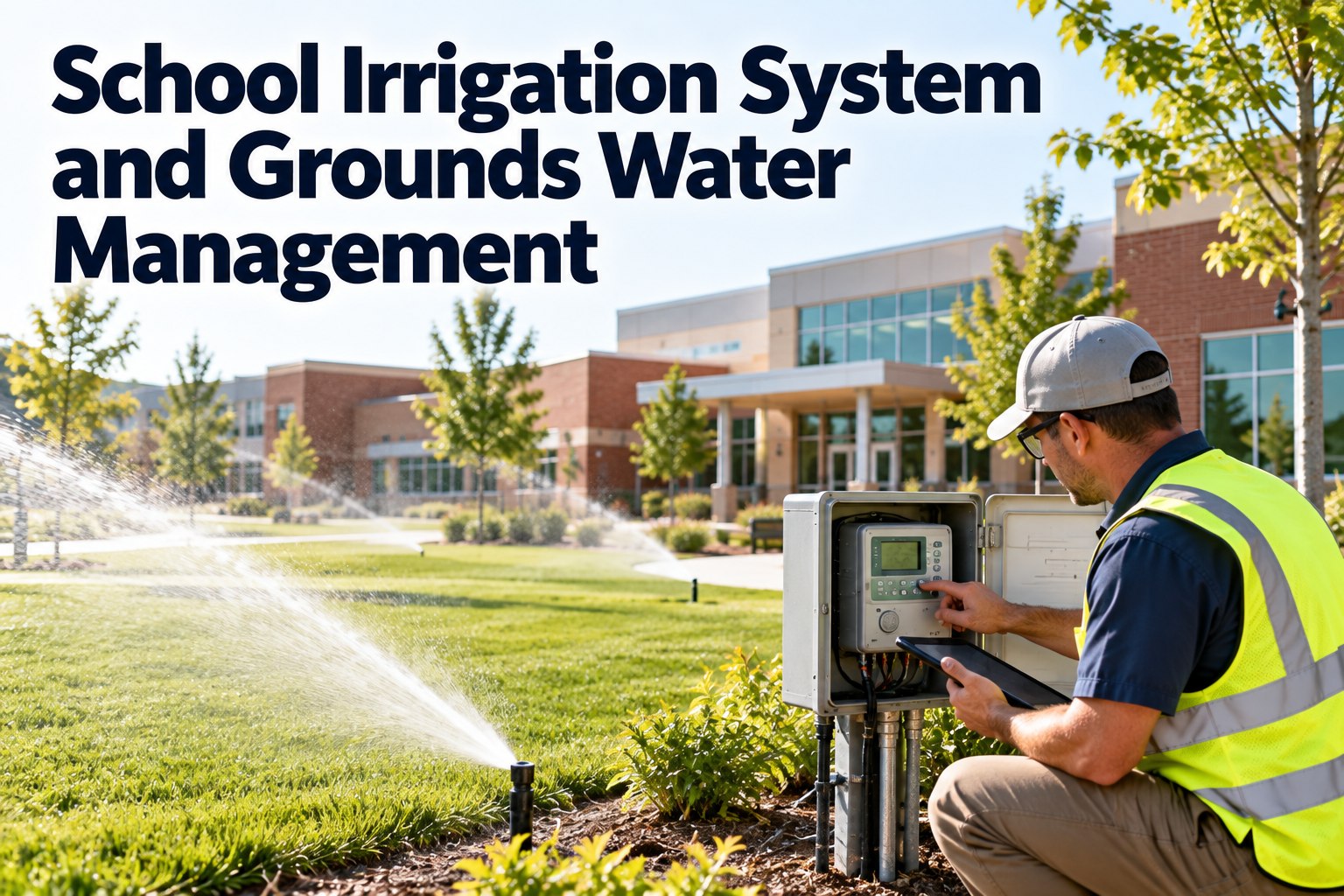
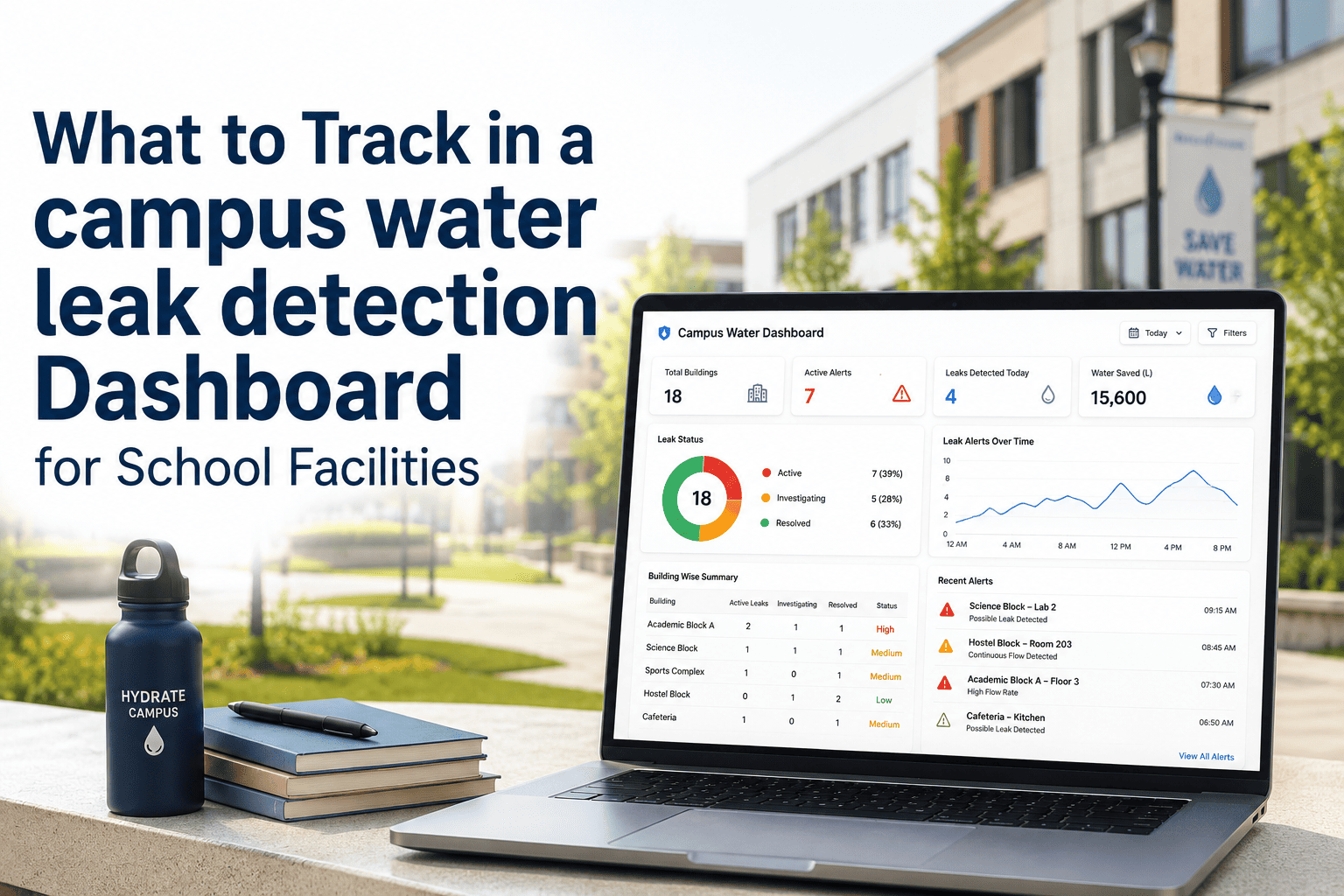
A stuck sprinkler head runs all night on a field nobody's using, a controller still waters at July settings in October, and a mainline leak seeps underground for weeks before anyone notices. On most campuses, irrigation is the single largest water use — and the most wasteful, because the failures hide in plain sight across acres of grounds. The fix isn't more watering; it's managing it. OXMAINT AI is AI-powered maintenance management software (CMMS) that schedules irrigation PMs, logs coverage audits, and turns a flow-sensor alert into a work order before the water bill spikes. Book a demo to see grounds water under control.
Education & Campus · Grounds Water Management
Your Biggest Water Bill Is Leaking Through the Grounds
School irrigation quietly wastes water through broken heads, misprogrammed controllers and undetected leaks — often the largest single line on the utility bill. OXMAINT AI brings it under a maintenance program: scheduled coverage audits, smart-controller and sensor checks, and flow alerts that become work orders — cutting irrigation water while keeping the grounds green.
- 1Audit the coverage
- 2Program by season
- 3Sense & detect leaks
- 4Fix & track savings
Smart-irrigation water savings
30–50%
typical reduction from weather-based control, sensors and leak detection
Weather / ET controlup to ~50%
Soil-moisture sensing20–50%
Ranges per EPA WaterSense and smart-irrigation studies; your result depends on the site.
Where the Water Actually Goes
Overwatering isn't one big mistake — it's a dozen small, invisible ones spread across the grounds. Naming them is the first step to stopping them. Start a free trial to catch them on a schedule.
Broken & stuck heads
A cracked or stuck-open head can dump water for hours — often on pavement, not turf.
Underground leaks
Mainline and fitting leaks seep unseen for weeks — the waste a flow sensor catches in hours.
Stale schedules
Controllers left at summer run-times keep watering into cool, wet months — the biggest silent waste.
Poor coverage
Misaligned nozzles and uneven distribution force longer cycles to reach the dry spots.
The Grounds Water-Management Program
Cutting irrigation water isn't a one-time fix — it's a repeatable program. This is the sequence OXMAINT AI runs across the campus. Book a demo to build your program.
1
Audit coverage
Walk each zone, catch-test distribution, and log broken or misaligned heads as work orders.
2
Program by season
Set weather-based or ET controllers so run-times track the actual weather, not a fixed summer setting.
3
Add sensing
Rain and soil-moisture sensors skip cycles the grounds don't need; flow sensors watch the mains.
4
Detect & dispatch
A high-flow alert — a break or stuck valve — raises a work order and can trigger a master-valve shutoff.
5
Track the savings
Trend water use per zone so the program's results show up on the bill, not just on paper.
Turn a Flow Alert Into a Work Order, Not a Water Bill
See how OXMAINT AI takes a broken-head or leak signal, opens a ranked work order for grounds crew, and keeps the audit and savings record.
The Sensors That Do the Watching
A crew can't walk every zone every day — but sensors can watch continuously and flag only what needs attention. These are the ones that earn their keep. Start a free trial to wire them to work orders.
Weather / ET controller
Adjusts run-times to real temperature, humidity, wind and rain — the core of seasonal savings.
Soil-moisture sensor
Reads actual root-zone water and skips a cycle when the ground is already wet enough.
Rain shutoff
Stops the system during and after rain, so it isn't watering a soaked field.
Flow sensor
Spots leaks, broken heads and stuck valves in real time — and can shut the main automatically.
Sensor roles and savings ranges per EPA WaterSense and smart-irrigation guidance: weather-based control saves up to roughly half, soil-moisture systems 20–50%, and flow sensors catch leaks that run undetected for weeks. Sources: EPA WaterSense; smart-irrigation case studies.
The Coverage Audit: One Zone at a Time
Before you spend on controllers, audit what you have — most waste is a broken head or a misaligned nozzle, not a technology gap. Run this per zone and log each finding. Book a demo to see the audit checklist.
- Run each zone and watch for broken, stuck or sunken heads.
- Check spray alignment — water on turf, not pavement or walls.
- Catch-test distribution to find dry spots forcing longer cycles.
- Look for pooling or runoff that signals overwatering or clay soil.
- Confirm rain and soil sensors are working and wired in.
- Verify the controller schedule matches the current season.
How OXMAINT AI Manages Grounds Water
OXMAINT AI is maintenance management software that keeps irrigation audits, controller and sensor PMs, and leak-driven work orders on one record — so grounds water is managed, not guessed. Start a free trial to map your zones.
-
1
Map
Register every zone, controller and sensor as an asset with its location and history.
-
2
Schedule
Run seasonal coverage audits and controller/sensor checks as recurring PMs.
-
3
Respond
Turn a flow alert or audit finding into a ranked work order for the grounds crew.
-
4
Prove
Trend water use per zone so conservation shows up as real numbers on the bill.
Frequently Asked Questions
How much water can smart irrigation save a school?
Weather-based control, sensors and leak detection typically cut irrigation water 30–50%, with soil-moisture systems alone in the 20–50% range — though results depend on the site.
Start a free trial to track yours.
What wastes the most irrigation water?
Stale schedules that water at summer settings all year, plus broken or stuck heads and undetected leaks — the failures spread across acres that no one sees at once.
Book a demo to catch them.
How does a flow sensor help?
It watches the mains in real time and flags a leak, broken head or stuck valve within hours instead of weeks — and can trigger an automatic master-valve shutoff.
Start a free trial to wire it in.
Do we need new controllers to save water?
Not first. Most waste is a broken head or a stale schedule — a coverage audit and seasonal programming come before any hardware spend.
Book a demo to see the audit.
Can OXMAINT AI prove the water savings?
Yes — by trending water use per zone alongside the audits and repairs, so conservation shows up as measurable numbers, not an estimate.
Start a free trial to measure it.
Keep the Grounds Green and the Water Bill Low
Audit coverage, program by season, catch leaks fast and track the savings — grounds water management for the whole campus on one platform.