
A roof leak discovered in October costs 10× more to remediate than the same damage caught in a spring inspection. Water that enters through an unsealed penetration in April becomes a mould problem by September, a structural issue by the following spring, and a classroom closure by the year after that. School roofs fail for predictable reasons — blocked drains that cause ponding, unsealed penetrations at HVAC curbs, flashing separation at parapet walls, and membrane blisters that crack under freeze-thaw cycling — and all of them are visible in a structured inspection before they cause interior damage. This checklist covers every roof inspection item for a flat or low-slope school building, organised by inspection frequency and seasonal timing. Deploy it in OxMaint to schedule inspections automatically before each season, log findings with photos, and generate work orders for every deficiency found.
1. Roof Membrane and Surface Condition
The membrane is the primary waterproofing layer. Most membrane failures develop slowly — blisters form over months, seams open gradually, and surface erosion progresses year by year. None of these announce themselves until the leak appears on the ceiling below. A quarterly visual walk catches the majority of developing membrane failures before they breach.
2. Flashing and Coping
Flashing failures cause more school roof leaks than membrane failures. The junction between the roof membrane and any vertical surface — parapet wall, equipment curb, skylight, or penetration — is the highest-risk point on any roof. Flashing that has separated, cracked, or lost sealant continuity allows water to travel behind the membrane before appearing as an interior leak, making source tracing difficult.
3. Roof Penetrations and Equipment Curbs
Every pipe, conduit, vent, and HVAC unit that passes through the roof creates a potential leak point. Curb-mounted equipment is the most common single source of water ingress in school roofs — not because the curb itself fails, but because the sealant joint at the top of the curb flashing is the one detail that maintenance teams rarely inspect until water appears inside.
4. Roof Drains and Scuppers
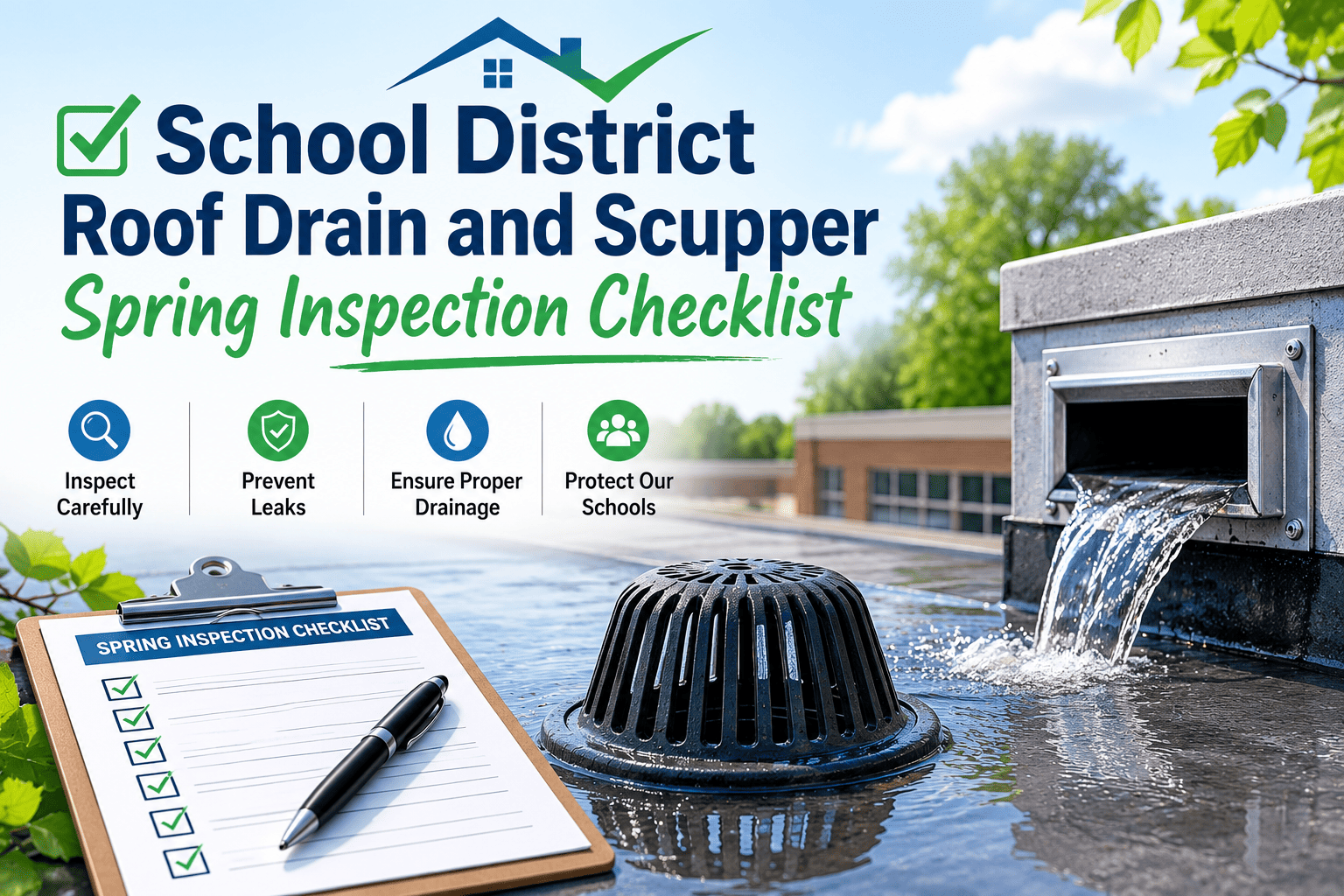
Blocked roof drains are the single most preventable cause of school roof damage. Ponding water adds structural load, saturates insulation, and creates hydrostatic pressure that forces water through any membrane weakness. A drain that is cleared in 10 minutes prevents a ponding event that can cause weeks of interior damage.
5. Gutters, Downspouts, and Drainage
6. Parapet Walls and Roof Edge
7. Interior Indicators of Roof Problems
The first sign of a roof leak is often not on the roof — it is on the ceiling tile below it. Interior indicators are the early warning system for roof failures that have not yet been detected externally. A stained ceiling tile identified in October and investigated in October costs far less than the same tile investigated in March after a winter of unreported water ingress.




.png)