Spring is the highest-risk season for school district roof drainage failures — winter debris, freeze-thaw cycles, and biological growth combine to block strainers, scuppers, and downspouts right as heavy rainfall begins. A blocked roof drain on a flat K-12 building can accumulate hundreds of pounds of standing water per square foot within hours, risking structural failure, interior flooding, and mold. This checklist covers the complete school district roof drain and scupper spring inspection — primary drains, overflow scuppers, downspout discharge, and condition documentation — structured for CMMS-tracked preventive maintenance records. Sign Up Free to deploy this checklist in OxMaint and auto-generate spring PM work orders for every school building in your district. Book a Demo to see how K-12 facilities teams manage roof drain compliance across multiple campuses.
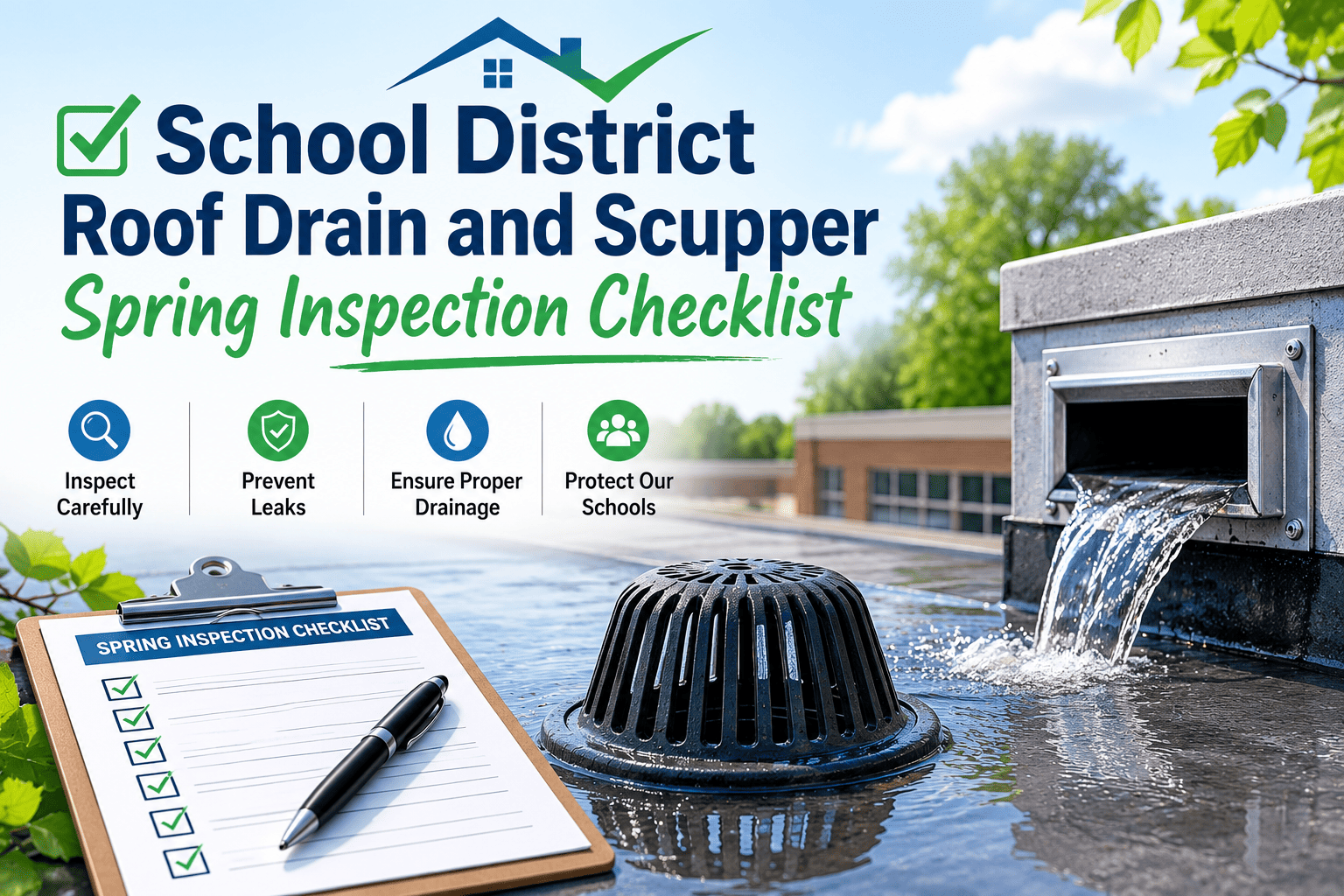
School District Roof Drain & Scupper Spring Inspection Checklist
Complete spring roof drainage inspection — primary drains, overflow scuppers, downspouts, strainers, and CMMS-tracked records for K-12 facilities compliance.
How to Use This Checklist
Complete this inspection at the start of spring — ideally after the last freeze event and before the first heavy rainfall season. All roof drainage components must be accessed safely per district fall protection policy. Items marked Immediate Action require a work order before the next rain event. Items marked Log & Monitor must be documented and scheduled for follow-up within 30 days.
K-12 Facilities — OxMaint CMMS
Auto-Generate Spring Roof PM Work Orders for Every School
OxMaint triggers spring roof drain inspections automatically based on season schedule — assign to facilities staff, track completion per building, and store inspection photos against each asset record.
1. Strainers and Dome Guards
Strainer baskets and dome guards are the first line of defence against drain blockage. Winter accumulates leaf debris, gravel, moss, and biological growth directly on and around dome guards — clearing these before spring rainfall is the single highest-impact step in school roof drainage maintenance.
2. Primary Drain Bodies
The drain body connects the roof surface to the internal drainage stack. Spring inspection must confirm the drain opening is fully unobstructed, the drain body is structurally sound, and water flows freely into the leader without restriction.
Roof Drain Work Orders Tracked Per Building in OxMaint
Each roof drain defect found during spring inspection generates an OxMaint work order linked to the building asset — priority, assigned technician, due date, and photo documentation all stored against the drain record. Fleet manager sees all open items district-wide on one dashboard.
Sign Up Free to start tracking.
Book a Demo to see the multi-campus view.
3. Overflow Scuppers
Overflow scuppers are the emergency drainage path when primary drains are overwhelmed or blocked. Most K-12 buildings on flat roofs are required by code to have overflow scuppers set 2" above the primary drain level. Their sole purpose is emergency drainage — they must never be blocked by debris, parapet cap, or retrofitted equipment.
4. Downspouts and Leaders
Downspout blockages frequently go undetected until overflow occurs at the roof level. Spring inspection must confirm the entire drainage path from roof drain to ground discharge is clear and structurally intact — including below-grade connections where applicable.
5. Membrane Condition Around Drains
The membrane-to-drain transition is one of the most common leak points on flat school roofs. Freeze-thaw cycling, UV degradation, and clamping ring pressure all concentrate at the drain perimeter — spring inspection must confirm the membrane is fully adhered and watertight at every drain location.
6. Ponding Water and Slope Assessment
Ponding water — defined as water that remains 48 hours after rainfall — accelerates membrane degradation and indicates a drainage deficiency that will worsen over time. Spring inspection should include a post-rain walk within 48 hours of any rainfall event to map ponding locations and link them to drainage system deficiencies.
7. Documentation and CMMS Records
A completed spring roof drain inspection without a documented record provides no protection in the event of a water intrusion claim or insurance dispute. Every drain inspected, every defect found, and every work order raised must be stored against the building asset record — accessible by facilities management, administration, and auditors on demand. Sign Up Free to start building inspection records in OxMaint today. Book a Demo for a walkthrough of multi-building PM record management.
School District Facilities — OxMaint CMMS
Spring Roof Drain PM Across Every Campus — One Dashboard
OxMaint tracks spring roof drain inspection completion per building, flags overdue work orders, and maintains a full drainage maintenance history per asset. Facilities directors see district-wide compliance status in real time.
✓Spring PM work orders auto-generated per building
✓Defects escalated instantly to facilities manager
✓Full drain inspection history per asset
✓Roof warranty and compliance records in one place
Frequently Asked Questions
How often should school district roof drains be inspected?
Minimum twice yearly — spring before the heavy rain season and fall before leaf-fall season. High-debris buildings (near mature trees) may require quarterly strainer clearing. OxMaint can schedule all PM cycles automatically per building.
What is the difference between a primary drain and an overflow scupper?
Primary drains are the standard roof drain connected to the internal drainage stack — they handle normal rainfall. Overflow scuppers are emergency drains set 2" higher that only activate when primary drains are overwhelmed or blocked. Both must be operational.
What qualifies as a ponding water deficiency on a school roof?
Any water that remains on the roof surface 48 hours after rainfall has stopped. This indicates the drainage system is unable to clear the roof. Chronic ponding requires engineering review and should be tracked as a capital maintenance item.
Can OxMaint manage roof drain inspections across multiple school buildings?
Yes. OxMaint supports multi-site school district facilities management — each building has its own asset register, PM schedule, and inspection history. District-level dashboards show completion rate and open defects across all campuses in one view.
Does a blocked overflow scupper require immediate repair?
Yes — a blocked overflow scupper is a life-safety structural risk. If primary drains fail during heavy rainfall and overflow scuppers are blocked, the roof deck can accumulate loads exceeding structural design capacity. Issue a work order immediately and complete repair before the next rain event.
How does OxMaint help with roof warranty compliance documentation?
OxMaint stores inspection records, photos, and work orders against each building asset. For buildings with active roof warranties, these records demonstrate required maintenance was performed — essential for warranty claims.
Book a Demo to see how warranty documentation is managed.
Get Started — OxMaint CMMS
Every School Roof. Every Drain. Every Inspection Documented.
Deploy this checklist in OxMaint today — spring roof drain PM work orders generated automatically, defects tracked per building, and full inspection history available on demand for audits, insurance, and warranty claims.