The standard "funding gap" in higher education isn't just a number on a spreadsheet—it's the sound of a 30-year-old chiller failing during finals week or the sight of a historic masonry facade crumbling onto a pedestrian walkway. By 2026, the average university's deferred maintenance backlog has ballooned to over $100 million, a "hidden debt" that threatens institutional solvency and student recruitment. When maintenance is reactive, you aren't just fixing equipment; you are managing a rolling series of emergencies that cost 30× more than scheduled care. This checklist provides the framework to flip that script, moving from crisis management to a structured, data-driven capital renewal strategy. Sign Up — digitize your facility audits and eliminate paper-based backlog tracking.
Is your campus backlog a manageable list or a ticking time bomb? Transition to proactive capital renewal today.
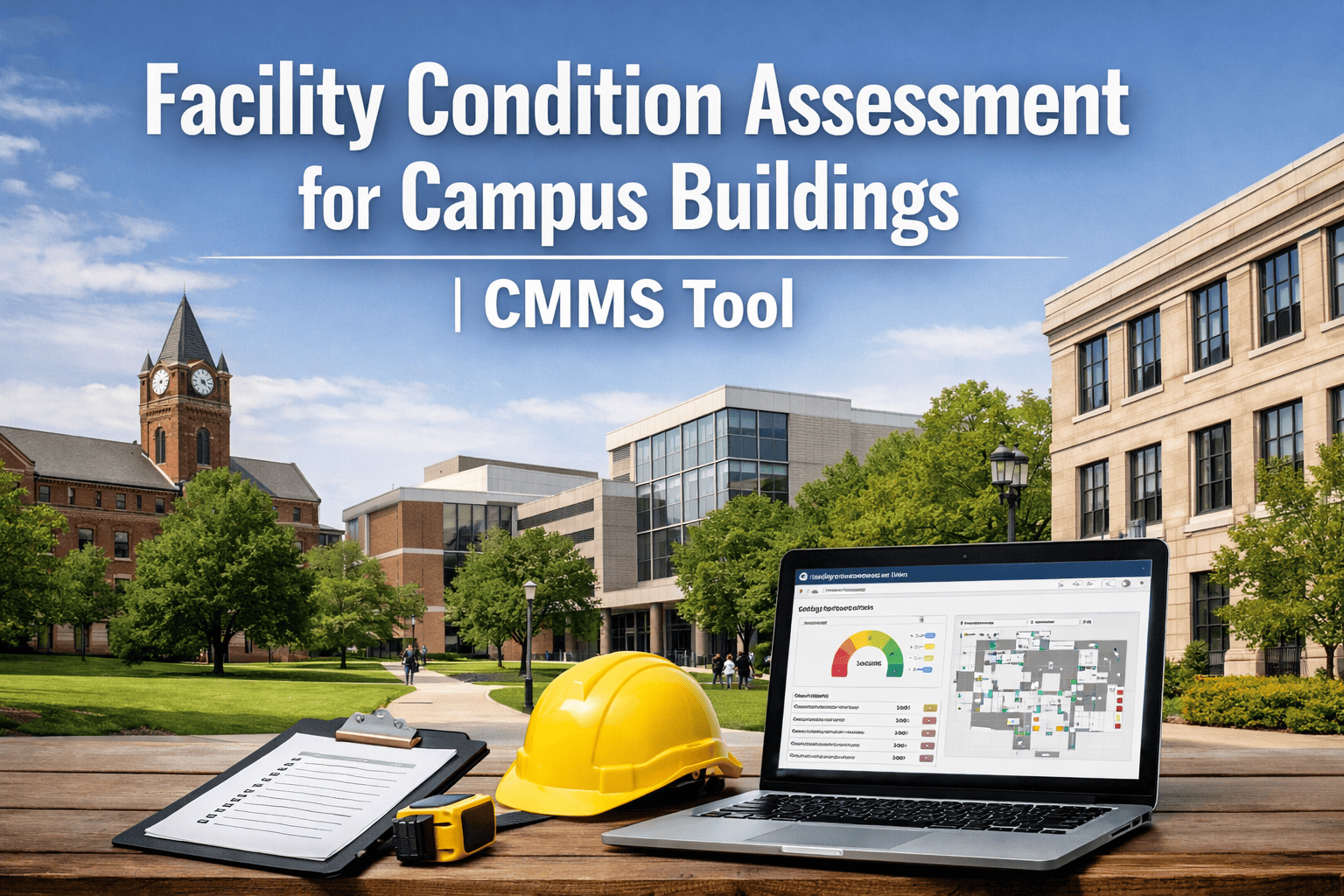
Oxmaint replaces subjective "gut-feel" maintenance with objective Facility Condition Index (FCI) data. Capture asset health on mobile devices, attach photos of deterioration, and generate the cost-justified reports your Board of Trustees requires to approve funding.
Section 1: Building Envelope & Structural Integrity
The envelope is the first line of defense. Failures here lead to secondary damage—mold, rot, and electrical shorts—that can triple the cost of the original repair. Inspect facades and roofs annually to catch minor penetrations before they become structural liabilities.
Envelope audits are the backbone of risk-based budgeting. Sign Up — use photo-documentation to prove facade risks to your Board.
Section 2: MEP (Mechanical, Electrical, Plumbing) Systems
MEP systems represent the "vital organs" of your campus. In 2026, the focus has shifted toward decarbonization and energy efficiency. Aging MEP systems are typically the largest contributors to an institution's carbon footprint and operational waste.
Obsolescence is your biggest MEP risk. Tracking asset lifecycles digitally allows you to bundle replacements across the campus for 15-20% bulk-purchase savings.
Book a Demo — see asset lifecycle forecasting in action →Section 3: Life Safety & Regulatory Compliance
Compliance is non-negotiable. Deferred maintenance in life safety systems creates immediate legal and insurance liability. These audits must be completed with 100% accuracy to satisfy fire marshals and institutional risk managers.
Section 4: Interior Finishes & The "Student Experience"
While less "critical" than a boiler, the aesthetic condition of a campus directly impacts enrollment. Students and parents view peeling paint or stained carpets as an indicator of overall institutional health.
Student experience audits turn facilities into a recruitment tool. Sign Up — track student-facing defects on the go.
Audit Complete
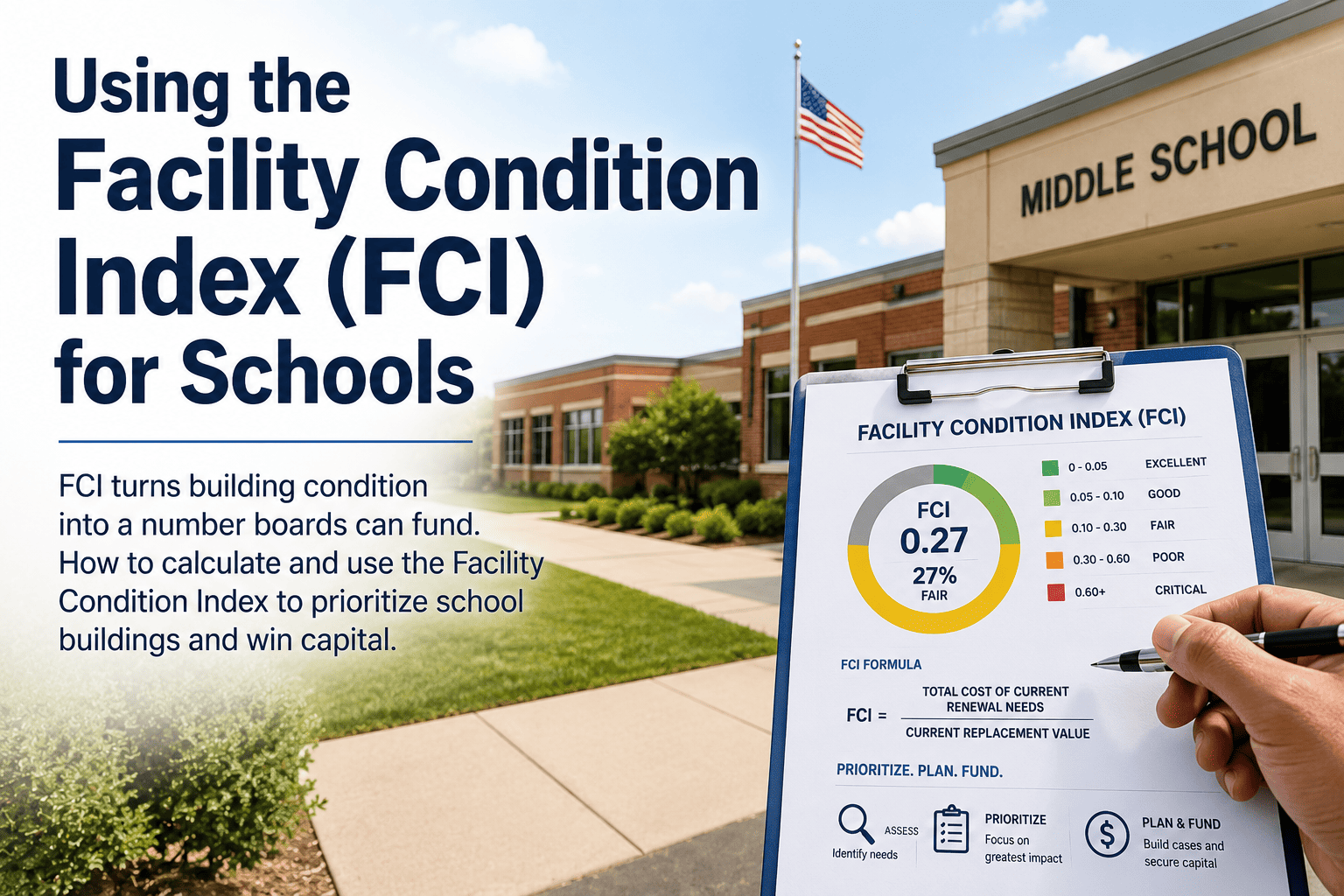
By documenting these conditions, you have moved from "knowing there's a problem" to "quantifying the risk." Use this data to calculate your building's FCI (Repair Cost ÷ Replacement Value). An FCI > 0.10 indicates a building in "Poor" condition that needs immediate capital intervention.
Don't let your deferred maintenance remain a mystery. Oxmaint provides the digital tools to inventory assets, score their condition, and build a 5-year roadmap that wins Board approval. Stop reacting to failures and start managing your campus assets with precision. Our mobile-first platform ensures your field data is accurate, photo-backed, and ready for reporting.
Why Paper-Based Audits Sabotage Your Funding
Most universities fail to secure maintenance funding because they can't present "Board-Ready" data. Paper forms and static spreadsheets are the enemies of capital renewal.
Frequently Asked Questions
Ready to Solve Your Backlog?
Your campus infrastructure is telling a story—are you listening? Oxmaint's digital checklists and asset management tools provide the clarity you need to stop the "break-fix" cycle. Build a transparent, defensible, and successful capital renewal strategy today.