University Sustainability Programs: How Facilities Maintenance Supports Green Campus Goals
By Jamie lanister on March 30, 2026
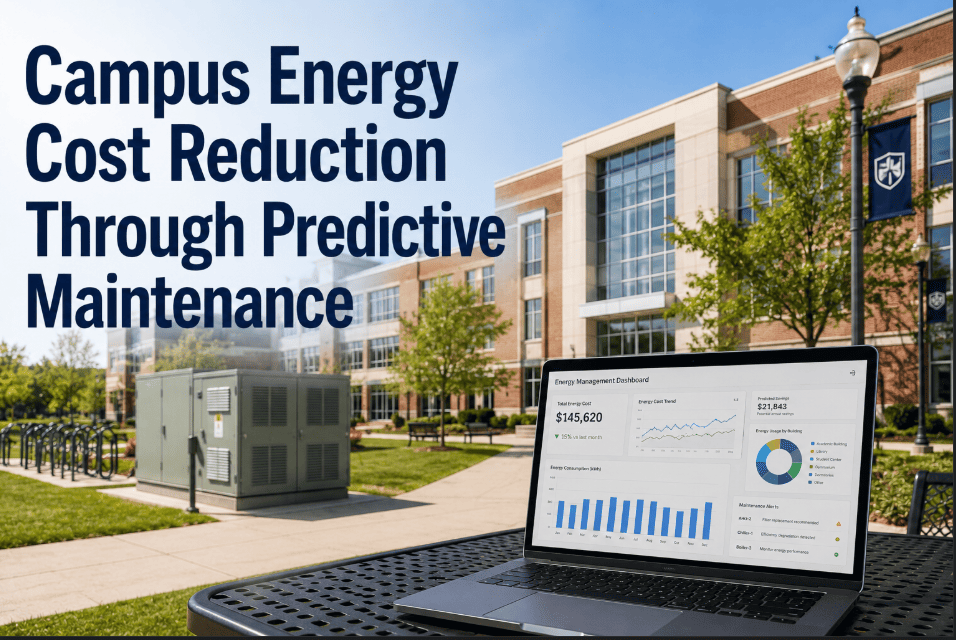
University sustainability commitments — net zero carbon targets, LEED certification maintenance, renewable energy integration, water conservation, and waste reduction — are increasingly driven by student recruitment, donor requirements, and state emissions legislation. But the gap between sustainability policy and sustainability outcome is almost entirely a facilities operations problem. A geothermal system maintained reactively underperforms its design efficiency by 30–40% within five years. A solar array without inverter PM accumulates losses that compound annually. OxMaint connects sustainability goals to maintenance operations — tracking energy use intensity, water consumption, renewable output, and waste diversion as live CMMS dashboard metrics, giving sustainability officers the data they need and facilities teams the PM schedules that keep sustainability infrastructure performing as designed.
OxMaint · Article · University Sustainability · Green Campus Facilities
University Sustainability Programs: How Facilities Maintenance Supports Green Campus Goals
Energy efficiency PM · water conservation systems · waste reduction infrastructure · solar, geothermal & wind maintenance · CMMS-tracked sustainability metrics — green campus operations for universities and large educational institutions.
average energy reduction by universities with CMMS-managed HVAC and controls PM — APPA Sustainability Data
$2.1M
average annual energy cost saved by a mid-size university after implementing FM-integrated sustainability PM
32%
average water consumption reduction at campuses running smart irrigation and CMMS-scheduled water system PM
870+
US universities with net zero or carbon neutral commitments requiring facilities maintenance integration — AASHE
The Four Sustainability Maintenance Pillars
University sustainability programmes span four operational domains — each requiring distinct maintenance protocols and live performance tracking. Energy efficiency and water conservation are primarily maintenance-driven: the technology is installed, and its performance depends entirely on how consistently it is maintained. OxMaint tracks KPIs across all four domains in a single facilities dashboard.
Energy Efficiency
38% savings
HVAC controls calibration, chiller PM, building envelope maintenance, LED lighting upgrades, and smart occupancy scheduling — all CMMS-managed for sustained performance year over year.
Water Conservation
32% reduction
Smart irrigation control, sub-meter anomaly detection, grey water system maintenance, cooling tower water treatment — compounding water savings tracked per building in OxMaint.
Waste Reduction
58% diversion
Compactor PM, recycling station maintenance, food waste processor upkeep, and compost system servicing — all tracked to maintain the diversion rates that sustainability reporting requires.
Renewable Energy
91% uptime
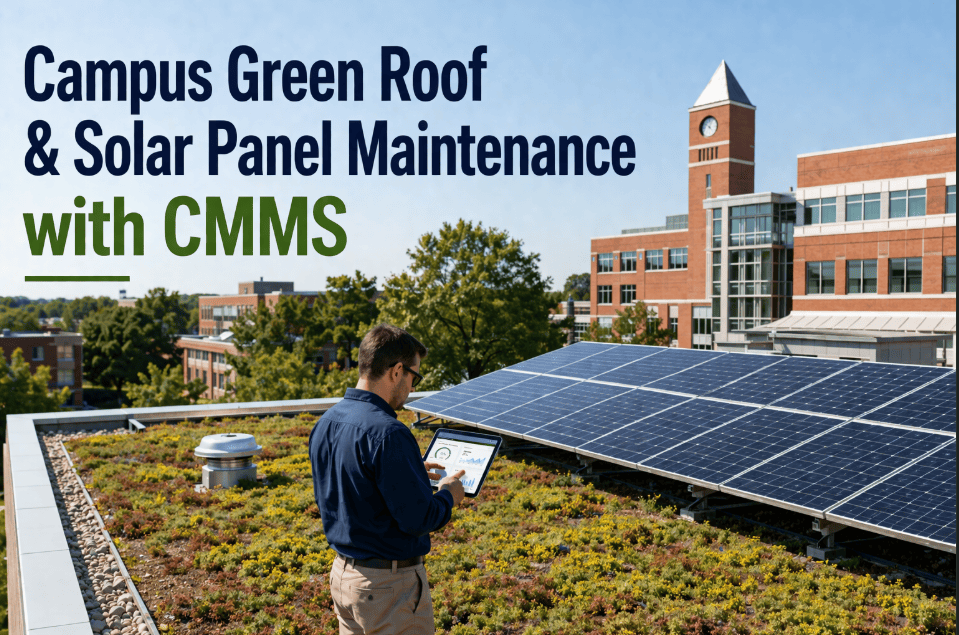
Solar array inverter PM, panel cleaning, geothermal loop maintenance, wind turbine service — each renewable system needs its own PM programme to deliver what the sustainability commitment assumes.
Environmental Performance: With vs Without a Facilities PM Programme
Sustainability infrastructure maintained properly performs near its design specification. Infrastructure maintained reactively degrades 2–4% per year — compounding silently until a major overhaul is needed. The comparison below shows typical performance gaps at a 500,000 sqft campus over five years without a structured CMMS maintenance programme.
CAMPUS SUSTAINABILITY — 5-YEAR PERFORMANCE WITHOUT vs WITH CMMS MAINTENANCE PROGRAMME
Energy Use Intensity
kBtu/sf/yr — lower is better
Without PM programme
88 kBtu/sf
OxMaint PM programme
54 kBtu/sf
Water Consumption
gallons/student/yr — lower is better
Without PM programme
6,200 gal/student
OxMaint PM programme
4,200 gal/student
Solar Array Output
% of design capacity — higher is better
Without PM programme
62% of design
OxMaint PM programme
94% of design
Waste Diversion Rate
% diverted from landfill — higher is better
Without PM programme
38%
OxMaint PM programme
72%
Technology: AI, IoT & SAP for Green Campus Operations
The most effective sustainability programmes are built on continuous monitoring — not annual audits. AI building analytics, digital twin energy modelling, and IoT sensor networks provide real-time visibility into energy, water, and waste performance. OxMaint converts sustainability data anomalies into maintenance work orders before they compound into performance gaps.
AI Digital Twin — Energy
38%
Energy consumption reduction
Campus energy model optimises HVAC setpoints, lighting schedules, and plug-load management against occupancy and weather data — recommending and implementing efficiency changes automatically.
IoT Building Sensors
94%
Anomaly detection accuracy
CO₂, temperature, humidity, and occupancy sensors flag HVAC overcooling, unoccupied zone heating, and plug load anomalies before they appear on the utility bill.
Smart Water Metering
32%
Water consumption reduction
Sub-meter data per building identifies overnight consumption anomalies from running fixtures, irrigation failures, and grey water bypasses — triggering OxMaint work orders automatically.
Solar Telemetry / OBD
94%
Design output maintained
Inverter performance and panel soiling data trigger cleaning and PM work orders at the optimum interval — maintaining solar array output at design capacity year over year.
SAP HANA Integration
Live
Sustainability cost tracking
OxMaint maintenance costs feed SAP alongside utility data — giving sustainability officers a live cost-per-carbon-unit metric connecting FM spend directly to emissions outcomes.
Carbon Analytics Dashboard
STARS
Reporting-ready metrics
OxMaint PM data feeds STARS sustainability reporting — maintenance programme documentation, energy performance trends, and renewable system records all exportable in one report.
Renewable Energy System Maintenance: Solar, Geothermal & Wind
Renewable energy systems require structured PM programmes that most university facilities departments have not historically maintained. Solar arrays accumulate soiling losses of 1–5% per month without cleaning. A geothermal heat pump system requires seasonal loop pressure checks and heat exchanger inspection to maintain the coefficient of performance that justifies the system's capital cost.
Solar Array PM
Monthly: Inverter performance monitoring
Quarterly: Panel soiling index + cleaning
Annual: Full electrical inspection + string test
5-year: Inverter replacement assessment
Geothermal PM
Quarterly: Loop pressure + antifreeze check
Annual: Heat exchanger inspection + coil clean
Annual: COP measurement vs design baseline
5-year: Full loop integrity test
Wind Turbine PM
Monthly: Output monitoring + vibration check
Semi-annual: Gearbox oil + blade inspection
Annual: Full electrical + control system
3-year: Major overhaul assessment
❝
Our board report showed a 34% energy reduction in three years. What it didn't show was the facilities PM programme behind it — quarterly HVAC calibration, annual controls tuning, monthly solar monitoring, all in OxMaint. Without that programme, our geothermal system would have been running at 60% efficiency by year four. Sustainability is a maintenance discipline.
Vice President for Sustainability — Regional university · 28 buildings · 2.1M sqft · OxMaint user since
Frequently Asked Questions
Sustainability infrastructure performs at design specification only when properly maintained. Without PM, energy and water systems degrade 2–4% per year, compounding into 20–40% performance gaps over five years that negate the sustainability investment entirely.
APPA data indicates 22–38% energy cost reduction through consistent CMMS-managed HVAC PM — primarily from controls calibration, economizer testing, and chiller efficiency maintenance. This is typically the largest single sustainability lever in a university facilities programme.
Monthly inverter performance monitoring, quarterly panel cleaning, and annual full electrical inspection including string testing. Inverter replacement should be budgeted at 10–15 years. Without quarterly cleaning, soiling losses alone reduce output by 15–25% per year in most climates.
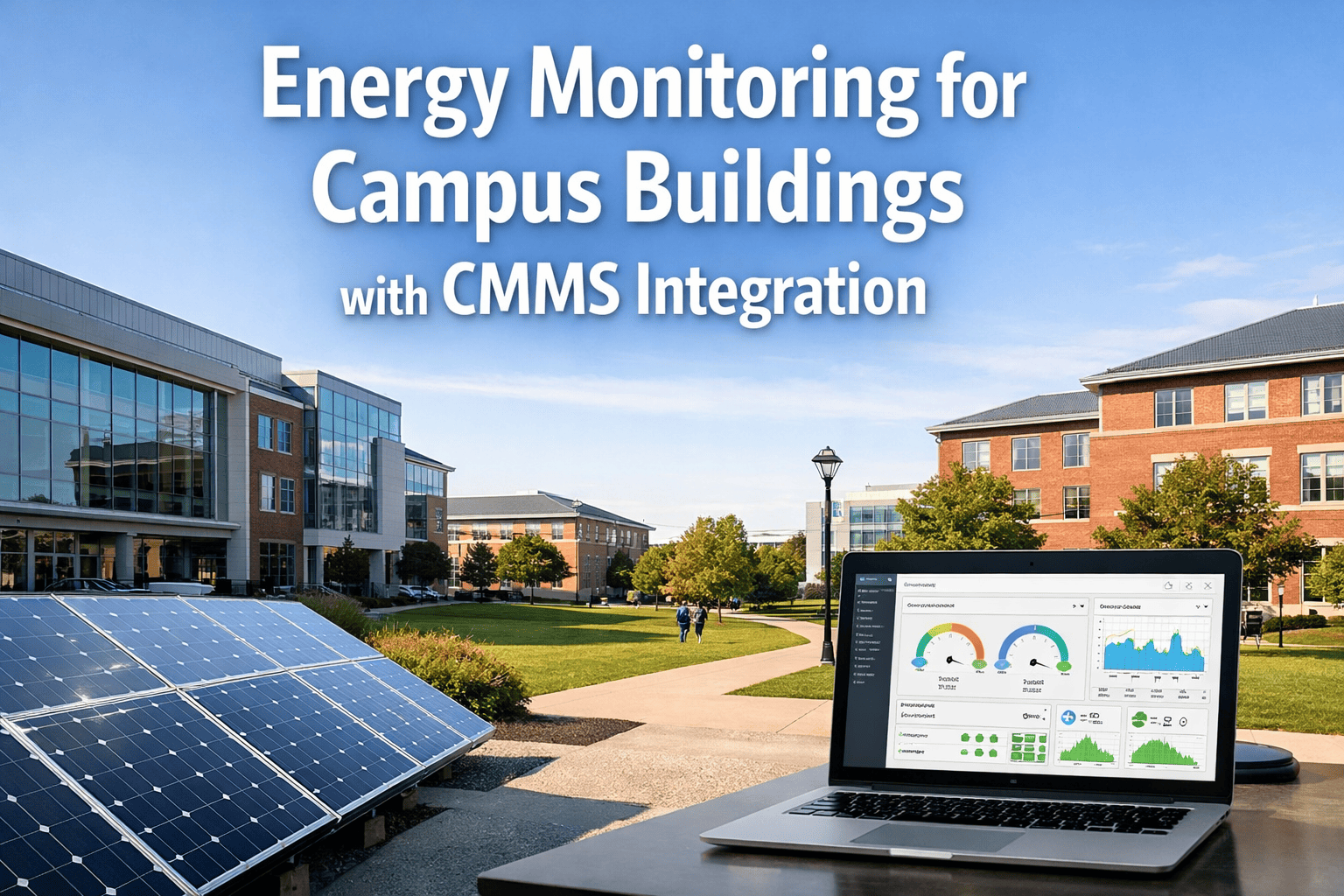
OxMaint integrates with smart meters and IoT sensors to track EUI, water consumption per building, solar output vs design, and waste diversion rates — providing a live sustainability dashboard alongside the maintenance work order system with no separate data entry.
Quarterly loop pressure and antifreeze checks, annual heat exchanger cleaning and COP measurement, and 5-year full loop integrity tests. Without this programme, geothermal COP degrades from 4.5 to 2.8 within seven years — erasing the energy advantage over conventional HVAC.
Yes — OxMaint maintenance data feeds directly into the Operations and Maintenance subcategory of STARS reporting, including PM programme documentation, energy performance trend data, water conservation evidence, and renewable energy maintenance records — all exportable in a single report.
Sustainability Goals Are Set by Policy. They're Achieved by Maintenance. OxMaint Connects Both.
Energy use intensity tracking · solar and geothermal PM · smart water metering · STARS reporting data · live sustainability dashboard. Free to start.