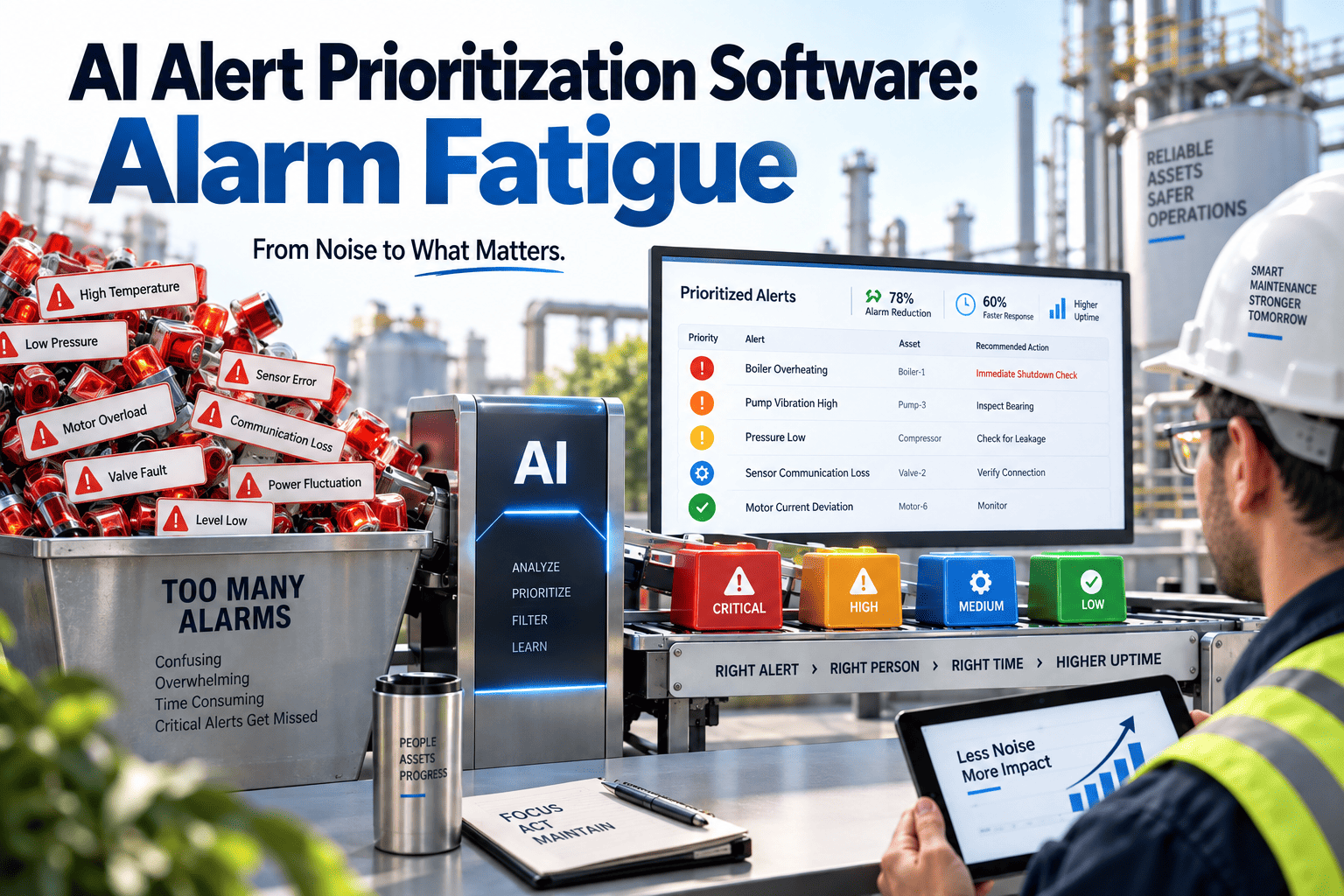
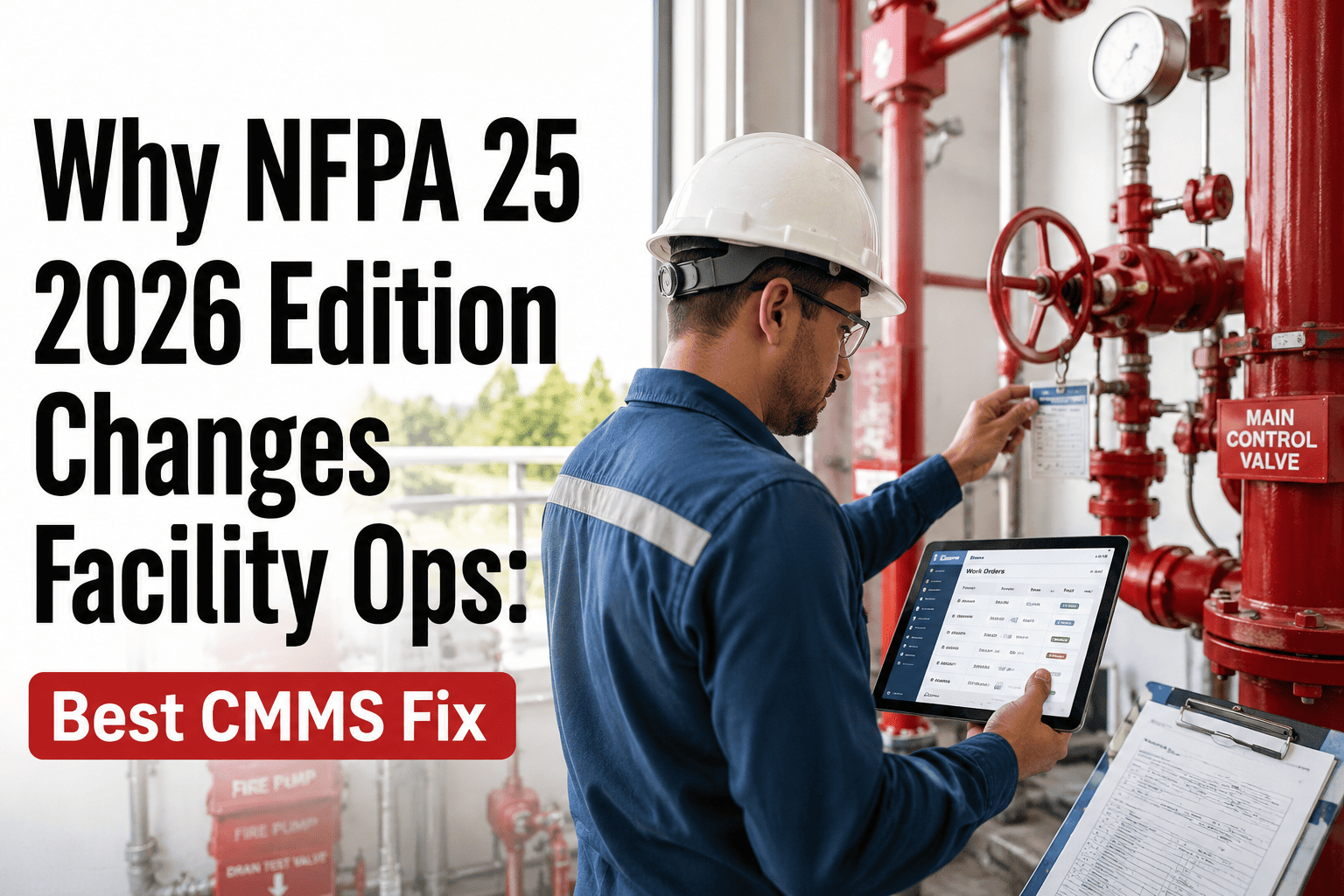
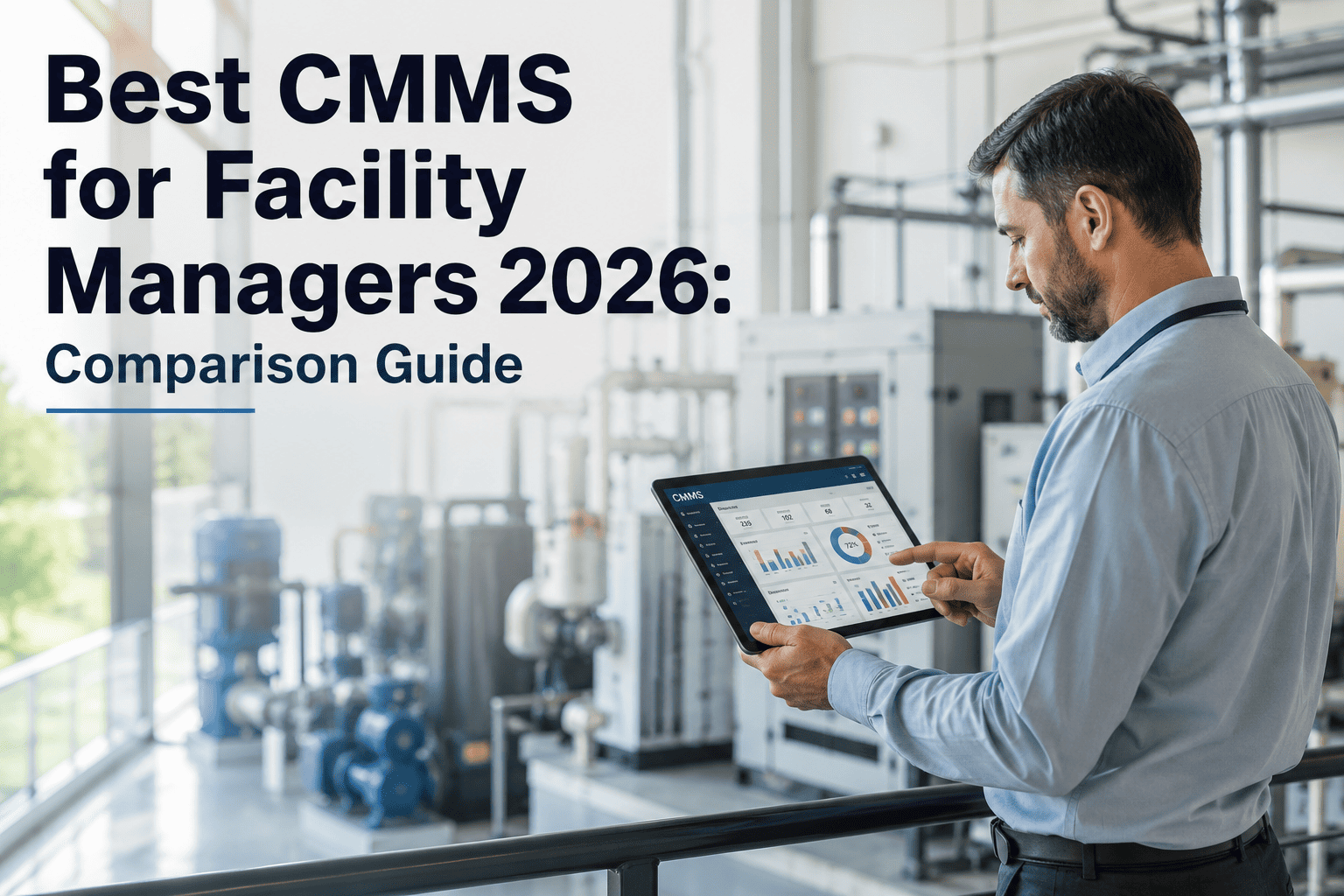
A technician who receives two hundred alerts a day eventually stops trusting any of them, and that is the real danger of alarm fatigue: not too little information, but so much of it that the signal that actually matters gets buried. Most facility teams do not have an alert problem, they have a prioritization problem, since every sensor, PLC, and building system is shouting at the same volume regardless of what it is reporting. OxMaint applies AI-based alert scoring so the handful of alerts that genuinely need a human response rise to the top automatically. See how it filters your own live alert feed by starting a free trial today.
AI Alert Prioritization
Ninety-five percent of your alerts are noise. OxMaint finds the other five.
Stop drowning technicians in low-value pings. OxMaint's AI scores every alert by urgency, asset criticality, and failure likelihood, and only escalates what genuinely needs attention right now, so nobody has to sort through the rest by hand.
Without prioritization
214 raw alerts logged today
Technicians triage manually, one by one
Critical alarms mixed in with routine pings
Average response time: 47 minutes
With OxMaint AI scoring
11 alerts surfaced as action-required
Ranked automatically by urgency and risk
Routine pings logged, not pushed to phones
Average response time: 6 minutes
Alarm fatigue is a measurable operational cost
When every alert looks equally urgent, technicians develop the same instinct as a driver who ignores a car alarm in a parking lot — they stop reacting quickly, and eventually they stop reacting at all. That instinct is rational given the volume, but it is exactly what allows a genuine equipment failure to slip through unnoticed until it becomes an expensive outage.
91%
Of raw alerts across a typical facility require no human action at all
6 min
Average time to acknowledge a genuinely critical alert after AI scoring
3.8x
Faster mean time to respond compared with unranked alert queues
60%
Fewer after-hours phone notifications sent to on-call staff
Where all the noise actually comes from
Before an alert can be scored intelligently, it helps to understand why facilities end up with so many of them in the first place. Alert volume rarely comes from one runaway system. It builds up slowly, from several ordinary sources that nobody ever goes back and cleans up.
Threshold settings copied from the manufacturer
Default alarm limits are often set conservatively for liability reasons, not for how a specific asset actually behaves on your site, so they trip constantly.
New sensors added without cleanup
Each retrofit or expansion adds new alert sources, but nobody goes back to remove or re-tune the alerts that are now redundant or obsolete.
One alert generating multiple notifications
A single trip can fire an email, a text message, and a dashboard flag simultaneously, making one event feel like three separate problems.
Seasonal and shift-based blind spots
Thresholds tuned for summer operation often misfire constantly in winter, or vice versa, because nobody adjusts limits for the season or the shift pattern.
No distinction between asset criticality tiers
A spare air handler and a primary chiller can trigger identically styled alarms, even though a failure on one matters far more than the other.
Alerts that never expire or resolve
Some alarms stay active in the system long after the underlying condition has cleared, quietly adding to the count technicians have to wade through.
How the prioritization engine actually scores an alert
Every incoming alert is passed through four weighted checks before it is either escalated, queued, or quietly logged for later trend analysis. The scoring runs in the background, so technicians only see the outcome, not the underlying math.
Tier 1 — Immediate escalation
Safety-related faults, complete asset shutdowns, or conditions likely to cascade into a larger failure within the hour. Pushed instantly to the on-call technician's phone with the reason for the escalation attached.
Tier 2 — Same-shift response
Meaningful deviations from normal operating range on a moderately critical asset. Added to the top of the active work queue for the current shift so it is handled before routine tasks resume.
Tier 3 — Scheduled review
Minor deviations or early-warning trends that are worth a look but do not require dropping current work immediately. Bundled into the next planning meeting for a proper review with context.
Tier 4 — Logged for trend analysis
Routine, expected, or self-resolving events that historically never required intervention. Recorded silently so patterns can still be spotted later without interrupting anyone in the moment they occur.
Let your team respond to signal, not noise
OxMaint's scoring engine reads directly from your existing sensors, PLCs, and building systems, so there is no rip-and-replace project required to start cutting down alert volume across every site you manage.
What changes across an alert's lifecycle
The table below compares how a single alert is handled with a traditional threshold-based alarm system versus OxMaint's AI-based scoring, from the moment a sensor trips to the moment the issue is resolved.
Five signs your facility has an alarm fatigue problem
Alarm fatigue rarely announces itself directly. It shows up as small behavioral changes across a maintenance team, and those changes are usually visible well before a serious incident makes the problem impossible to ignore.
Alerts get silenced, not resolved
Technicians mute or dismiss notifications faster than they can meaningfully review them, simply to regain focus on the task in front of them.
The same alert repeats for weeks
A recurring low-priority alert becomes wallpaper, and nobody remembers why it was ever set up or whether it still matters.
Real failures are found by walking the floor
Staff discover critical issues through physical inspection rather than through the alert system that was supposed to catch it first.
On-call staff report notification burnout
Turnover and complaints rise among on-call technicians who are woken up repeatedly for issues that could easily have waited until morning.
Nobody can say what "urgent" means
Ask five people to define a critical alert and you get five different answers, which means the threshold was never actually agreed on.
Alert volume keeps rising with no owner
New sensors and integrations keep adding alerts to the pile, but nobody is responsible for pruning or re-tuning the rules that generate them.
A ninety-day path from noise to signal
Facilities do not need a multi-year program to fix alarm fatigue. Most see a measurable drop in unnecessary notifications within the first month, following a straightforward rollout sequence.
Week 1–2
Connect and observe
OxMaint connects to existing sensors and alarm feeds in read-only mode, quietly scoring alerts in the background without changing any existing routing yet.
Week 3–4
Calibrate the scoring model
The team reviews a sample of scored alerts against what technicians actually did, tuning thresholds until the scores match real-world judgment.
Week 5–8
Switch on live routing
Tier one and tier two alerts begin routing directly to the responsible technician, while lower tiers are logged for review instead of pushed live.
Week 9–12
Expand and refine
Additional asset classes and building systems are brought into the scoring model, and reporting dashboards go live for shift leads and management.
Measuring whether prioritization is actually working
A prioritization project is only worth running if it produces numbers a facility director can point to. OxMaint tracks a small set of operational metrics before and after go-live, so the impact of AI scoring is never a matter of opinion.
Notification volume per technician
Total pings received per shift, broken out by tier, so leadership can see the raw noise reduction in plain numbers rather than a vague sense of things feeling calmer.
Mean time to acknowledge critical alerts
How long it takes a genuinely urgent alert to get a human response, tracked separately from lower tiers so the metric cannot be diluted by routine noise.
False positive rate by asset class
How often a tier one or tier two alert turns out to require no action, which is used to keep re-tuning the scoring model over time.
Missed or delayed critical events
Any incident that was under-scored is reviewed individually, and the scoring model is adjusted immediately so the same mistake does not repeat.
These four numbers together give a complete picture. A facility can be confident that alert volume dropped without also confirming that nothing important slipped through, and OxMaint reports on both sides of that equation from the same dashboard technicians already use for their daily work.
Before OxMaint, our night shift technician carried a phone that buzzed constantly, and honestly, he had started ignoring it because ninety percent of the time it was nothing. Three weeks after we turned on AI scoring, his notification volume dropped by more than half, and the alerts that did come through were ones that actually needed him. We caught a compressor bearing issue at two in the morning that, in the old system, would have been just one more buzz he silenced and dealt with the next day.
— Facilities Operations Lead, Multi-Site Healthcare Campus
Frequently asked questions
Does this replace our existing alarm or SCADA system?
No. OxMaint sits alongside your existing systems and reads alert data from them, adding a scoring and routing layer on top rather than replacing infrastructure you already rely on and have already paid for.
How does the AI learn what counts as critical for us?
It starts from asset criticality and failure history you already have, then adjusts scoring over time based on how technicians actually respond to past alerts, learning which ones genuinely needed action.
Will low-priority alerts just disappear?
No, nothing is deleted. Lower-tier alerts are logged and remain fully available for trend review, they are simply not pushed as live notifications that interrupt a technician's day unnecessarily.
Can we adjust the scoring thresholds ourselves?
Yes, thresholds are visible and adjustable by your team at any time. You can
start a free trial and tune scoring against your own alert history right away.
How fast can we get this running on our sites?
Most facilities are observing scored alerts within the first two weeks. A guided rollout call is available if you would like to
book a demo and plan the connection together.
Turn two hundred alerts into the ten that matter
Join facility and reliability teams using OxMaint's AI alert prioritization to cut notification volume, speed up real response times, and protect technicians from burnout without losing visibility into anything.