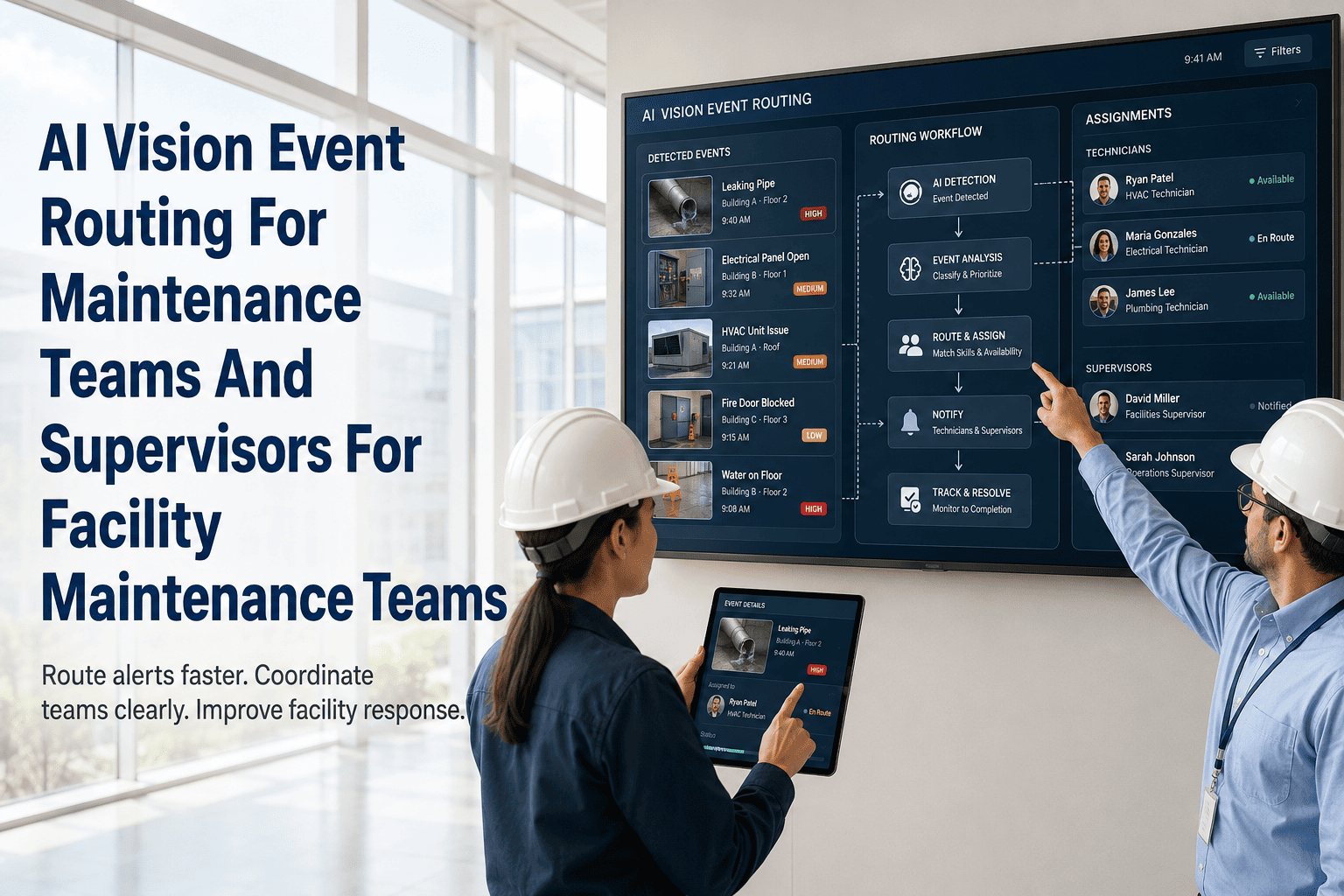
A maintenance team that discovers a defect and a maintenance team that can prove it discovered that defect, routed it correctly, and closed it with documented evidence are two entirely different teams when an auditor or a building owner is in the room. Traditional facility inspection creates the first type of team. AI Vision Event Routing creates the second. When a camera captures a defect — coil fouling on an AHU, bearing discolouration on a motor, water staining above an electrical panel — the finding has to travel through the right sequence: severity scored, priority assigned, technician notified, work order created, and closure documented with a post-repair photo. In manual processes, that chain breaks at almost every link. OxMaint's AI Vision Event Routing closes every link automatically — from photo capture on a technician's phone to a structured, prioritised work order in the right hands — in under 15 seconds per inspection point. Facilities with AI vision routing in place detect 3.8 times more defects per inspection cycle compared to manual walkthroughs, while reducing the volume of low-priority noise that causes alert fatigue. Book a demo to see how OxMaint routes visual inspection findings into the right work orders, for the right technicians, with zero manual dispatch steps between camera and crew.
15 sec
Photo to structured work order — AI Vision to CMMS routing time per inspection point
3.8×
More defects detected per inspection cycle versus manual walkthrough — at the same inspection frequency
94%
Defect detection accuracy across six trained defect categories in OxMaint's AI Vision models
60%
Reduction in follow-up inspection time — visual evidence captured at fault point, not retrieved afterward
How AI Vision Event Routing Works — Camera to Crew in Five Steps
1
Capture
Photo Taken on Mobile
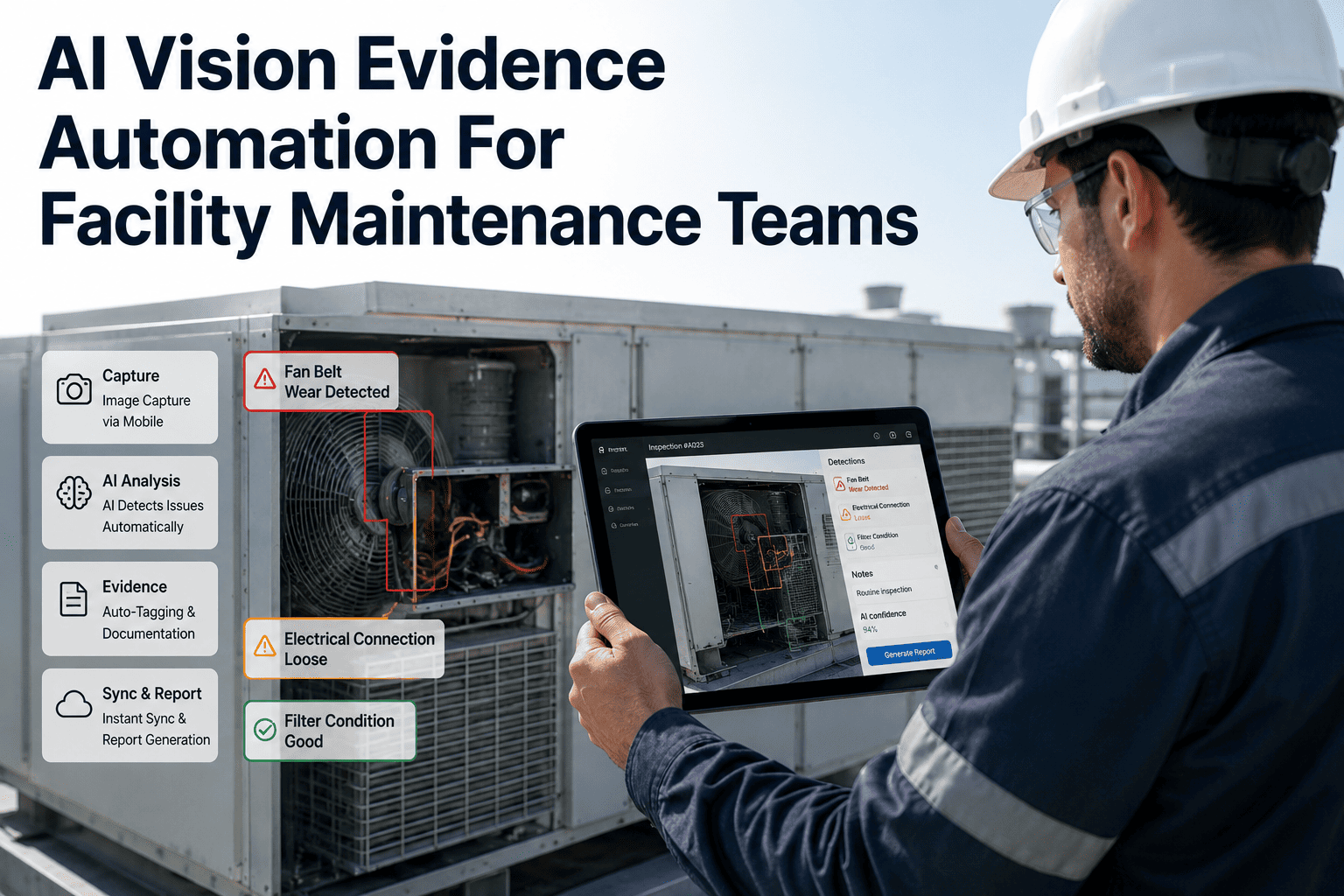
The technician taps one button in the OxMaint mobile app to capture a photo at any inspection point. No separate camera hardware, no additional app, no connectivity required — AI processes the image on-device instantly.
2
Detect
AI Defect Analysis
OxMaint's vision model classifies the defect type — corrosion, crack, wear, leak, thermal discolouration, or missing component — and assigns a 1–5 severity score against configurable thresholds for that asset's criticality tier.
3
Route
Priority Assigned and Routed
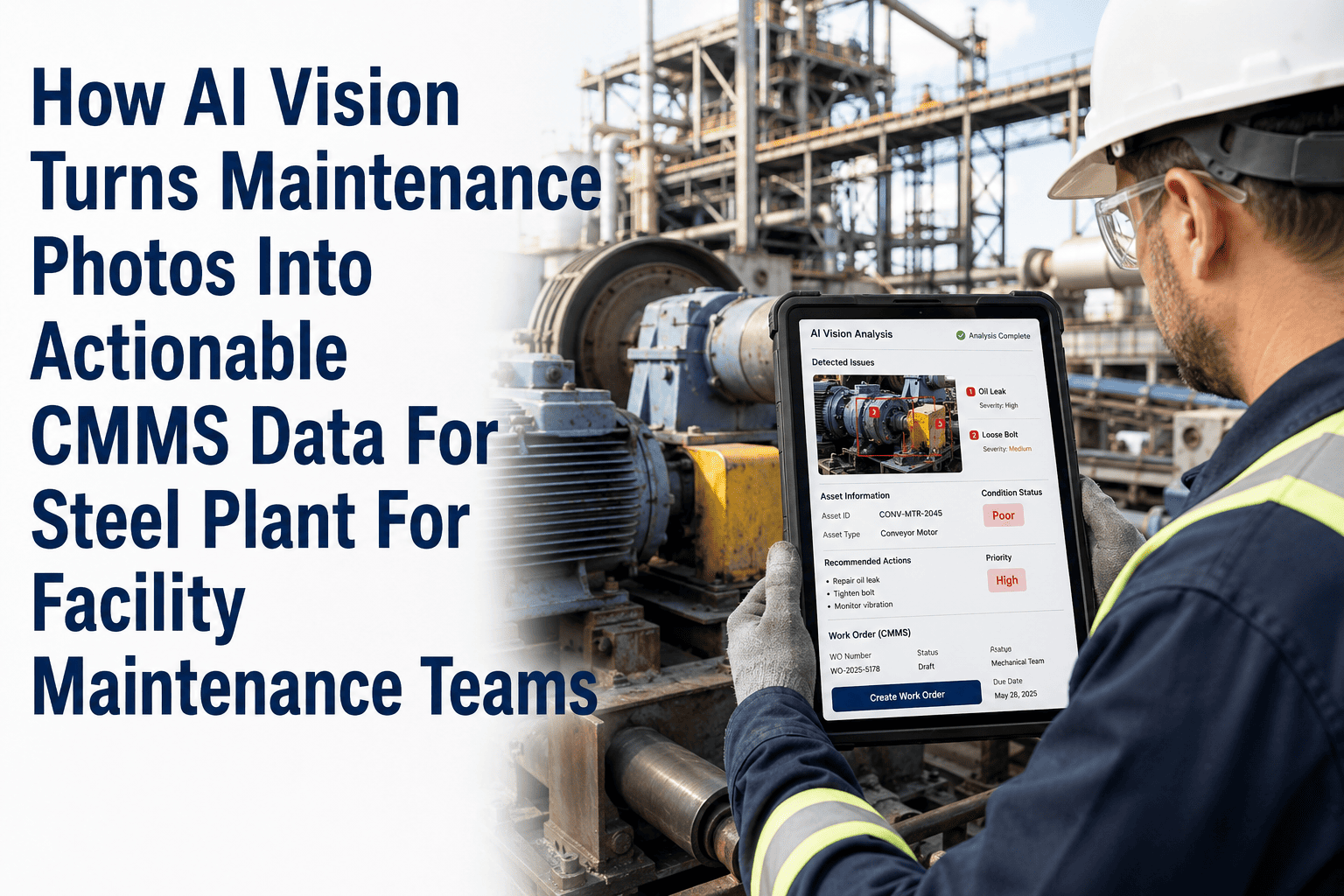
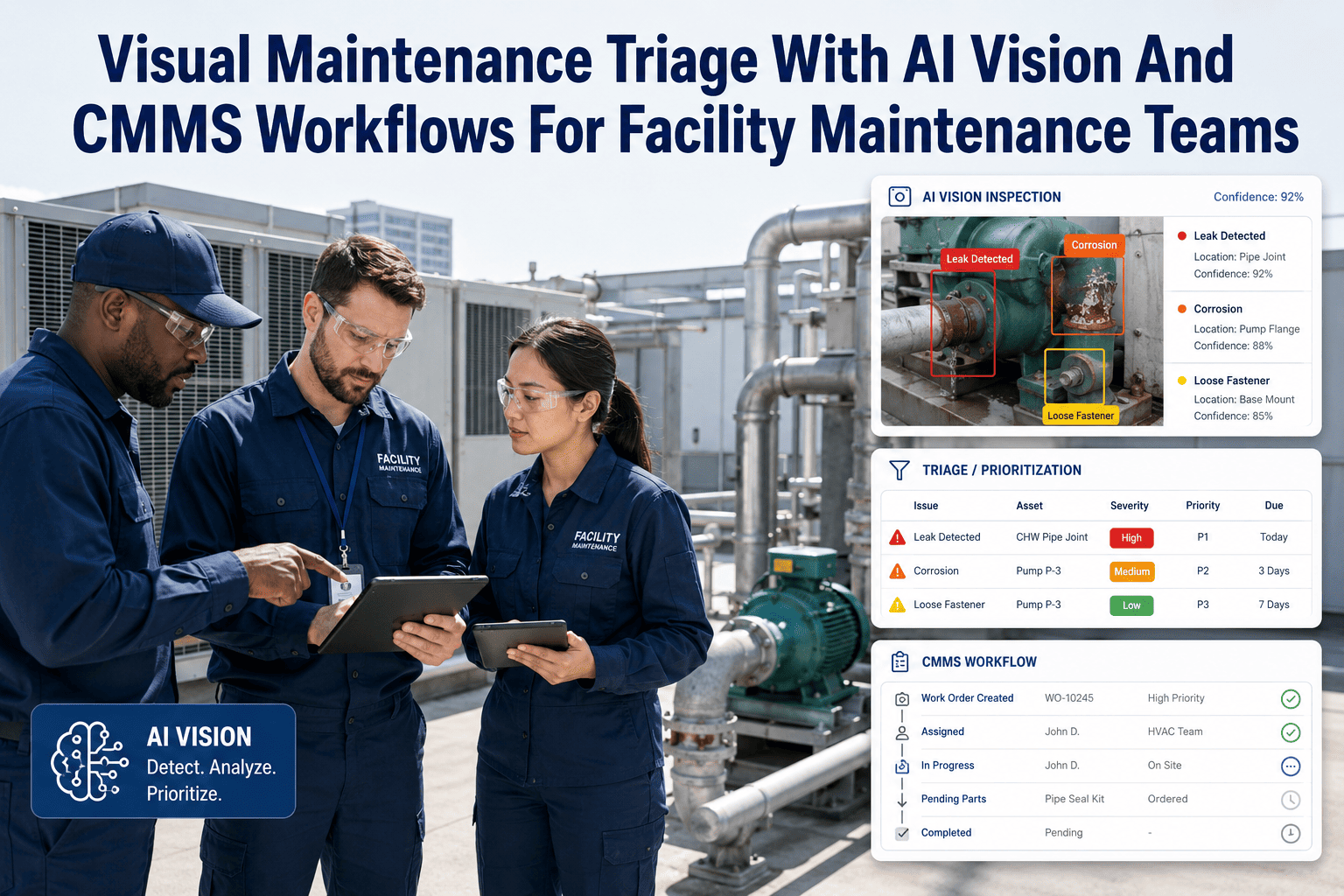
Findings above the severity threshold are converted into CMMS work orders automatically, with defect type, severity score, asset location, and annotated photo pre-populated. Below-threshold findings enter a review queue for supervisor triage.
4
Dispatch
Technician Notified
The assigned technician receives a mobile notification with the work order, defect photo, asset history, and recommended repair action — before they leave the supervisor's office. No radio call, no verbal relay, no missed context.
5
Close
Evidence Chain Completed
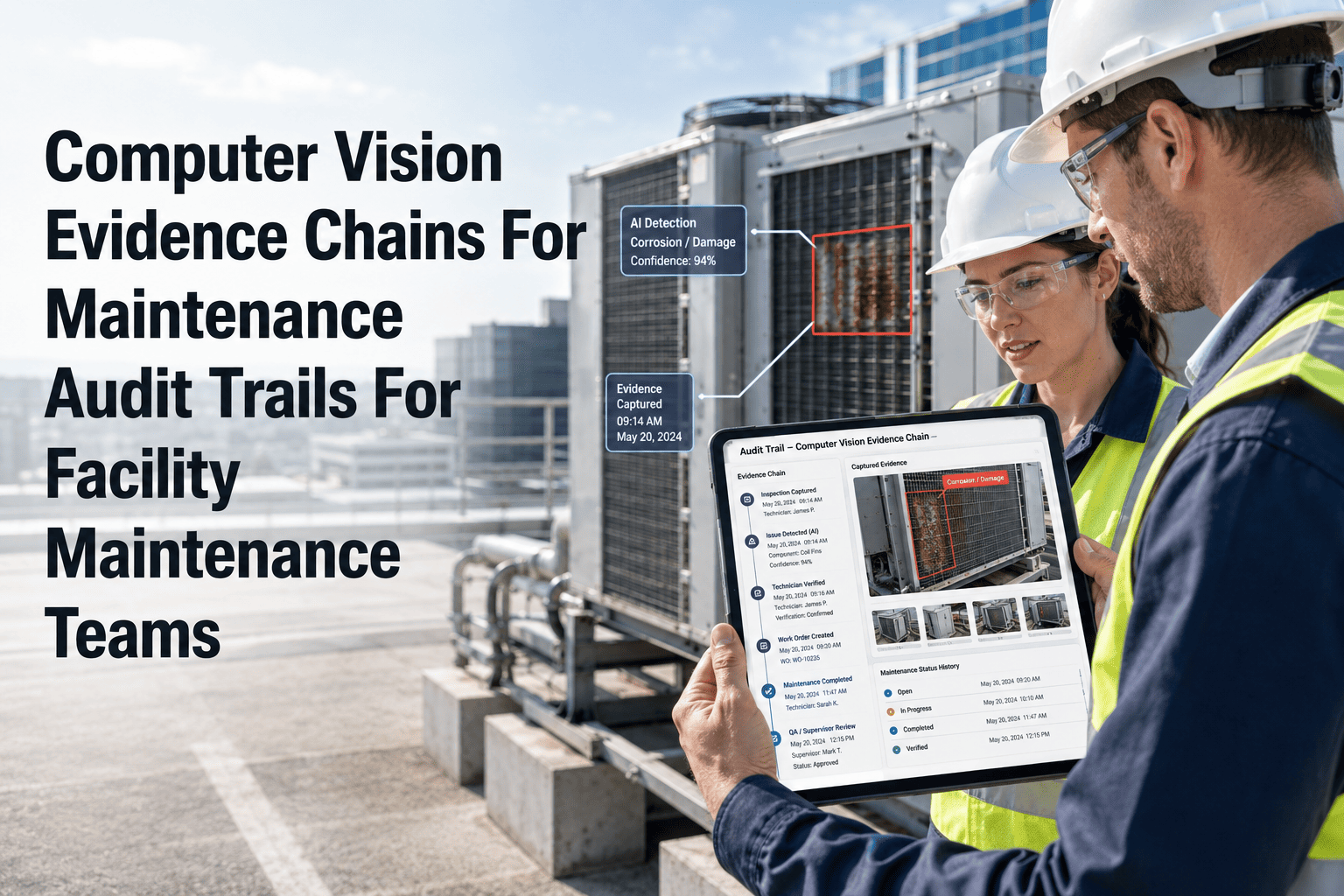
Technician captures a post-repair photo on closure. The full evidence chain — detection photo, defect classification, severity score, repair action, and closure photo — is permanently stored in the asset record.
OxMaint · AI Vision Event Routing · Facility Maintenance
From camera tap to routed work order in 15 seconds — with severity scoring, technician assignment, and audit-ready evidence chain built in automatically.
Defect-to-Work-Order Routing Rules — How OxMaint Eliminates Subjective Triage
Defect Detected
Severity Score
Routing Action
Technician Gets
Corrosion on pipe joint — early stage
2 / 5
Logged to review queue — no immediate WO
Grouped into next scheduled PM cycle inspection
AHU coil fouling — moderate buildup detected
3 / 5
Planned WO created — 7-day completion window
Defect photo + coil cleaning task + asset service history
Water stain above electrical panel
4 / 5
Urgent WO created — 24-hour response required
Annotated photo + electrical hazard classification + prior WO history
Bearing thermal discolouration — critical asset
5 / 5
Immediate WO + supervisor alert — 2-hour response
Heat map overlay photo + vibration baseline + recommended replacement parts
Surface discolouration on non-critical wall panel
1 / 5
Logged only — no action generated
Record maintained in asset visual baseline for trend tracking
Manual Inspection Routing vs. OxMaint AI Vision Event Routing
Manual Process
Inspector sees defect, makes a mental note or writes on paper clipboard
Severity assessed subjectively — accuracy degrades after 30 minutes of walkthrough
Verbal or radio handoff to supervisor — defect description loses detail in translation
Supervisor manually creates work order — hours or days after defect found
No pre-repair photo in work order — technician arrives without visual reference
Closure documented in writing — no post-repair photo, no visual evidence chain
OxMaint AI Vision
Photo captured on mobile — AI processes defect in under 15 seconds
Severity scored 1–5 by AI model — consistent across every inspection hour
Structured event created automatically — no verbal relay, no translation loss
Work order created and assigned before inspector moves to next point
Annotated defect photo attached to WO — technician arrives with full visual context
Post-repair photo captured on closure — complete visual evidence chain in asset record
Frequently Asked Questions
What camera hardware does OxMaint AI Vision require?
No dedicated camera hardware is required. Technicians use OxMaint's mobile app on any iOS or Android smartphone. Photo capture is embedded in the inspection checklist workflow — one tap to capture, AI processes locally on the device. This means zero additional hardware cost per inspection point and full functionality in basements, mechanical rooms, and remote sites without network coverage. Sign in to OxMaint to configure your inspection checklist with AI Vision photo capture steps.
How does OxMaint prevent alert fatigue from too many low-severity findings?
OxMaint's severity threshold configuration lets supervisors set per-asset-tier cutoffs that control which findings generate immediate work orders versus entering a review queue or logging only. Low-priority findings below the threshold never generate work orders unless manually escalated. Configurable repeat-finding suppression windows prevent the same low-severity defect from generating repeated queue entries until the threshold is met. Book a demo to walk through threshold configuration for your facility asset register.
Can AI Vision event routing integrate with our existing PM inspection checklists?
Yes. AI photo capture is added as a step within your existing OxMaint PM inspection checklists — it does not replace your PM program, it augments it. When a technician reaches an inspection point configured for visual analysis, the app prompts for a photo capture. The AI analysis runs in under 15 seconds and either confirms acceptable condition or flags a defect and routes a work order. Sign in to OxMaint to add AI Vision capture steps to your existing inspection templates.
How accurate is OxMaint's AI defect detection across different facility types and asset categories?
OxMaint's vision models achieve 94% detection accuracy across six trained defect categories — corrosion, cracking, wear, leaks, thermal discolouration, and missing components — across standard commercial and industrial facility types. Accuracy improves continuously as your team captures more images of your specific assets, with model retraining cycles every quarter. Book a demo to review detection accuracy benchmarks for your specific asset types.
Does the AI Vision evidence chain support regulatory audits and compliance documentation?
Yes. Every OxMaint AI Vision event produces a timestamped, technician-attributed record linking the detection photo, severity classification, work order creation, technician assignment, and post-repair closure photo — all permanently stored in the asset record. This complete visual evidence chain is exportable by asset, date range, or facility for audit preparation. Sign in to OxMaint to review the audit export workflow for compliance reporting.
OxMaint · AI Vision · Event Routing · Facility Management
Your inspection team is already walking the floor. OxMaint makes sure every defect they see is severity-scored, routed to the right technician, and documented with photo evidence — automatically, in 15 seconds per point.
AI Vision · Severity Scoring · Auto Work Order Routing · Mobile Inspection · Audit Evidence Chain