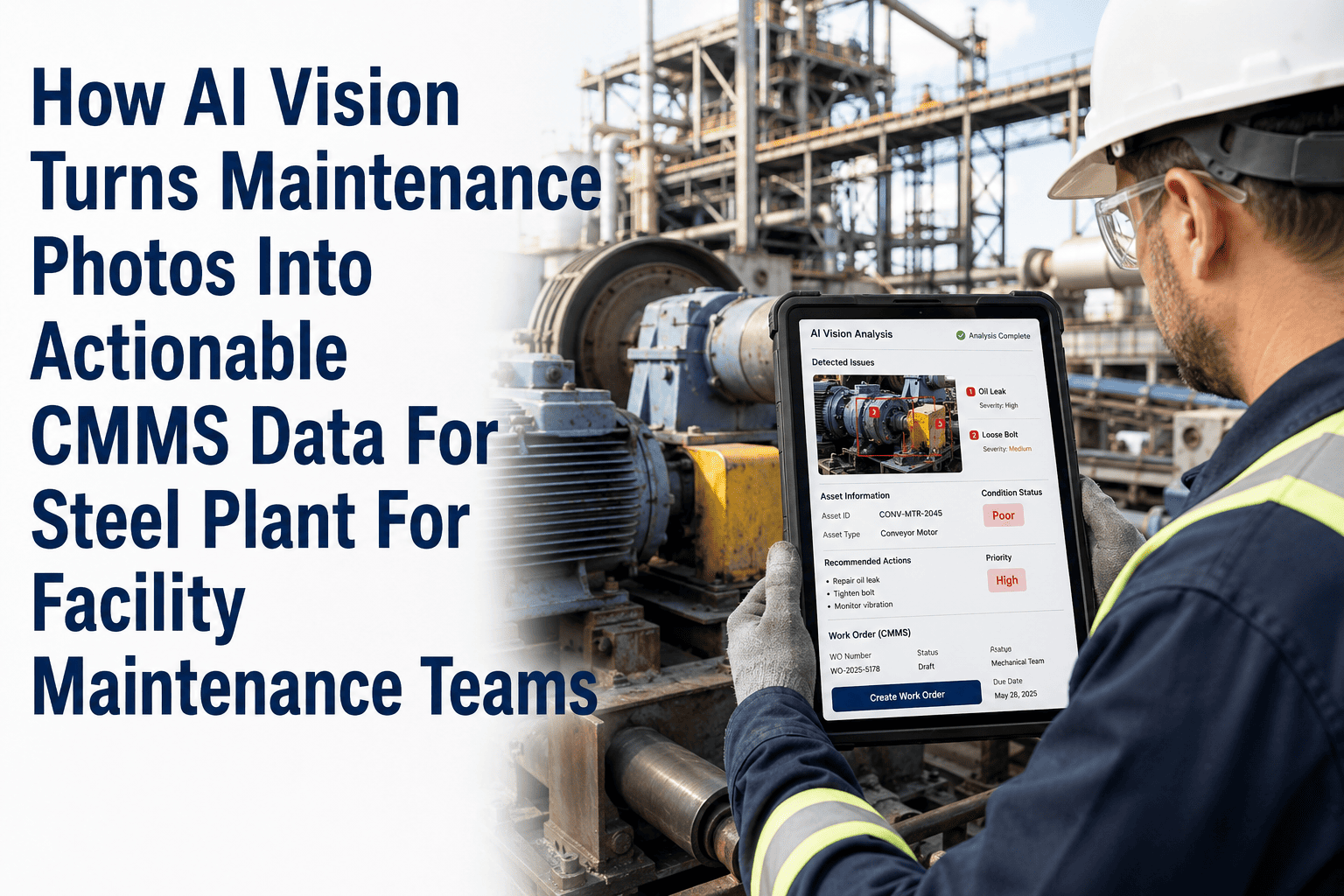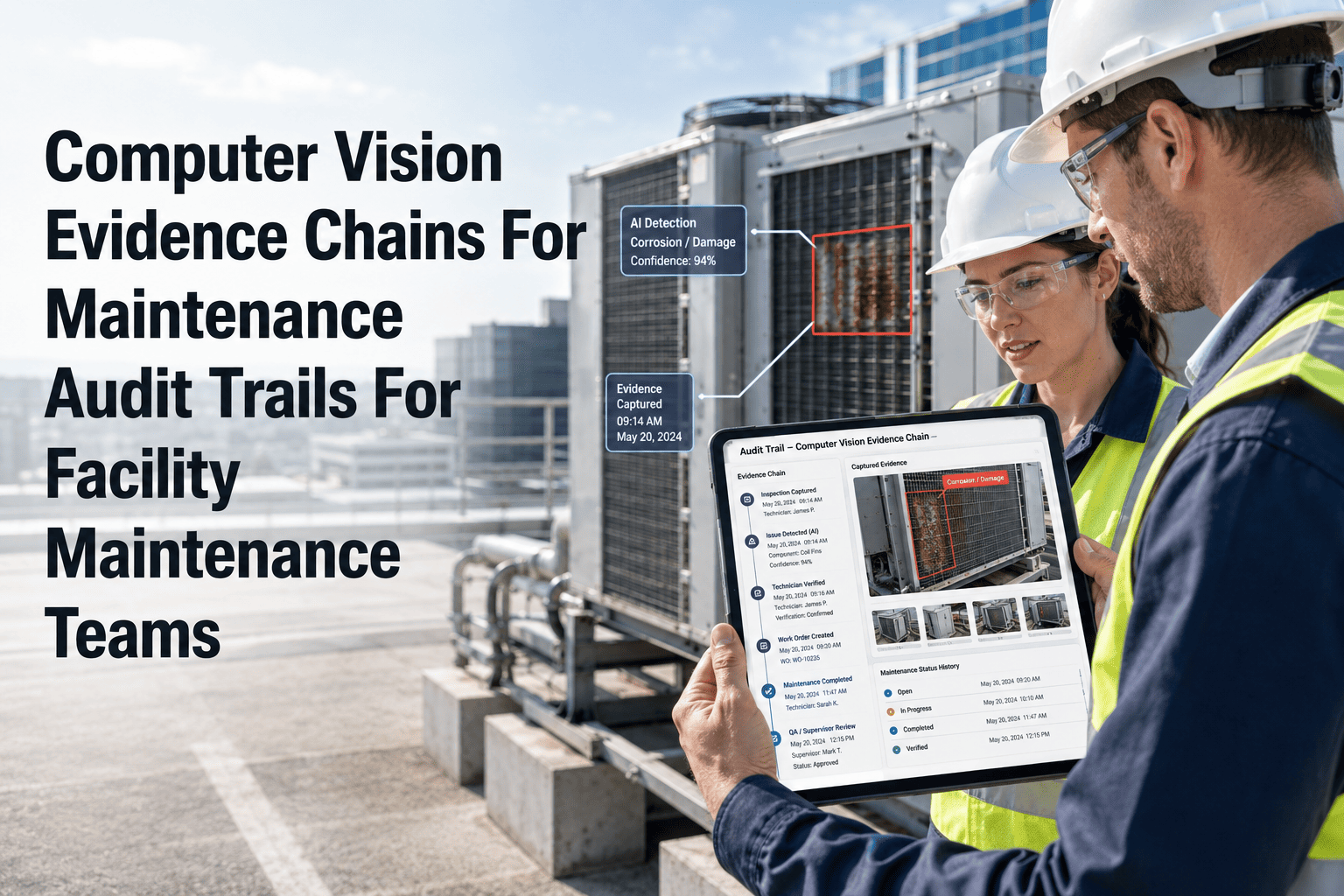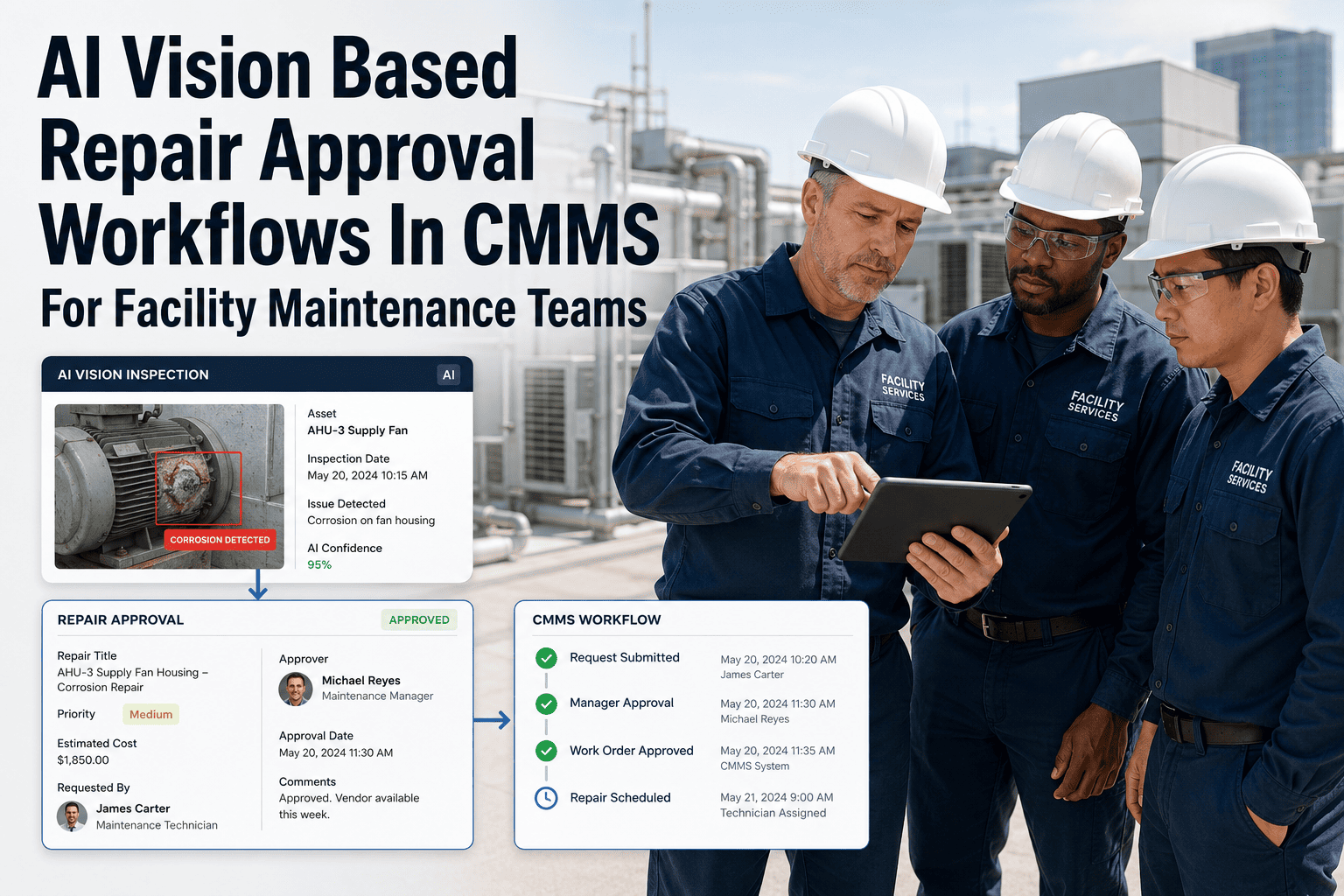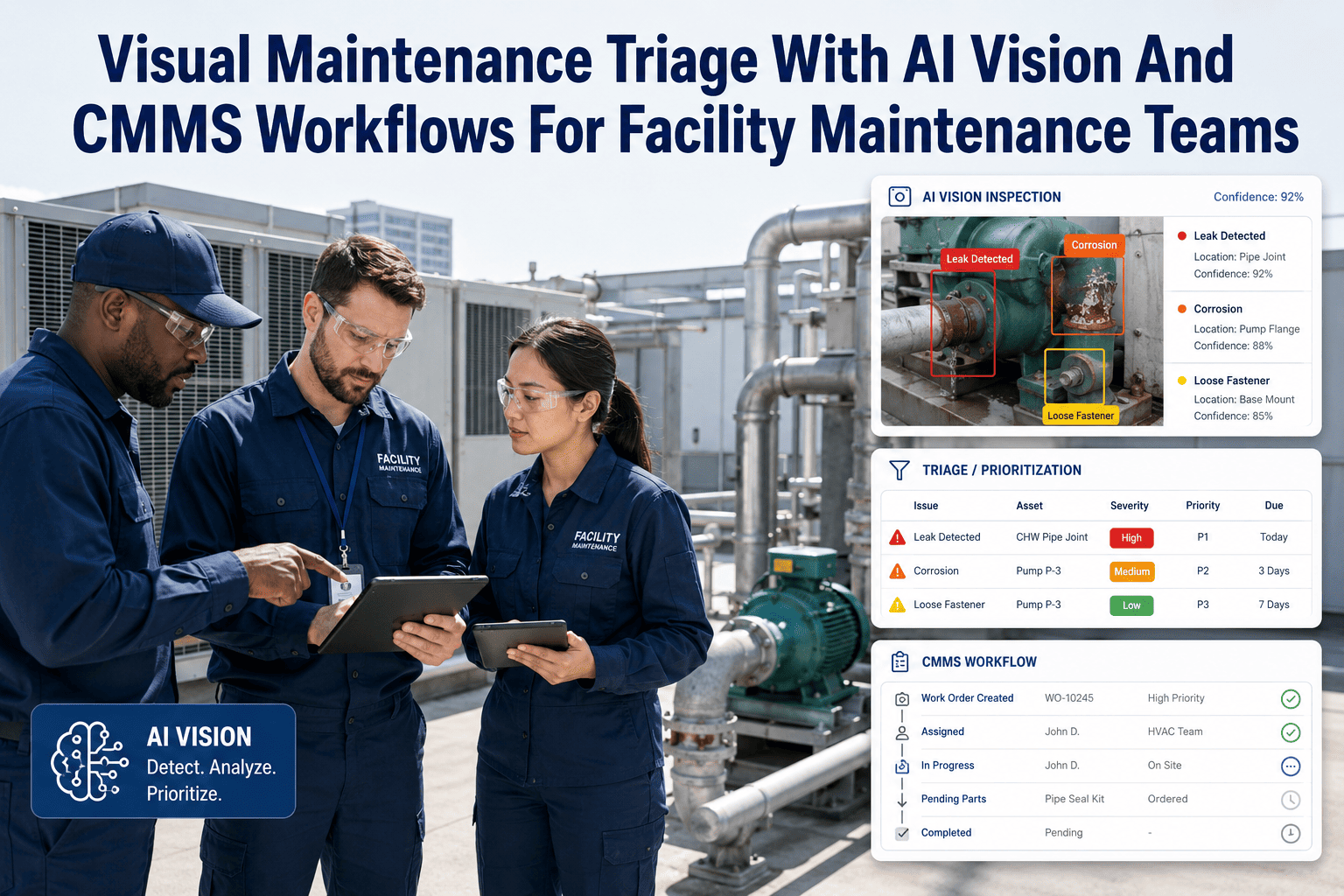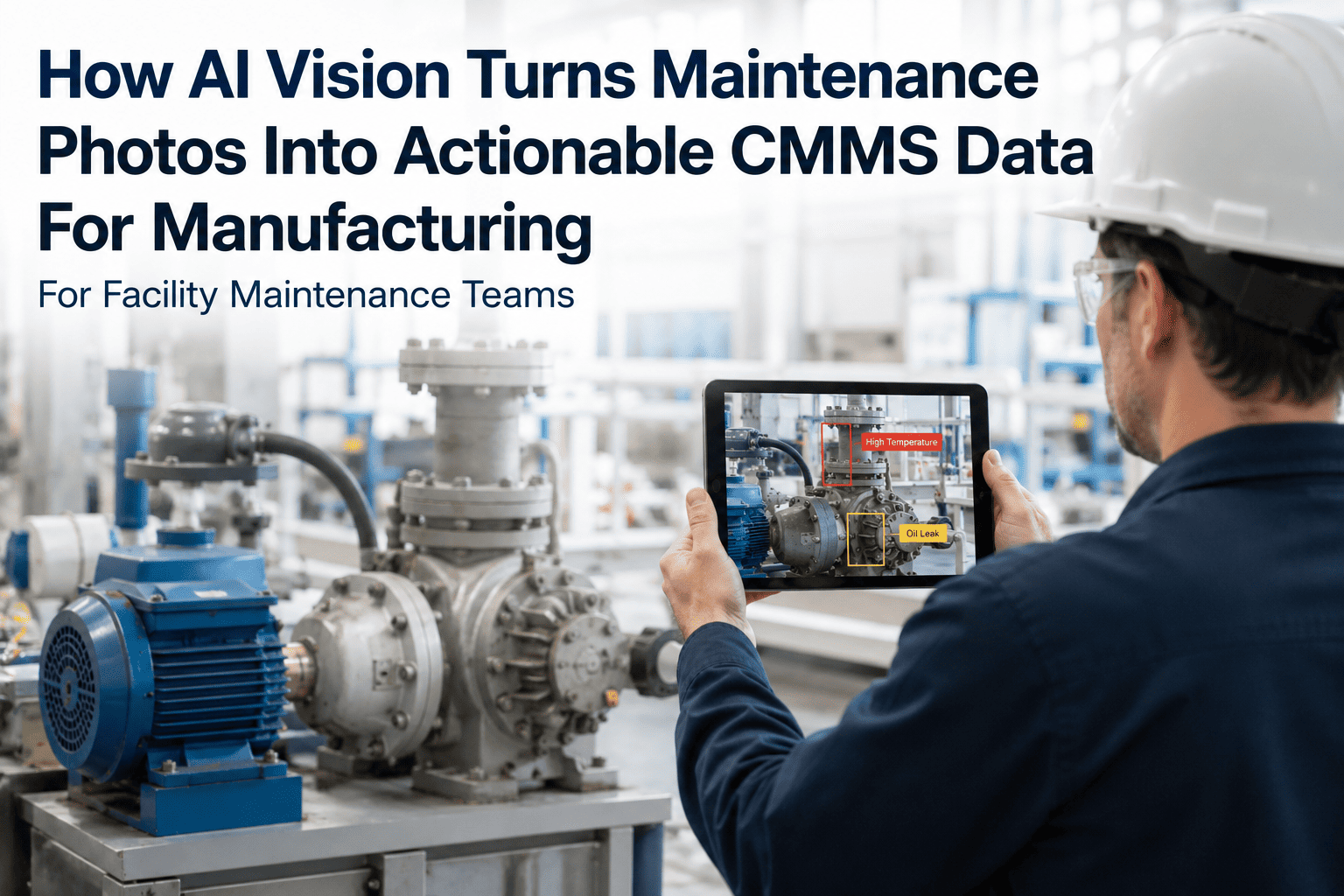
A maintenance technician on a manufacturing floor snaps a photo of a worn conveyor bearing fifteen times a week, and fifteen times that photo sits in a phone gallery doing nothing. The defect is documented but disconnected — no work order, no asset history, no trend data for the next reliability review. OxMaint's AI Vision engine turns that same photo into structured CMMS data automatically — defect type, affected asset, severity, and a work order, all in the time it takes to put the phone back in a pocket. Book a demo to see it run on your plant floor photos.
Manufacturing · AI Vision to CMMS Data
How AI Vision Turns Maintenance Photos Into Actionable CMMS Data
Without AI Vision
Photo sits in a personal phone gallery
No link to asset ID or maintenance history
Manual data entry delays work order by hours or days
No trend visibility across recurring defects
With OxMaint AI Vision
Photo classified and filed against the asset in seconds
Work order auto-opens with severity and trade routing
Evidence becomes searchable analytics-ready history
Recurring defects surface automatically for RCA review
The Conversion Path
What Happens Between the Photo and the Work Order
1
Image capture. Technician photographs the defect through the mobile app during a routine round or inspection.
2
Defect classification. The AI model identifies the defect category — corrosion, leak, misalignment, wear — and estimates severity.
3
Asset matching. The system cross-references the location and equipment tag to attach the finding to the correct asset record.
4
Work order generation. A prioritized work order is created and routed to the qualified technician without manual entry.
5
Analytics feed. The closed record joins asset history, feeding failure-pattern analysis for future predictive maintenance.
Stop Letting Photo Evidence Go to Waste
OxMaint converts every maintenance photo into structured, analytics-ready CMMS data the moment it's captured.
Plant Floor Defects
Common Manufacturing Defects the AI Model Classifies
| Defect Type | Typical Asset | Severity Signal | Recommended Action |
|---|---|---|---|
| Bearing wear | Conveyors, motors | High | Schedule replacement before failure |
| Fluid leak | Hydraulic press, pumps | High | Isolate and inspect seals immediately |
| Belt misalignment | Conveyor systems | Medium | Realign at next planned stop |
| Corrosion | Structural frames, piping | Medium | Add to next inspection cycle |
| Surface scuffing | Guarding, enclosures | Low | Log for routine repair |
Expert Review
What Reliability Researchers Say About Visual Defect Capture
Manufacturers that close the gap between defect observation and CMMS data entry consistently report fewer repeat failures, because the friction of manual logging is what causes most minor defects to go unrecorded until they escalate into unplanned downtime.
— Reliability Engineering and System Safety, Maintenance Data Capture Studies
Image-based defect classification has reached sufficient accuracy for routine industrial use, and plants adopting it are building richer asset failure histories than those relying solely on technician-written notes.
— Journal of Manufacturing Systems, Industrial AI Applications
FAQs
Frequently Asked Questions
Does the AI model need training on our specific equipment first?
The base model recognizes common industrial defect categories out of the box, and accuracy improves further as it processes photos from your specific plant over the first few weeks. Start a free trial to begin building that plant-specific accuracy right away.
What happens if the AI misclassifies a defect?
Technicians can correct the classification directly in the app before the work order is finalized, and that correction feeds back into improving future accuracy for similar defects on your floor.
Can this replace our existing manual inspection rounds?
It's designed to strengthen existing rounds rather than replace them, giving technicians a faster way to log what they already observe during scheduled walks. Book a demo to see how it fits into your current inspection workflow.
How quickly does the analytics data become useful for trend analysis?
Most plants see meaningful recurring-defect patterns emerge within the first one to two months of consistent photo capture, since each entry adds to a growing, searchable asset history. Sign up free to start building that history today.
AI Vision to CMMS
Turn Every Plant Floor Photo Into Data You Can Act On
OxMaint connects capture, classification, and analytics into one continuous flow built for manufacturing maintenance teams.