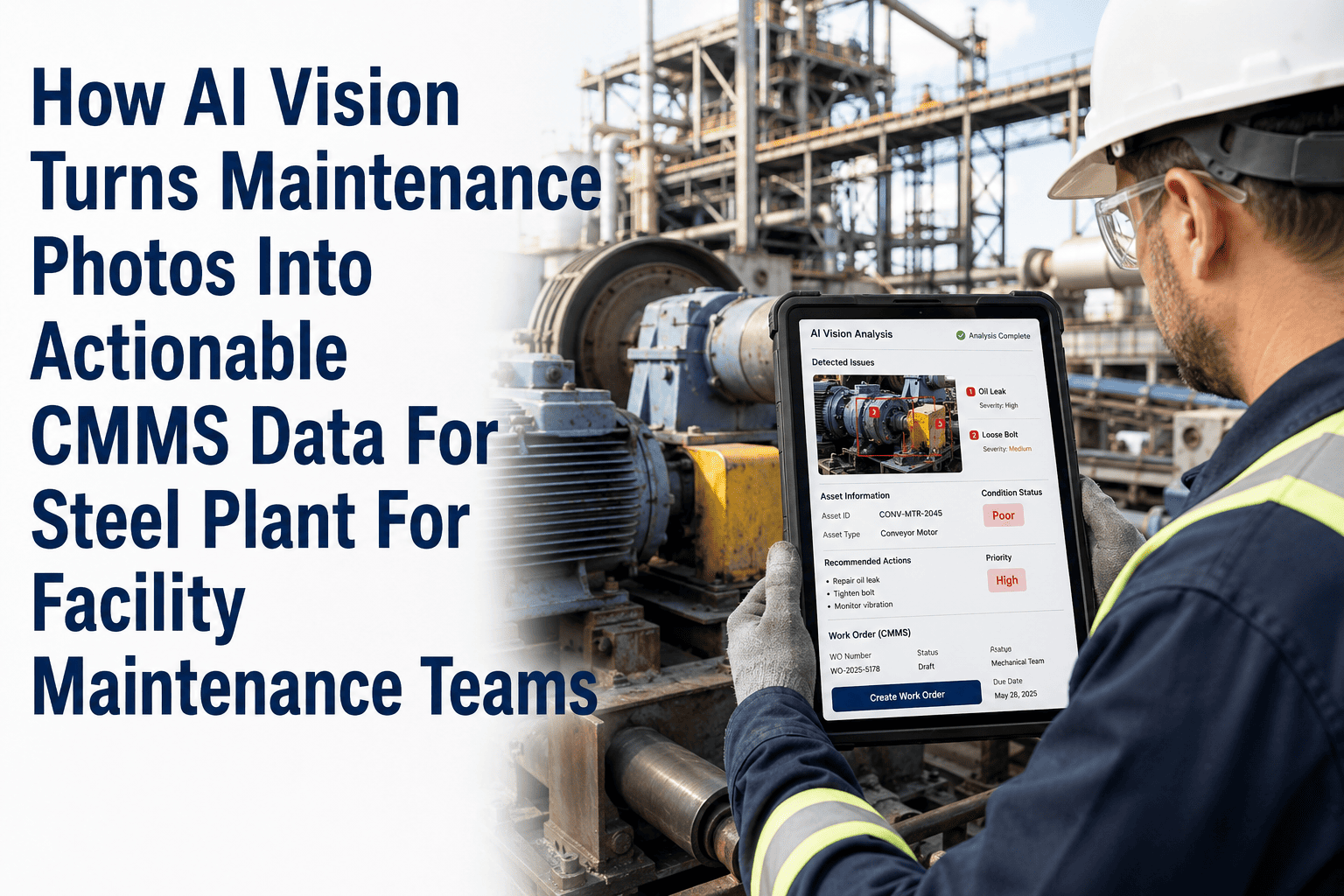
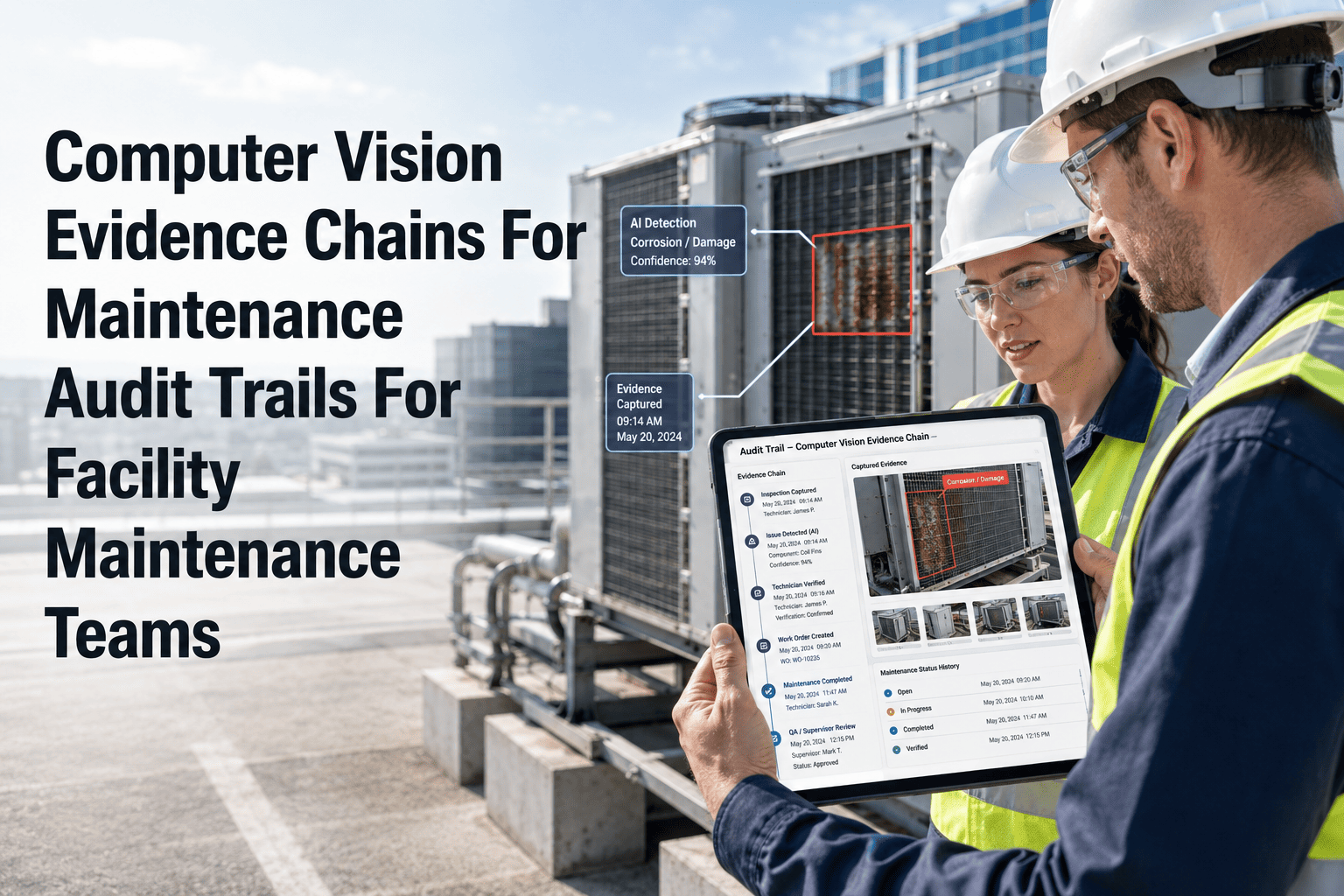
Kiln shells, preheater refractory, and grinding mill liners all wear in ways that are visible long before they cause a failure, yet most cement plants still depend on inspectors writing notes after a walk-down rather than capturing the actual condition in a form maintenance planning can use. OxMaint's AI Vision engine takes the photo your inspector already takes and turns it into a classified, prioritized CMMS work order automatically. Book a demo to see it applied to your kiln and mill inspections.
Cement Plant · AI Vision to CMMS Data
How AI Vision Turns Maintenance Photos Into Actionable CMMS Data
75%
Of wear-related shutdowns show visible warning signs days in advance
2 sec
Average time for AI classification of an inspection photo
1
Continuous record per asset, from first photo to last repair
Plant Zones Covered
Where AI Vision Reads Inspection Photos Across the Plant
Kiln Shell & Refractory
Shell distortion, hot spots, and refractory wear identified from routine kiln inspection photography.
Preheater Tower
Buildup, refractory spalling, and cyclone wear flagged from inspection rounds without manual data entry.
Grinding Mill
Liner wear and structural cracking captured during shutdown inspections and converted to scheduled work.
Conveyor & Material Handling
Belt damage and chute wear identified from photos taken during normal operating rounds.
Convert Every Kiln and Mill Inspection Photo Into a Work Order
OxMaint classifies wear patterns and structural defects from inspection photos, keeping maintenance planning ahead of the next shutdown.
From Photo to Plan
How a Classified Defect Becomes a Scheduled Repair
| Photo Finding |
Severity |
Maintenance Action |
| Kiln shell hot spot |
Critical |
Immediate inspection, possible load reduction |
| Preheater refractory spalling |
High |
Scheduled for next planned shutdown |
| Mill liner wear |
Medium |
Added to liner replacement plan |
| Conveyor belt surface wear |
Low |
Logged for routine maintenance shift |
Expert Review
What Cement Industry Researchers Say About Visual Inspection Data
Kiln shell condition monitoring through regular visual inspection remains one of the most cost-effective ways to prevent unplanned shutdowns in cement production, and plants that convert these inspections into structured maintenance data act on findings measurably faster than those relying on paper-based reporting.
— Cement International, Kiln Reliability Research
Automated defect classification applied to routine plant inspection photos is becoming a practical tool for standardizing wear assessment across shifts and inspectors, reducing the inconsistency that has historically affected manual condition reporting in heavy process industries.
— World Cement, Predictive Maintenance Adoption Studies
FAQs
Frequently Asked Questions
Can the AI model distinguish normal wear from a developing failure?
The model is trained to recognize progressive wear patterns and flag severity based on visual indicators like crack propagation and surface deformation, with confidence scores shown alongside each classification.
Start a free trial to test it against your own kiln and mill photos.
How does this fit into our existing shutdown planning process?
Classified defects feed into the same work order backlog your planners already use, making it straightforward to group findings into the next scheduled shutdown window.
Book a demo to see how it integrates with shutdown planning.
Can multiple plants in our group share a single dashboard view?
Yes, OxMaint supports multi-site dashboards so corporate reliability teams can review classified defects and trends across every plant in the group from one place.
Is historical inspection data still useful if we start using this going forward?
Existing inspection records can be added manually to build out asset history alongside new AI-classified entries, giving you a more complete picture sooner.
Sign up free to begin building that combined history.
AI Vision for Cement Plants
Keep Maintenance Planning Ahead of the Next Shutdown
OxMaint converts kiln, preheater, and mill inspection photos into classified, scheduled maintenance action automatically.