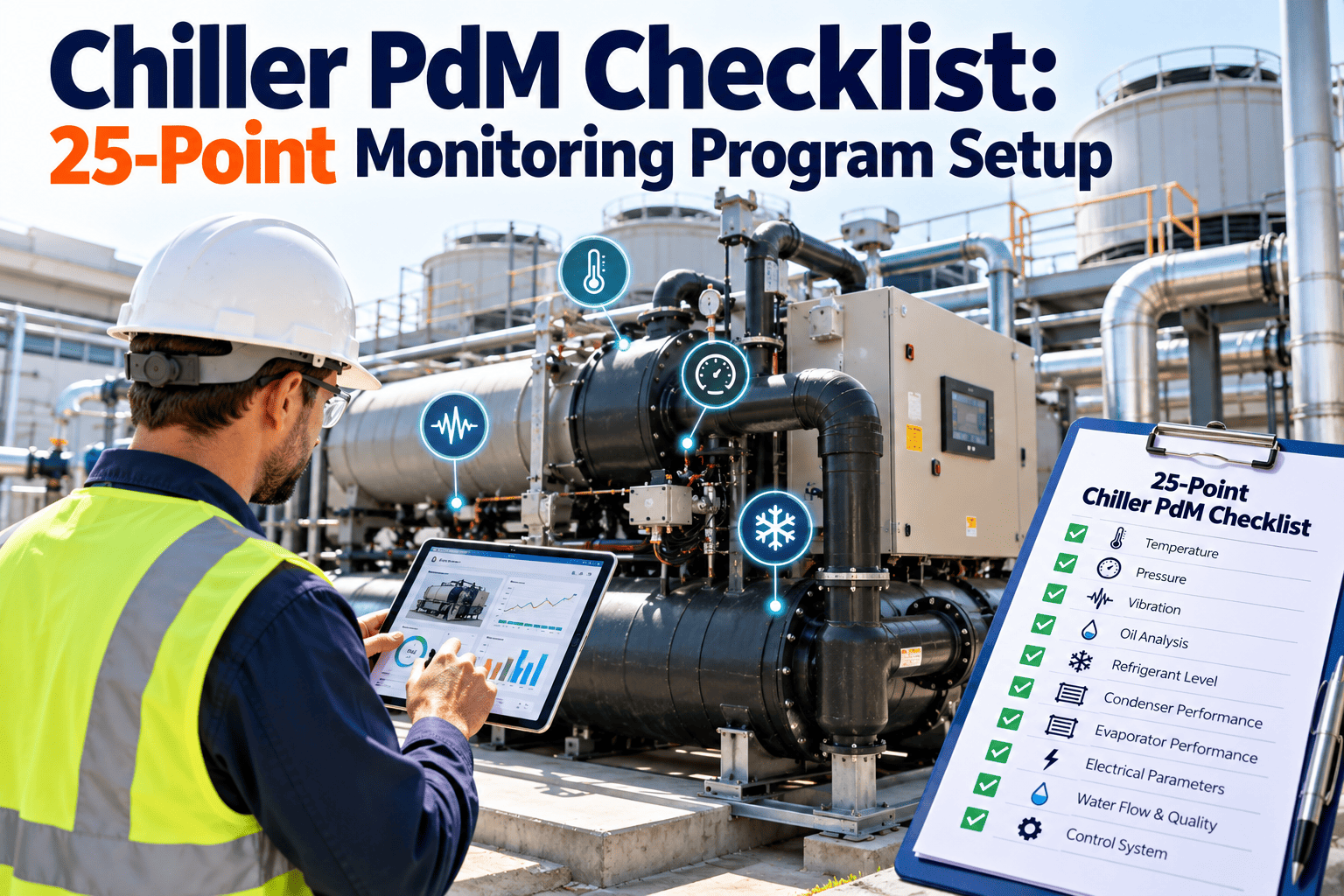
Maintaining peak chiller performance requires systematic inspection protocols that identify issues before they escalate into costly failures. A well-structured chiller inspection program extends equipment lifespan, reduces energy consumption by 15-30%, and prevents unexpected downtime that can halt entire facility operations. Schedule a consultation to discover how Oxmaint streamlines chiller inspection workflows and automates compliance documentation.
Essential Guide
Chiller Inspection Fundamentals
Systematic approaches to maximize efficiency, prevent failures, and ensure regulatory compliance
40%Of HVAC energy consumed by chillers
25+Years potential lifespan with proper maintenance
$50K+Average cost of emergency chiller repairs
Why Chiller Inspections Matter
Chillers represent significant capital investments and consume substantial energy in commercial and industrial facilities. Regular inspections catch performance degradation early, optimize operating efficiency, and ensure compliance with environmental regulations governing refrigerant handling.
Key Benefits of Systematic Chiller Inspections
Energy Optimization
Identify efficiency losses from fouled tubes, refrigerant issues, and control problems that increase energy consumption by 10-25%
Failure Prevention
Detect bearing wear, motor insulation breakdown, and refrigerant leaks before catastrophic failures occur
Extended Equipment Life
Proper maintenance extends chiller lifespan from 15 years to 25+ years, maximizing return on investment
Regulatory Compliance
Document refrigerant handling, leak checks, and safety inspections required by EPA and local regulations
Digitize your chiller inspection program today. Oxmaint provides customizable inspection templates, automated scheduling, and comprehensive reporting.
Use this clickable checklist to track your chiller inspection progress. Each checkbox can be clicked to mark items as complete. This comprehensive checklist covers all critical components requiring regular inspection.
Complete Chiller Inspection ChecklistClick each item to mark as inspected
Compressor System
Heat Exchangers
Refrigerant Circuit
Electrical Systems
Inspection Frequency Guidelines
Different chiller components require varying inspection intervals based on criticality, wear patterns, and operational conditions. Establishing proper frequencies ensures comprehensive coverage without over-maintenance.
Recommended Inspection Intervals
Inspection Item
Daily
Weekly
Monthly
Annually
Operating logs review
Yes
-
-
-
Oil level verification
Yes
-
-
-
Refrigerant pressure check
-
Yes
-
-
Approach temperature analysis
-
Yes
-
-
Motor amp draw measurement
-
-
Yes
-
Tube bundle inspection
-
-
-
Yes
Refrigerant leak testing
-
-
-
Yes
Frequencies may need adjustment based on chiller age, operating hours, and environmental conditions.
Never miss a scheduled chiller inspection. Oxmaint automates inspection scheduling and sends reminders to ensure complete compliance.
Tracking key performance indicators during inspections helps identify efficiency degradation and predict maintenance needs. These metrics establish baselines for comparison and trigger investigation when values drift outside acceptable ranges.
Key Chiller Performance Indicators
0.55
kW/Ton Efficiency
Target: 0.50-0.65 at full load
2.5°F
Evaporator Approach
Target: 1-3°F (tube condition)
1.8°F
Condenser Approach
Target: 1-2°F (fouling indicator)
Oil Pressure Differential
Maintain manufacturer specs
Common Chiller Problems and Detection
Regular inspections catch developing problems before they cause failures. Understanding common issues and their indicators helps technicians identify problems during routine inspections.
High Severity
Refrigerant Leak
Detection Signs: Low refrigerant charge, oil traces at fittings, decreased capacity, high superheat readings
Action: Immediate leak detection and repair required, document for EPA compliance
High Severity
Bearing Wear
Detection Signs: Increased vibration, elevated bearing temperatures, unusual sounds, metal in oil analysis
Action: Schedule bearing replacement during planned shutdown, increase monitoring frequency
Medium Severity
Tube Fouling
Detection Signs: Increased approach temperatures, higher energy consumption, reduced capacity
Action: Schedule tube cleaning, review water treatment program effectiveness
Modern CMMS platforms transform chiller inspections from paper-based processes to streamlined digital workflows. Digital inspections improve data accuracy, enable real-time trend analysis, and ensure consistent documentation across multiple facilities.
Oxmaint Chiller Inspection Workflow
1
Automated Scheduling
System generates inspection tasks based on configured frequencies and sends notifications to assigned technicians
2
Mobile Data Collection
Technicians complete digital checklists on mobile devices, capturing readings, photos, and observations
3
Automatic Issue Detection
System flags out-of-range readings and automatically creates work orders for corrective maintenance
Oxmaint provides comprehensive chiller management with digital inspection templates, automated scheduling, performance trending, and regulatory compliance documentation. Join facilities that have reduced chiller downtime by 35% through systematic inspection programs.
Daily operator checks should include oil levels and operating logs. Weekly inspections cover refrigerant pressures and approach temperatures. Monthly inspections should include detailed performance analysis, and annual inspections require comprehensive mechanical and electrical testing. Critical facilities may require more frequent inspection intervals. Sign up for Oxmaint to configure custom inspection schedules for your facility.
What are the most important metrics to track during chiller inspections?
Key metrics include kW/ton efficiency, evaporator and condenser approach temperatures, oil pressure differential, and refrigerant subcooling/superheat. These indicators reveal equipment health and efficiency. Trending these values over time helps predict maintenance needs and identify degradation before failures occur.
What documentation is required for chiller inspection compliance?
EPA regulations require documentation of refrigerant handling, leak checks, and charge records. Additionally, facilities should maintain inspection records, oil analysis reports, and maintenance history for insurance and warranty purposes. Book a demo to see how Oxmaint automates compliance documentation.
How can digital inspection tools improve chiller maintenance?
Digital tools ensure consistent data collection, enable real-time trend analysis, and automatically flag out-of-range readings. Mobile access allows technicians to reference historical data during inspections, while automatic work order generation ensures issues are addressed promptly. Digital records also simplify audit preparation and regulatory compliance.
What indicates a chiller needs immediate attention?
Critical warning signs include unusual noises or vibrations, rapid efficiency decline, refrigerant leaks, high bearing temperatures, abnormal oil analysis results, and safety system activations. Any of these conditions warrants immediate investigation to prevent equipment damage and ensure occupant safety.