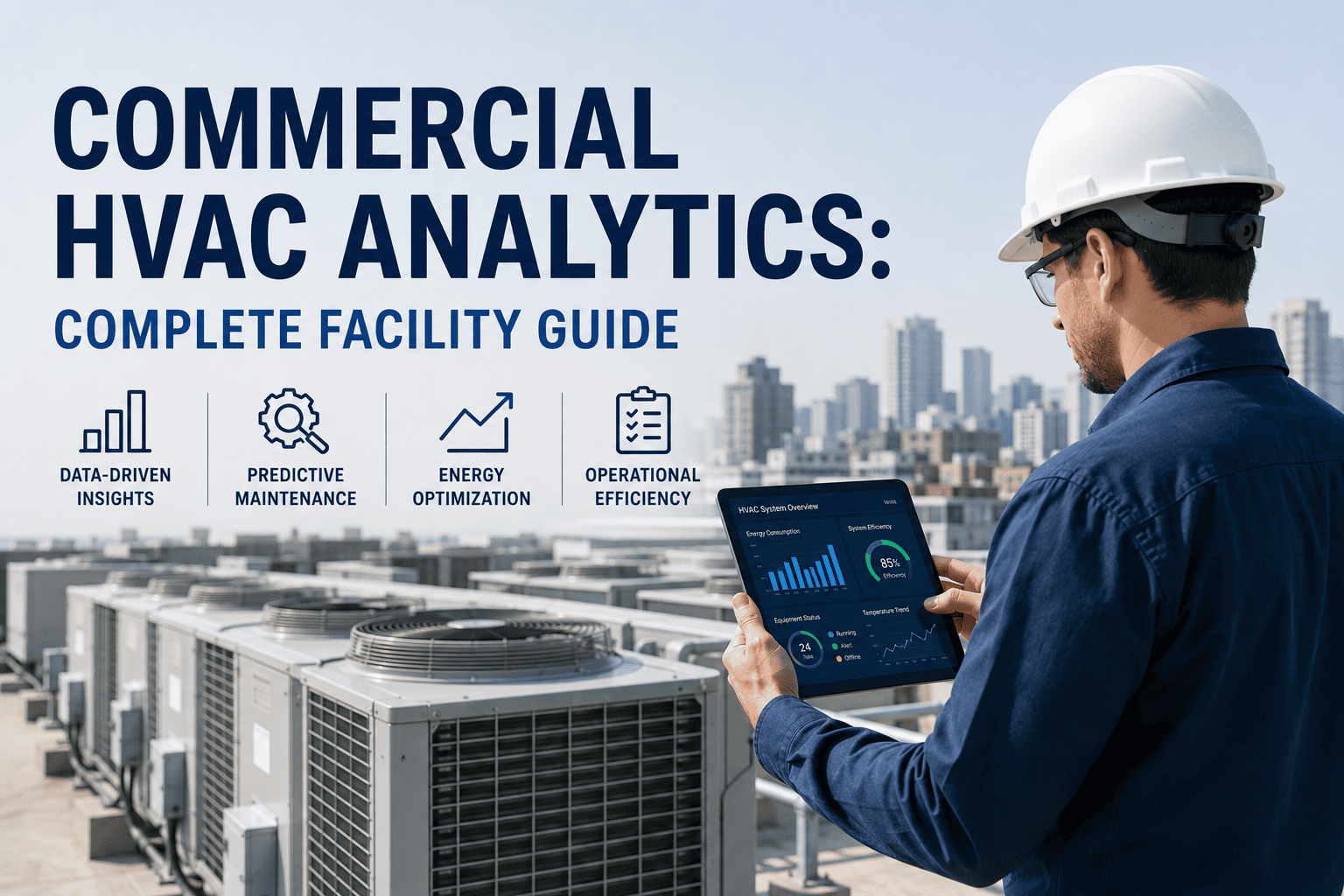
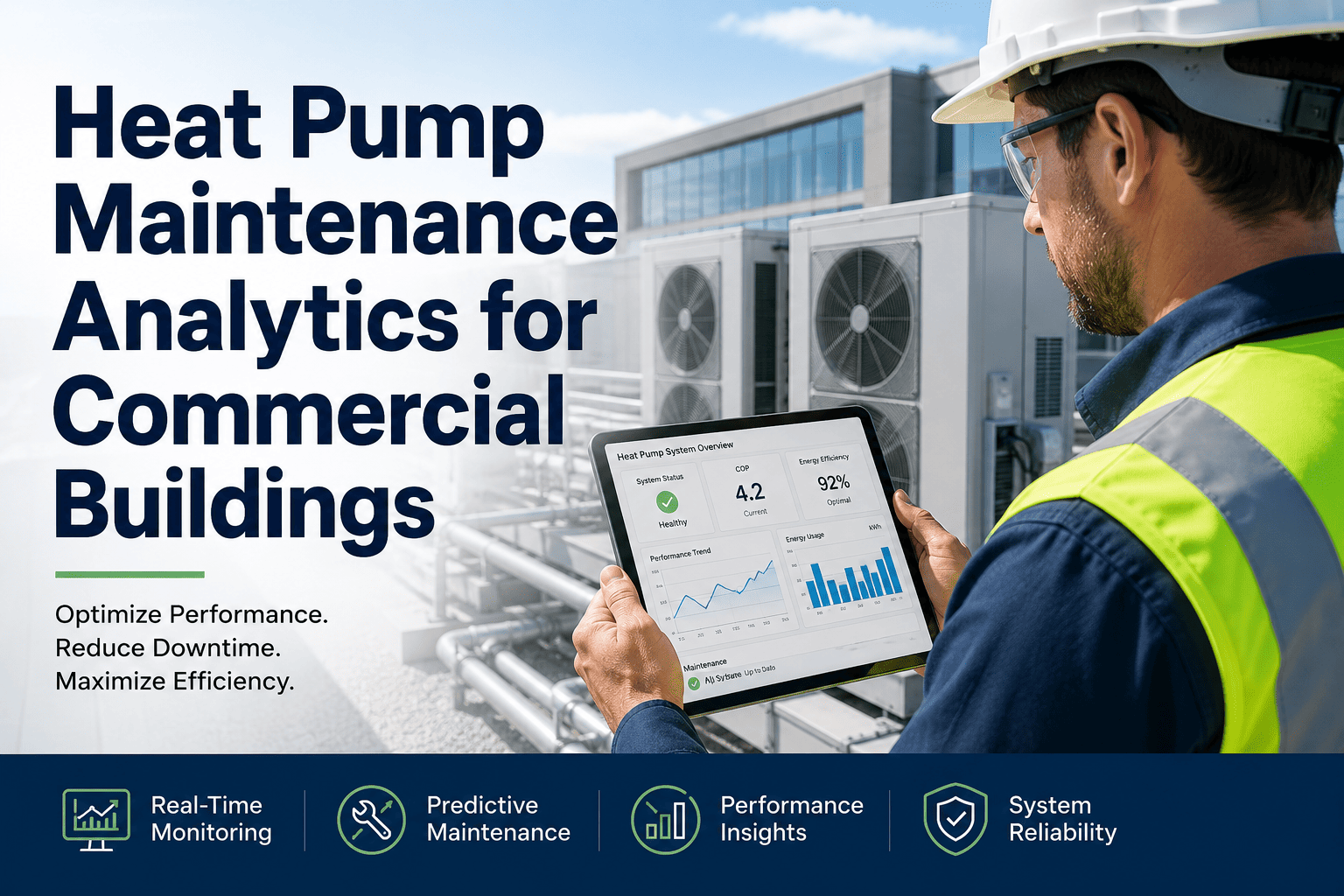
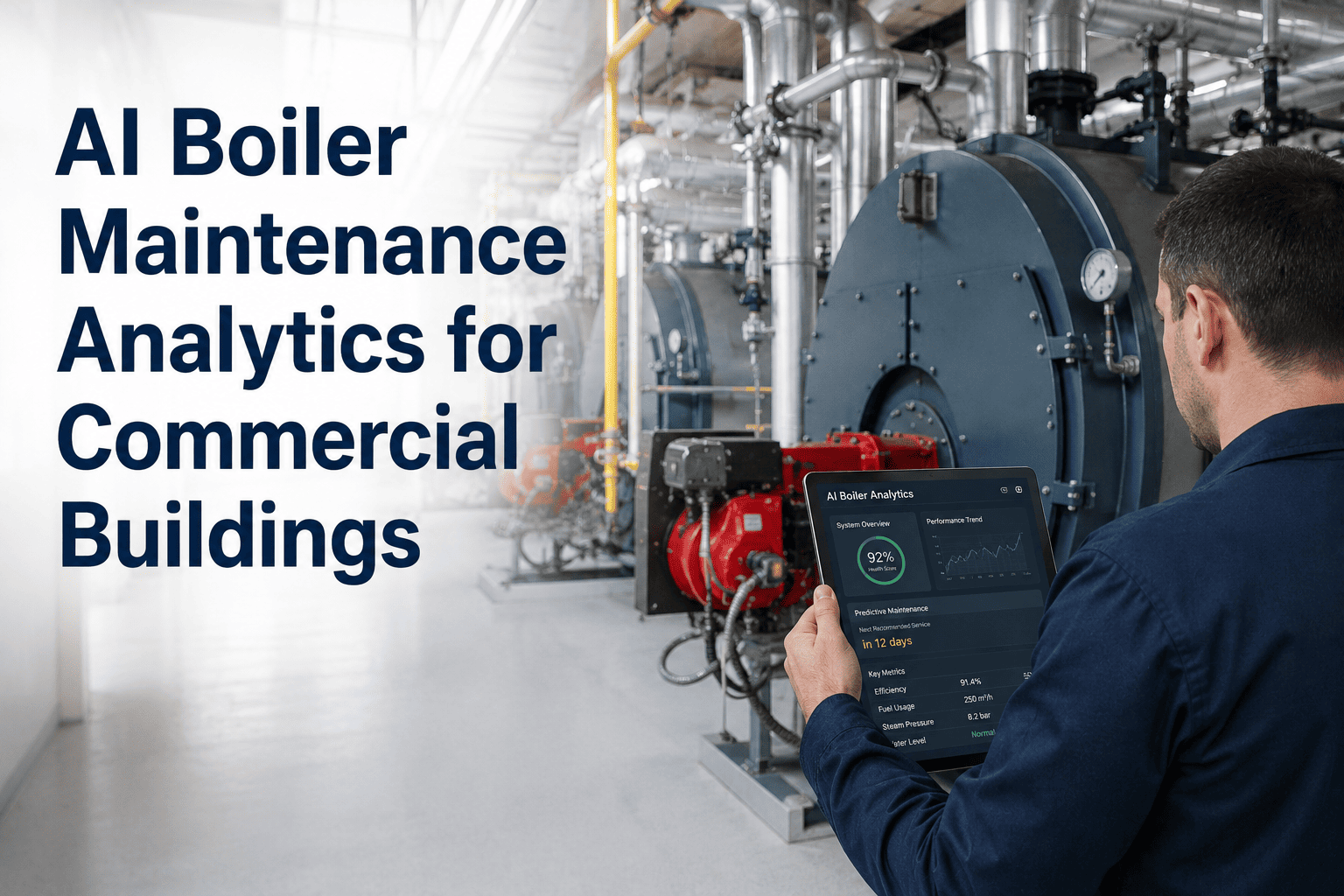
Commercial HVAC systems account for 40–60% of a building's total energy consumption and represent the single highest-consequence maintenance category in any facility portfolio. A chiller that fails during peak summer occupancy is not a maintenance event — it is a business continuity crisis. Yet the majority of commercial facilities still run HVAC maintenance on fixed calendar schedules that bear no relationship to actual equipment condition, usage intensity, or degradation trajectory. The result is a predictable cycle of over-maintenance on healthy equipment and catastrophic failure on units that were degrading visibly in the data for weeks before they stopped. OxMaint's AI-powered CMMS replaces that cycle with condition-based monitoring, automated PM scheduling, and real-time energy tracking across every HVAC asset in your portfolio.
Blog · HVAC & Energy · Complete Guide
Commercial HVAC Maintenance: Complete Facility Guide
Chillers · Boilers · AHUs · Cooling Towers · VRF Systems · AI Condition Monitoring · Energy Optimisation
40%
of building energy is HVAC
3–5×
reactive vs PM repair cost
68%
of HVAC failures are preventable
25%
avg energy saving with AI
Commercial HVAC — Industry Benchmarks
6 Critical HVAC Asset Types — PM Schedules and Failure Costs
01
Centrifugal Chiller
The highest-consequence HVAC asset in any commercial building. Condenser fouling, refrigerant loss, and compressor wear are the three primary failure drivers — all detectable weeks in advance through efficiency trending.
Monthly condenser · Quarterly oil analysis · Annual full service
Reactive failure: $18K–$65K · PM cost: $400–$1,200
02
Air Handling Units
AHUs serving multiple zones amplify any maintenance failure across every occupant they serve. Filter loading, belt wear, and bearing degradation are the three leading causes of AHU failure — all visible in energy draw and airflow data before breakdown.
Monthly filter · Quarterly belt and bearing · Annual coil clean
Reactive failure: $8K–$35K · PM cost: $200–$600
03
Cooling Towers
Cooling towers carry the highest regulatory risk of any HVAC asset — Legionella colonisation is a potential liability event with settlement costs in the millions. Water treatment documentation and biological monitoring are non-negotiable compliance requirements.
Weekly biocide · Monthly water analysis · Annual basin clean
Legionella liability: $40K–$500K+ · Treatment cost: $800–$2,400/yr
04
Boilers
Commercial boilers require statutory annual inspection in most jurisdictions. Between inspections, combustion efficiency trending, flue gas analysis, and water quality management determine whether the boiler runs at design efficiency or wastes 15–30% of input energy.
Monthly combustion check · Quarterly water treatment · Annual statutory inspection
Reactive failure: $12K–$45K · PM cost: $300–$900/yr
05
VRF / VRV Systems
Variable refrigerant flow systems serving modern commercial buildings have complex refrigerant circuits and inverter-driven compressors that require specialist monitoring. Refrigerant charge deviation of 10% causes 25% efficiency loss — invisible without systematic measurement.
Quarterly refrigerant check · Semi-annual filter and coil · Annual system audit
Reactive compressor: $6K–$22K · PM cost: $150–$450/zone
06
FCUs and PTACs
Fan coil units and packaged terminal ACs are the most numerous HVAC assets in any hotel, apartment, or commercial office — and the most guest- or occupant-visible. Filter neglect is the single cause of 70%+ of FCU complaints and the most preventable maintenance failure in any building portfolio.
Quarterly filter and drain · Annual coil and valve service
Occupant complaint cost: $200–$800 · PM cost: $40–$90/unit
HVAC Failure Cost vs PM Cost — The Business Case
| Asset |
Primary Failure Mode |
Warning Signal |
Reactive Cost |
Annual PM Cost |
PM ROI |
| Centrifugal Chiller |
Compressor seizure |
kW/ton rise, vibration trend |
$18K–$65K |
$400–$1,200 |
20–50× |
| Air Handling Unit |
Bearing failure, belt break |
Vibration, energy draw rise |
$8K–$35K |
$200–$600 |
18–40× |
| Cooling Tower |
Legionella / fill fouling |
Water treatment log gaps |
$40K–$500K |
$800–$2,400 |
50–200× |
| Commercial Boiler |
Heat exchanger failure |
Combustion efficiency drop |
$12K–$45K |
$300–$900 |
15–40× |
| VRF System |
Compressor failure |
Refrigerant charge deviation |
$6K–$22K |
$150–$450 |
15–50× |
Automate Every HVAC PM Schedule Across Your Portfolio
OxMaint generates PM work orders for every HVAC asset automatically — by interval, run hours, or condition trigger. Every completion is timestamped, every record is audit-ready, and every energy deviation is flagged before the bill arrives.
AI vs Calendar-Based HVAC Maintenance — What Changes
Fixed quarterly service regardless of actual condition
Alarm-only detection — fault already advanced at trigger
Energy waste invisible until monthly utility bill
Compliance tracked on spreadsheets or paper
PM intervals set by manufacturer, not actual use
Capital replacement driven by failure or age estimate
Condition-based PM — triggered by deviation from baseline
Degradation detected 2–8 weeks before failure threshold
Real-time energy anomaly alerts per asset, per zone
Auto-generated compliance records, one-click audit export
PM intervals optimised from actual failure history and MTBF
Capital planning backed by MTBF trend and cost-per-repair data
Where HVAC Energy Is Lost — and Where AI Finds It
Fouled condenser coils
+15–25% chiller energy consumption
AI detects kW/ton deviation before next scheduled clean
Overloaded AHU filters
+8–18% fan motor energy
Differential pressure trending triggers filter WO before performance loss
VRF refrigerant undercharge
+25% system energy per 10% charge loss
Efficiency trending flags charge deviation between annual services
BMS setpoint drift
+10–20% building-wide energy
Cross-system AI identifies scheduling anomalies against occupancy baseline
"
The commercial HVAC maintenance gap I see most consistently across portfolios is not the absence of PM schedules — almost every building has them. The gap is the absence of condition verification between scheduled PM visits. A chiller that was serviced in March and fails in August did not suddenly degrade in August. It degraded progressively from April onward, producing measurable efficiency loss and vibration data that no one was watching. The facilities that have deployed AI monitoring on their chiller and AHU assets consistently catch those developing faults in May or June — scheduling a targeted repair at planned rates rather than an emergency response at emergency rates. The cost differential is 60–75% per incident. For a portfolio with five or ten chillers, that is a six-figure annual maintenance budget advantage, compounding every year the AI monitoring stays in operation.
Carmen Villanueva, PE, CEM
Principal HVAC and Energy Engineer · 23 Years Commercial Building Systems · Licensed Professional Engineer · Certified Energy Manager (AEE) · Specialist in commercial HVAC predictive maintenance, building energy optimisation, and AI condition monitoring deployment for institutional and commercial portfolios
Frequently Asked Questions
How does OxMaint schedule HVAC preventive maintenance across hundreds of assets without manual input?
OxMaint generates PM work orders automatically based on three trigger types: fixed calendar intervals (e.g. quarterly filter changes for all AHUs on floors 1–12), run-hour thresholds (e.g. chiller compressor service at every 2,000 operating hours), and condition-based triggers from connected sensors (e.g. differential pressure PM when filter loading exceeds threshold). Once the PM rules are configured for each asset class — typically a one-time setup taking 2–4 hours — the system generates, assigns, and tracks every PM work order without manual scheduling.
Start a free trial to configure your HVAC PM schedule. Work orders are batched intelligently by floor, wing, or equipment room to minimise technician travel time, and all completions are timestamped against the specific asset record to maintain a continuous, audit-ready service history.
What data does OxMaint use to detect HVAC degradation between scheduled PM visits?
OxMaint integrates with BMS systems, IoT sensors, and direct equipment data feeds via open API, MQTT, BACnet, and Modbus protocols. For chillers, the primary monitoring parameters are kW/ton efficiency ratio, condenser approach temperature, compressor bearing vibration, and refrigerant superheat — all of which produce measurable deviation weeks before failure threshold is crossed. For AHUs, filter differential pressure, supply air temperature deviation, and fan motor current draw are the leading indicators.
Book a demo to see AI detection on your specific HVAC asset types. Facilities without existing BMS connectivity can begin with manual data entry on work order completion forms, which still provides MTBF trending and maintenance cost analytics — with condition-based triggers added as sensor connectivity is established over time.
How does OxMaint handle cooling tower Legionella compliance documentation?
OxMaint treats cooling tower water treatment as a compliance-critical PM category with mandatory documentation fields. Each water treatment work order — biocide dosing, pH test, blowdown check, biological sampling — is completed on mobile with parameter readings, chemical batch numbers, and technician sign-off recorded against the specific cooling tower asset. The system maintains a continuous water treatment log that satisfies ASHRAE 188 water management plan requirements and can be exported as a complete treatment history at any time.
Start a free trial to set up your cooling tower compliance workflow. Date-gap alerts fire automatically if a treatment task is missed or overdue — the most common documentation failure in cooling tower compliance audits — and a 30-day advance warning ensures annual Legionella risk assessments are scheduled and completed before expiry.
OxMaint · Commercial HVAC Maintenance
Stop Servicing Schedules. Start Monitoring Conditions.
OxMaint gives commercial facility teams AI-powered HVAC condition monitoring, automated PM scheduling, and energy anomaly detection — so every failure is caught in the data before it reaches the equipment.