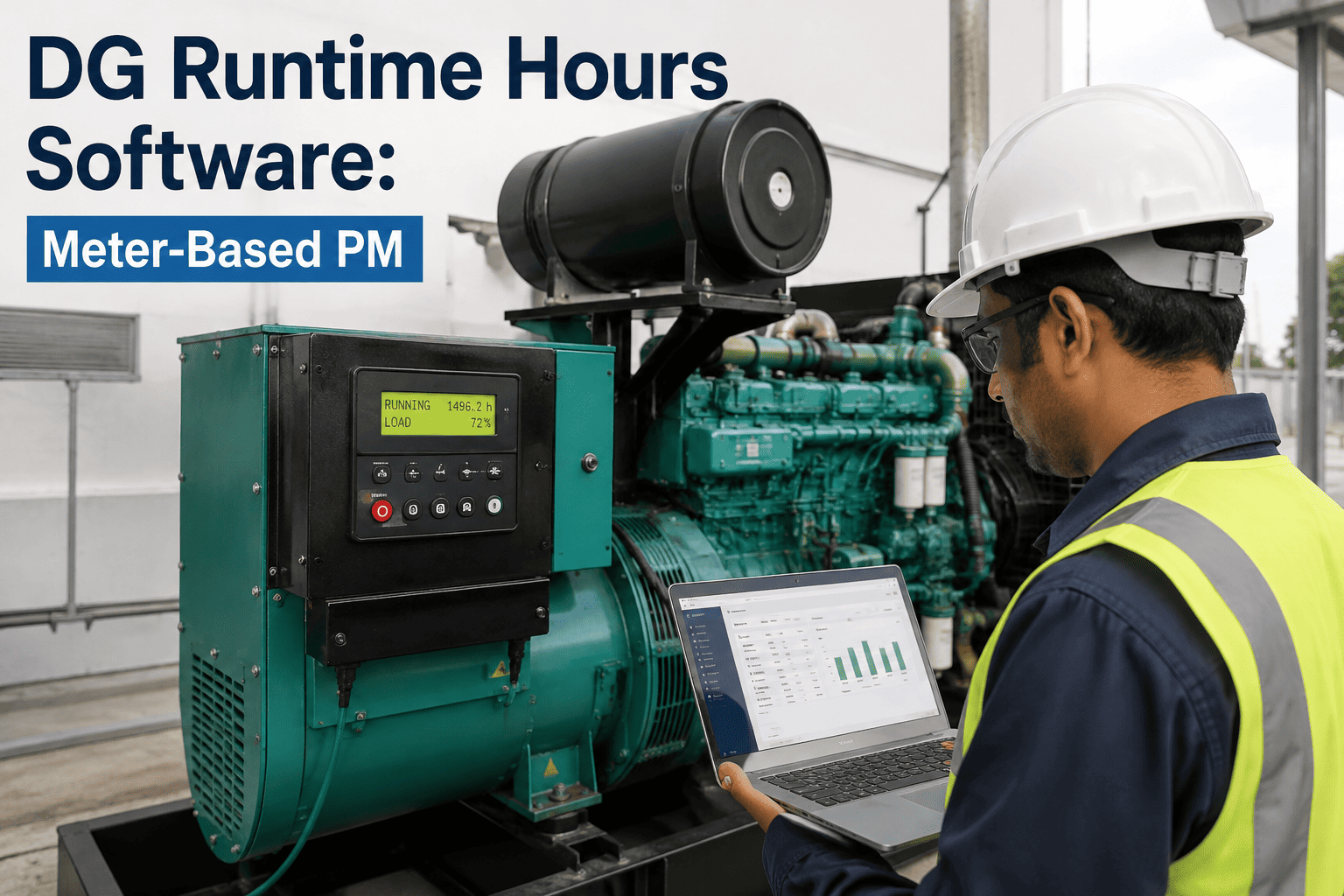
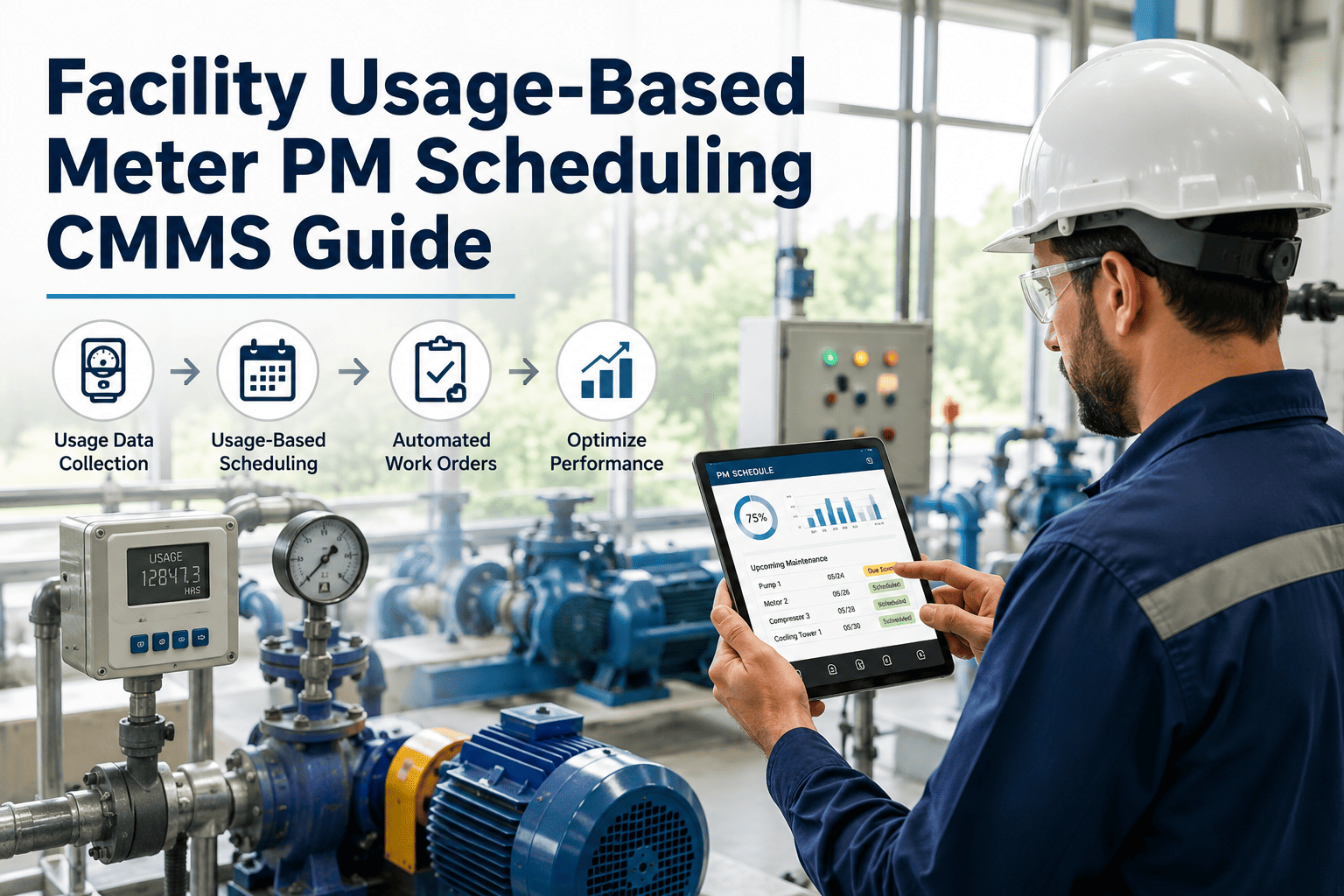
A regional hospital system runs eleven diesel generators across four campuses. Every one of them gets serviced on the same 90-day calendar cycle, whether it ran six hours that quarter or sixty. The unit behind the data hall logged 340 hours chasing three grid outages and a cooling failure, yet its oil change landed on the same day as the generator that never left standby. Runtime hours, not the calendar, are what actually age a diesel engine — and most facilities have no way to see them without walking out to eleven separate hour meters. OxMaint reads every genset's runtime automatically and triggers PM the moment the hours say it's due.
Runtime-Based PM — OxMaint CMMS
Stop Servicing Generators By The Calendar — Service Them By The Hours They Actually Ran
Automatic hour-meter reads. PM triggered the moment a genset crosses its runtime threshold. NFPA 110 test logs, load bank history, and oil-change intervals tracked per unit — no clipboard, no yard walk.
30 min
Minimum monthly load-run duration NFPA 110 requires for emergency generators under Section 8.4.2
30%
Minimum nameplate load a genset must reach in its monthly test, or a supplemental load bank test is required
96 hrs
Minimum continuous runtime a Class X emergency power system must sustain without refueling
3-5x
Typical cost premium of a reactive engine failure versus a service caught on the runtime schedule
Why Calendar-Only PM Fails Diesel Generators
Diesel generators don't wear out on a 90-day cycle. They wear out on hours run, load carried, and how many cold starts the engine has taken. A calendar-only PM program services the standby unit in the corner the same way it services the unit that carried a data hall through a six-day outage, because nobody synced the hour meter to the work order. The result is oil changed too early on units that barely ran, and changed too late on the unit that ran hardest — right up until it fails during the next real event.
Simulated Fleet Runtime View — 3 Sites, 9 Generators
On schedule
Due within 60 hrs / 30 days
Overdue or test non-compliant
Downtown Data Campus
Genset 1 — 2,000 kW1,180 hrs · oil/filter due at 1,500 hrs
Genset 2 — 2,000 kW1,460 hrs · oil/filter due in 40 hrs
Genset 3 — 1,500 kWAnnual load bank test overdue 15 days
Regional Hospital
Genset 1 — 750 kWMonthly test compliant · 34% load reached
Genset 2 — 500 kWMonthly load only 18% · supplemental test flagged
Genset 3 — 750 kW2,050 hrs · injector service overdue
Manufacturing Plant
Genset 1 — 1,000 kW640 hrs · next service at 750 hrs
Genset 2 — 1,000 kWCoolant service due in 60 hrs
Genset 3 — 400 kW210 hrs · on schedule
2 red items · 2 amber · 5 green — fleet view auto-updated from hour-meter reads. Every threshold crossed is a scheduled work order, not a surprise.
Calendar-Based PM vs Meter-Based PM
The gap between a calendar PM program and a runtime-triggered one shows up in exactly the moments that matter: whether the oil gets changed when the engine actually needs it, whether the monthly test data holds up to a surveyor, and whether a contractor's invoice matches hours the unit actually ran.
| Dimension |
Calendar-Based PM |
Meter-Based PM (OxMaint) |
| Oil & filter change trigger |
Fixed date regardless of hours run |
Auto-triggered at the unit's actual hour-meter threshold |
| Monthly load test record |
Logged as pass/fail on paper |
Load %, duration, exhaust temp logged per NFPA 110 §8.4.2 |
| Annual load bank scheduling |
Tracked in a spreadsheet, easy to miss |
Work order generated ahead of the due date automatically |
| Vendor invoice verification |
Billed hours taken at face value |
Runtime log cross-checked against invoiced service hours |
| OEM warranty compliance |
Hour-based intervals tracked manually or not at all |
Interval enforced automatically, protecting engine warranty |
| AHJ / Joint Commission audit |
Days assembling logs across sites |
Full runtime and test history exported in minutes |
The Runtime Milestones Every Diesel Generator Should Track
Most generator failures trace back to one missed interval, not a mystery. These are the milestones a runtime-based program tracks per unit, from the weekly walk-around to the annual load bank test.
W
Weekly
Visual & Fluid Check
Fuel level, coolant level, oil level, and battery voltage checked without running the unit under load. Catches the low-fluid issue before it becomes a failed start.
M
Monthly · 30 min under load
NFPA 110 Exercise
Run at 30% or more of nameplate load, or to the manufacturer's minimum exhaust temperature, with the ATS transfer tested and results logged quantitatively — not as a checkbox.
250h
Every 250–400 hrs
Oil & Filter Service
Interval varies by engine model and duty cycle. Oil analysis at this point catches wear metals and contamination before they turn into a bearing or ring failure.
500h
Every 500–750 hrs
Coolant, Belts & Hoses
Coolant condition test, belt tension check, hose inspection, and fuel filter replacement. This is where overheating and fuel-delivery issues are usually headed off.
1500h
Every 1,000–1,500 hrs
Injector & Fuel System Service
Injector cleaning or replacement per OEM interval, along with fuel polishing on stored diesel that's been sitting since the last real run.
A
Annually / Every 2,000 hrs
Full Load Bank Test
Supplemental load bank test for units that rarely reach 30% load on their own, plus governor and control panel calibration to confirm the unit performs at nameplate.
Turn Hour-Meter Data Into Work Orders That Fire Themselves
Every genset gets its own runtime clock. Every threshold it crosses becomes a scheduled work order before the engine forces the issue, not after.
6 Signs Your Generator Fleet Has A Runtime Blind Spot
1
Hour Meters Read By Hand, Occasionally
If the only runtime record is a technician writing a number down during quarterly rounds, the gap between reads is where hours — and warranty coverage — quietly go missing.
2
Same Oil-Change Date Across Different-Use Units
Two gensets on the identical PM calendar, despite one carrying real outages and the other sitting idle, is the clearest sign the program is date-driven, not hour-driven.
3
Monthly Test Logged As Pass/Fail Only
NFPA 110 requires quantitative load and duration data. A pass/fail entry won't hold up when an AHJ or Joint Commission surveyor asks to see the numbers behind it.
4
Oversized Units Never Reaching 30% Load
A generator sized for future expansion often can't reach 30% nameplate on today's building load, which triggers an annual supplemental load bank requirement most teams never track.
5
Injector Or Turbo Failures With No Warning
Component failures that seem to "come out of nowhere" are usually failures the hour meter saw coming — the interval was just never tied to an actual work order.
6
Vendor Invoices For "Preventive Service" With No Hours Attached
Without a runtime log to check against, there's no way to confirm a contracted service interval was actually due when the invoice says it was performed.
Outcomes Facility Teams See After Switching To Meter-Based PM
100%
Runtime and NFPA 110 test data captured automatically per generator, no manual meter walks
5 min
Full compliance and service history exported for an AHJ or Joint Commission audit
30-40%
Typical drop in unplanned engine failures once PM shifts from calendar to runtime hours
10-15%
Vendor invoice reduction once service hours are checked against the logged runtime
Q
We had eleven generators across four buildings and eleven different hour meters nobody synced to one PM schedule. Two units were getting serviced early, one ran 400 hours past its oil interval before anyone caught it. In OxMaint, every genset has its own runtime clock, and the work order fires itself when the hours hit. Our last Joint Commission survey pulled the full test history in about four minutes.
Facilities Engineering Manager · Regional Hospital System · Four campuses, 11 generators
Frequently Asked Questions
Runtime-Based PM — OxMaint CMMS
Every Genset. Every Hour. Every Test Logged. Documented Automatically.
Automatic hour-meter tracking per unit. NFPA 110 test data logged with real numbers. PM triggered by runtime, not a date on a wall calendar.