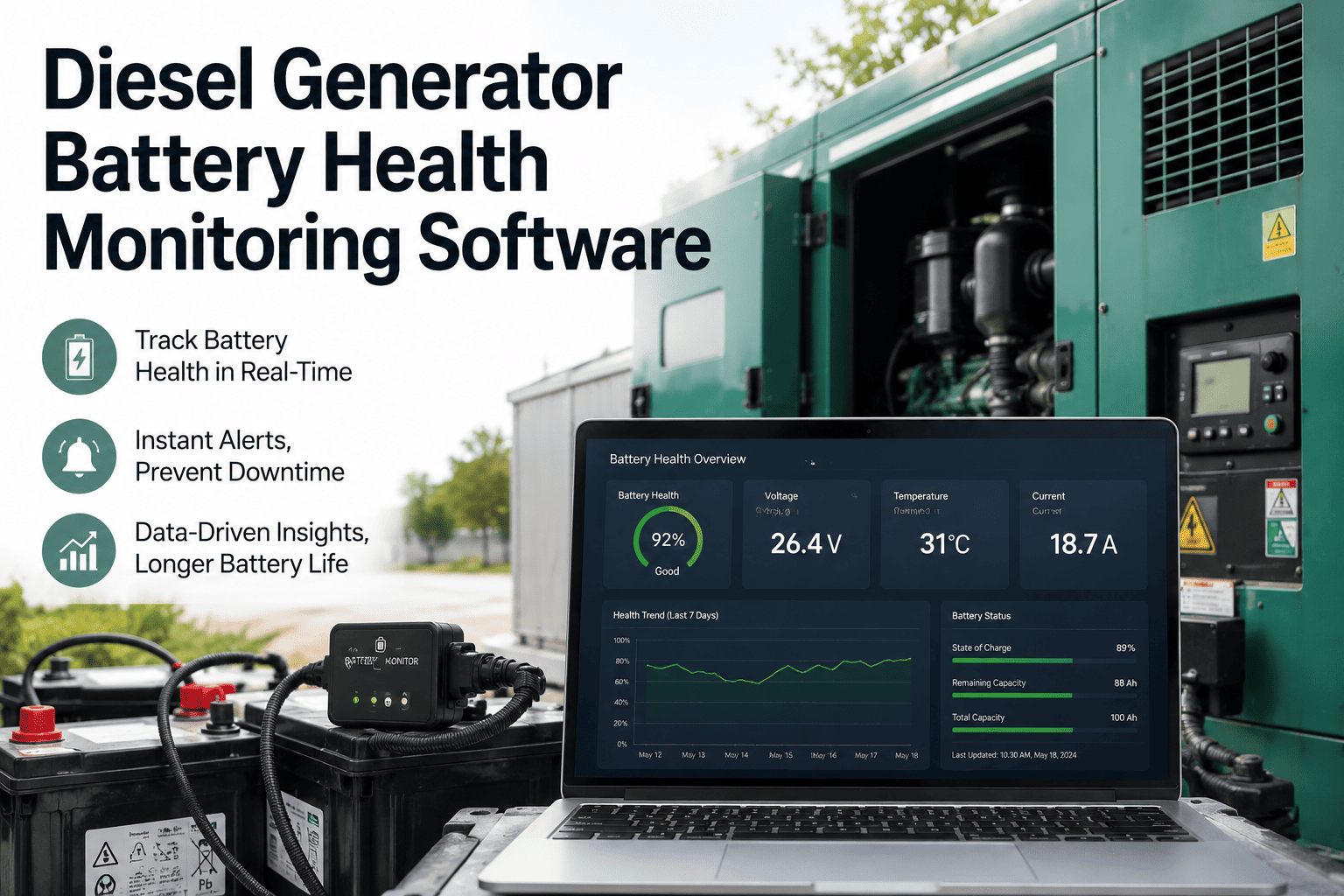
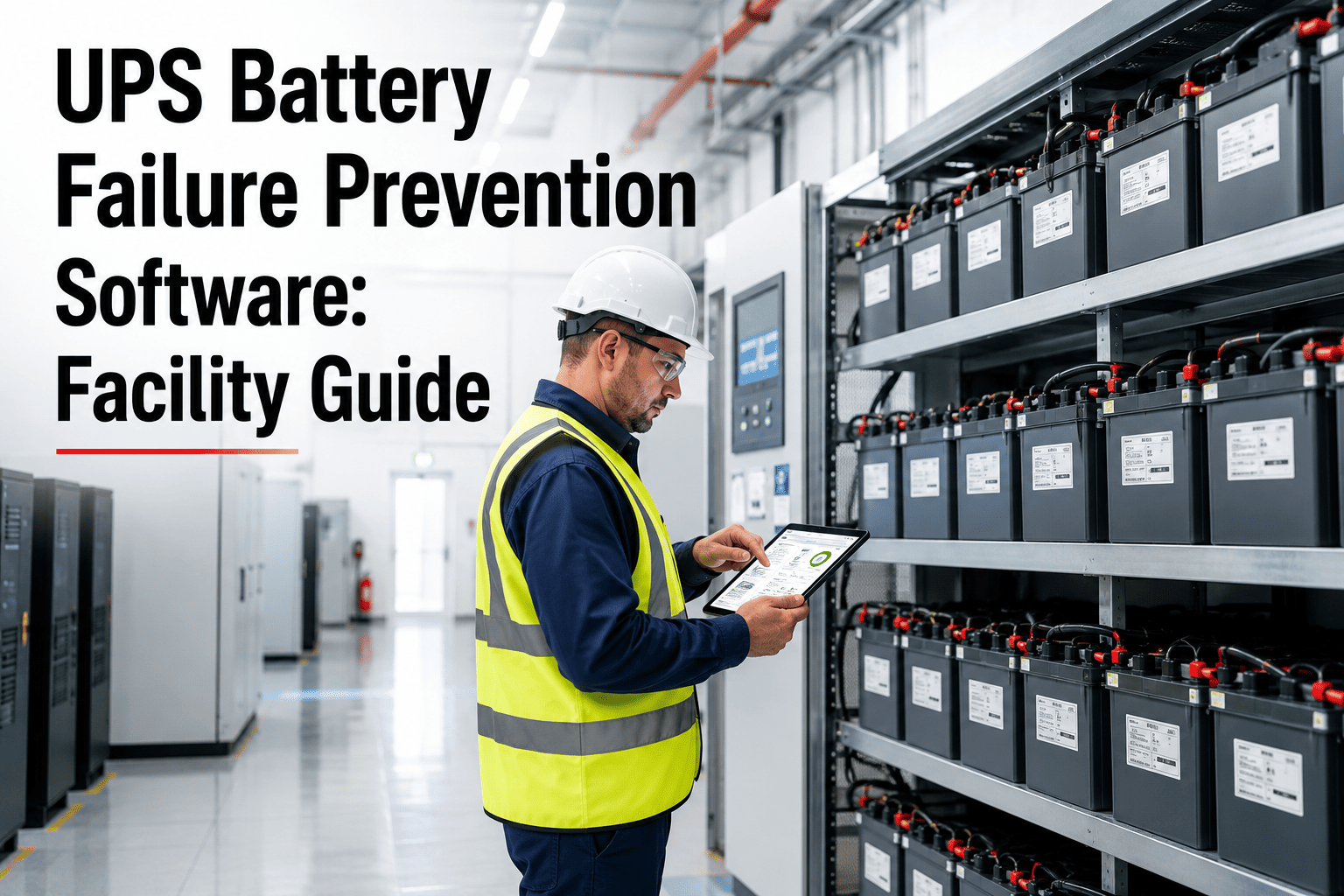
A generator that fails to start during an outage almost never fails because of the engine — it fails because the starting battery could not deliver the cranking current the engine needed at the moment it mattered. NFPA 110 exists precisely because emergency and standby power systems are only as reliable as the weakest link in their starting chain, and batteries degrade in ways that are invisible to a visual inspection: internal plate sulfation, rising internal resistance, and capacity loss all progress silently while the battery still shows a normal resting voltage. Facility teams running Level 1 and Level 2 Emergency Power Supply Systems are required to test far beyond a voltage check, yet most still rely on a technician's clipboard and a spreadsheet that no one cross-references against the last test cycle. Centralizing specific gravity readings, impedance trends, and load bank results inside one CMMS platform turns scattered paper records into a defensible, trend-visible compliance history.
weekly
NFPA 110 Level 1 visual battery inspection frequency
monthly
Required voltage, specific gravity, and terminal connection checks
annual
Full load bank test frequency for most Level 1 EPSS installations
3-5 yrs
Typical service life of a starting battery before capacity drops below reliable cranking levels
See Your Battery Test Compliance Gaps Before an Inspector Does
OxMaint links weekly inspections, monthly readings, and annual load bank results to every generator asset in your portfolio — with trend charts that flag a failing battery weeks before it strands a generator.
Why Starting Battery Failure Is the Most Common Cause of Failed Generator Starts
A generator engine, fuel system, and controller can be in perfect working order and still fail to start if the battery cannot deliver sufficient cranking amps in cold weather or after a partial discharge cycle. Batteries fail gradually through mechanisms that a quick voltage reading does not reveal — sulfation builds up on plates during periods of undercharge, internal grid corrosion increases resistance over years of float charging, and capacity quietly declines even while open-circuit voltage still reads normal. This is exactly why NFPA 110 requires more than a voltage check: specific gravity, impedance, and periodic load testing each expose a different failure mechanism that voltage alone cannot detect.
Plate Sulfation
Lead sulfate crystals build up on battery plates during undercharge periods, reducing usable capacity even when the battery appears to hold a normal resting voltage.
Rising Internal Resistance
Corrosion at the grid and connections increases internal impedance over time, limiting the current the battery can actually deliver during a cold cranking event.
Undetected Cell Imbalance
One weak cell in a multi-cell battery string can drag down overall performance while individual terminal voltage readings still appear within range.
Charger Malfunction
A battery charger delivering the wrong float voltage silently overcharges or undercharges the battery for months before a scheduled test catches the drift.
Battery Testing Methods Compared: What Each Test Actually Detects
NFPA 110 Testing Cascade: What Happens Weekly, Monthly, and Annually
W
Weekly Visual Inspection
Technician confirms electrolyte level, terminal condition, and absence of corrosion or leakage, logging the check against the generator's EPSS record.
M
Monthly Voltage and Specific Gravity Readings
Cell-by-cell specific gravity and terminal voltage are recorded and compared against the prior month's trend to catch a slow decline before it becomes a failure.
Q
Quarterly Impedance Trending
Internal resistance readings build a rolling trend line that flags an aging battery approaching end-of-life well before it drops below reliable cranking capacity.
A
Annual Load Bank Verification
A full load test confirms the battery and the generator together can meet actual starting and running demand, closing out the annual EPSS compliance cycle.
Battery Chemistry Affects the Testing Program You Need
Not every emergency generator battery is the same chemistry, and the correct test cadence and thresholds shift depending on what is installed. Flooded lead-acid batteries require regular electrolyte level checks and specific gravity readings that valve-regulated designs do not need, since VRLA batteries are sealed. Nickel-cadmium batteries tolerate deeper discharge cycles better but carry different voltage thresholds entirely. A monitoring and CMMS program that treats every battery bank identically risks flagging false alarms on one chemistry while missing real degradation on another.
Flooded Lead-Acid
Requires periodic electrolyte level topping and specific gravity testing per cell, with the widest field history and lowest upfront cost among common chemistries.
VRLA / Sealed
Maintenance-free electrolyte handling, but internal resistance and impedance trending become the primary early-warning signal since visual electrolyte checks are not possible.
Nickel-Cadmium
Tolerates wider temperature swings and deeper discharge cycles, commonly specified for harsh environments, with its own distinct voltage and capacity thresholds.
Where This Fits Inside NFPA 110's Broader EPSS Requirements
Level 1
Life Safety EPSS Testing Rigor
Level 1 systems, which support life safety loads, carry the strictest weekly and monthly test intervals and the least tolerance for undocumented gaps in the battery test record.
Level 2
Legally Required Standby Systems
Level 2 systems follow a similar but slightly less stringent inspection cadence, though the same specific gravity, impedance, and load bank testing principles still apply.
Records
Documented Test History Requirement
NFPA 110 requires maintained records of every inspection and test performed, making a searchable digital history far more defensible than a binder in a mechanical room.
Corrective Action
Deficiency Resolution Tracking
Any battery reading outside acceptable range must trigger a documented corrective action — an automated work order provides exactly that trail with a timestamp.
From a Failed Reading to a Closed Work Order
A battery testing program only protects a facility if a bad reading actually results in a fixed battery before the next outage. Manual programs frequently break down at this exact handoff — a technician records a low specific gravity reading on a clipboard, the sheet gets filed, and no one follows up until the next scheduled test months later reveals the same problem, now worse. Connecting the testing schedule directly to a CMMS closes that gap by turning an out-of-range reading into an assigned, tracked, and time-stamped corrective action the moment it is recorded, rather than a note that waits for someone to notice it.
Rolling Out a Battery Testing Program Across a Generator Fleet
Facility and critical power teams responsible for dozens or hundreds of standby generators rarely have the staff to build a battery testing program from scratch on every unit at once. The programs that hold up under an AHJ or insurance review tend to follow the same sequence: establish the baseline, prioritize by criticality, standardize the test cadence, and connect every reading to a system that actually flags the ones that matter.
01
Inventory Every Battery Bank and Its Chemistry
Record battery type, install date, and manufacturer rating for each generator so thresholds are set against the correct chemistry rather than a one-size-fits-all default.
02
Rank Generators by System Criticality
Life-safety-supporting Level 1 systems get the tightest test cadence and the fastest corrective action deadlines, while lower-criticality standby units can follow a slightly longer review cycle.
03
Standardize the Weekly-to-Annual Test Cadence
Apply the same visual, voltage, specific gravity, impedance, and load bank schedule across every comparable unit so technicians follow one consistent checklist instead of site-specific variations.
04
Digitize the Reading and Trend It Automatically
Move readings out of paper logs and into a system that plots each battery's trend line, so a slow decline is visible months before it becomes a failed start.
05
Close the Loop With Automated Work Orders
Every out-of-range reading should generate a tracked work order automatically, ensuring the corrective action NFPA 110 requires actually happens and gets documented.
What an Overdue Load Bank Test Actually Costs a Facility
The consequence of a missed or overdue load bank test rarely shows up as a line item — it shows up the day a transfer switch calls for standby power and the generator cranks weakly or not at all. For a hospital, a data center, or a manufacturing site running a Level 1 or Level 2 EPSS, that single failed start can cascade into life-safety exposure, regulatory citation, or six or seven figures in business interruption cost, all traceable back to a battery test that slipped past its due date on a spreadsheet nobody reviewed that quarter. The relatively small operational cost of running a disciplined weekly-to-annual test program is difficult to justify only until the first time it prevents exactly that outcome.
Battery Testing Program Metrics That Matter
100%
Generator Battery Banks on a Documented Test Schedule
0
Overdue Load Bank Tests Across the Portfolio
< 30 days
Average Time From Failed Reading to Battery Replacement
100%
Weekly Inspections Logged With Digital Timestamp
Frequently Asked Questions
Why isn't a voltage reading enough to know a generator battery is healthy?
A battery can hold a normal resting voltage while its internal capacity has already declined significantly from sulfation or plate corrosion. Voltage confirms the battery is charged, not that it can deliver the cranking current an engine needs, which is why NFPA 110 also requires specific gravity and periodic load testing.
How often does NFPA 110 require a full load bank test?
Most Level 1 Emergency Power Supply Systems require an annual load bank test, though the exact interval depends on the system classification and any exemptions from routine load testing based on actual run-time data. Tracking this schedule inside a
CMMS platform prevents an overdue test from going unnoticed.
What is the difference between impedance testing and specific gravity testing?
Specific gravity measures electrolyte density in flooded cells and reflects state of charge and cell imbalance, while impedance testing measures internal resistance and works across both flooded and sealed battery types, making it the more universal early-warning indicator for aging batteries.
Can battery test data be linked to the generator's overall maintenance record?
Yes — pairing battery test history with the generator's fuel, engine, and transfer switch maintenance records in one asset file gives a complete reliability picture instead of scattered logs that are never reviewed together.
What happens if a battery test reveals a reading outside acceptable range?
NFPA 110 requires the deficiency to be corrected and documented. In a connected program, an out-of-range reading generates a work order automatically, and the corrective action, replacement date, and follow-up reading are all captured in the same record, which teams can set up through
a short platform walkthrough.
Turn Battery Test Records Into a Reliability Program, Not a Filing Task
OxMaint schedules every weekly, monthly, and annual battery test, tracks the readings against trend, and closes the loop with automated work orders your team can actually follow.