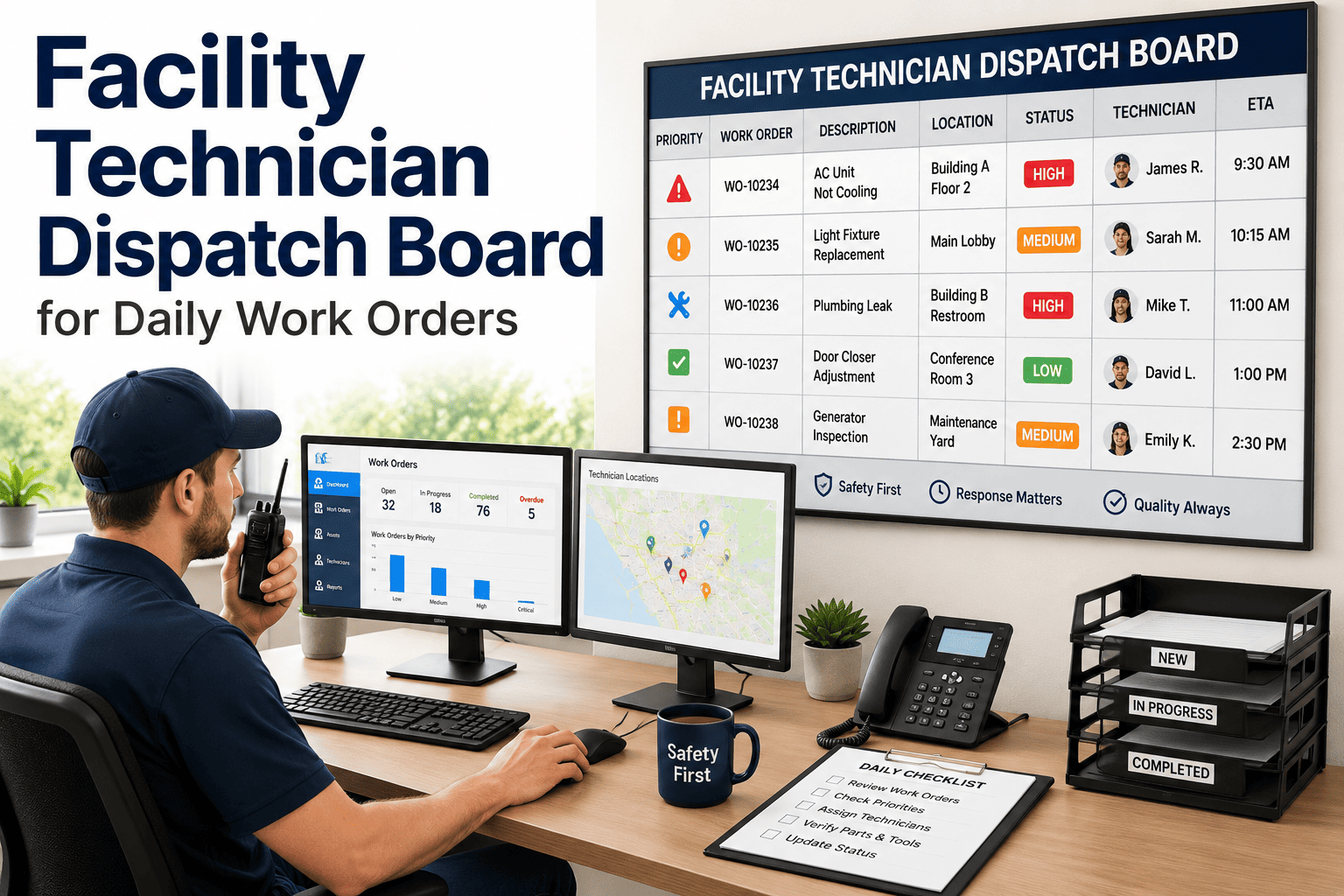
Every facility maintenance team receives more work requests than they can action simultaneously. The difference between a high-performing FM operation and a reactive one is not the volume of requests — it is the logic used to determine which job gets dispatched first, to whom, and with what deadline. Without a structured prioritisation framework, the loudest tenant wins, the most visible defect gets fixed, and the most critical asset waits. Oxmaint's work order management system applies asset criticality, safety risk, SLA deadlines, and operational impact scoring to every incoming request — ensuring the right job reaches the right technician at the right time, every time.
WORK ORDER MANAGEMENT
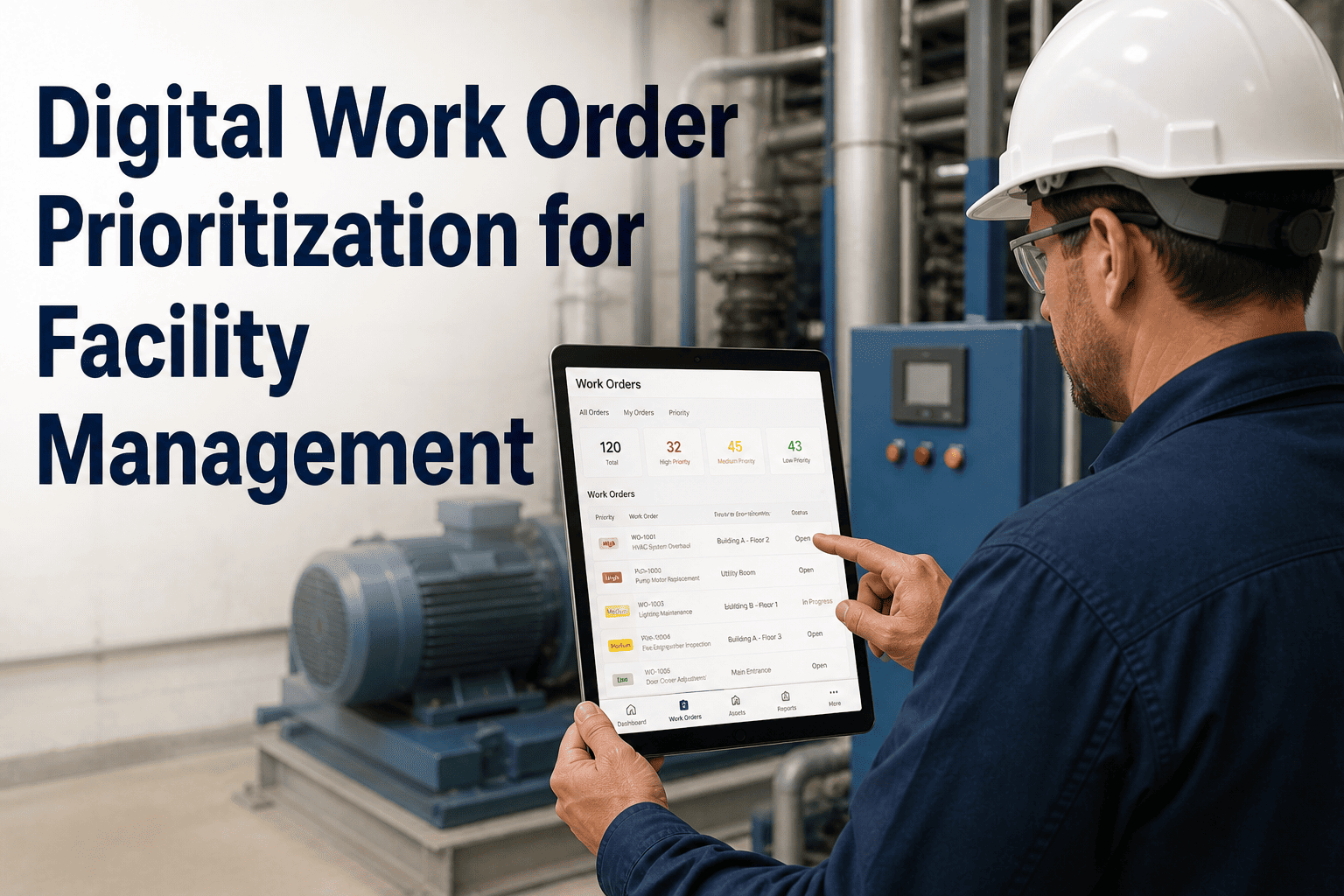
Digital Work Order Prioritization for Facility Management
Stop dispatching by instinct. A structured priority matrix based on asset criticality, safety risk, tenant impact, and SLA logic turns reactive maintenance into a measurable, defensible operation.
Why Informal Prioritisation Fails at Scale
In a small facility with one technician and ten assets, informal priority decisions work well enough. In a mid-size commercial building with 200 assets, multiple tenants, vendor subcontractors, and compliance obligations, informal prioritisation produces the same outcome every time: critical assets are neglected, SLAs are breached, tenant escalations consume management time, and the maintenance team works harder while outcomes decline. The root cause is always the same — prioritisation logic that lives in someone's head rather than in the system.
61%
of facility SLA breaches occur on work orders that were correctly logged but incorrectly prioritised at dispatch — not due to resource shortfalls
3.4x
higher tenant complaint rate in facilities using informal priority systems versus those with structured CMMS-based triage logic
42%
of maintenance managers report that high-criticality assets are routinely deprioritised due to visible low-urgency requests from senior tenants
28 min
average time saved per work order when digital triage logic replaces supervisor manual review in FM operations above 150 active work orders monthly
The Five-Factor Priority Matrix
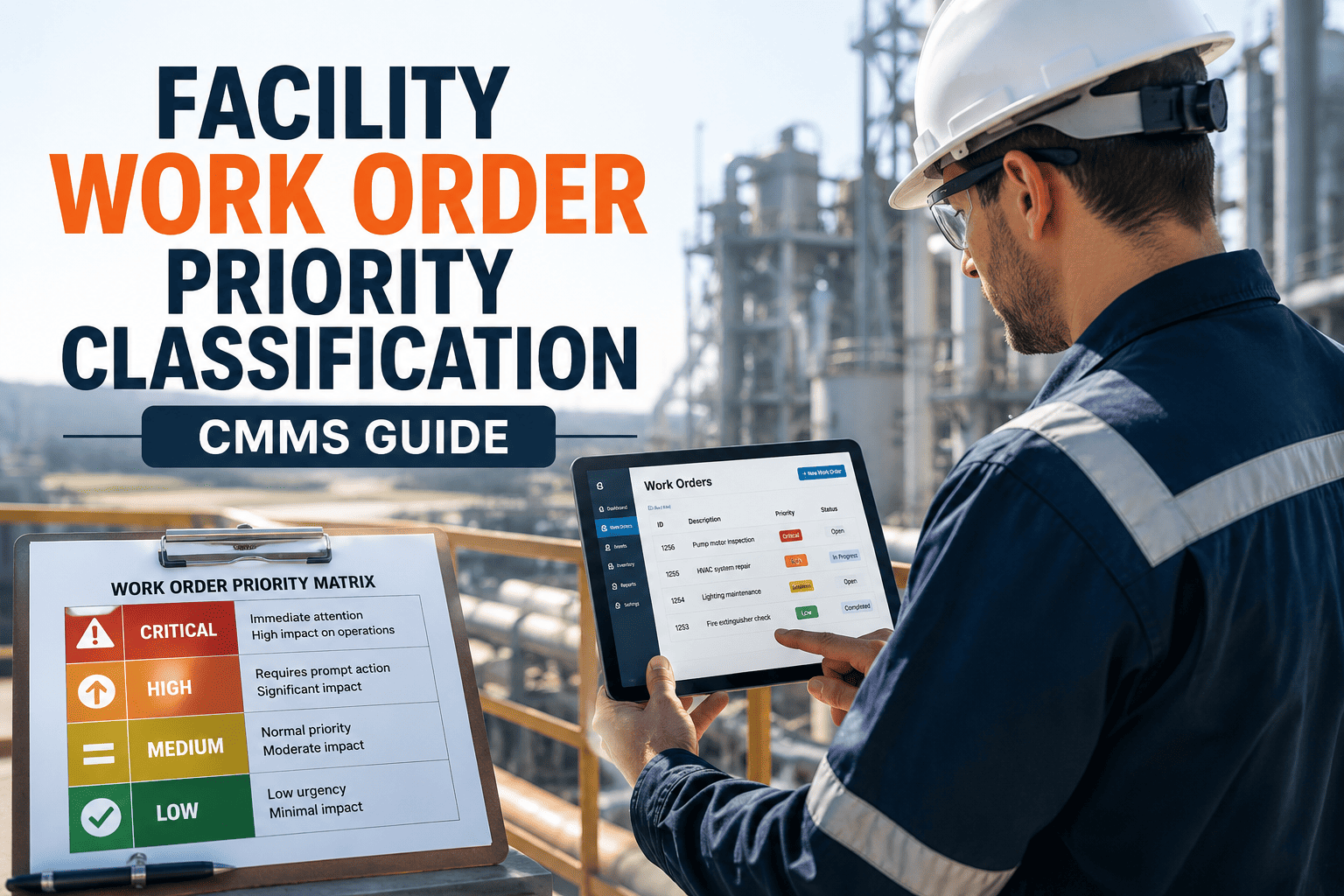
Effective work order prioritisation scores each incoming request across five dimensions, then calculates a composite priority score that drives dispatch sequence, resource allocation, and SLA clock settings. The matrix below represents the framework used by leading FM operations — and the logic built into Oxmaint's automated dispatch rules.
Factor 1
Safety and Regulatory Risk
Any work order involving a life-safety risk — gas leak, structural failure, fire suppression fault, electrical hazard — receives an automatic P1 override regardless of all other scores. Regulatory non-compliance items (statutory inspection overdue, legionella risk, pressure system fault) receive P1 or P2 automatically.
Weight: 40% — Override capable
Factor 2
Asset Criticality Rating
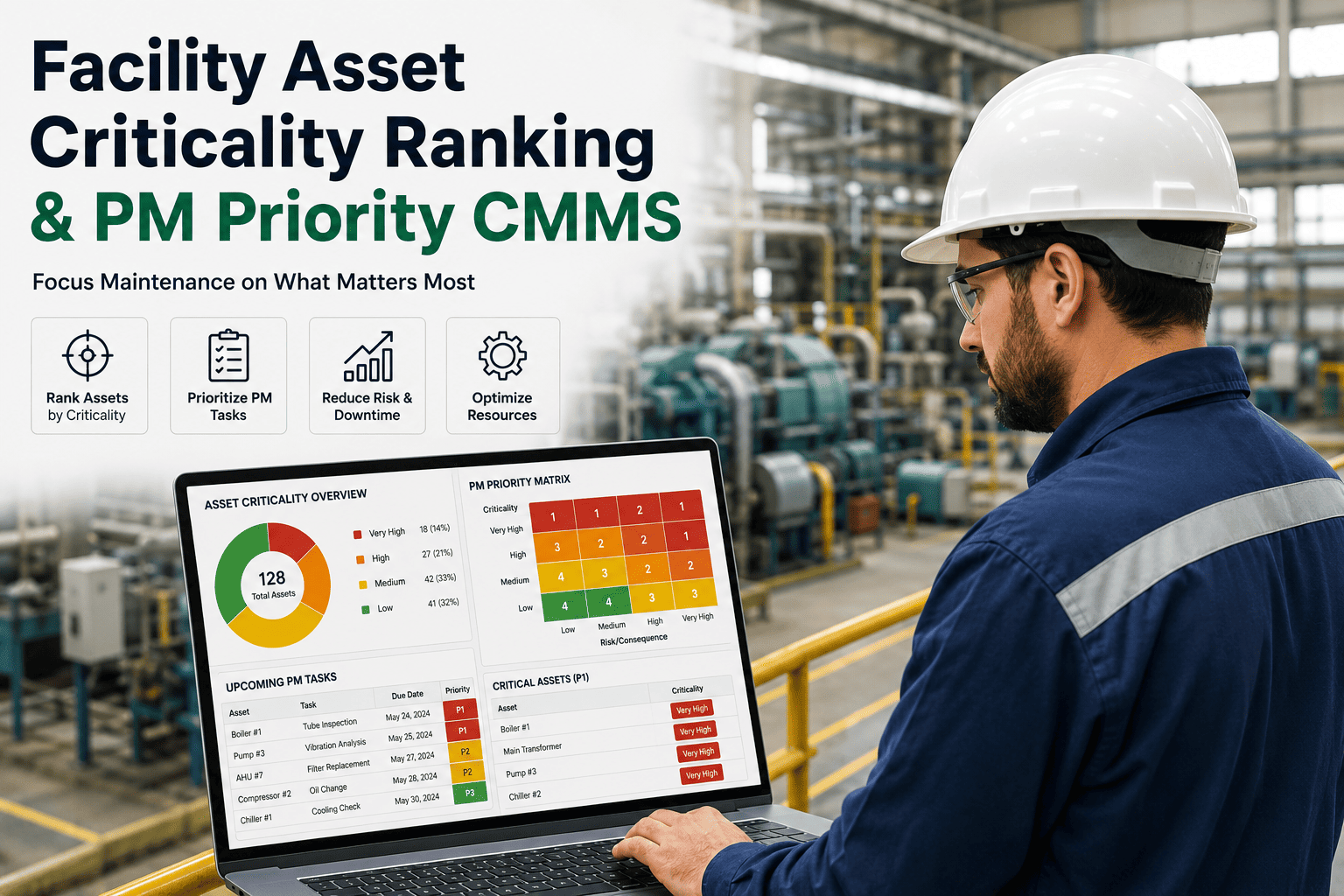
Each asset in the CMMS carries a criticality rating (1–5) based on its operational impact if unavailable. A central chiller serving the entire building scores 5. A non-critical light fitting in a back-office corridor scores 1. The asset criticality score feeds directly into work order priority without requiring dispatcher judgment.
Weight: 25% of composite score
Factor 3
Operational and Tenant Impact
Work orders affecting revenue-generating spaces, occupied meeting facilities, common areas, or tenant-facing services score higher than back-of-house defects. A broken lift serving a fully occupied tower scores higher than an identical fault in a car park stairwell.
Weight: 20% of composite score
Factor 4
SLA Deadline Proximity
As a work order ages toward its SLA response or resolution deadline, its priority score automatically escalates. A P3 work order approaching SLA breach within two hours dynamically reprioritises above a newly logged P3 with 48 hours remaining — preventing SLA breaches through passive queue management.
Weight: 10% — Dynamic escalation
Factor 5
Deterioration and Cascade Risk
Some defects are low-urgency today but generate cascading damage if left unaddressed. A minor roof membrane split scores higher than its impact severity alone suggests because water ingress, structural damage, and mould remediation costs compound rapidly. Cascade risk is applied as a multiplier on the base priority score.
Weight: 5% — Multiplier applied
Priority Levels: Definition, Response, and Resolution Standards
| Priority Level |
Definition |
Response Time |
Resolution Time |
Example Work Orders |
| P1 — Emergency |
Life safety, building integrity, complete service failure |
15 minutes |
4 hours |
Gas leak, lift entrapment, fire suppression fault, major water ingress |
| P2 — Urgent |
Critical asset fault, high tenant impact, statutory deadline |
2 hours |
24 hours |
HVAC failure in occupied zone, boiler fault, power outage to floor |
| P3 — High |
Significant but non-critical impact, SLA-governed |
4 hours |
48 hours |
Hot water failure, security access fault, common area cleaning defect |
| P4 — Standard |
Moderate impact, no immediate risk, routine SLA |
24 hours |
5 working days |
Office lighting fault, minor plumbing drip, door closer failure |
| P5 — Planned |
Low impact, no urgency, batched for planned maintenance |
48 hours |
30 days |
Cosmetic defects, non-critical equipment service, minor decoration |
AUTOMATED PRIORITY DISPATCH
Every Work Order Gets the Right Priority — Automatically
Oxmaint applies your priority matrix to every incoming work order, dispatches to the right technician, sets SLA clocks automatically, and escalates before breaches occur — no supervisor review required for routine triage.
Manual vs Digital Work Order Prioritisation
Capability
Manual / Spreadsheet
Oxmaint CMMS
Priority assignment
Supervisor judgment — inconsistent, bias toward visible requests
Rule-based scoring applied at logging — consistent across all requesters
SLA clock management
Manual tracking — breaches discovered after the fact
Automatic escalation before breach — alert sent 2 hours before deadline
Asset criticality input
Not linked — dispatcher must know asset importance from memory
Criticality rating from asset record applied automatically at work order creation
Emergency override
Phone call to supervisor — delay in urgent situations
P1 work order alerts all available technicians and duty manager immediately
Priority audit trail
No record of why a job was prioritised or deprioritised
Full log of priority score, factors applied, and any manual overrides with reason
Volume management
Supervisor overwhelmed at peak periods — backlogs form
Queue sorted and dispatched automatically — supervisor reviews exceptions only
Expert Review
Rachel Park, CFM, BIFM Member
Head of FM Operations, Multi-Site Commercial Portfolio — 17 Years in Facilities Management
The biggest myth in FM is that experienced supervisors make better priority decisions than structured systems. They don't — they make faster ones, based on familiarity rather than objective risk. The result is that well-liked tenants get faster response times, assets that aren't visually obvious get deprioritised, and critical infrastructure quietly deteriorates while cosmetic defects receive attention. When we implemented asset criticality scoring tied to every work order, the first thing that changed was what our team spent their mornings on. Critical plant got actioned first. SLA compliance improved within 60 days. And we could finally show clients a defensible audit trail for every priority decision.
Oxmaint gave us the rules engine to make that happen without retraining the team — the logic is built into the system, not into people's heads.
Frequently Asked Questions
How does Oxmaint apply asset criticality to work order priority automatically?
Each asset in Oxmaint's registry carries a criticality rating configured during setup — typically on a 1–5 scale reflecting the operational impact of that asset being unavailable. When a work order is raised against an asset, the criticality rating is automatically incorporated into the priority scoring calculation. This means a fault on a critical chiller automatically generates a higher priority than an identical type of fault on a non-critical asset, without requiring the dispatcher to know the asset's importance from memory. Criticality ratings are reviewed and updated annually as part of the asset lifecycle management process.
Book a demo to see how asset criticality configurations are structured.
Can priority rules be customised for different building types or tenant agreements?
Yes. Oxmaint's priority rules engine is fully configurable per site, building type, and lease agreement. A retail property with anchor tenant SLA obligations can apply different response time thresholds and escalation rules than an industrial facility or a healthcare building. Priority levels, SLA clocks, escalation recipients, and override permissions are all configured at the site level, meaning a portfolio of diverse properties can run appropriate priority logic for each building from a single platform without applying a one-size-fits-all approach that generates compliance gaps on specialist facilities.
How does Oxmaint prevent high-priority work orders from being missed during peak request periods?
Oxmaint's automatic escalation system monitors SLA clocks continuously and sends escalation alerts to duty managers and team leads when any work order reaches a configurable threshold before its SLA deadline — typically two hours for P2 and four hours for P3 work orders. P1 emergency work orders generate immediate simultaneous alerts to all available technicians and the duty manager, eliminating the risk of a critical fault sitting unacknowledged in a busy inbox. The platform also provides a live priority-sorted work order queue visible to all team members, so high-priority items are never buried below routine requests in a shared list.
Can supervisors manually override the automated priority score when needed?
Yes, with a documented reason. Oxmaint allows authorised supervisors to manually adjust priority levels when local context justifies it — for example, downgrading a standard priority request because the affected space is vacant, or upgrading a routine request because a VIP event is occurring in the area. All manual overrides are logged with the reason, the time, and the user who applied them, creating a complete audit trail that protects both the supervisor and the organisation from challenge over priority decisions. This ensures the automated system remains the baseline while preserving operational judgment where it genuinely adds value.
OXMAINT WORK ORDER MANAGEMENT
Replace Priority Guesswork With Priority Logic
Oxmaint's configurable priority matrix, automatic SLA escalation, and asset criticality scoring give your FM team a work order system that dispatches the right job first — every time, with a complete audit trail.