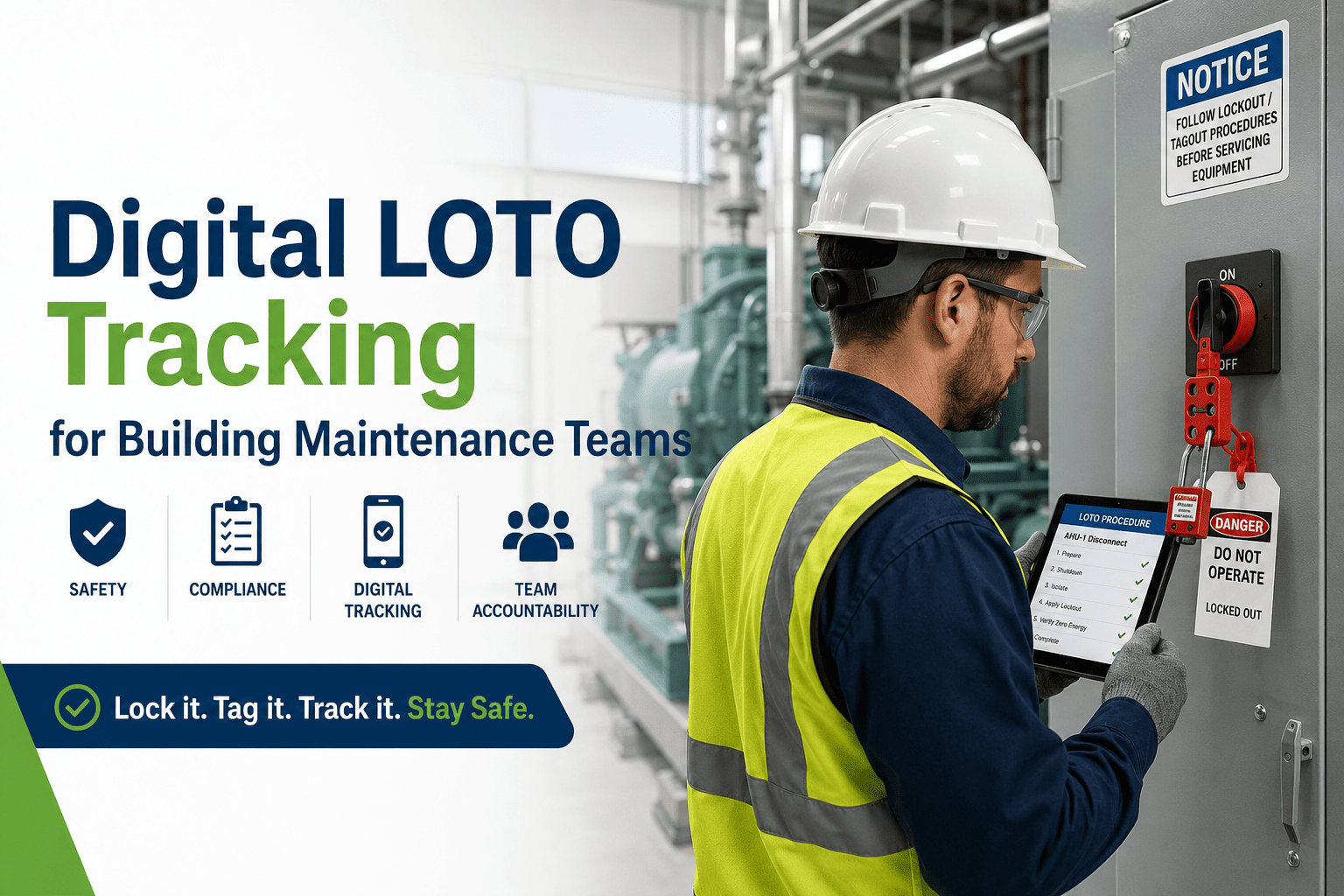
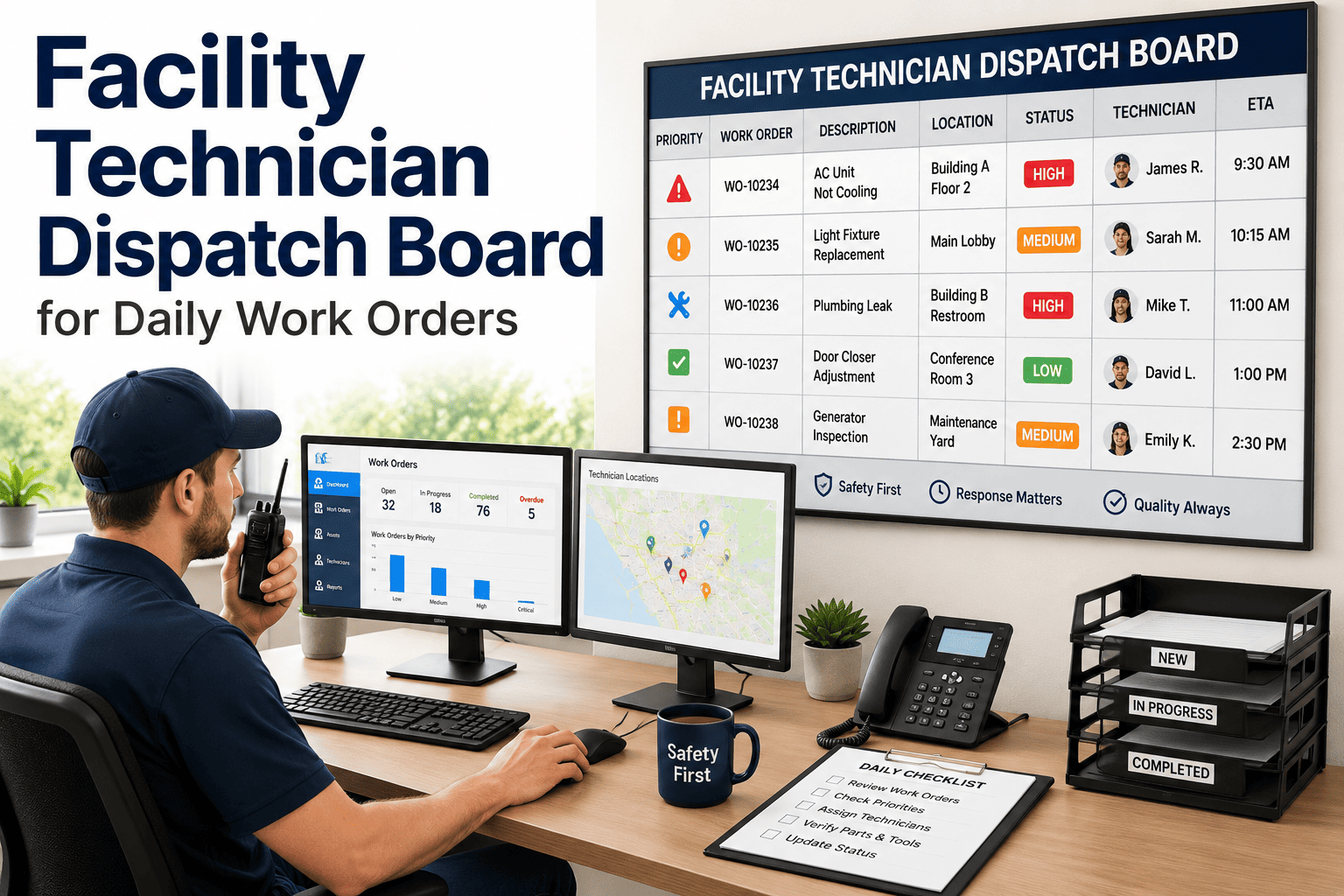
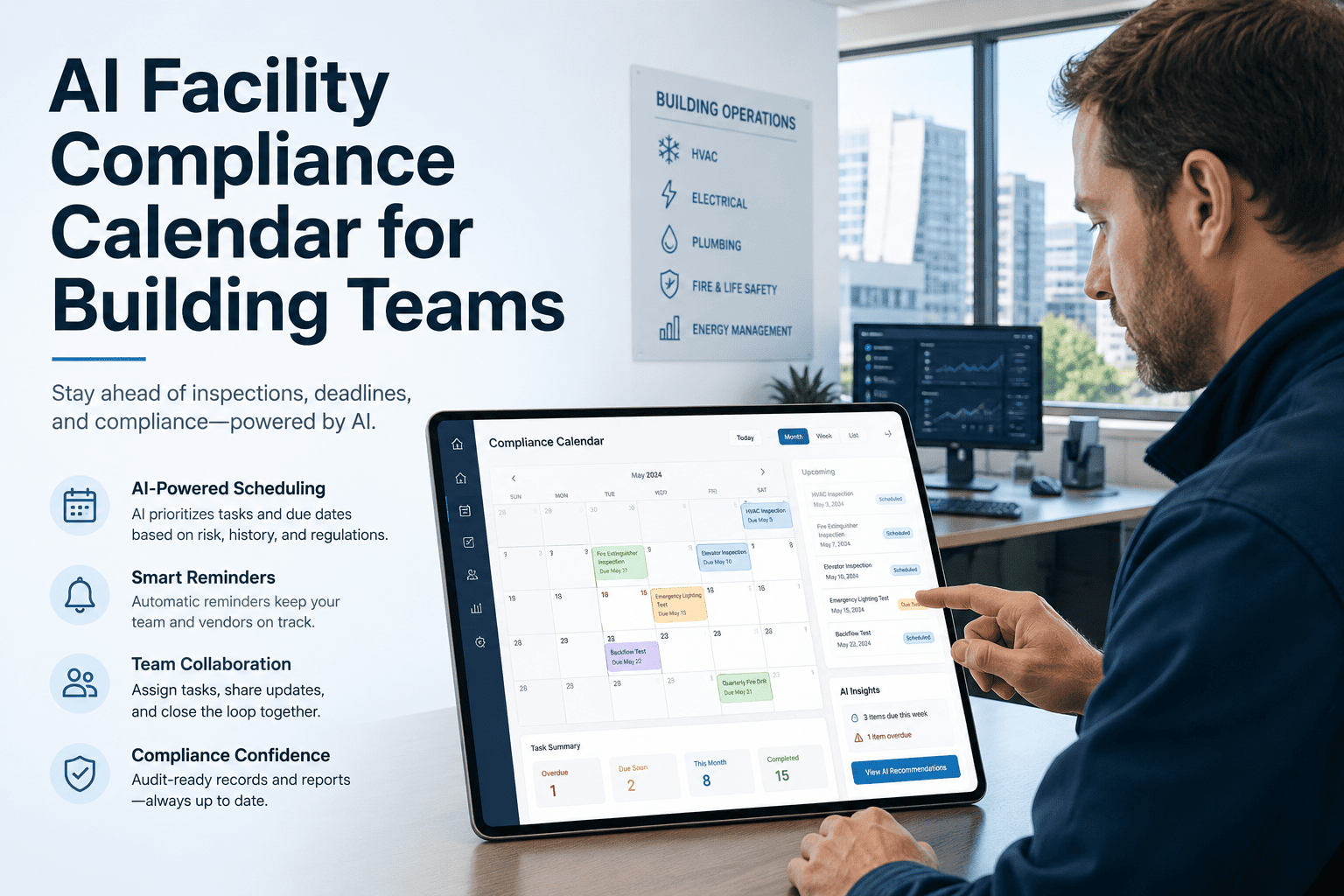
In FY 2024, OSHA issued 2,655 citations for violations of 29 CFR 1910.147 — the Control of Hazardous Energy standard — making lockout/tagout the fifth most-cited violation in the country for the second consecutive year. Behind every citation is a building where a technician serviced energised equipment because the isolation step was skipped, forgotten, or never properly documented. OxMaint's digital LOTO tracking replaces paper isolation logs and verbal approvals with a structured digital workflow — forcing every isolation step to be confirmed, signed, and timestamped before a work order can proceed.
Safety Operations · Compliance Tracking · 29 CFR 1910.147
Digital LOTO Tracking for Building Maintenance Teams
Structured isolation workflows. Mandatory technician sign-off. Timestamped audit records. Every hazardous energy control step enforced digitally — before the work order opens.
The Cost of LOTO Failure — 2024 Data
190
Deaths from hazardous energy in 2023
142 caused by electrical exposure alone (BLS / Brady)
50K
Injuries preventable annually with proper LOTO
OSHA estimates — most caused by unexpected re-energisation
2,655
OSHA LOTO citations in FY 2024
5th most cited standard — up from 6th the previous year
$1.46M
Average fatality cost per incident
Serious injury average: $43,000 per event (TRADESAFE)
90%
Reduction in hazardous energy fatalities and injuries achievable with full LOTO compliance (OSHA)
10%
of all severe workplace accidents linked to inadequate energy control — across every industry type
3M
US workers regularly exposed to hazardous energy during servicing and maintenance (BLS)
+29%
Increase in LOTO violations from 2022 to 2023 — inadequate training the leading root cause
Why Paper LOTO Fails Building Maintenance Teams
Most building maintenance teams have a written LOTO programme. The gap is between the binder on the shelf and what actually happens on the floor when a technician needs to isolate an electrical panel, HVAC unit, or chilled water pump under time pressure.
01
No Enforcement at the Point of Work
Paper LOTO procedures sit in a binder or shared drive. A technician in a hurry can skip steps and self-certify completion. There is no system that blocks work order execution until every isolation point is confirmed — the procedure relies entirely on discipline under pressure.
02
No Real-Time Visibility for Supervisors
When multiple technicians are working across a building simultaneously, supervisors have no live view of which equipment is currently locked out, who applied the lock, or whether the isolation was verified. Concurrent work on shared systems is a critical exposure point with paper-only records.
03
Audit Trail Gaps
When an OSHA inspector asks for LOTO records, paper binders produce missing entries, unsigned steps, and illegible handwriting. A gap in the isolation log for a specific work order is treated as evidence the procedure was not followed — even if the technician followed every step in person.
04
Group LOTO Coordination Failure
Multi-technician jobs require group LOTO where each authorized employee applies their own lock. Paper coordination of who has locked out, who has removed their lock, and when the system is safe to re-energise is inherently fragile. Premature re-energisation in multi-lock scenarios causes a disproportionate share of fatalities.
Digital LOTO Workflow: Step-by-Step Checklist
OxMaint enforces this eight-step LOTO workflow digitally — every step mandatory, every confirmation timestamped, every work order blocked until isolation is complete and signed off.
01
Work Order Created — LOTO Required Flag
When a work order is created for any equipment with hazardous energy sources, OxMaint automatically flags it as requiring LOTO. The equipment's energy isolation profile — listing all energy sources, isolation points, and lock locations — is attached to the work order from the asset record.
Record: Work order with LOTO flag, energy source profile attached
02
Authorised Technician Assigned
Only technicians with current LOTO authorisation for the specific equipment type can be assigned. OxMaint checks the technician's training record before allowing assignment — blocking unqualified personnel from being scheduled on LOTO-required work orders.
Record: Assigned technician ID, authorisation expiry date, training certificate linked
03
Notify Affected Employees
Before isolation begins, all affected employees in the work area are notified via the work order system that the equipment will be de-energised. Notification is logged with recipient names and timestamp — satisfying 29 CFR 1910.147(d)(2) notification requirements.
Record: Notification log with recipient list and confirmation timestamps
04
Equipment Shut Down — Documented
Technician confirms equipment has been shut down per normal stopping procedure. Confirmation is captured on the mobile device with a mandatory sign-off field — no step can be skipped or marked complete without individual user authentication.
Record: Shutdown confirmation, user ID, timestamp, optional photo
05
Isolate All Energy Sources — Point-by-Point
The isolation checklist lists every energy source for the specific asset — electrical disconnects, pneumatic lines, hydraulic circuits, gravity energy, steam, chemical. Each isolation point must be individually confirmed and signed. Photo evidence of locks applied is captured per isolation point.
Record: Per-point isolation confirmation with photo, individual sign-off, timestamp
06
Verify Zero Energy State
Technician confirms zero energy verification — voltage test results, pressure gauge readings, thermal check. This is the step most frequently skipped in paper-based programmes and the step most directly associated with re-energisation incidents. OxMaint makes it unskippable.
Record: Zero-energy verification reading, test method, instrument used, timestamp
07
Work Order Unlocked — Maintenance Begins
Only after all isolation steps are confirmed and signed does the work order status change to "Active — Safe to Proceed." The system prevents technicians from logging work start before LOTO completion. Supervisor can monitor live status on the dashboard throughout the job.
Record: LOTO completion timestamp, supervisor acknowledgement, work start time
08
Restore Energy — Controlled Release
Upon job completion, the restoration sequence is documented: tools and personnel cleared, guards replaced, affected employees notified, locks removed in sequence. Each removal is logged individually. Re-energisation only occurs after all locks are accounted for and the checklist is complete.
Record: Sequential lock removal log, re-energisation authorisation, close-out timestamp
Every step above is enforced in OxMaint — not optional, not skippable.
No work order proceeds until isolation is confirmed. Every record is timestamped, signed, and audit-ready.
OSHA 29 CFR 1910.147 Compliance Map
| OSHA Requirement |
CFR Section |
Paper LOTO Gap |
OxMaint Digital Enforcement |
| Written energy control programme |
§1910.147(c)(1) |
Binder often outdated; version control absent |
Energy profiles stored per asset, version-controlled with change log |
| Energy isolation procedures per equipment |
§1910.147(c)(4) |
Generic procedures applied to wrong equipment |
Asset-specific LOTO procedure attached to every work order |
| Authorised employee training records |
§1910.147(c)(7) |
Training records stored separately; not checked before job assignment |
Training verification checked on assignment; expired credentials block scheduling |
| Notification of affected employees |
§1910.147(d)(2) |
Verbal notification; no documentation |
Digital notification log with recipient list and acknowledgement timestamps |
| Per-step isolation confirmation |
§1910.147(d)(4)–(d)(6) |
Single signature on form; steps not individually verified |
Mandatory point-by-point confirmation with photo evidence per isolation point |
| Periodic programme audit (annual) |
§1910.147(c)(6) |
Audit conducted but records not linked to specific work orders |
Annual LOTO programme review auto-generated; findings linked to corrective work orders |
| Group LOTO — multiple lock coordination |
§1910.147(f)(3) |
No system tracking who has applied or removed locks |
Individual lock application and removal logged per technician in real time |
LOTO by Energy Type: Building-Specific Checklist
Building maintenance teams encounter a wider variety of energy types than most single-industry operations. Each type requires a different isolation approach — and each carries its own failure mode when isolation is incomplete.
ELECTRICAL
Electrical Energy Isolation
Identify all electrical sources — single-phase, three-phase, UPS, generator backup circuits
Open, lock, and tag each disconnect switch or circuit breaker — one lock per authorised employee
Test all circuits for zero voltage using calibrated meter — test before touch, every time
Verify capacitor discharge complete on variable frequency drives before contact
OSHA 29 CFR 1910.333(b) · NFPA 70E Article 120
MECHANICAL
Mechanical / Pneumatic Energy
Close and lock all pneumatic supply valves — bleed residual pressure from lines before work
Block or pin all gravity-held components — suspended loads, counterweights, stored spring energy
Chock rotating components — fans, pumps, drive shafts — that may coast or cycle after de-energisation
Verify pressure gauge reads zero on all pneumatic circuits before contact with any component
OSHA 29 CFR 1910.147(d)(5) · ANSI Z244.1
HVAC / THERMAL
HVAC and Thermal Energy
Close chilled water and hot water isolation valves — lock valves in closed position with hasp and tag
Bleed air handlers — confirm supply pressure at zero before opening coil connections
Allow thermal cool-down for steam and hot water systems — minimum wait time documented per SOP
Confirm refrigerant isolation for chiller service — verify gauges before any refrigerant circuit work
OSHA 29 CFR 1910.147 · ASHRAE 15 · EPA 608
HYDRAULIC / PLUMBING
Hydraulic and Plumbing Systems
Isolate water supply with lockable ball valve — confirm downstream pressure gauge reads zero
Drain lines to atmospheric pressure before opening any hydraulic circuit or pipe connection
For pumps — close suction and discharge valves, lock both, confirm pump casing pressure at zero
Document system pressure readings before and after isolation — photo-capture gauge readings
OSHA 29 CFR 1910.147 · ASME B31.1
"
The LOTO violations I see cited most often in building maintenance are not the result of technicians being reckless — they're the result of systems that don't force compliance at the moment it matters. A paper form that requires a signature at the end of a multi-step process is not a safety system. It's a documentation system. A technician under pressure will complete the form and skip the verification steps, because the form can't tell the difference. Digital LOTO tracking changes the structural dynamic: the system knows which step the technician is on, it requires evidence that the step was completed, and it won't advance the work order until it is. That's not bureaucracy — that's what 29 CFR 1910.147 has always required. We just now have tools that actually enforce it.
Reuben Achterberg, CSP, CSHM
Certified Safety Professional · Certified Safety and Health Manager · 18 years commercial and industrial facilities safety · Former EHS Director, 12-building mixed-use portfolio · Specialist in hazardous energy control programme design and OSHA citation response
Frequently Asked Questions
Which building maintenance tasks require a full LOTO procedure under OSHA 1910.147?
Any servicing or maintenance task where unexpected energisation or start-up could cause injury requires LOTO under 29 CFR 1910.147. In building maintenance, this includes electrical panel work, AHU and chiller servicing, pump and motor maintenance, elevator mechanical work, cooling tower maintenance, and any task requiring entry into a machine's operating zone. Minor tool changes that can be performed using normal production controls without placing body parts in a danger zone are exempt — but building teams frequently misclassify borderline tasks as exempt. When in doubt, LOTO applies. OxMaint flags LOTO requirements at the asset level so there is no ambiguity at the point of work.
How does OxMaint handle LOTO for multi-technician jobs where group lockout is required?
Group LOTO in OxMaint works through individual lock application tracking — each authorised technician assigned to the work order must individually confirm their lock is applied before the work order goes active, and must individually confirm their lock is removed before re-energisation is authorised. The system blocks restoration until every technician in the group has checked out. Supervisors see a live dashboard view of who has locked out and who has cleared — eliminating the scenario where a lock is missed and a system is re-energised prematurely. Book a demo to see the group LOTO workflow configured for your team size.
What records does OxMaint generate for OSHA inspections and insurance audits?
For every LOTO work order, OxMaint retains a complete digital record package: the energy control procedure used, the technician's authorisation status at the time of the job, per-step isolation confirmations with individual sign-offs, photo evidence of locks applied, zero-energy verification readings, group lock removal sequence, and re-energisation authorisation. This package is filterable by equipment, date range, technician, or energy type — producing a full LOTO programme audit in minutes rather than days. Start your free trial to see the LOTO audit report format.
How long does it take to migrate a building's existing LOTO programme into OxMaint?
Most buildings complete their initial LOTO programme migration in 1–2 weeks: asset energy profiles are created for critical equipment in the first week, LOTO work order templates are configured with asset-specific isolation sequences, and technician authorisation records are uploaded. The OxMaint onboarding team provides a standard energy profile template library covering the most common building equipment types — AHUs, chillers, pumps, electrical panels, and elevators — which are customised to your specific asset inventory. Book a demo to see the onboarding timeline for your building portfolio.
Digital LOTO · 29 CFR 1910.147 · OxMaint
Paper LOTO Procedures Rely on Discipline. Digital LOTO Enforces It.
OxMaint replaces paper isolation logs with a structured digital workflow that blocks work orders until every energy source is confirmed isolated — with photo evidence, individual sign-off, and a complete audit trail that satisfies OSHA, insurers, and building owners.