
The electrical panel is the heart of your facility's power distribution, yet it is often the most neglected component until a failure occurs. According to the NFPA, electrical distribution failures are a leading cause of industrial fires, costing billions annually in property damage and downtime. The difference between a safe facility and a catastrophic shutdown often comes down to maintenance strategy. While traditional annual torque checks are standard, they miss 90% of the thermal anomalies that precede failure. For facility managers aiming to ensure uptime and safety, moving from reactive troubleshooting to predictive monitoring is essential. OXmaint's CMMS integrates with thermal inspections and IoT sensors to catch these issues early—start your free trial today to protect your assets.
The Safety Gap: Why Reactive Maintenance Falls Short
Traditional electrical maintenance relies on periodic inspections and manual torque checks—a reactive approach that waits for problems to manifest. Technicians perform open-panel work during scheduled maintenance windows, introducing safety risks including arc flash exposure and the potential to damage cold-flow bonds on connections. This manual method captures only a snapshot in time, missing the gradual thermal buildup that precedes catastrophic failure. Over-torquing during checks can actually create loose connections, while incomplete documentation leaves no audit trail for compliance or historical analysis.
Predictive maintenance powered by thermal imaging and IoT sensors transforms this paradigm. Instead of waiting for issues to occur, facilities detect heat differentials months before failure, identify resistance problems before they cause arcing, and eliminate dangerous open-panel work through non-invasive monitoring. Every reading is logged automatically, creating a complete thermal history of each panel. Work orders are triggered instantly when anomalies are detected, and repairs can be scheduled proactively rather than reactively. The result: predictive strategies reduce electrical maintenance costs by 50% and accidents by 75%.
The choice is clear. Organizations continuing with reactive, manual-only approaches face ongoing risk of unplanned downtime, safety incidents, and accelerated component failure. Those implementing predictive monitoring with OXmaint gain visibility into electrical health before problems strike, ensure compliance with NFPA 70B standards, and dramatically extend asset lifespan while protecting their workforce.
Why Electrical Panels Fail: The Silent Killers
Electrical panels rarely fail instantaneously. They deteriorate over time due to thermal cycling, vibration, and environmental factors. A loose connection creates resistance, resistance creates heat, and heat creates oxidation—a vicious cycle that eventually leads to arcing or fire. Manual tightening campaigns often exacerbate the issue; "checking" a connection can break the cold-flow bond of copper, actually creating a loose connection where there wasn't one before.
Furthermore, modern loads introduce harmonics and stresses that older panels weren't designed to handle. Without visibility into the thermal signature of your breakers and busbars, you are essentially flying blind. OXmaint bridges this gap by scheduling regular thermal inspections and integrating with IoT heat sensors to provide a continuous pulse on your electrical infrastructure.
5 Warning Signs of Imminent Panel Failure
01
Tripping Breakers
Frequent trips indicate overload, short circuits, or a weakening breaker mechanism that requires immediate replacement.
02
Buzzing Sounds
Audible buzzing or hissing suggests arcing electricity between connections or vibration in the busbar assembly.
03
Burning Smell
A fishy or acrid smell is the hallmark of melting plastic insulation caused by severe overheating.
04
Warm to Touch
Panels should operate cool. Warmth indicates high resistance or severe overload conditions inside.
05
Flickering Lights
Voltage fluctuations caused by loose neutral wires or main lug issues often manifest as dimming or flickering lights.
The cost of ignoring these signs is catastrophic. An arc flash incident can cost upwards of $1 million in medical bills, OSHA fines, and equipment replacement, not to mention the complete halt of production. Don't wait for the smoke to appear. Schedule a demo with OXmaint to see how to digitize your electrical preventive maintenance program.
How Infrared & IoT Transform Electrical Safety
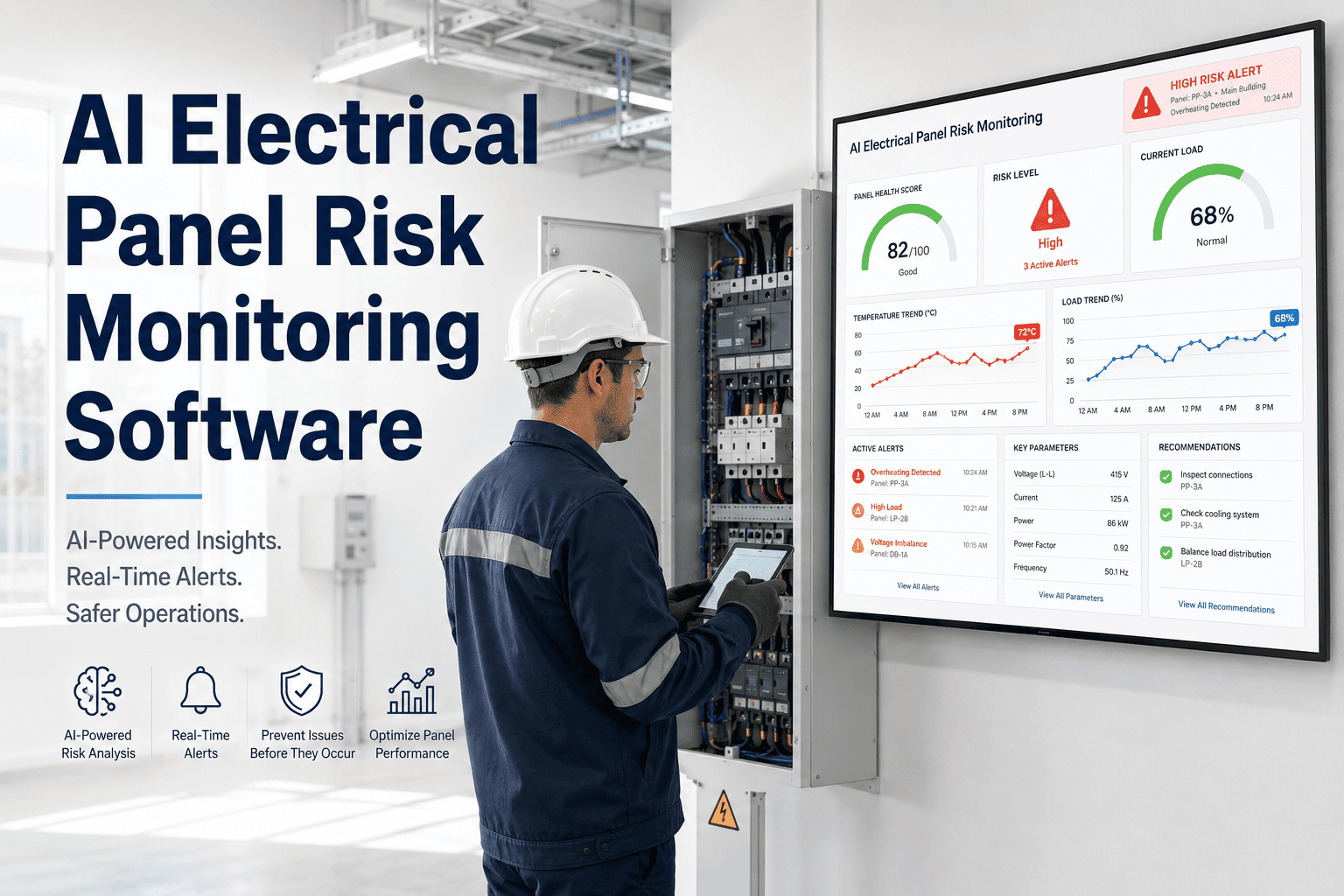
Modern electrical maintenance relies on seeing the invisible. Thermography (Infrared) and continuous thermal monitoring via IoT sensors detect heat differentials that indicate resistance issues months before they cause a failure. By feeding this data into a CMMS like OXmaint, facilities generate a "thermal history" for every panel, allowing for trend analysis and predictive intervention.
The Predictive Workflow: From Heat to Action
Detection
IoT sensors or IR cameras detect a temperature rise of >10°C above ambient on a breaker.
Analysis
Data is pushed to OXmaint. AI compares readings against historical baselines and load contexts.
Alerting
High-priority work order created automatically. Electrician alerted via mobile app with location.
Resolution
Repair completed, parts logged, and new thermal reading taken to verify fix.
This automated workflow eliminates the "pencil-whipping" of inspection logs. Every check is verified, every temperature spike is recorded, and no critical alert gets lost in a stack of paper. Try OXmaint free to digitize your electrical safety program.
The ROI of Preventing Electrical Failure
The return on investment for an electrical maintenance program is calculated not just in saved parts, but in business continuity. A single main breaker failure can idle an entire plant for days while parts are sourced. Avoiding one such event pays for the CMMS implementation for years.
Cost Avoidance Calculator
Potential annual savings for a medium-sized manufacturing facility
Unplanned Downtime
Avoid 4 hours of production stop
$200,000
Equipment Replacement
Extend breaker/busbar life by 20%
$45,000
Energy Efficiency
Eliminate resistive losses (heat)
$12,000
Insurance Premiums
Fire risk reduction credits
$15,000
Emergency Labor
Avoid overtime rates for fixes
$25,000
Total Potential Savings:
$297,000+
Typical payback period: < 3 months
Beyond the financials, safety is paramount. Ensuring your electrical panels are maintained according to NFPA 70B standards reduces legal liability and protects your workforce. Schedule a demo to see how OXmaint helps maintain compliance.
Industry Applications
Manufacturing
High-load motors causing vibration and thermal stress on MCCs.
Avoids line stoppagesCommercial Buildings
Tenant HVAC loads and lighting panels often neglected in basements.
Ensures tenant safetyData Centers
Zero tolerance for power loss; requires redundant UPS and PDU monitoring.
100% Uptime GuaranteeNo matter the facility type, electricity is the common denominator. OXmaint's flexibility allows you to customize checklists and maintenance schedules for Main Distribution Panels (MDP), Motor Control Centers (MCC), and lighting sub-panels. Book a consultation to discuss your power infrastructure.
Troubleshooting Decision Guide
When an issue arises, knowing whether to repair or replace is critical. Use this guide to determine the best course of action for aging or faulty panels.
Repair / Maintain When:
Panel is < 15 years old
Parts are readily available
Single breaker failure only
Enclosure is rust-free
Thermal issues are connection-based (loose wire)
Replace / Upgrade When:
Panel is obsolete (e.g., Zinsco, FPE)
Evidence of water damage/corrosion
Signs of busbar overheating/pitting
Expansion requires more circuits than available
Safety standards (NEC) have changed significantly
Frequently Asked Questions
How often should electrical panels be inspected?
OSHA and NFPA 70B recommend annual inspections for most industrial equipment. However, critical panels or those in harsh environments should be inspected quarterly. Infrared (thermographic) scans should be performed at least annually while the system is under load. OXmaint allows you to automate these schedules so nothing is missed.
What causes a breaker to trip repeatedly?
Repeated tripping is usually caused by an overloaded circuit, a short circuit (hot touching neutral/ground), or a ground fault. It can also indicate that the breaker itself has weakened over time. Never simply replace a breaker with a larger one; investigate the root cause using a CMMS to track load history.
Can OXmaint help with Arc Flash compliance?
Yes. OXmaint can store your Arc Flash Analysis reports, track when the next study is due (typically every 5 years), and ensure that only qualified personnel are assigned to work orders involving open panels, helping you maintain NFPA 70E compliance.
What is the difference between a short circuit and an overload?
An overload occurs when too many devices draw more current than the circuit is designed for, causing heat buildup. A short circuit is a low-resistance path (fault) that allows a massive amount of current to flow instantly. Both are dangerous, but short circuits cause immediate, violent reactions.
.jpeg)


