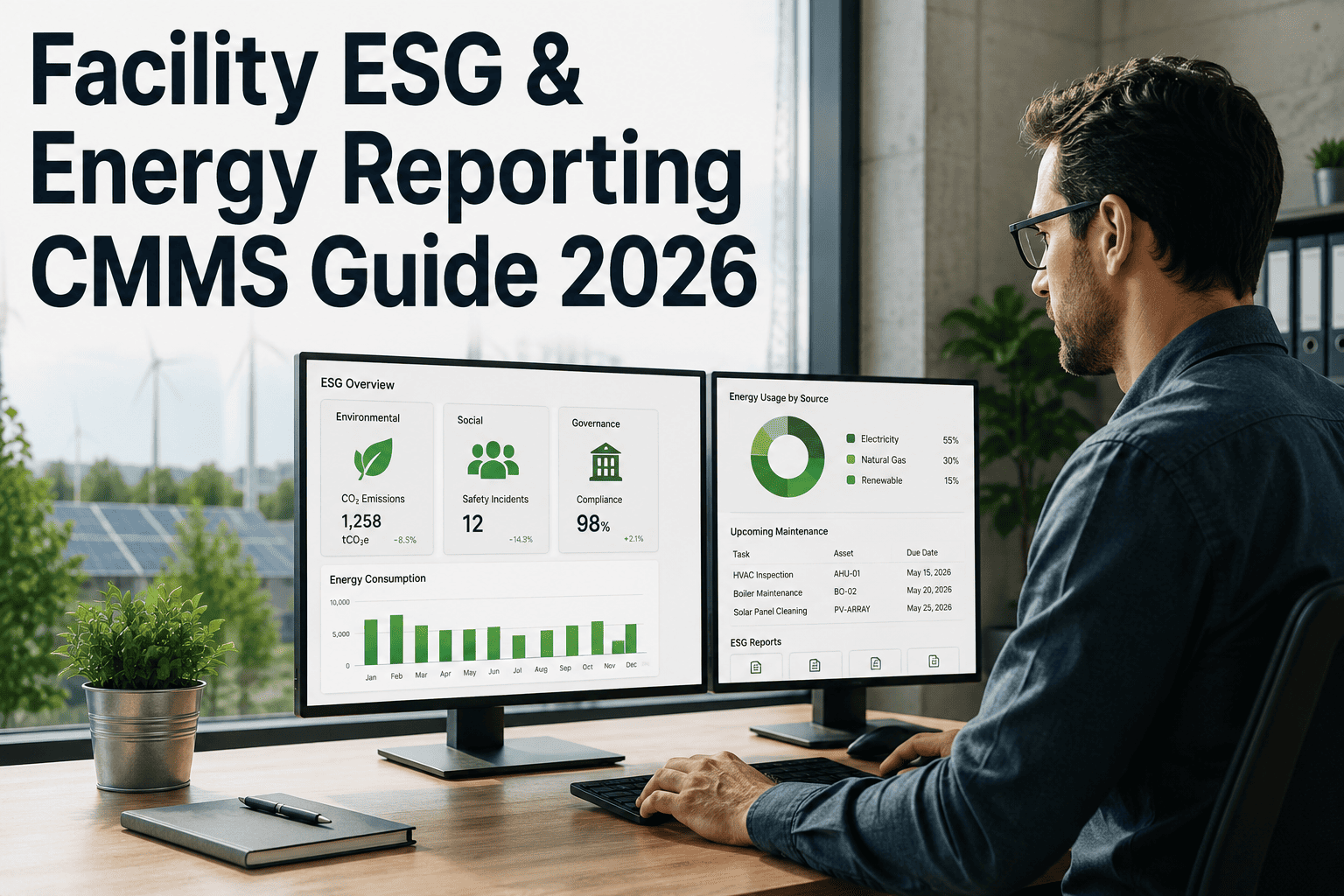
ESG reporting has moved from voluntary disclosure to operational requirement for facility managers in 2026. Investors, regulators, and enterprise tenants now expect documented Scope 1, 2, and 3 emissions data, water and waste metrics, and social performance indicators — and they expect them from facilities-level data, not estimates. The facility manager who cannot produce building-level ESG data on request is now a liability in lease negotiations, capital approvals, and regulatory submissions. This guide covers what to measure, how to structure reporting, and how a CMMS becomes the data backbone of a defensible ESG program. Book a session to see how Oxmaint automates ESG data collection from your maintenance operations — or start a free trial and begin tracking your facility's ESG metrics today.
Why 2026 Is Different
The ESG Reporting Landscape Facility Managers Face Right Now
42%
of Fortune 500 companies now require ESG data from their top facility vendors and property partners in lease or contract renewals
SEC
climate disclosure rules now require Scope 1 and 2 emissions from material operations — facilities are the primary source for most industries
$2.1T
in real estate assets globally now subject to mandatory building-level energy and carbon disclosure requirements
The Emissions Framework
Scope 1, 2, and 3 Emissions: What Facility Managers Own
Scope 1
Direct Emissions
Combustion in facility-owned equipment — boilers, generators, emergency diesel units, fleet vehicles. Every fuel consumption record in your CMMS is a Scope 1 data point.
CMMS Source: Work order fuel logs, generator runtime records, boiler fuel consumption
Scope 2
Purchased Energy Emissions
Electricity, district heating/cooling, steam purchased from utilities. Calculated using energy consumption data multiplied by grid emission factors for your region.
CMMS Source: Energy meter readings, utility cost records, HVAC runtime hours by zone
Scope 3
Value Chain Emissions
Contractor travel, materials purchased for maintenance, refrigerant losses, waste disposal. The most complex scope — but CMMS work order data captures contractor activity, parts procurement, and refrigerant top-up records.
CMMS Source: Contractor work orders, parts purchase records, refrigerant service logs
Full Metrics Library
What to Measure: ESG KPIs for Facility Operations
| ESG Category |
Metric |
Unit |
CMMS Data Source |
Reporting Framework |
| Environmental |
Total energy consumption |
kWh / sq ft |
Meter readings, HVAC runtime |
GRI 302, GRESB |
| Environmental |
Carbon emissions (Scope 1+2) |
tCO2e / yr |
Fuel logs, energy records |
GRI 305, SEC Climate |
| Environmental |
Water consumption |
Gallons / sq ft |
Water meter reads, leak work orders |
GRI 303, LEED |
| Environmental |
Refrigerant loss (GWP-weighted) |
kg CO2e |
HVAC refrigerant service records |
EPA 608, GRI 305 |
| Environmental |
Waste diverted from landfill |
% total waste |
Contractor waste manifests in WO |
GRI 306, GRESB |
| Social |
Contractor safety incident rate |
TRIR |
Work order incident reports |
GRI 403, OSHA 300 |
| Social |
Preventive maintenance compliance |
% on-time |
PM work order completion rate |
GRESB, internal |
| Governance |
Regulatory compliance rate |
% inspections passed |
Inspection work order close records |
GRI 207, investor ESG |
Start Collecting ESG Data from Work Orders — Not Spreadsheets
Oxmaint captures energy records, contractor activity, refrigerant logs, and compliance data inside every work order — so your ESG report builds itself from operational data, not manual entry.
Reporting Frameworks
Which ESG Framework Applies to Your Facility in 2026
GRI Standards
Universal baseline for voluntary and mandatory ESG disclosure. GRI 302 (energy), 303 (water), 305 (emissions), 306 (waste), 403 (safety) are most relevant for facility operations.
Voluntary / Widely Required by Investors
GRESB
Real estate-specific ESG benchmark. Scores building portfolios on energy, water, waste, and governance. Required or expected by major institutional real estate investors globally.
Real Estate — Institutional Investor Driven
SEC Climate Rules
Requires Scope 1 and 2 disclosure for public companies with material climate risks. Facilities are the primary emissions source for most covered companies — building-level data is essential.
US Public Companies — Regulatory Mandate
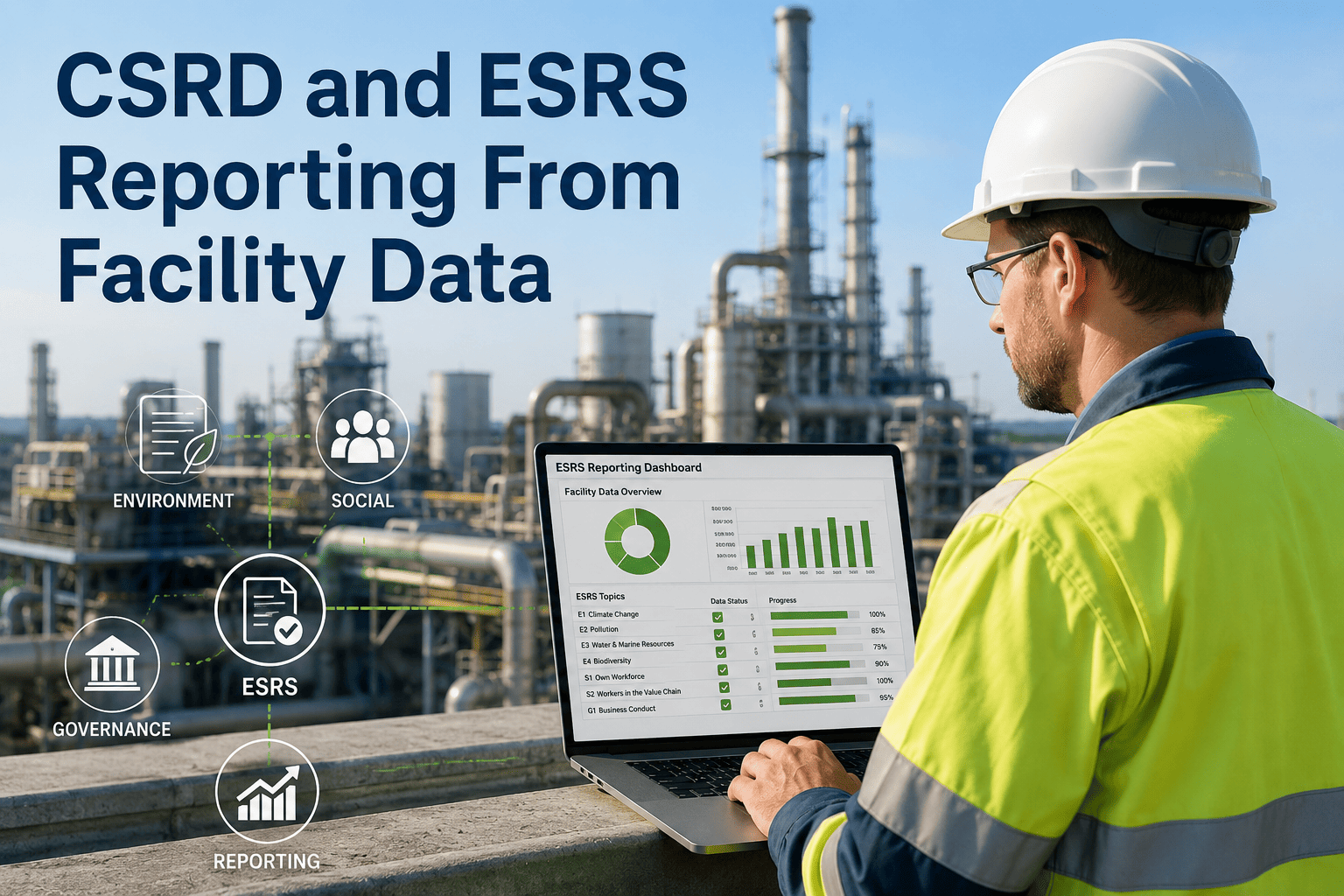
CSRD (EU)
European Sustainability Reporting Directive applies to EU operations and companies with significant EU revenue. Requires double materiality assessment and detailed facility-level environmental data.
EU Operations — Regulatory Mandate
Expert Review
What Sustainability and Facility Leaders Say About ESG Data
"The biggest ESG reporting challenge we had wasn't the framework — it was the data. Our energy and emissions numbers came from three different systems and took two weeks to reconcile every quarter. Once our CMMS became the central record for maintenance activity, energy logs, and contractor work, ESG data became a report we could run in an afternoon instead of a project that consumed a month."
"Institutional tenants are now asking for building-level ESG data as part of lease negotiations — not after signing. They want to see energy intensity trends, PM compliance rates, and refrigerant management records. Facilities teams that can produce that data from a CMMS have a material advantage. Teams still working off spreadsheets are losing deals to buildings that can."
Frequently Asked Questions
ESG Reporting for Facilities: Common Questions
Turn Your Maintenance Data Into a Defensible ESG Report
Oxmaint captures the operational data your ESG reporting requires — inside every work order, PM record, and contractor log — so your 2026 ESG submission is built on verified facility data, not estimates.