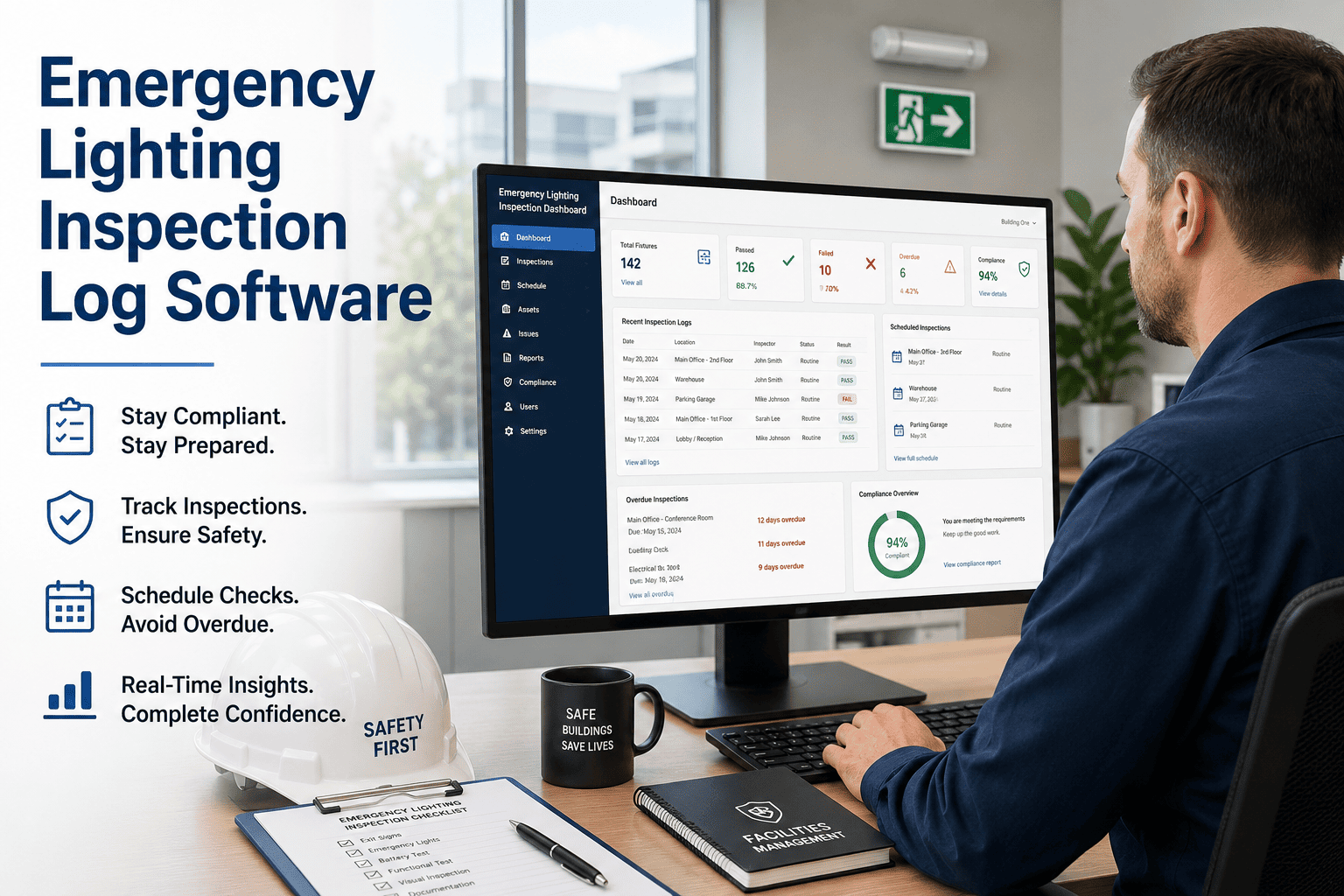
Emergency response equipment that goes unchecked is not a backup — it is a liability. OSHA inspectors cite emergency equipment failures as one of the top five deficiencies in facilities across all industries, and the consequences extend beyond fines: a failed AED or blocked eyewash station during an actual emergency can be catastrophic. OxMaint's compliance tracking platform keeps every piece of emergency equipment on a tested, documented schedule so your team is always inspection-ready and genuinely prepared.
Safety & Compliance · Emergency Preparedness · Compliance Tracking
Emergency Response Equipment Inspection Checklist
Complete inspection framework for first aid stations, AEDs, spill kits, eyewash stations, emergency showers, evacuation equipment, and life safety systems — with responsible roles and compliance references.
Weekly
ANSI Z358.1 minimum — eyewash and emergency shower activation
Monthly
AED readiness check and emergency lighting test (NFPA 101)
Annual
Full AED inspection and eyewash plumbed-unit inspection (ANSI Z358.1)
Top 5
Emergency equipment deficiencies rank in OSHA's most cited violations list
Weekly Checks
- Eyewash station flush activation
- Emergency shower flow test
- Fire extinguisher visual check
- First aid stock quick scan
Monthly Checks
- AED indicator light and pads
- Emergency lighting 30-sec test
- Spill kit inventory count
- Exit sign verification
Annual Checks
- Full AED service and battery
- Eyewash plumbed unit full inspection
- Fire blanket integrity check
- Emergency communication system test
Section 01
First Aid Stations
First aid stations are the first point of response for workplace injuries. OSHA 1910.151 requires adequately stocked first aid supplies wherever a clinic or hospital is not reasonably accessible — and inspectors will check supplies, location, and accessibility on every visit.
Stock & Condition
All first aid kit contents present and within expiry date — verify against facility standard kit list; no expired items in service
Standard: OSHA 1910.151 · Role: Safety Officer · Record: First aid inventory form
First aid station cabinet undamaged, clearly marked, and accessible during all operating shifts — no obstructions within 3 feet
Role: EHS Officer · Record: Station accessibility log
Gloves, CPR face shields, and bloodborne pathogen supplies stocked per OSHA 1910.1030 requirements
Standard: OSHA 1910.1030 · Role: Safety Officer · Record: BBP supply checklist
Burn treatment supplies available in facilities with heat, chemical, or electrical hazards — burn gel within expiry, sterile dressings stocked
Role: EHS Officer · Record: Specialised supply log
Section 02
AED — Automated External Defibrillators
Survival rates for sudden cardiac arrest drop by 7 to 10 percent for every minute without defibrillation. An AED that fails at the moment of use due to a dead battery or expired pads is not just a compliance failure — it is a preventable tragedy. Monthly checks and annual professional service are the minimum standard.
Readiness Verification
AED status indicator light green / ready — record unit serial number, indicator status, and battery expiry date
Role: Safety Officer · Record: AED readiness log with serial number
Electrode pads within expiry date — both adult and paediatric pads present if required by facility policy
Role: Safety Officer · Record: Pad expiry date log
AED cabinet unlocked or quick-release mechanism functional — accessible within 3 minutes of any occupied zone
Role: EHS Officer · Record: Response time map
AED location signage visible from all approaches — reflective signage or illuminated cabinet where required
Role: Facility Manager · Record: Location signage inspection form
Annual professional AED service completed and certificate on file — includes internal component check, battery load test, and firmware update
Role: Safety Manager · Record: Annual service certificate
Never miss an AED expiry or eyewash activation. OxMaint sends automated reminders before deadlines — not after failures.
Section 03
Eyewash Stations & Emergency Showers
ANSI Z358.1 is the controlling standard for eyewash and emergency shower equipment. Non-compliance is one of the most commonly cited deficiencies in chemical-handling facilities — and the most preventable with a documented weekly activation protocol.
Eyewash Stations
Weekly flush activation completed — flush for minimum 3 minutes to clear stagnant water; water temperature verified between 60–100°F (tepid)
Standard: ANSI Z358.1 · Role: Safety Officer · Record: Weekly activation log with date and initials
Protective dust caps in place when not in use — remove and verify spray heads unobstructed before each weekly flush
Role: Safety Officer · Record: Visual inspection log
Eyewash station located within 10 seconds (approximately 55 feet) of all hazardous chemical use areas — unobstructed travel path confirmed
Standard: ANSI Z358.1 · Role: EHS Officer · Record: Distance compliance map
Annual full inspection by qualified personnel — includes flow rate test, nozzle alignment verification, and plumbing condition assessment
Standard: ANSI Z358.1 · Role: Qualified Inspector · Record: Annual inspection certificate
Emergency Showers
Weekly activation test — confirm pull handle operates freely, water flow is full coverage, and drain is unobstructed
Standard: ANSI Z358.1 · Role: Safety Officer · Record: Weekly shower test log
Annual flow rate test confirms minimum 20 gallons per minute for 15 minutes duration — document result and submit to EHS records
Standard: ANSI Z358.1 · Role: Qualified Inspector · Record: Annual flow test report
Section 04
Spill Kits & Chemical Emergency Equipment
Spill Kit Inventory
Spill kit contents inventoried — absorbent pads, booms, gloves, goggles, disposal bags all present and undepleted
Role: Environmental Officer · Record: Spill kit inventory form
Spill kit type matched to chemical hazards present — acid kit in acid zones, hydrocarbon kit at fuel storage; verify against chemical inventory
Role: EHS Officer · Record: Hazard-matched kit placement log
Spill kit location clearly marked and unobstructed — staff in the zone confirmed to know location and basic deployment procedure
Role: EHS Officer · Record: Awareness confirmation log
PPE for Emergency Response
Chemical-resistant gloves, splash goggles, and aprons present at all chemical emergency response kits — inspect for damage, degradation, and correct sizing
Role: Safety Officer · Record: Emergency PPE audit form
Respiratory protection for chemical emergency response available and within service life — confirm fit-tested personnel have access at all shifts
Standard: OSHA 1910.134 · Role: Safety Manager · Record: Respiratory equipment log
Section 05
Emergency Lighting, Exit Signs & Evacuation Equipment
Emergency Lighting
30-second monthly test completed on all emergency lighting units — all units illuminate within 10 seconds of power interruption
Standard: NFPA 101 Section 7.9.3 · Role: Electrical Maintenance · Record: Monthly test log
Annual 90-minute full-duration test completed — units maintain required illumination level for full duration; any failing unit replaced immediately
Standard: NFPA 101 · Role: Electrical Maintenance · Record: Annual test report
Exit Signs & Evacuation Aids
All exit signs illuminated and visible from all approach directions — verify backup power function; no signs dark or obscured
Standard: NFPA 101 · Role: Safety Officer · Record: Exit sign inspection form
Evacuation chairs and mobility assist equipment stationed at stairwells — confirm wheels, brakes, and straps are functional
Role: EHS Officer · Record: Evacuation equipment inspection form
Emergency communication system tested — PA system, alarm horns, and strobe units all functional in all occupied areas
Role: Safety Officer · Record: Communication system test log
Compliance Reference
Standards & Inspection Frequencies at a Glance
| Equipment Type |
Governing Standard |
Weekly |
Monthly |
Annual |
| Eyewash Station |
ANSI Z358.1 |
Activation flush |
— |
Full inspection |
| Emergency Shower |
ANSI Z358.1 |
Flow test |
— |
Flow rate test |
| AED |
Local / AHA guidelines |
— |
Readiness check |
Professional service |
| Fire Extinguisher |
NFPA 10 |
Visual inspection |
— |
Maintenance service |
| Emergency Lighting |
NFPA 101 |
— |
30-second test |
90-minute test |
| Spill Kit |
OSHA / EPA guidance |
— |
Inventory check |
Full replacement review |
| First Aid Kit |
OSHA 1910.151 |
— |
Stock and expiry check |
Full contents audit |
Expert Review
What Safety Compliance Professionals Say
01
In 15 years of OSHA compliance consulting, eyewash stations are the single most commonly failed item I find on surprise audits. Facilities activate them at installation and never touch them again. Stagnant water, mineral buildup, and corroded nozzles make them useless — or dangerous — when someone needs them most.
OSHA Compliance Consultant, 15 years of facility auditing experience
02
AED pad expiry is a silent risk. Pads look fine in the packaging and the status light stays green — but expired pads may not deliver an effective shock. We found three expired pad sets in a single facility audit. Monthly checks with a documented log are the only reliable safeguard.
Certified Safety Professional (CSP), Healthcare Facility Risk Consultant
03
The shift to digital compliance tracking with OxMaint changed how our team approaches emergency equipment. Every expiry, every test, every activation is timestamped and filed automatically. When the SPCB inspector walked in last quarter, we pulled a complete 12-month log in under 2 minutes.
EHS Manager, Chemical Manufacturing Plant, 800+ employees
FAQs
Frequently Asked Questions
How often must eyewash stations be activated under ANSI Z358.1?
ANSI Z358.1 requires plumbed eyewash stations to be activated weekly to flush stagnant water from supply lines and verify operability. The water temperature must be between 60 and 100°F — outside this range the station may cause additional injury during use. A full annual inspection by a qualified person is also required.
OxMaint schedules and records every weekly activation with a timestamped entry so your compliance log is always current without manual tracking.
What documentation do OSHA inspectors request for emergency equipment?
OSHA inspectors typically request inspection logs for fire extinguishers (NFPA 10), eyewash station activation records (ANSI Z358.1), emergency lighting test logs (NFPA 101), AED maintenance certificates, and first aid kit inspection forms. All records should identify the date, the inspector's name, and the result of each check.
Book a demo to see how OxMaint generates a complete, compliance-ready document package in minutes when an inspector arrives.
Where should spill kits be located in a facility?
Spill kits must be located within the area where a spill is most likely to occur — typically within 10 seconds of travel from chemical storage, dispensing, or handling zones. The kit type must match the chemical hazard: a hydrocarbon absorbent kit is ineffective for an acid spill. Locations must be clearly marked, unobstructed, and known to all workers in the zone.
Use OxMaint to map kit locations, assign monthly inventory checks, and trigger automatic restocking work orders when contents are depleted.
What is the correct frequency for AED inspection?
A visual readiness check — status indicator light, pad expiry, and accessibility — should be completed monthly and documented with serial number and date. An annual professional service by a qualified technician is also required, covering battery load testing, internal diagnostics, firmware updates, and electrode pad integrity. Facilities with multiple AEDs should stagger annual service dates so no more than one unit is out of service simultaneously.
See how OxMaint manages multi-unit AED compliance scheduling.
Keep Every Emergency System Certified and Inspection-Ready
OxMaint tracks every AED expiry, eyewash activation, spill kit inventory, and lighting test on automated schedules — with timestamped evidence and one-click compliance reports for OSHA, SPCB, and Factory Inspectorate visits.