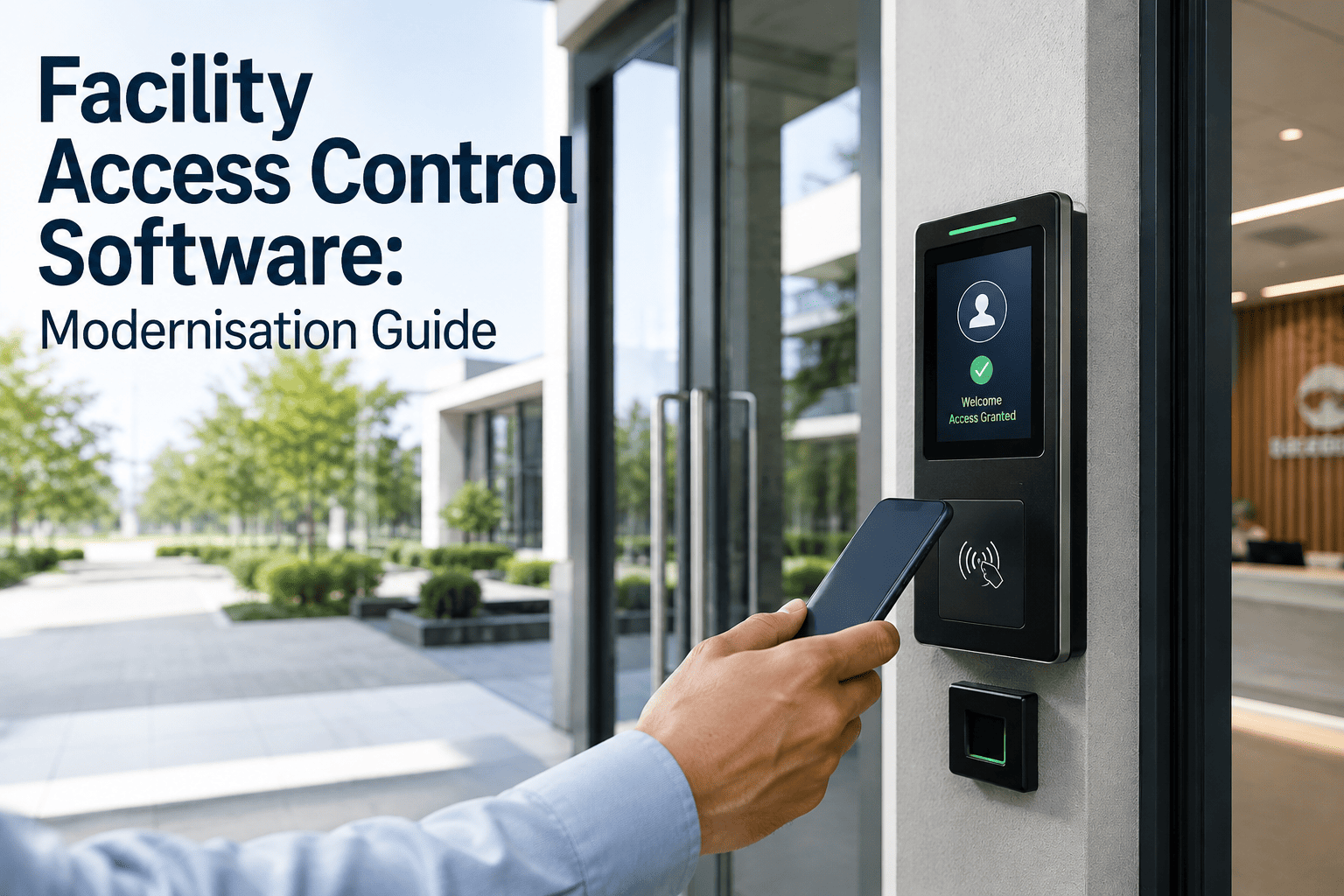
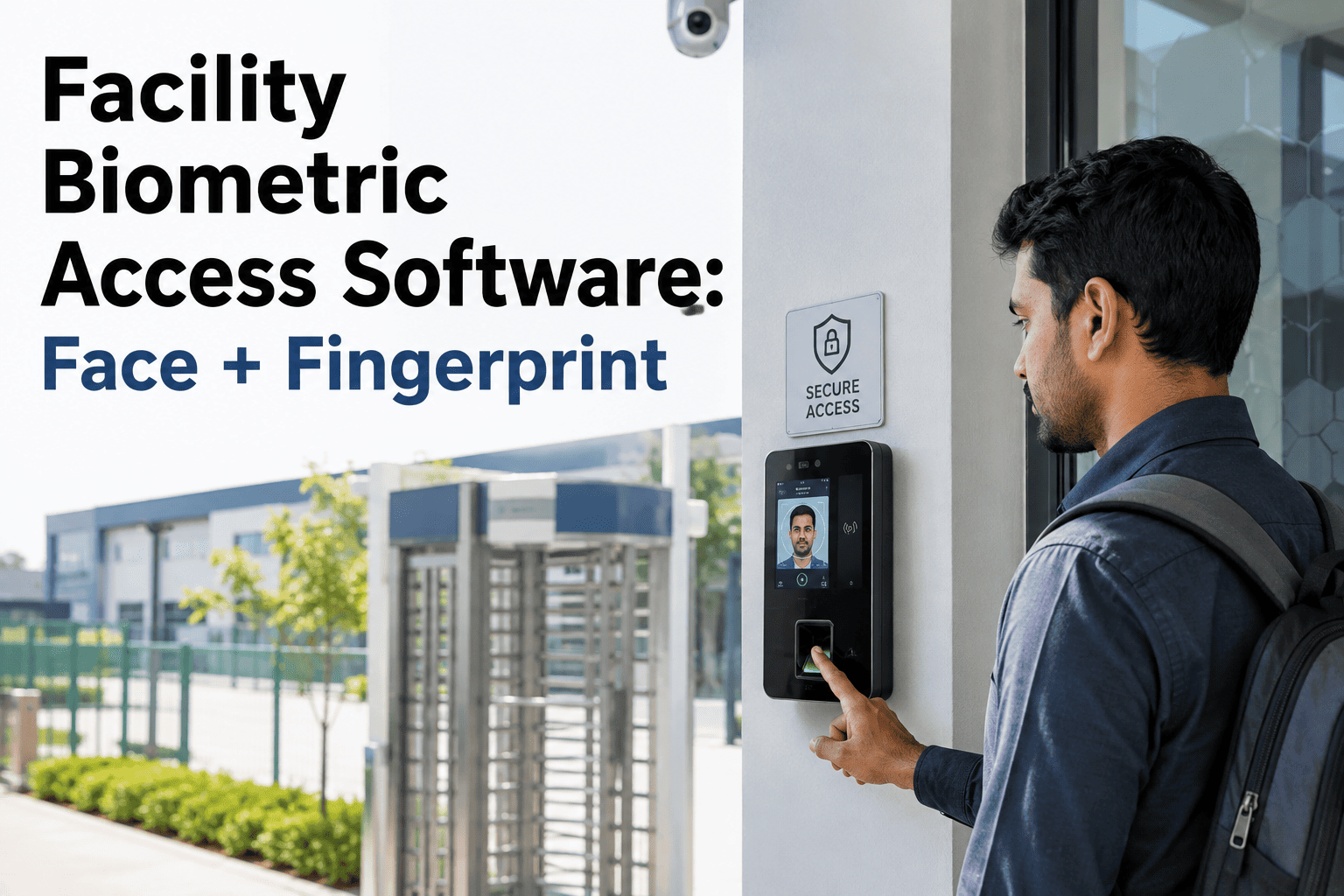
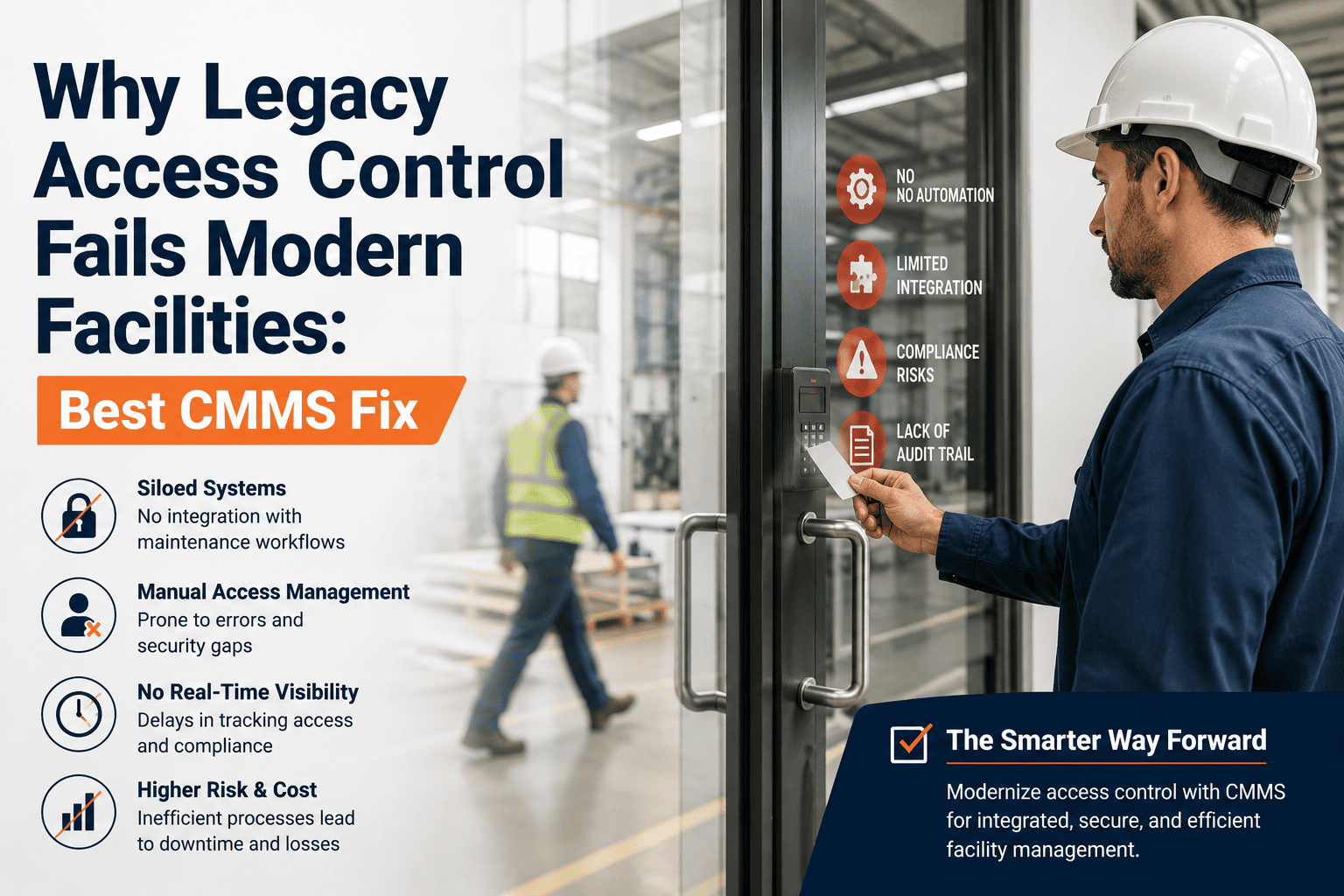
Every facility running mag stripe cards, HID Prox badges, or legacy Wiegand wiring is sitting on borrowed time. These credential formats were built decades ago with no encryption, no tamper detection, and no way to tell a facility team when a reader has failed until someone is already locked out or a door has been propped open all night. Security teams are shifting to OSDP, mobile credentials, and biometric authentication because legacy card formats can be cloned in seconds with equipment sold openly online, and because unencrypted one-way wiring gives no warning before it fails. Modernising access control is no longer only a security decision — it is an asset-tracking and maintenance problem, since every reader, controller, and credential now needs monitoring, scheduled servicing, and a documented replacement plan. See how a facility CMMS keeps every access control asset visible from installation to retirement inside OxMaint.
Facility CMMS · Access Control Modernisation
Retire Mag Stripe, HID Prox, and Wiegand Before They Put Your Facility At Risk
Legacy credential formats were never built for today's threats. See where OSDP, mobile credentials, and biometrics fit into your modernisation plan, and how a facility CMMS keeps every reader, controller, and door tracked through the transition.
29%
of organizations already use mobile smartphone credentials for access control
27%
plan to add mobile credentials within the next 12 to 18 months
AES-128
encryption built into OSDP, compared with zero encryption in Wiegand wiring
73%
of organizations now rank identity management as their top security priority
Legacy Credentials Under Pressure
Why Mag Stripe, HID Prox, and Wiegand Are Being Phased Out
01
Magnetic Stripe Cards
Swipe cards store credential data on a magnetic band that wears down with every use and can be duplicated with a low-cost reader sold openly online. Once a card is skimmed, the system has no way to know a copy exists.
02
HID Prox (125kHz)
Low-frequency proximity cards broadcast an unencrypted number the moment they are near a reader, so the credential can be captured from a few inches away without the cardholder ever noticing anything happened.
03
Wiegand Wiring
Wiegand only sends data one way, from reader to controller, so the panel cannot confirm a reader is genuine, healthy, or even still connected until someone is already stuck outside a door during a shift change.
04
Unmonitored Controllers
Older panels rarely report their own status, so a firmware fault, a battery failure, or a tampered enclosure can sit undetected for weeks until an audit or a lockout forces the issue into the open.
Side by Side
Legacy Credentials vs Modern Access Control
The gap between legacy hardware and current standards is not incremental. It changes what a facility team can actually see, prove, and respond to when something goes wrong.
| Capability |
Legacy Credentials |
Modern Access Control |
| Encryption |
None on Wiegand, mag stripe, or Prox |
AES-128 encryption on OSDP and mobile |
| Communication direction |
One-way, reader to controller only |
Bi-directional, real-time status updates |
| Cloning risk |
Cloneable with low-cost hardware |
Encrypted credential, not copyable in transit |
| Failure visibility |
Silent until a door fails to open |
Reader health reported to the controller |
| Compliance reporting |
Reconstructed manually after the fact |
Logged automatically as devices report in |
What's Replacing Legacy Hardware
Three Technologies Doing the Heavy Lifting in 2026
OSDP
Open Supervised Device Protocol was developed by the Security Industry Association to replace Wiegand's one-way wiring with bi-directional, AES-128 encrypted communication. A single OSDP port can support multiple readers, cutting wiring cost while giving controllers the ability to flag a disconnected or tampered reader immediately.
Mobile Credentials
Digital credentials held on a phone or wearable use Bluetooth Low Energy or NFC instead of a physical card, removing the cloning risk tied to swipeable or proximity formats. Most facilities keep a small stock of physical backup cards during the transition rather than switching every door at once.
Biometrics & Identity Convergence
Fingerprint, facial, and iris authentication tie access directly to a person rather than a card that can be lost, shared, or copied, and are increasingly managed inside the same identity platform used for digital logins. Facilities adopting biometrics are also building clearer governance policies to address employee privacy concerns.
The Migration Plan
How Facility Teams Move From Legacy to Modern Without a Shutdown
01
Audit Every Reader and Panel
Before any hardware changes, log every access point, its credential type, wiring, and age so the migration plan is based on what is actually installed, not what the original blueprints assumed.
02
Pick the Right Mix Per Door
High-traffic entrances and perimeter doors typically move to OSDP and mobile first, while low-risk interior doors can often keep existing hardware a while longer without raising overall exposure.
03
Migrate Building by Building
Running the switch in phases, one building or one floor at a time, keeps staff and tenants moving through doors without forcing a system-wide outage window.
04
Track Every Asset Through the Change
Every new reader and controller becomes a tracked asset from the day it goes live, with service history and warranty dates recorded before the old hardware is even removed.
Modernise Access Control Without Losing Track of a Single Reader
Book a walkthrough of how a facility CMMS turns access control hardware into tracked, serviceable assets, or start logging your readers and controllers today.
Who Is Modernising Right Now
Where Access Control Upgrades Matter Most
01
Corporate Campuses
Multi-building campuses are consolidating dozens of legacy reader types onto one open protocol so a single security team can manage every entrance from one dashboard instead of juggling vendor-specific panels.
02
Healthcare Facilities
Hospitals and clinics are pairing mobile credentials with strict identity governance, since clinical staff move between units constantly and a lost badge can mean unauthorized access to sensitive areas.
03
Multi-Site Retail & Logistics
Chains with dozens of locations are standardising on OSDP so a replacement reader from any vendor can be swapped in without a custom wiring job at every single site.
04
Data Centers & Utilities
Facilities with strict compliance obligations are moving away from unencrypted credentials entirely, since an unmonitored Wiegand line is now treated as an audit finding rather than an acceptable risk.
Inside the CMMS
What a Facility CMMS Tracks During Migration
1,940
Readers and controllers logged as assets across a typical portfolio
63
Devices flagged for replacement before the next audit window
18
Legacy readers still pending migration this quarter
96%
Of access control faults resolved before an audit is scheduled
From the Field
What Facility Teams Say After Modernising Access Control
5 / 5
We had HID Prox readers on every door across three buildings and had no idea how many were actually still working until we started migrating. The audit alone caught six controllers that had been silently failing for months. Moving to OSDP gave us real status on every door, and our compliance audit went from a two-week scramble to a same-day export.
DF
David Ferreira
Facility Security Manager, Corporate Campus
4 / 5
Our clinic staff badge in and out of a dozen rooms every shift, and lost prox cards were a weekly headache. Mobile credentials cut lost-badge tickets by more than half, and because every reader is tracked in the CMMS, maintenance knows about a failing door before a nurse ever gets locked out.
PN
Priya Nandakumar
Operations Lead, Healthcare Facility
Common Questions
Access Control Modernisation — Frequently Asked Questions
Do we have to replace every reader at once to modernise?
No. Most facilities migrate door by door, prioritising main entrances and perimeter access before moving interior doors onto a normal replacement schedule.
Start a free trial to see how migration phases are tracked.
Is OSDP compatible with our existing wiring?
OSDP typically runs over the same cabling used for Wiegand, and many readers installed since 2018 already support it, so a firmware update or reader swap is often enough without rewiring a building.
Do mobile credentials mean we can retire physical cards completely?
Most facilities keep a small set of physical backup cards even after mobile rollout, since phones can run out of battery, and a hybrid approach avoids lockouts during the transition period.
How does a CMMS fit into an access control upgrade?
Every reader, controller, and credential becomes a tracked asset with service history, warranty dates, and automatic work orders when a device reports a fault.
Book a demo to see the asset view live.
What happens to reporting and audits during migration?
Legacy and modern devices can be tracked side by side in the same system, so compliance reports stay complete throughout the migration instead of showing gaps while hardware is replaced.
Facility CMMS · Access Control Modernisation
Give Every Door a Modern Credential and a Maintenance Record
Replace guesswork with a documented view of every reader, controller, and credential in your facility, from the first OSDP swap to the last mag stripe card taken out of service.