A regional healthcare system replaced its badge printers, its visitor kiosks, and its video platform in the last three years — and never touched the access panels wiring every door back to Wiegand readers installed in 2011. The doors still open, so nobody flags them on the annual security walkthrough. Then a contractor plugs a cheap cloning device into an exposed reader cable, walks a copied badge past three restricted doors, and the incident report reads "system functioned as designed." That is the quiet failure mode of legacy access control — it never crashes, it just stops protecting anyone while looking exactly like it always did. Facility teams who cannot say which doors still run unencrypted Wiegand, which readers are unsupervised, or which panels are past warranty need one place that already knows — that place is OxMaint.
Facility Access Control Modernization — OxMaint CMMS
Track Every Reader, Panel, And Credential Like The Asset It Actually Is
Hardware inventory by protocol and risk level. Preventive maintenance on panels, readers, locks, and battery backup. Door-by-door modernization sequencing. Audit-ready reports for security committees and cyber-insurance renewals.
The Access Control Reality Most Facility Teams Are Not Tracking
Nobody replaces a working door reader on a hunch. Access control hardware sits behind walls and above ceilings, so it only gets attention when a door fails open, an audit asks a question nobody can answer, or an insurer wants proof of encrypted communication. The numbers below are why that is no longer a safe way to run it.
1980s
The decade Wiegand was designed — still the protocol running most doors in buildings today, with no encryption between reader and panel
29%
Organizations already running mobile smartphone credentials, with another 27% planning adoption within 12 to 18 months
74%
Organizations that have deployed or are actively planning mobile credentials, per HID's 2026 identity and security outlook
40%
Fewer tailgating incidents reported in buildings that moved from card-only entry to mobile or touchless credentials
Why Legacy Access Control Quietly Fails Modern Facilities
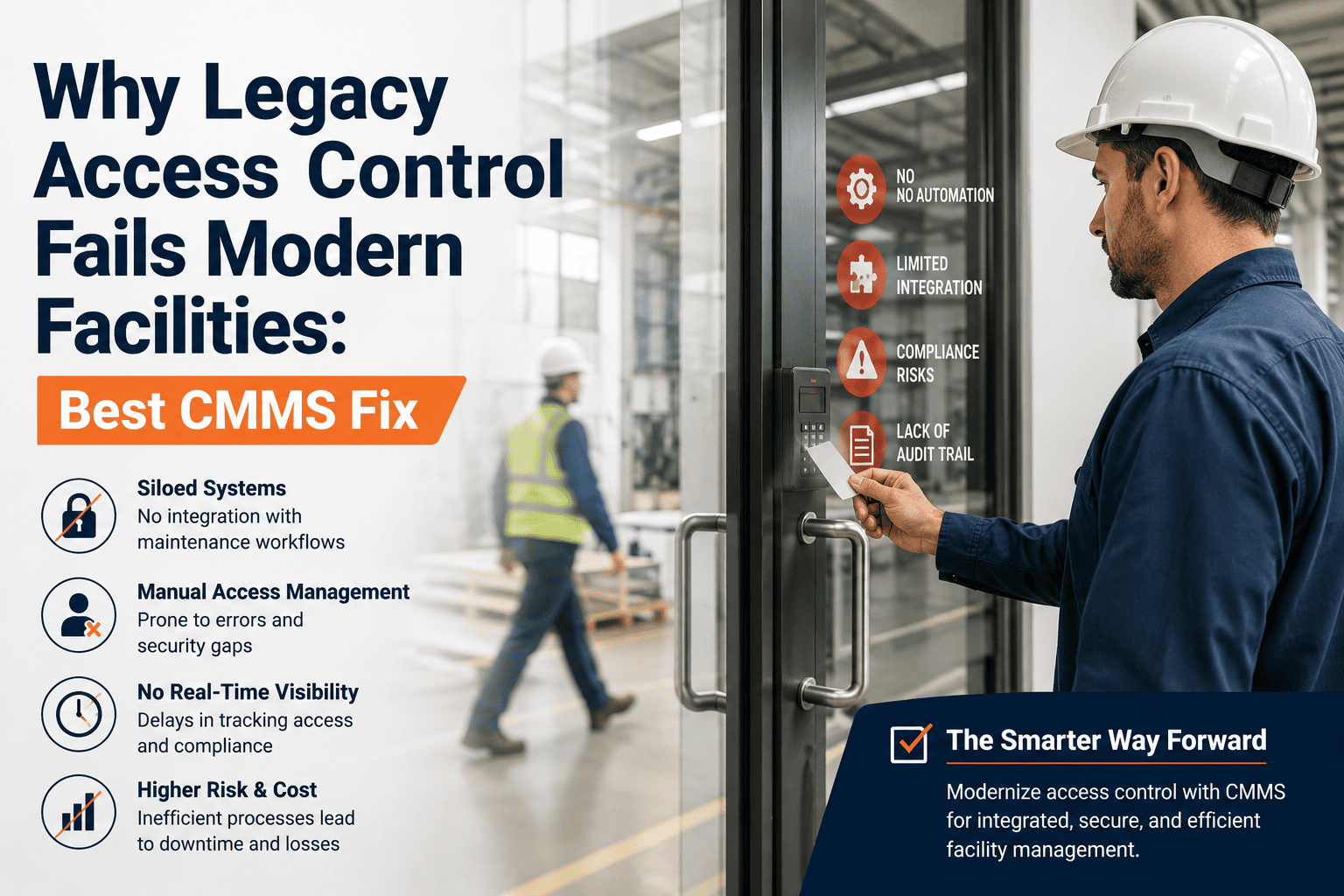
Legacy access hardware does not announce its own decline the way a broken elevator or a leaking pipe does. It keeps letting people through doors right up until the moment it lets the wrong person through. These are the four failure points showing up across office, healthcare, retail, and industrial portfolios still running first-generation panels and readers.
Plaintext, Clonable Credentials
Wiegand sends card data between reader and panel with no encryption. Off-the-shelf cloning tools capture that transmission and reproduce a working badge in seconds, and the panel has no way to tell the copy from the original.
No Device Supervision
A cut cable, a pried-off reader, or a disconnected panel goes unnoticed on legacy wiring because nothing is monitoring the line. Supervised protocols like OSDP flag tamper and disconnection the moment it happens — legacy hardware simply stays silent.
Systems That Do Not Talk To Each Other
Access control, visitor management, video, and HR directories often run in separate silos. A visitor checked in at the front desk can walk into a restricted area with no alert, because the systems tracking each event were never connected.
Maintenance Nobody Can See
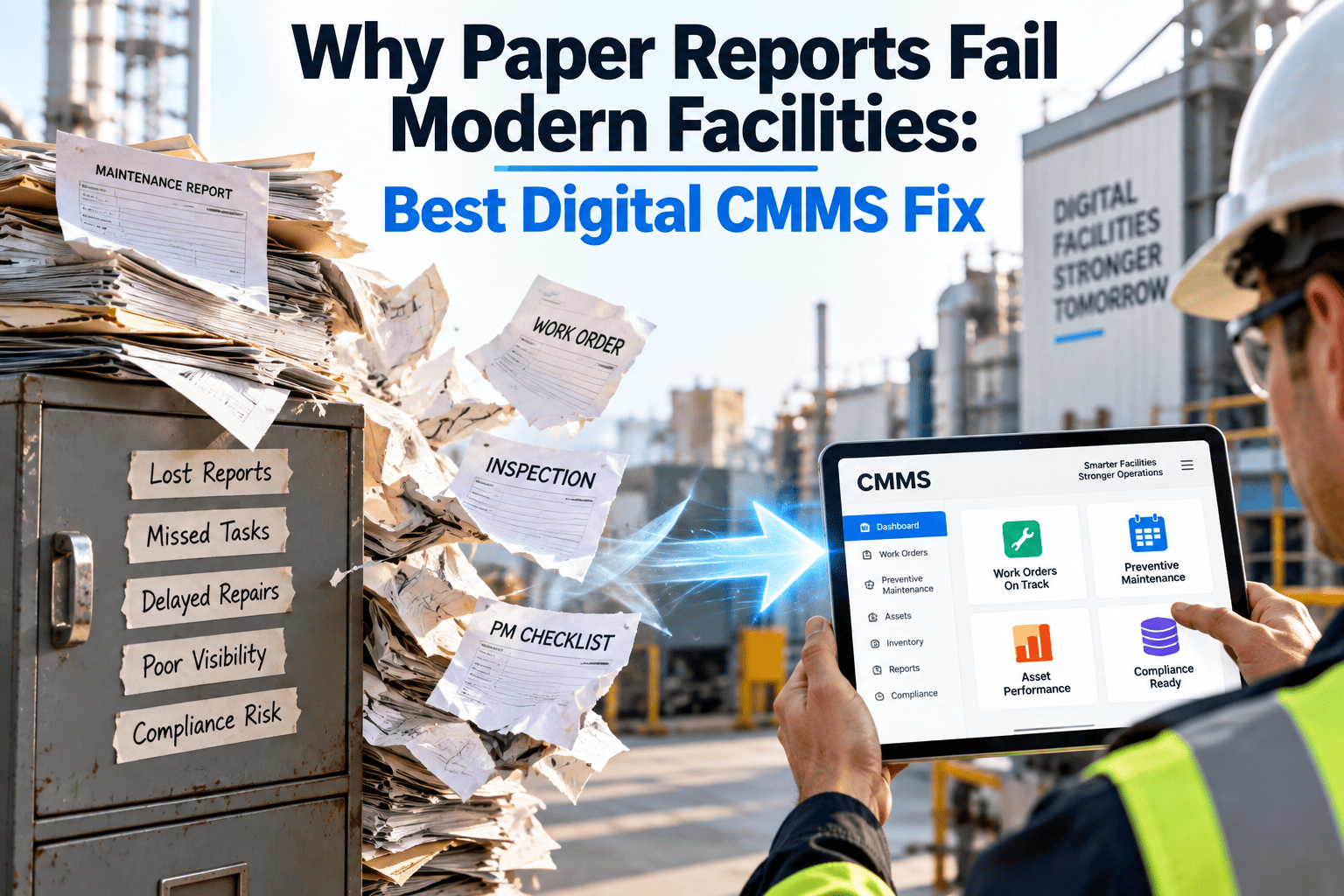
Battery backups, door strikes, request-to-exit sensors, and controller firmware degrade on their own schedule with no dashboard tracking any of it — so the first sign of failure is a door that will not lock, discovered after hours.
Legacy Access Program vs OxMaint-Managed Access Program
Swapping a reader does not fix an access control program on its own. What actually changes outcomes is whether every panel, reader, lock, and credential is tracked as a maintained asset with a service history — instead of hardware nobody looks at until it fails.
| Dimension |
Legacy Program |
OxMaint-Managed Program |
| Reader and protocol inventory |
Unknown mix of Wiegand and OSDP, undocumented by door |
Every reader logged by door, protocol, and firmware version |
| Preventive maintenance |
Reactive — battery, lock, and sensor failures found on lockout |
Scheduled PM on panels, locks, batteries, and door hardware |
| Credential lifecycle |
Manual badge tracking, slow revocation on staff turnover |
Credential status tied to asset record, revocation logged instantly |
| Integrator and vendor accountability |
No timestamped record of service visits or response time |
Every service call logged against contract SLA terms |
| Modernization sequencing |
Decided ad hoc after an incident or failed audit |
Door-by-door risk scoring drives a planned upgrade order |
| Audit and insurance reporting |
Days spent assembling records across teams and vendors |
Full hardware and maintenance history exported in minutes |
From Wiegand To OSDP — A Sequenced Upgrade, Not A Rip-And-Replace
Most facilities cannot swap every reader on a single weekend, and they do not need to. Vendors already sell readers that run Wiegand and OSDP side by side during the transition, so the upgrade can move door by door based on actual risk. This is the sequence that keeps the building open while the hardware catches up to the threat.
1
Inventory Every Door
Log reader protocol, panel model, lock type, and firmware version for every controlled opening across the portfolio before deciding what changes first.
2
Score Doors By Risk
Perimeter entries, server rooms, pharmacy cages, and executive floors move to the front of the queue ahead of low-traffic interior doors.
3
Swap Readers In Phases
Dual-protocol readers keep existing panels functional during the transition, so tenants and staff see no disruption door by door.
4
Migrate Credentials
Move staff onto mobile or encrypted smartcard credentials as their doors convert, retiring clonable cards as each phase completes.
5
Keep Monitoring After Go-Live
Supervised readers report tamper and disconnection events on their own — the program only holds up if someone is watching the feed.
Modernization Sequencing — OxMaint CMMS
Turn A Guess Into A Door-By-Door Upgrade Plan
Risk-score every opening, sequence the reader swap, and track every work order from inventory to go-live — with the maintenance history to prove it at the next audit.
Six Signals It Is Time To Modernize, Not Just Repair
Access control hardware rarely fails all at once, which is exactly why it gets deferred for years. These are the signals facility and security teams report right before a legacy system finally becomes the incident everyone was trying to avoid.
1
Perimeter Doors Still On Wiegand
The doors with the highest consequence if breached are the ones still transmitting credential data with no encryption at all.
2
No Alert On A Disconnected Reader
If a cut cable or pried reader would go unnoticed until someone physically checks the door, the system has no supervision at all.
3
Slow Credential Turnover
Reprinting badges takes days and revoking access for departed staff lags behind HR — a gap every legacy card system carries by default.
4
Workforce Expects Mobile, Not Plastic
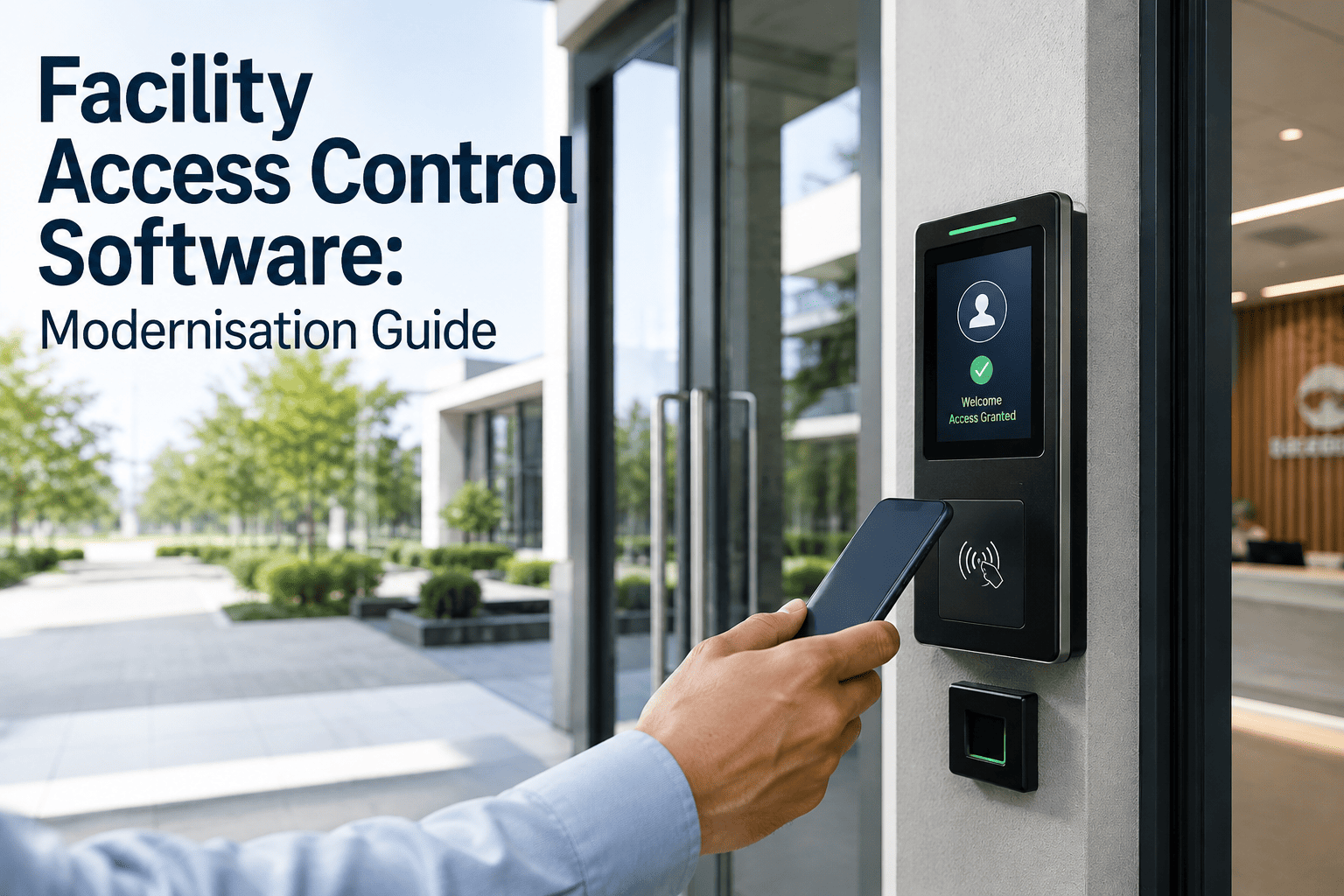
Staff already unlock phones, cars, and hotel rooms with an app. A building still issuing plastic cards reads as behind, not secure.
5
Insurance Or Compliance Questions Go Unanswered
Cyber-insurance renewals now ask about encrypted reader protocol and device supervision — and an unanswered question raises the premium.
6
Recurring Tailgating At The Same Doors
Slow or clunky readers train people to hold the door for the next person — a pattern that faster, touchless entry reliably breaks.
What Facility Teams Report After Bringing Access Hardware Into OxMaint
These are the outcomes that come up at security committee meetings and insurance renewals once every reader, panel, and credential is tracked as a maintained asset instead of hardware nobody checks until it fails.
100%
Of doors mapped by reader protocol, panel model, and maintenance status
40%
Fewer tailgating incidents after moving high-traffic doors to mobile or touchless entry
Minutes
To pull a full hardware and service history for an audit or insurance renewal
Instant
Credential revocation the moment a status change is logged against the asset
We knew which doors had cameras and which had badge readers, but nobody could tell you which readers were still Wiegand until we mapped every door in OxMaint. Turned out our loading dock and two stairwell doors — the ones an intruder would actually target — were the oldest hardware in the building. That would never have surfaced from a walkthrough.
Director of Security Operations · Multi-tenant office portfolio · 9 buildings
Frequently Asked Questions
Facility Access Control — OxMaint CMMS
Every Reader. Every Panel. Every Credential. Tracked, Not Guessed.
Map your hardware, sequence the upgrade, and walk into your next audit or insurance renewal with a record ready in minutes, not days.