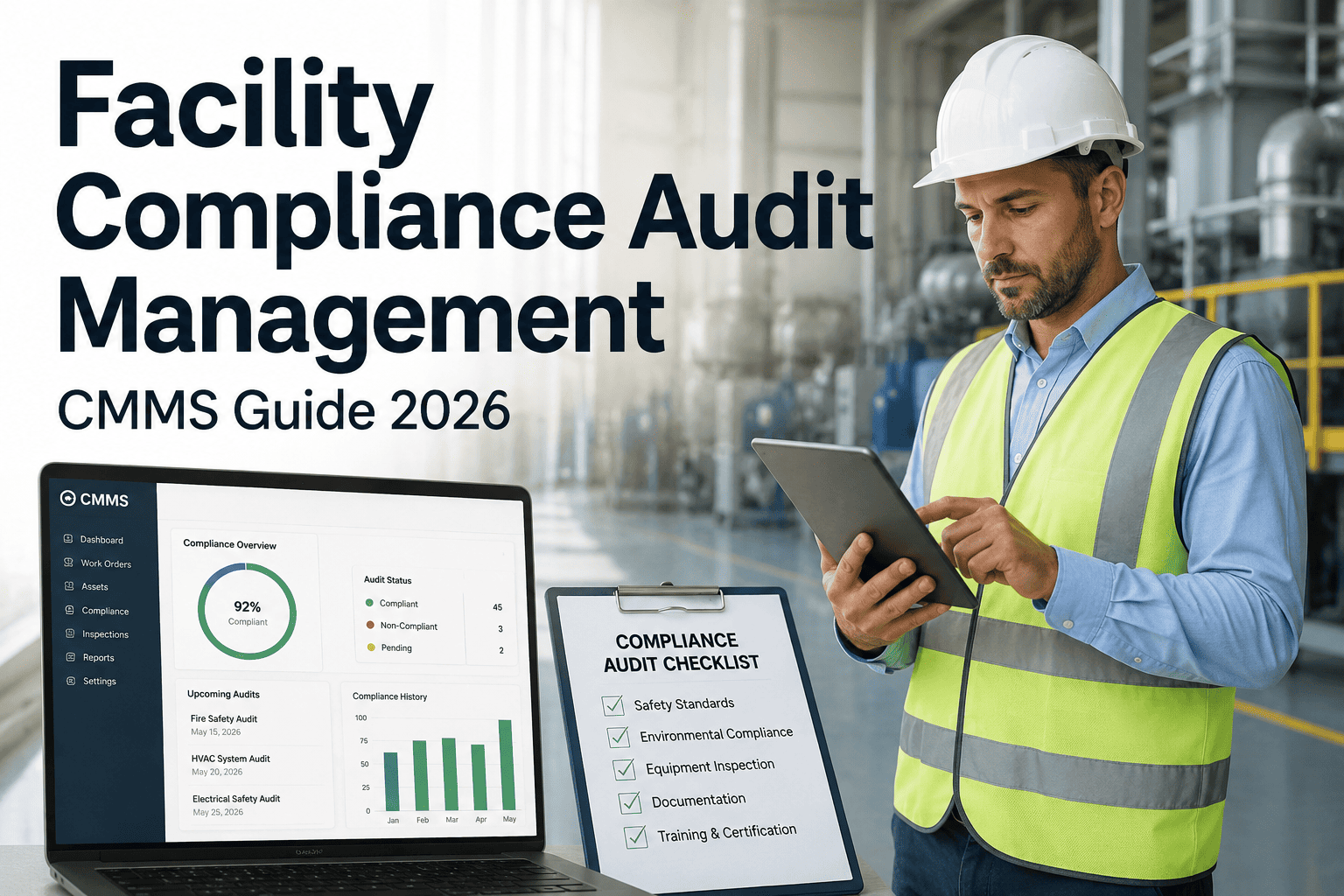
Environmental compliance for a commercial facility is not one regulation — it is three separate federal programs running on three separate clocks, each with its own trigger threshold, its own documentation standard, and its own penalty schedule. A cooling system crossing fifteen pounds of refrigerant now falls under EPA leak detection rules. A hazardous waste total crossing one thousand kilograms in a single month changes a facility's generator status overnight. A stormwater discharge with no site-specific pollution prevention plan on file is a violation before an inspector ever samples the water. None of these deadlines wait for a facilities team to notice them, and the fines for missing one can run into tens of thousands of dollars per day. Closing that gap is exactly what OxMaint's asset management platform is built to do.
Three Regulatory Clocks, One Facility, Zero Room for a Missed Deadline
Refrigerant management, stormwater discharge, and hazardous waste generation are governed by three different EPA programs, each auditable on demand and each carrying its own penalty schedule. A documented, maintenance-linked record is the only defense that holds up when an inspector asks for proof.
Know Your Hazardous Waste Generator Status Before an Inspector Does
RCRA generator status is not a fixed label — it is recalculated every calendar month based on how much hazardous waste a facility actually produces, and every tier carries a different set of storage time limits, labeling rules, and reporting obligations.
The Compliance Calendar Every Facility Is Already Running
Four Compliance Programs, Four Different Clocks
Each environmental program has its own trigger threshold, its own paperwork, and its own penalty schedule — the table below lines them up side by side so nothing falls into a gap between departments.
| Program | Trigger Threshold | Required Documentation | Reporting Deadline | Penalty Exposure |
|---|---|---|---|---|
| Refrigerant Management | 15+ lbs HFC refrigerant charge | Leak inspection logs, repair verification, technician certification | Repair within 30 days of leak | Up to $60,000 per day |
| Stormwater Discharge | Regulated industrial activity on site | SWPPP, inspection logs, monitoring data | Quarterly inspection and monitoring | Permit revocation, per-day fines |
| Hazardous Waste | 100+ kg generated per month | Waste characterization, manifests, accumulation logs | Biennial report (LQG) | Per-drum, per-day citations |
| Chemical Inventory (Tier II) | 10,000 lbs hazardous chemicals on site | Annual chemical inventory report | March 1 annually | State-level daily penalties |
OxMaint links refrigerant inventories, SWPPP inspection schedules, and hazardous waste logs directly to the assets that generate them, and fires a reminder before any deadline is missed.
From Chemical Inventory to Audit-Ready Record
Almost every environmental citation I have seen was not a facility dumping something it should not have. It was a facility that could not produce the paperwork proving it did the right thing on time. A generator status that quietly shifted from SQG to LQG because nobody was tracking monthly totals. A SWPPP that existed but had not been updated in three years. A refrigerant leak that got fixed but never had its verification test logged. The regulations themselves are not the hard part — the hard part is keeping three separate compliance calendars synchronized with three separate sets of field records, and doing it every single month without fail.
Frequently Asked Questions
How does OxMaint track EPA refrigerant leak inspections?
Each refrigerant-holding asset carries its charge weight and leak rate history, and OxMaint schedules the required inspection and 30-day repair window automatically. Start a free trial to set up refrigerant tracking for your equipment.
Can OxMaint monitor hazardous waste generator status month to month?
Yes. OxMaint logs waste volumes as they are generated and flags a facility approaching the SQG or LQG threshold before the reporting obligations change. Book a demo to see generator status tracking in action.
Does OxMaint help manage a stormwater pollution prevention plan?
OxMaint schedules the quarterly and post-storm inspections a SWPPP requires and stores every monitoring result against the facility's permit record for audit purposes.
What happens if a facility misses a Tier II filing deadline?
State agencies can assess daily penalties for a late or missing Tier II report, and repeated misses draw closer regulatory scrutiny going forward. Start your free trial to put the March 1 deadline on an automated calendar.
Can OxMaint manage environmental compliance across multiple facilities?
Yes, a single portfolio dashboard shows refrigerant, stormwater, and hazardous waste status across every site, with every open deadline visible in one place.
Three Clocks Running. One Place to Watch Them All.
OxMaint links refrigerant inventories, stormwater inspections, and hazardous waste logs to the assets that create them, and keeps a complete, audit-ready record for every EPA program your facility answers to.