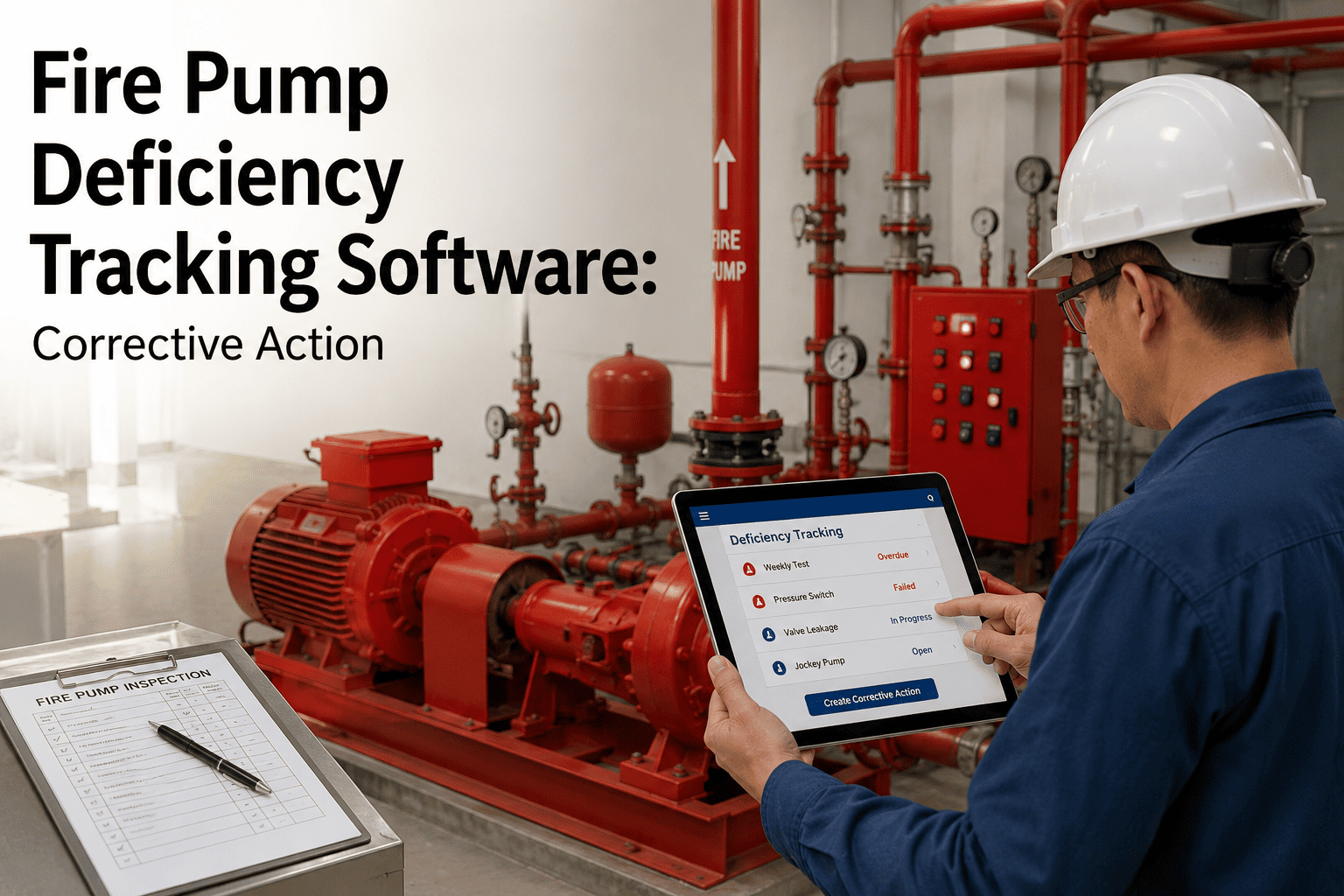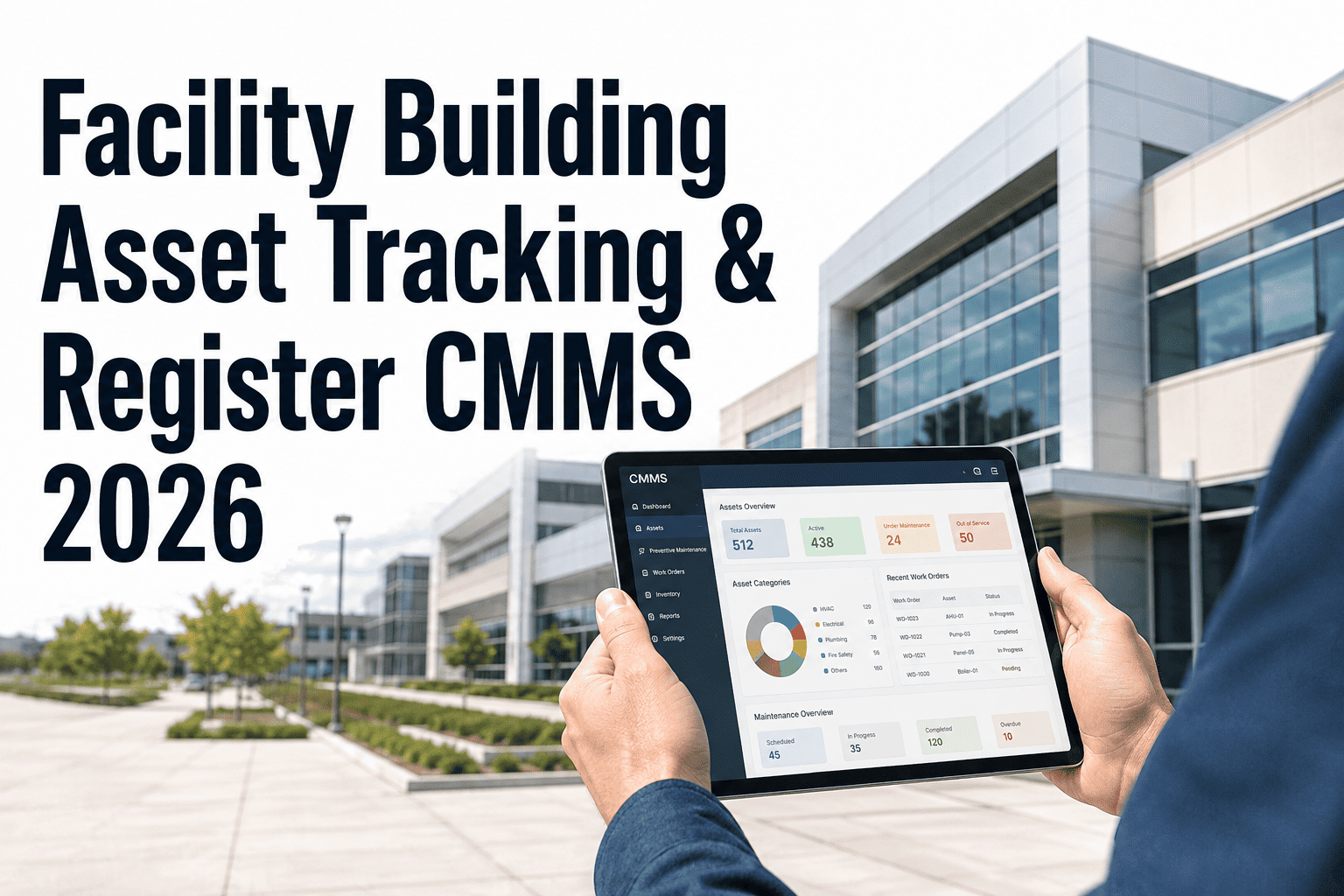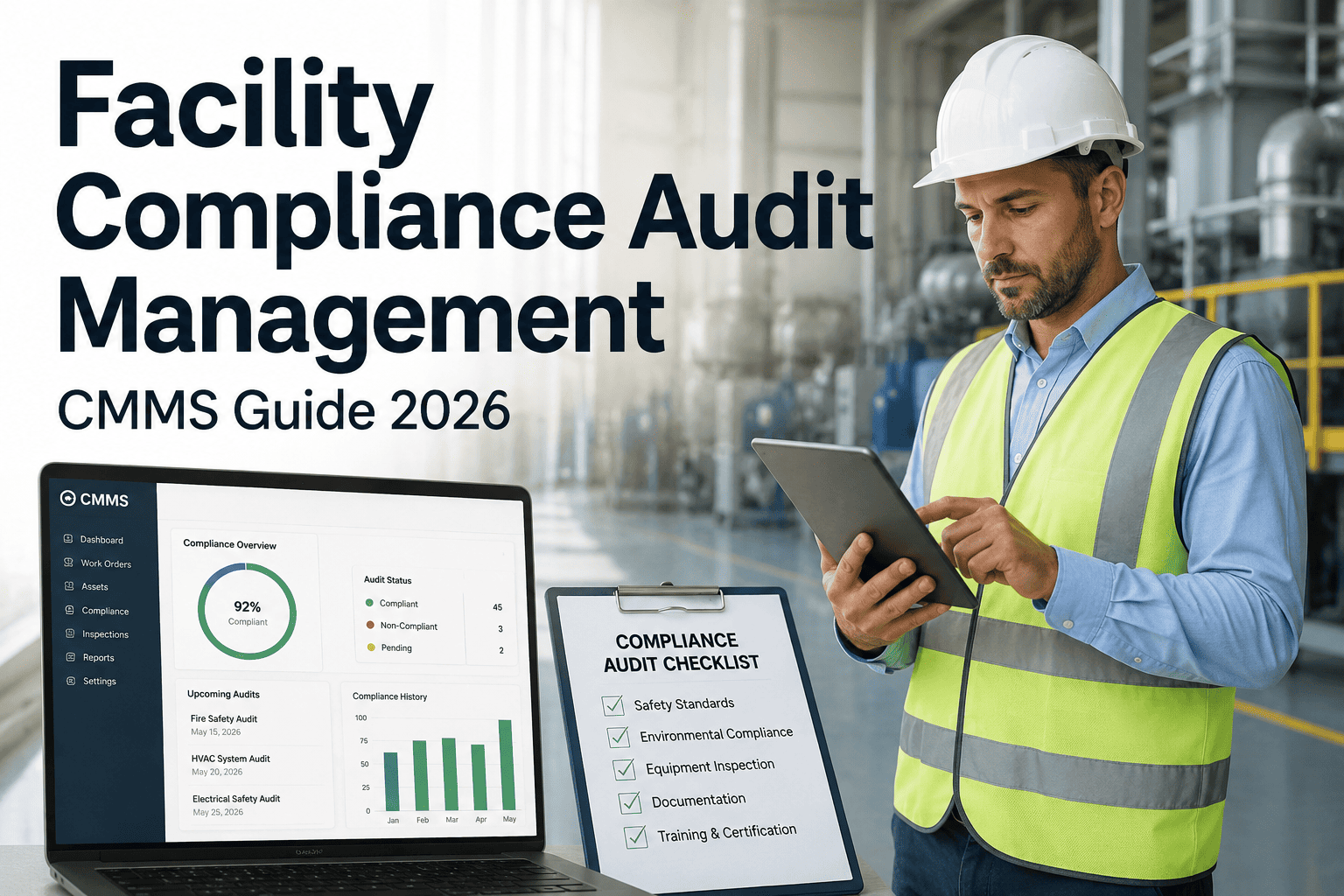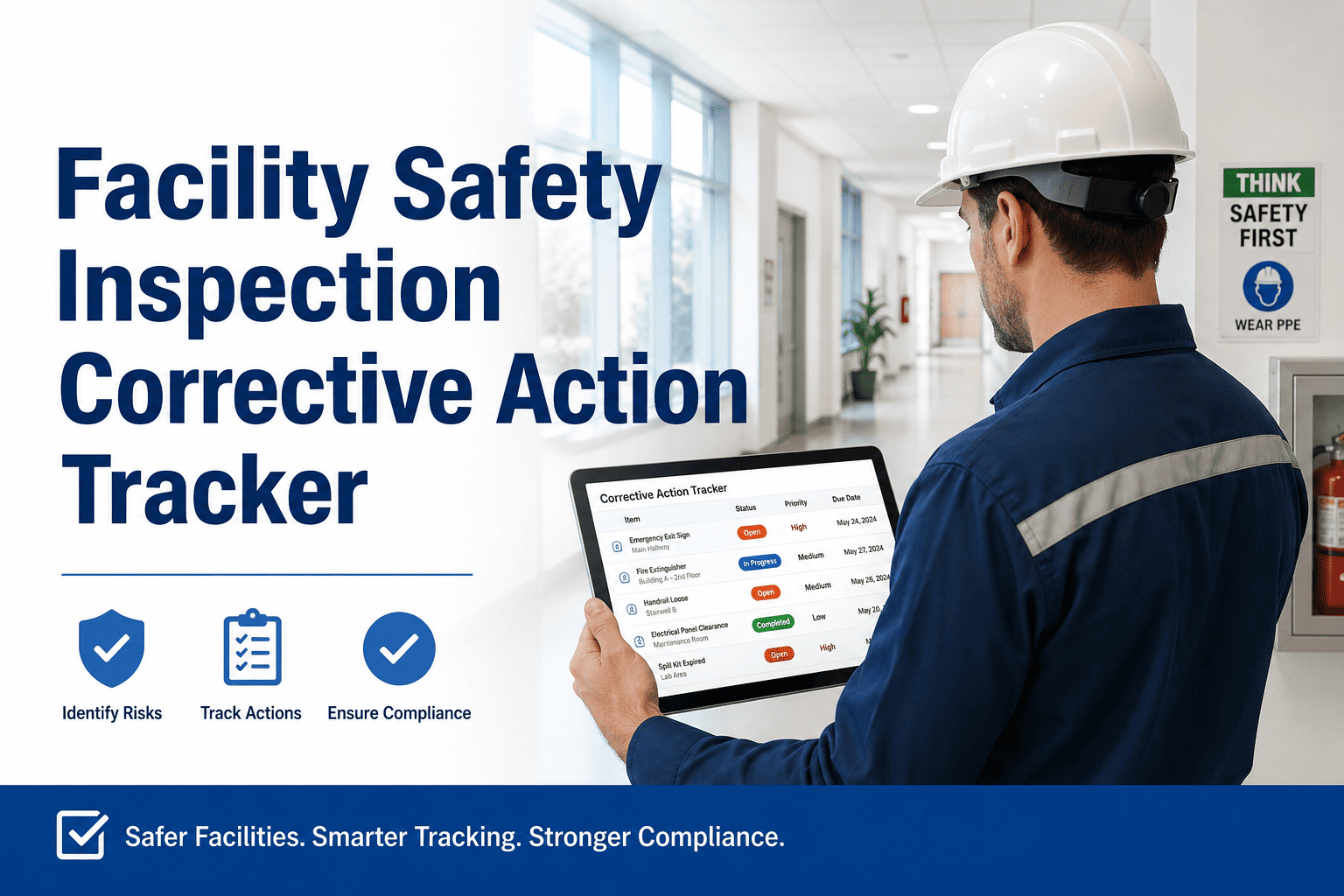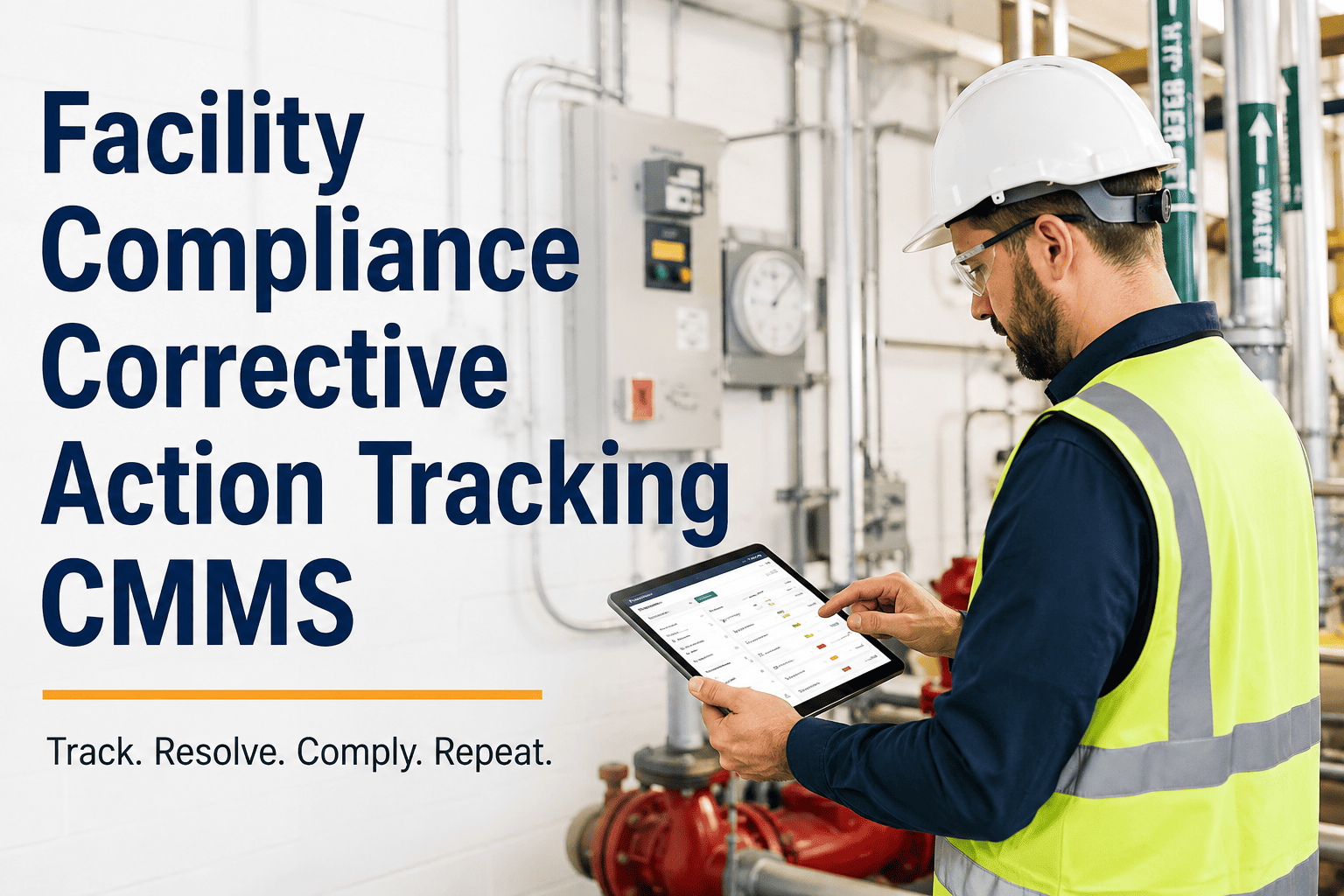
Corrective action tracking is the discipline that separates a facility that passes its next ISO 55001 or OSHA audit from one that receives a repeat finding and a six-figure penalty — yet most maintenance teams still chase findings through email threads, shared spreadsheets, and sticky notes on a wall. When a finding stays open past its due date, the gap compounds: the original defect worsens, the compliance evidence expires, and auditors escalate from a Level 1 observation to a Level 3 nonconformity that can suspend operations. A CMMS built around a closed-loop finding-to-resolution workflow eliminates that risk by forcing owner assignment, due-date enforcement, evidence capture, and verification sign-off into one auditable record. The framework below walks through the workflow, benchmarks, and CMMS configuration that high-maturity facilities use to close 90% of corrective actions within 30 days — and you can operationalize all of it by spinning up a Start Free Trial of OxMaint today.
Close every compliance finding before its due date — or pay the penalty.
Industry audits show that 68% of facilities carry corrective actions past their committed due dates, and the average open finding sits unresolved for 94 days. A CMMS-driven corrective action workflow cuts that cycle to under 30 days and produces an audit-ready evidence trail for every closure.
Why spreadsheet tracking fails past 50 findings
Once a facility accumulates more than a few dozen open corrective actions, manual tracking methods collapse under their own weight. Owners change roles, due dates slip silently, and the evidence needed for audit closure disappears into personal inboxes.
A 180-asset food processing plant was carrying 63 open corrective actions across three audits — fire door inspections, LOTO procedure updates, and refrigerant leak repairs — tracked in a shared spreadsheet with no owner column. After an FDA inspection produced a Form 483 with three observations tied directly to findings that had been "in progress" for over 120 days, the plant deployed a CMMS corrective action workflow. Within 60 days, 51 of the 63 actions were closed with photo evidence and verifier sign-off; the remaining 12 were reassigned with firm due dates, and the Form 483 response included a complete audit trail that satisfied the inspector on re-inspection.
Six-stage finding-to-resolution workflow
A defensible corrective action program follows a closed loop: every finding enters the system at a known stage, moves forward only when a documented gate is satisfied, and cannot close without verified evidence. Each stage below maps to a CMMS status, an owner role, and a maximum dwell time benchmark.
Finding Logged
Finding enters the CMMS from an inspection, audit, work order, or incident report with source reference, severity (1–4), regulatory citation, and asset tag.
Root Cause Assigned
A 5-Why or fishbone analysis attaches to the record. The CMMS links the finding to the asset failure history and any recurring work orders that contributed.
Owner & Due Date Set
A named individual — not a department — is assigned, with a due date calculated from severity (Level 1 = 7 days, Level 2 = 30 days, Level 3 = 90 days, Level 4 = 180 days).
Corrective Work Executed
A linked corrective work order captures labor hours, parts, and photo evidence. The CMMS enforces mandatory evidence fields before the status can advance.
Verification & Sign-off
An independent verifier — not the person who performed the work — confirms the fix, attaches a verification photo or test result, and signs the digital closure record.
Closed & Archived
The record locks, generates an immutable audit trail, and archives to the asset's compliance history. A 30-day effectiveness check is auto-scheduled for Level 1 and 2 findings.
Severity-based due-date matrix
The single most common failure in corrective action programs is assigning every finding the same 90-day due date. High-severity findings drag on while low-severity ones crowd the queue. The matrix below — aligned with ISO 45001 and common OSHA citation tiers — gives your CMMS a rules engine that auto-calculates due dates at log time.
| Severity Level | Examples | Max Time to Root Cause | Corrective Due Date | Verification Required |
|---|---|---|---|---|
| Level 1 — Critical | Imminent danger, OSHA willful violation, fire suppression failure | 2 business days | 7 calendar days | Yes — independent + photo evidence |
| Level 2 — Major | LOTO procedure gap, expired calibration on safety instrument | 5 business days | 30 calendar days | Yes — independent sign-off |
| Level 3 — Moderate | Missing inspection label, outdated SOP reference | 10 business days | 90 calendar days | Yes — manager review |
| Level 4 — Minor | Documentation formatting, housekeeping near non-critical asset | 15 business days | 180 calendar days | Self-certification acceptable |
Required CMMS fields for a defensible audit trail
An auditor will ask one question about every closed corrective action: "Show me the evidence." If your CMMS record cannot produce a timestamped chain of custody — from finding to verified closure — the closure does not exist. Configure these mandatory fields before you log your next finding.
Finding Source Reference
Link to the originating inspection report, audit ID, work order, or incident number. Required for traceability during re-audit.
Named Owner (Individual)
A specific person — never a department. The CMMS should reject submissions with a team name in the owner field and require a user account.
Auto-Calculated Due Date
Driven by the severity matrix — not a manual entry. Removes human bias and ensures Level 1 findings never sit in a 90-day queue.
Linked Corrective Work Order
Every finding generates or links to a work order with labor, parts, and cost capture. Standalone findings with no work order are flagged as orphaned.
Evidence Attachments
Photos, test results, calibration certificates, or signed attestations. Configure the CMMS to require at least one attachment before status can advance to verification.
Independent Verifier Sign-off
A digital signature from someone other than the assigned owner, with a timestamp and IP record. The strongest defense against "self-certified" audit findings.
The cost of an open finding vs. CMMS-managed closure
The business case for CMMS-based corrective action tracking is not about software cost — it is about avoided penalty exposure, reduced audit preparation labor, and the elimination of repeat findings. The formula and table below quantify the payback for a typical mid-sized regulated facility.
Avoided Cost = (Open Findings × Repeat-Finding Rate × Avg. Penalty per Finding) + (Audit Prep Hours Saved × Loaded Labor Rate)
For a facility with 50 open findings, a 34% repeat-finding rate, $14,200 average penalty per repeat finding, and 120 hours of audit prep saved at $85/hr loaded labor, the annual avoided cost exceeds $250,000 — against a CMMS investment of $6,000–$12,000/year.
| Metric | Spreadsheet-Tracked | CMMS-Tracked | Difference |
|---|---|---|---|
| Median days to closure | 94 days | 27 days | −71% |
| Repeat-finding rate | 34% | 9% | −73% |
| Findings past due date | 68% | 11% | −84% |
| Audit prep labor hours | 160 hrs/audit | 40 hrs/audit | −75% |
| Evidence retrieval time | 3–5 days (manual) | Under 10 minutes | ~99% faster |
| Estimated annual avoided cost | Baseline | $250K+ | Positive ROI in < 30 days |
Stop letting open findings age past their due dates.
Deploy a closed-loop corrective action workflow in OxMaint and close 90% of findings within 30 days — with a defensible audit trail attached to every closure.
Corrective action tracking — your questions answered
How is a corrective action different from a regular work order in a CMMS?
A corrective work order fixes the immediate defect; a corrective action record tracks the full compliance lifecycle — root cause, owner, due date, evidence, verification, and closure — and links to the work order as one stage. The corrective action cannot close until the work order is complete AND an independent verifier signs off. This separation is what auditors look for under ISO 55001 and OSHA VPP criteria.
What due dates should we assign to different finding severities?
Best practice follows a severity matrix: Level 1 (imminent danger) = 7 calendar days, Level 2 (major compliance gap) = 30 days, Level 3 (moderate) = 90 days, and Level 4 (minor documentation) = 180 days. The CMMS should auto-calculate the due date from the severity field at log time so technicians cannot manually extend deadlines without a documented variance approval.
Can OxMaint send automatic escalation alerts when a finding approaches its due date?
Yes — OxMaint sends tiered alerts at 7 days before due, 1 day before due, on the due date, and daily thereafter for overdue items. Escalation routing goes to the assigned owner first, then the compliance manager, then the facility director. You can configure the routing rules and alert cadence during onboarding or test the full escalation chain with a Start Free Trial account.
How long should we retain closed corrective action records for audit purposes?
Most regulatory frameworks require a minimum of 3 years, but OSHA recordkeeping (29 CFR 1904) and EPA Compliance Monitoring require 5 years, and FDA 21 CFR Part 211 requires retention for 1 year past product expiration — which can effectively mean 7–10 years for pharmaceutical facilities. OxMaint stores closed records in an immutable archive with full chain-of-custody timestamps that satisfy all of these retention requirements.
What happens if the same finding recurs after we close the corrective action?
A recurrence means the original root cause analysis was incomplete or the corrective fix was ineffective. Your CMMS should auto-flag the recurrence by matching asset, finding type, and failure mode against the closed record — then reopen the original action at Level 1 severity and trigger a 30-day effectiveness review. This pattern detection is the single most powerful tool for driving repeat-finding rates below 10%, and you can see it in action when you Book a Demo with our team.
Ready to close every finding — on time, with evidence?
Join the facilities that cut corrective action cycle times by 71% and pass their next audit without a single repeat finding. Set up your closed-loop workflow in under an hour.
Free 14-day trial · No credit card