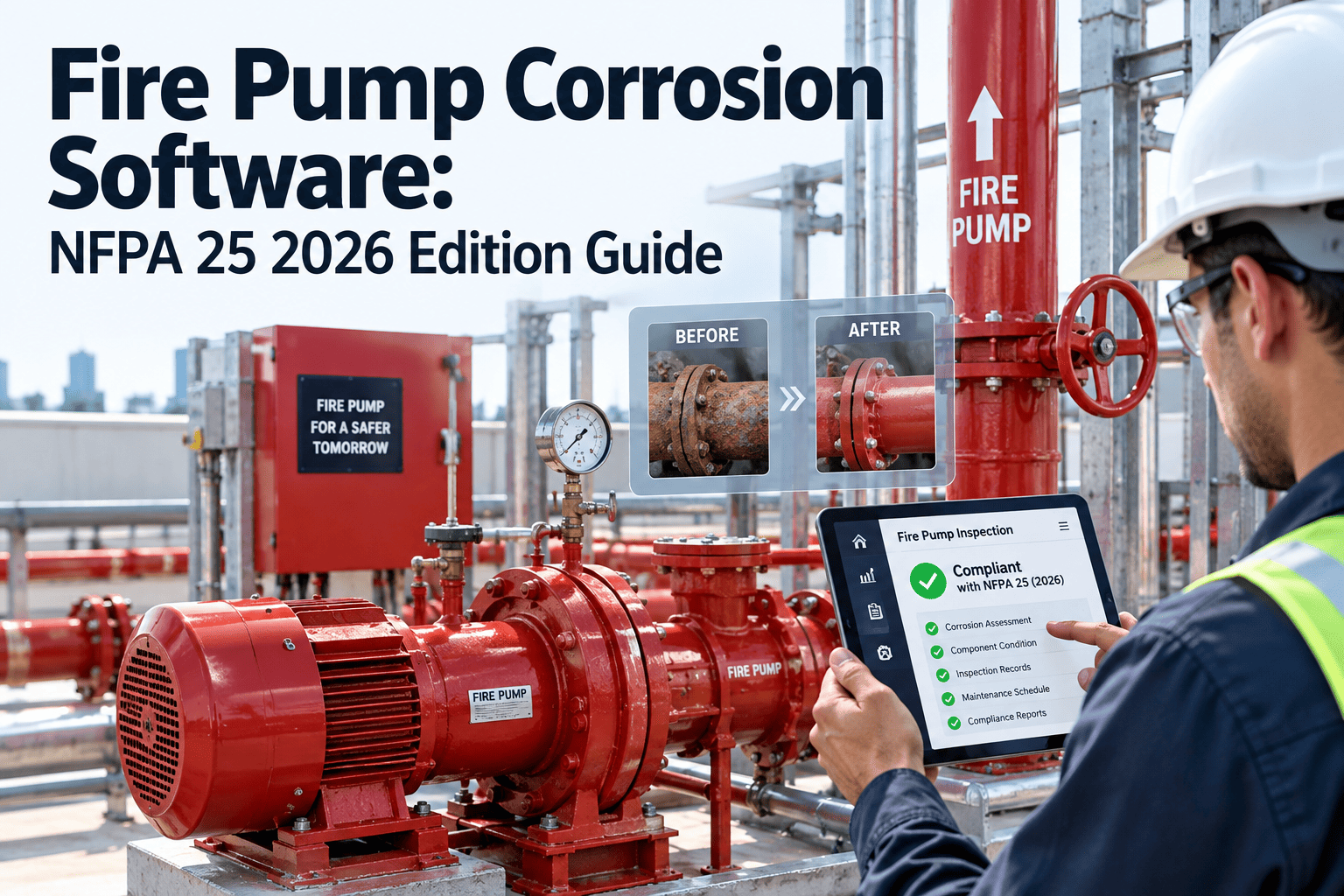
Fire pump corrosion is one of the fastest-growing causes of failed water-based fire protection systems, and the NFPA 25 2026 edition now holds facility owners directly accountable for how that corrosion is tracked, mitigated and documented. Internal pipe corrosion silently reduces flow, pits impellers and can quietly disqualify a fire pump from meeting its rated capacity long before anyone notices during a routine walk-through. The new edition makes corrosion mitigation equipment, from nitrogen generators to vapor corrosion inhibitors, subject to the same inspection, testing and maintenance discipline as the pump itself, and letting that equipment lapse can force a full hydraulic recalculation of the system. Facility and reliability teams responsible for fire protection compliance need a single system of record that captures corrosion readings, inspection intervals and inhibitor performance without paper logs or scattered spreadsheets. That is exactly the gap fire pump corrosion software is built to close, helping facility teams stay ahead of citations, denied claims and forced hydraulic redesigns, and teams already start a free trial of OxMaint to get audit-ready before the 2026 requirements take effect.
Stop finding corrosion gaps during an audit
Bring your fire pump, corrosion mitigation equipment and inspection intervals into one platform built for the 2026 edition, and walk into every audit with the record already assembled.
Why fire pump corrosion just became a bigger compliance problem
Under the 2026 edition of NFPA 25, fire pump corrosion is also a documentation obligation tied to hydraulic calculations, insurance standing and citation risk. If mitigation systems are not inspected, tested and maintained, the hydraulic advantage they provide can disappear. Facility teams must track and prove these records alongside weekly, monthly and annual pump tests.
Four corrosion requirements the 2026 edition adds to your fire pump checklist
The 2026 revision adds enforceable obligations for corrosion mitigation systems that support fire pump and sprinkler hydraulics. Facilities with nitrogen generators or inhibitor feeders outside a maintenance calendar now have a documented compliance gap.
Corrosion mitigation systems are now inspectable assets
Nitrogen generators, vapor corrosion inhibitor feeders and negative-pressure systems must be inspected, tested and maintained according to the standard and the manufacturer's instructions, not left running unchecked in the background. Facilities that treat these systems as install-and-forget equipment now carry a documented compliance gap the moment an inspector asks for maintenance history.
A lapsed inhibitor forces a hydraulic recalculation
If a mitigation system fails to hold the conditions that justified a higher C-value, the piping must be recalculated using a lower, corroded value, which can mean the fire pump no longer meets its design duty point on paper even though nothing physically changed on the pump itself. That gap can only be caught early with continuous, dated maintenance records.
Annual internal inspections for dry, preaction and deluge valves
These valves sit at the center of corrosion-prone dry systems and now require an annual internal look, not just an external functional check, adding another recurring inspection line to your fire pump program. Missing this step is one of the most common findings cited during 2026-era compliance reviews.
Qualified-for-the-task language raises the bar
Section 4.1.1.3 now requires personnel qualified for the specific task performed rather than a single blanket qualification. Corrosion diagnostics and fire pump maintenance sit well above a routine valve check, which means your records need to show who was qualified to do what, and when they did it.
See your fire pump corrosion data in one compliant record
OxMaint turns nitrogen generator run-hours, VCI cartridge levels, pipe corrosion readings and every ITM interval into a single digital record that is ready the moment an inspector, insurer or authority having jurisdiction asks for it.
Manual corrosion logs cannot keep up with the 2026 requirements
Paper logs and spreadsheets become harder to manage once corrosion mitigation equipment has its own ITM schedule and hydraulic-compliance consequences. The table below shows where manual records break down compared with a fire pump corrosion platform.
Scroll the table on smaller screens to compare each compliance activity side by side.
| Compliance activity | Paper & spreadsheet logs | OxMaint fire pump corrosion software |
|---|---|---|
| Pipe and fittings corrosion readings | Handwritten, easy to lose, hard to trend over years | Logged against the asset record with automatic trend charts |
| Nitrogen generator & VCI monitoring | Rarely tracked on a fixed schedule | Recurring ITM tasks auto-scheduled with run-hour alerts |
| Annual dry/preaction valve inspection | Easy to miss among dozens of valves | Auto-generated work order tied to the 2026 interval |
| C-value / hydraulic recalculation trigger | Discovered reactively during an audit | Flagged the moment mitigation ITM lapses |
| Impairment notification for failed inhibitors | Manual phone calls, easy to delay | Notification workflow tied to the impairment record |
| Audit preparation time | Days of assembling binders and spreadsheets | One-click compliance report from live records |
| Qualified-personnel documentation | Inconsistent, often untracked | Technician qualification linked to every task performed |
A missed reading or cartridge check may seem minor, but NFPA 25 evaluates the overall pattern. Paper programs struggle to prove consistent compliance during walkthroughs, claim reviews or authority-having-jurisdiction visits.
Fire pump corrosion software built around how NFPA 25 actually reads
OxMaint keeps corrosion data, fire pump tests and mitigation equipment records in one place. Tasks that once required cross-checking spreadsheets can be completed from a phone during a routine walk-through.
Digital corrosion inspection checklists
Technicians record pipe and fitting corrosion severity, location and photos directly against the asset on a mobile device, replacing paper tags that fade, tear or never make it back to the office. Every checklist is timestamped and attached to the exact fire pump or valve it belongs to.
Mitigation equipment run tracking
Nitrogen generator run-hours, VCI cartridge levels and negative-pressure system alarms are logged on their own recurring schedule, so a lapsed inhibitor never goes unnoticed until an inspector finds it first. Low-level alerts fire before the mitigation window closes.
Automated ITM scheduling by interval
Weekly churn tests, monthly electric pump runs, annual flow tests and annual internal valve inspections are pre-loaded against your fire pump assets, and OxMaint assigns and reminds automatically so nothing depends on someone remembering a date on a wall calendar.
Audit-ready compliance reports
Every corrosion reading, mitigation ITM record and fire pump test report rolls up into a single exportable report an authority having jurisdiction, insurer or corporate safety team can review in minutes instead of days spent assembling binders.
Your fire pump corrosion inspection calendar at a glance
NFPA 25 stacks several intervals on top of each other for a single fire pump. Here is how the recurring corrosion-relevant checks line up across the year.
The real cost of corrosion-related non-compliance
A missed corrosion mitigation ITM record can lead to a failed flow test, denied insurance claim or forced hydraulic redesign. The resulting costs can exceed the effort required to track corrosion properly.
Three steps to a 2026-ready fire pump corrosion record
Moving off paper does not require a long rollout. Facility teams can use their existing asset list, technician roster and inspection history to start an automated corrosion schedule.
The schedule then runs automatically: technicians see what is due, managers see what is overdue, and records update whenever fire pumps, valves or mitigation systems are serviced.
Fire pump corrosion software and NFPA 25 2026 — frequently asked questions
These are common questions from facility and reliability teams moving away from paper corrosion logs.
What does the NFPA 25 2026 edition actually require for fire pump corrosion?
Corrosion mitigation systems such as nitrogen generators and vapor corrosion inhibitors must now be inspected, tested and maintained on a documented schedule. If that upkeep lapses, the piping may need to be hydraulically recalculated at a lower, corroded C-value.
How is fire pump corrosion software different from a standard CMMS?
A fire pump corrosion platform combines standard work order management with corrosion-specific tracking such as inhibitor run-hours, VCI cartridge levels and pipe corrosion severity, mapped directly to the NFPA 25 interval each reading belongs to. You can start a free trial to see the difference on your own assets.
Who is qualified to inspect fire pump corrosion under the 2026 edition?
The standard now requires personnel qualified for the specific task performed rather than a single blanket qualification. Corrosion diagnostics and fire pump maintenance require a higher skill level than a routine valve status check, and that distinction now belongs in the written record.
Can OxMaint work alongside our existing fire protection service contractor?
Yes. OxMaint records what your contractor inspects and tests, so both your in-house team and their technicians are working from the same corrosion and pump history instead of separate paper files that never get reconciled.
How long does it take to get a facility's fire pump records into OxMaint?
Most facilities import their existing pump and asset data within a day and have their first automated corrosion and ITM schedule running the same week. Book a demo to see your own schedule mapped out.
Get ahead of the NFPA 25 2026 fire pump corrosion requirements
Move fire pump corrosion tracking into a single audit-ready record before the 2026 edition takes effect, so inspection records are ready when needed.
Free 14-day trial · No credit card