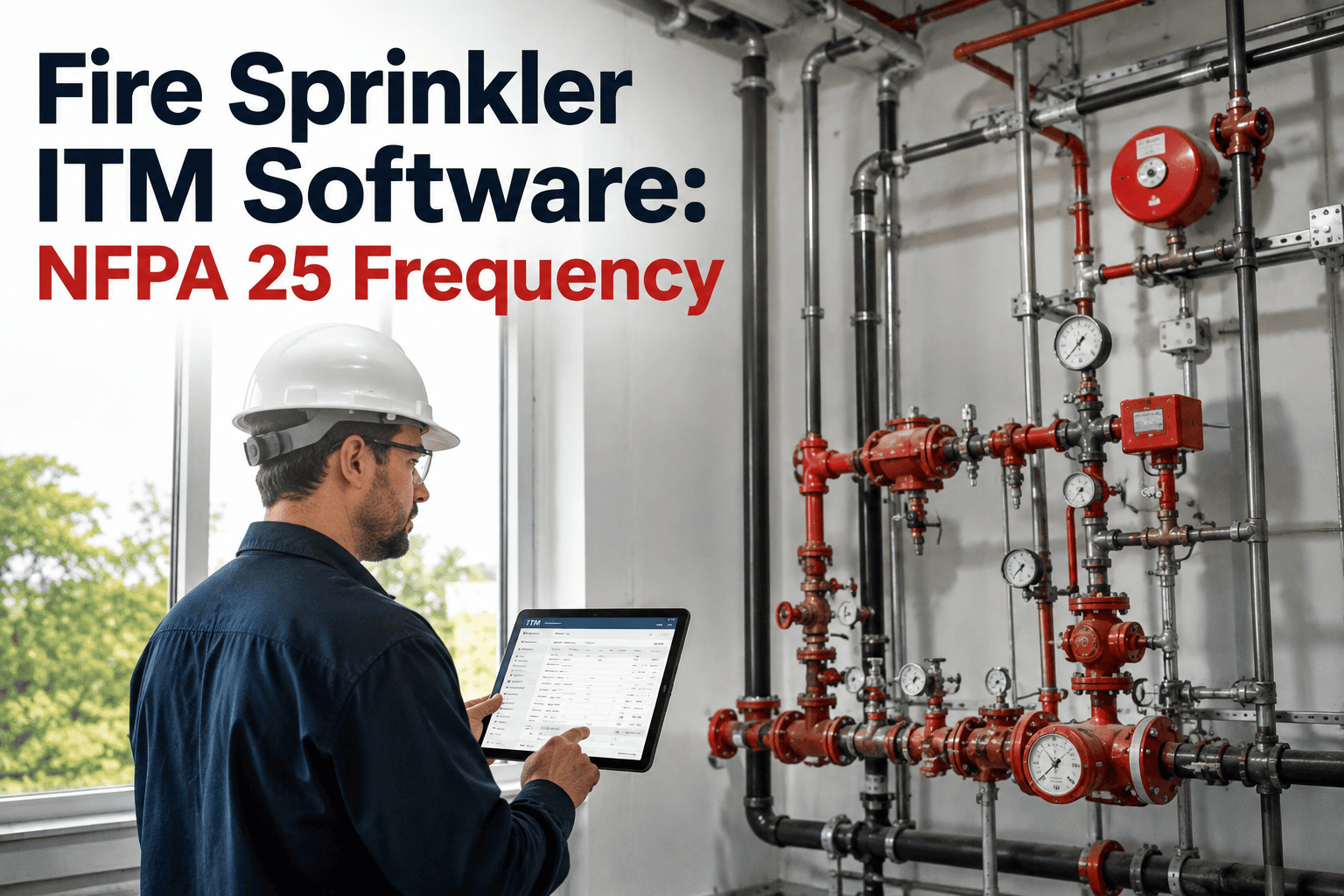
A single missed sprinkler inspection can turn a routine NFPA 25 audit into a shutdown notice, and most facility teams don't miss it on purpose — they miss it because the frequency calendar lives in someone's memory instead of a system. NFPA 25 sets five separate inspection cycles for a wet-pipe sprinkler system alone, from weekly gauge checks to five-year internal pipe inspections, and every cycle carries its own checklist, its own documentation requirement, and its own consequence for skipping it. Facility teams running sprinkler ITM off paper logs or a shared spreadsheet routinely lose track of which building is due for which frequency, especially across a multi-site portfolio. A facility CMMS built around ITM frequencies removes the guesswork by scheduling, documenting, and flagging every cycle automatically. OxMaint's sprinkler ITM module tracks every NFPA 25 frequency for every device across every building.
Never Miss an NFPA 25 Inspection Frequency Again
OxMaint schedules weekly, monthly, quarterly, annual, and five-year sprinkler ITM tasks automatically and flags overdue work before an inspector ever does.
5
Distinct NFPA 25 inspection frequencies a single wet-pipe system requires in one calendar year
$10,000+
Typical fine range facilities face for a documented sprinkler ITM lapse during an AHJ audit
92%
Facilities using automated ITM scheduling that pass their annual fire inspection on the first visit
NFPA 25 Inspection Frequency at a Glance
Wet-pipe, dry-pipe, pre-action, and deluge systems each carry their own frequency table under NFPA 25, but the five cycles below cover the checks that show up in almost every facility inspection binder.
Frequency
What Gets Checked
Who Performs It
OxMaint Automation
Weekly
Gauge readings, control valve position
Facility staff
Auto-reminder and digital log
Monthly
Gauge readings, wet valve enclosures
Facility staff
Recurring checklist assigned
Quarterly
Alarm devices, nameplate, supervisory valves
Staff or contractor
Scheduled work order
Annual
Full system inspection, main drain, fire pump
Licensed contractor
Compliance report generated
5-Year
Internal pipe investigation, obstruction check
Licensed contractor
Long-cycle asset scheduling
What Each Frequency Actually Requires
Understanding what happens at each cycle makes it far easier to spot a gap before an inspector does. Expand each frequency below for what it actually covers on the ground.
Weekly Checks
Weekly checks confirm gauge pressure and valve position on dry, pre-action, and deluge systems. It takes minutes to complete, yet missing several weeks in a row is one of the most common findings cited in an AHJ visit.
Monthly Checks
Monthly checks cover gauges on wet-pipe systems along with the condition of valve enclosures, hangers, and supports, replacing the need for a separate weekly check on wet-pipe-only buildings.
Quarterly Checks
Quarterly inspections test waterflow alarm devices and supervisory signal devices, and confirm the hydraulic design nameplate is still legible and matches the current system data.
Annual Checks
The annual inspection is the most comprehensive cycle, covering the full sprinkler system, a main drain flow test, and fire pump performance, all carried out under a licensed contractor.
Five-Year Checks
Every five years, an internal investigation of piping checks for obstructions, corrosion, and foreign material that an external visual inspection alone is never able to catch.
Turn Five Inspection Cycles Into One Automated Calendar
OxMaint assigns every weekly, monthly, quarterly, annual, and five-year task to the right person automatically and keeps a signed record for every completed check.
Compliance Risk Zones Inspectors Flag Most
Fire marshals and third-party inspectors see the same handful of problems on repeat across most facility portfolios. These four zones account for the majority of sprinkler-related citations.
1
Closed or Obstructed Control Valves
A control valve left closed after unrelated plumbing work is one of the single most dangerous and most common findings, since it can disable an entire zone without any visible alarm.
2
Missing Weekly or Monthly Gauge Logs
Paper logs get skipped during busy weeks and rarely get backfilled honestly, leaving a documentation gap that reads as a missed inspection even if the check actually happened.
3
Overdue Five-Year Internal Pipe Inspection
Because this cycle is so infrequent, it is the easiest one to lose track of across a multi-building portfolio, and it carries some of the highest remediation costs when problems are found late.
4
Unlabeled or Illegible Hydraulic Nameplates
A nameplate that no longer matches current system data or has become unreadable is a quick, easy citation for an inspector and a quick, easy fix once someone is actually tracking it.
What Non-Compliance Actually Costs
A missed sprinkler inspection rarely stays a paperwork problem. It tends to show up in three places at once, each with its own price tag.
Fines and Citations
Typical fine range
$10,000–$50,000
Repeat violation multiplier
2–3x base fine
Time to correct and re-inspect
2–6 weeks
Insurance Impact
Premium increase after a lapse
10–25%
Claim denial risk
Significantly higher
Documentation required to renew
Full ITM history
Business Interruption
Occupancy risk
Partial or full shutdown
Tenant or client notice
Often required
Reputational exposure
Long-term
We manage sprinkler ITM across eleven buildings and used to run it off three different spreadsheets. Since moving to OxMaint, every frequency is scheduled automatically and we passed our last annual fire inspection across all eleven sites on the first visit, with zero citations.
— Facilities Director, Regional Property Management Group
Frequently Asked Questions
What telematics or sensor hardware does OxMaint sprinkler ITM require?
None is required to start. OxMaint schedules and documents every NFPA 25 frequency from checklist data your team already collects, and can layer in sensor alerts later.
See how the scheduling works for your building portfolio.
Can OxMaint manage sprinkler ITM across multiple buildings and portfolios?
Yes, each building, system type, and device is tracked separately so a facility team can see exactly which site is due for which frequency at any moment, without juggling separate spreadsheets.
Does OxMaint generate documentation an AHJ or insurer will accept?
Every completed check is logged with a date, technician, and outcome, and exports as a formatted compliance report suitable for an authority having jurisdiction or an insurance renewal file.
How far in advance does OxMaint flag an upcoming five-year inspection?
Long-cycle tasks like the five-year internal pipe investigation are scheduled the moment the previous inspection is logged, with reminders escalating as the due date approaches so nothing slips through a multi-year gap.
How quickly can a facility get sprinkler ITM scheduling running in OxMaint?
Most facilities load their building and device list and have the full weekly-through-five-year schedule running within a day.
Book a demo to see a live setup on your own building list.
Automate Every NFPA 25 Frequency Across Every Building