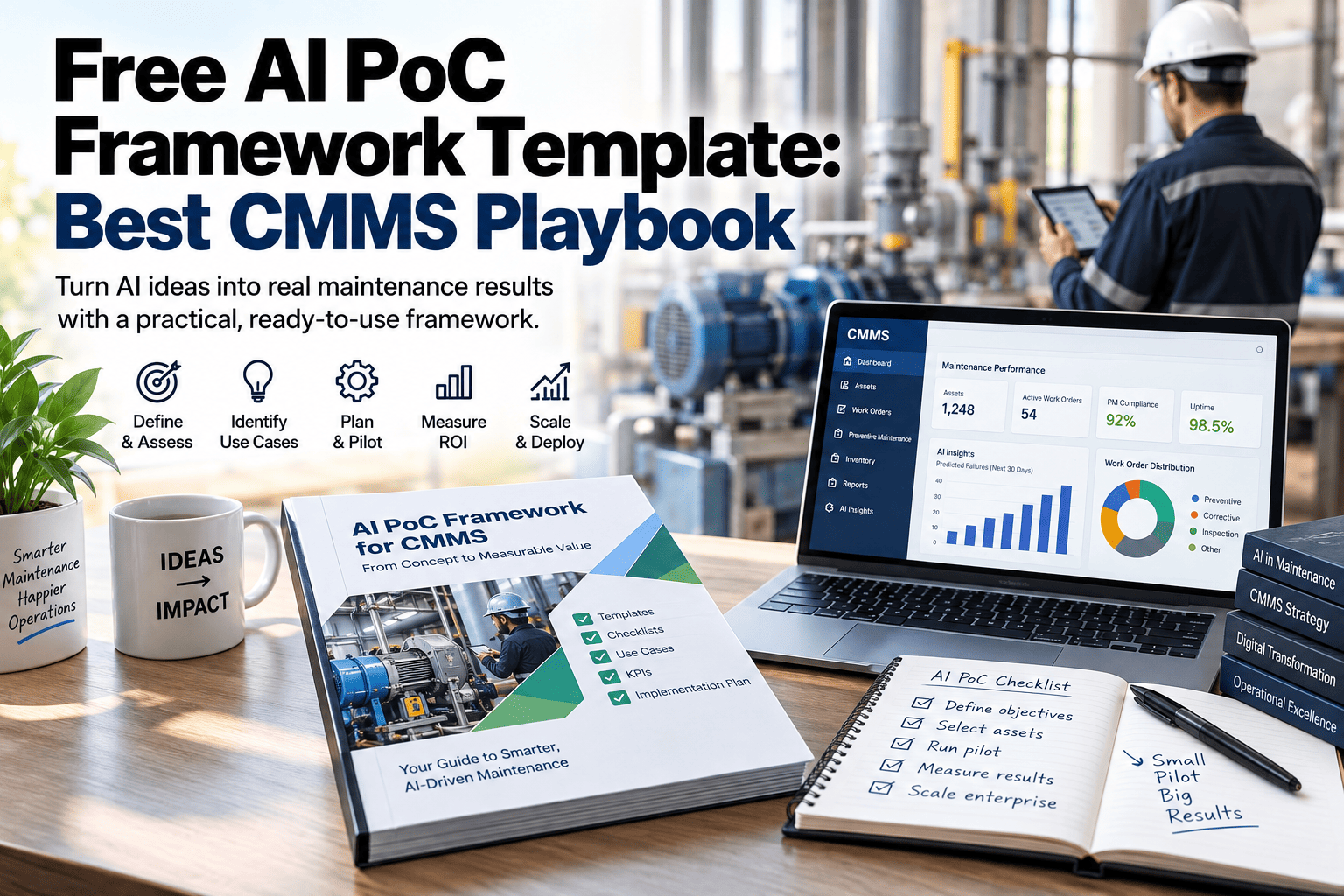
Most facility teams don't fail at AI because the technology doesn't work — they fail because the pilot was never structured to prove anything in the first place. A vendor demo looks impressive, a 90-day trial gets approved, and six months later nobody can say whether it actually reduced downtime or just generated interesting charts. This framework gives facility and operations leaders the questions to ask before a single dollar goes into an AI proof of concept, and where a CMMS fits into making the pilot measurable at all.
Before you approve another AI pilot, can you answer these 30 questions?
Most facility AI pilots stall in "pilot purgatory" — running indefinitely with no defined success criteria. This framework gives you the structured questions to ask before launch, so the pilot actually produces a yes-or-no answer.
What "pilot purgatory" actually looks like in a facility team
Pilot purgatory isn't a single failure — it's a pattern that repeats across facility teams evaluating predictive maintenance, computer vision inspections, or AI-driven scheduling tools.
- PatternThe pilot launches with no written success metric, so three months in nobody can say whether it worked — only whether people liked using it.
- PatternThe AI tool is tested against clean, vendor-provided sample data instead of the facility's own messy, incomplete asset history.
- PatternNobody defined what happens if the pilot fails, so a lukewarm result quietly extends into month seven, eight, and nine.
- PatternThe pilot runs in isolation from the CMMS, so its recommendations never turn into actual work orders that a technician executes.
- PatternIT and facilities each assumed the other owned data governance, so nobody checked whether the pilot's data use was even compliant.
30 questions across five categories, before you sign a pilot agreement
These questions are grouped by the decision they inform. A pilot that can't answer most of them in its category is not ready to start — regardless of how good the demo looked.
Problem Definition
Data Readiness
Success Criteria
Workflow Integration
Governance & Cost
Get the full framework mapped to your facility's own data
Walk through your asset register and work-order history against this framework before your next AI pilot decision.
Where most pilots actually sit before they start
Before spending on any AI PoC, it helps to place your facility honestly on this readiness scale — most pilots fail not because of the model, but because they launched from the left column.
What a structured PoC changes versus an open-ended trial
| Dimension | Unstructured pilot | Framework-driven PoC |
|---|---|---|
| Success definition | Decided informally, after results come in | Written and numeric, set before launch |
| Data used | Vendor sample or demo data | Facility's own historical work order data |
| End date | Open-ended, extended informally | Fixed, with a scheduled go/kill decision |
| Workflow integration | Separate dashboard, disconnected from work orders | Outputs route directly into the CMMS |
| Governance review | Often skipped or assumed handled | Completed before the pilot starts |
Why the CMMS is the foundation, not an afterthought, of an AI pilot
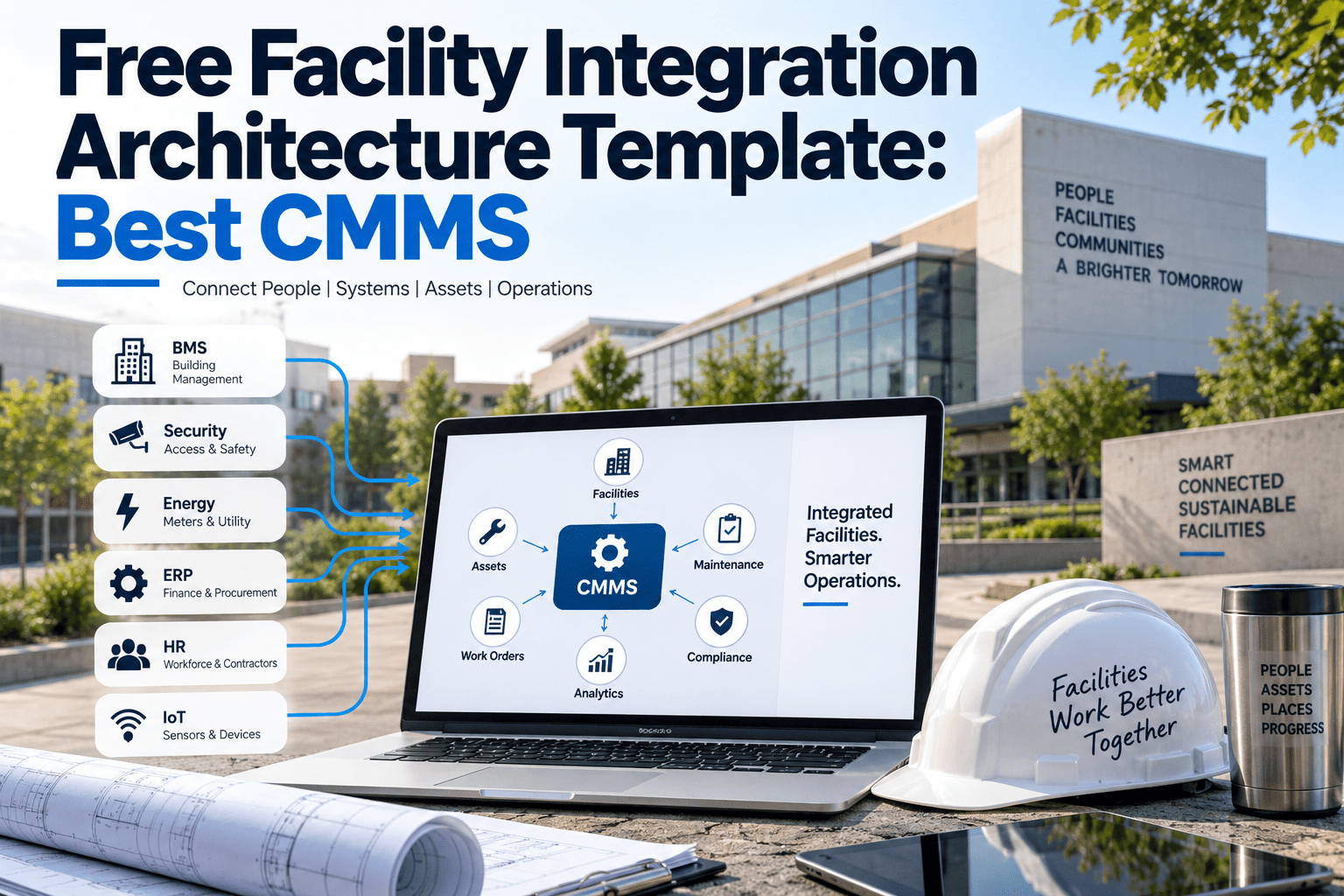
Most of the framework above comes back to one thing: whether your maintenance data lives somewhere structured enough for an AI tool to use, and connected enough for its output to become real work.
Asset and work order history already tagged and complete
A CMMS with a standardized asset hierarchy gives any AI model the labeled history it needs, instead of starting from a data-cleanup project.
A single source of truth for the baseline metric
Downtime, reactive ratio, or repair cost pulled from live CMMS data, so the pilot's "before" number isn't guessed or reconstructed after the fact.
A workflow for outputs to become work orders
Recommendations from a predictive or condition-based model route into the same mobile work order queue technicians already use, closing the loop.
A dashboard to measure the pilot against its own baseline
The same reporting layer that tracked the "before" number tracks the "after" one, so the go/kill decision is based on comparable data.
AI proof-of-concept pilots for facility maintenance — common questions
How long should a facility AI pilot actually run?
Most structured pilots run 60 to 120 days — long enough to generate a meaningful sample of recommendations, short enough to force a decision before it drifts into an open-ended trial.
What's the single biggest reason facility AI pilots stall?
No predefined, numeric success metric agreed before launch — without one, a mediocre result has nothing to be measured against and simply continues indefinitely.
Do we need clean data before starting a pilot?
You need enough — a complete asset register and at least a year of tagged work order history is usually the minimum for a model to produce a reliable signal rather than noise.
Should the AI pilot run inside our CMMS or as a separate tool?
It should route into the CMMS wherever possible — a pilot that produces insights nobody turns into a work order rarely survives past the trial period.
How do I get the full 30-question framework for my own facility?
Book a Demo and we'll walk through the framework against your current asset data and work order history.
Build the data foundation your next AI pilot actually needs
Get your asset register and work order history CMMS-ready before you spend another quarter in pilot purgatory.
Free 14-day trial · No credit card