Generator Maintenance Cost and ROI Guide for Facility Managers
By shreen on March 5, 2026
A single unplanned generator failure during a critical power outage costs facilities far more than three years of structured preventive maintenance combined. Facility managers across healthcare, data centers, manufacturing, and commercial real estate are discovering that the real question is not whether they can afford a generator maintenance program — it is whether they can afford to operate without one. Most facilities overspend on generator maintenance by 30 to 45 percent because they lack a digital system to track service history, parts consumption, and inspection intervals. Create your free Oxmaint account and bring measurable structure to every generator service event your team handles — starting today.
Generator Maintenance: The Numbers Facilities Cannot Ignore
$147KAverage cost of one unplanned generator failure in a healthcare facility — including emergency labor, parts, downtime, and regulatory exposure
72%Of generator failures are preventable with consistent preventive maintenance — yet most facilities miss over 40 percent of scheduled service intervals
4:1Average return on every dollar invested in generator preventive maintenance versus reactive repair spending across commercial and industrial facilities
Why Generator Maintenance Costs Spiral Without a System
Facilities that rely on paper logs, shared spreadsheets, and technician memory for generator maintenance face a predictable pattern: inspection intervals stretch, fluid changes get deferred, load tests get skipped, and small degradation issues go undetected until they become catastrophic failures. When a generator fails during an actual outage event — the only moment it truly matters — the resulting costs dwarf everything that proper maintenance would have required.
Reactive Maintenance Reality
RiskEmergency service calls billed at 2x to 3x standard labor rates with 4 to 24 hour response delays
RiskUndetected coolant leaks and fuel degradation accelerate engine wear by up to 60 percent
RiskLoad bank testing skipped for months or years — generator fails under real load conditions
RiskNo audit trail when JCAHO, NFPA 110, or insurance auditors request service documentation
RiskBattery failures — the number one cause of generator start failures — go undetected without scheduled testing
Planned Preventive Approach
WinScheduled service at contracted rates — labor costs reduced by 35 to 55 percent versus reactive calls
WinEarly detection of oil oxidation, coolant contamination, and fuel microbial growth before damage occurs
WinMonthly and annual load bank tests confirm full rated capacity under real-world demand conditions
WinComplete digital service history ready for any compliance audit in under five minutes
WinBattery impedance testing on every scheduled visit catches degradation 3 to 6 months before failure
Cost Insight
Facilities using a CMMS to manage generator maintenance reduce unplanned downtime costs by an average of 62 percent within the first 18 months — not from spending more, but from spending at the right intervals on the right components.
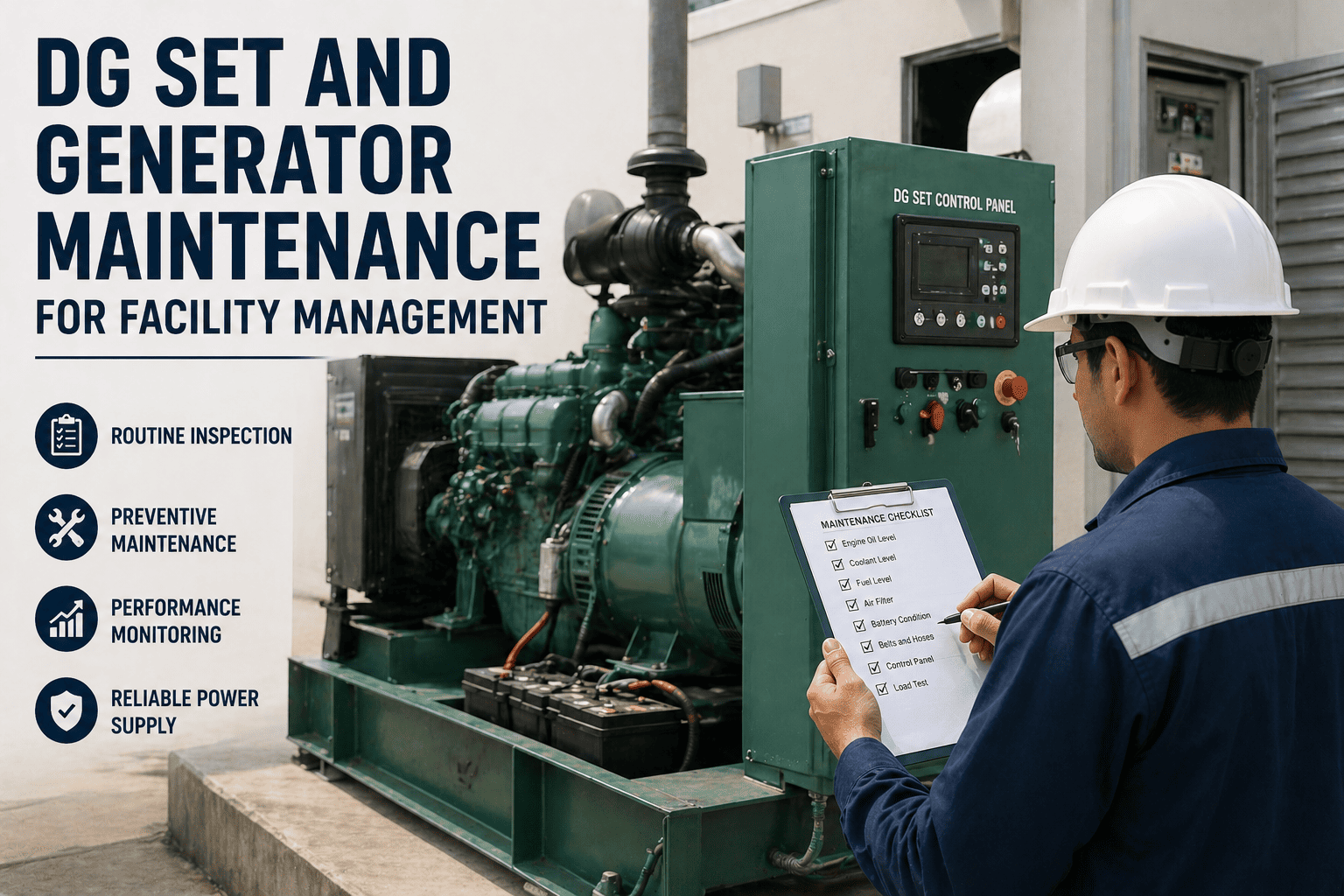
A structured maintenance checklist is the foundation of cost control for any generator asset. Each inspection interval targets specific failure modes that compound in cost when missed. Sign into Oxmaint to assign these as recurring work orders, track completion rates, and auto-escalate overdue items to supervisors.
WKL
Weekly Visual and Functional Checks
Detects: Sudden coolant loss from slow leaks — Battery charger failures causing cold-start failure during real outages
MTH
Monthly Exercise and Load Verification
Detects: Wet stacking from under-loading — ATS timing failures that delay power restoration during actual outages
QTR
Quarterly Fluid and Filter Service
Detects: Fuel microbial contamination before injector damage — Oil oxidation breakdown before bearing wear
ANN
Annual Full-Load Bank Testing and Major Service
Detects: Hidden alternator winding degradation — Battery failures that only appear under actual starting load conditions
Stop tracking generator service in spreadsheets
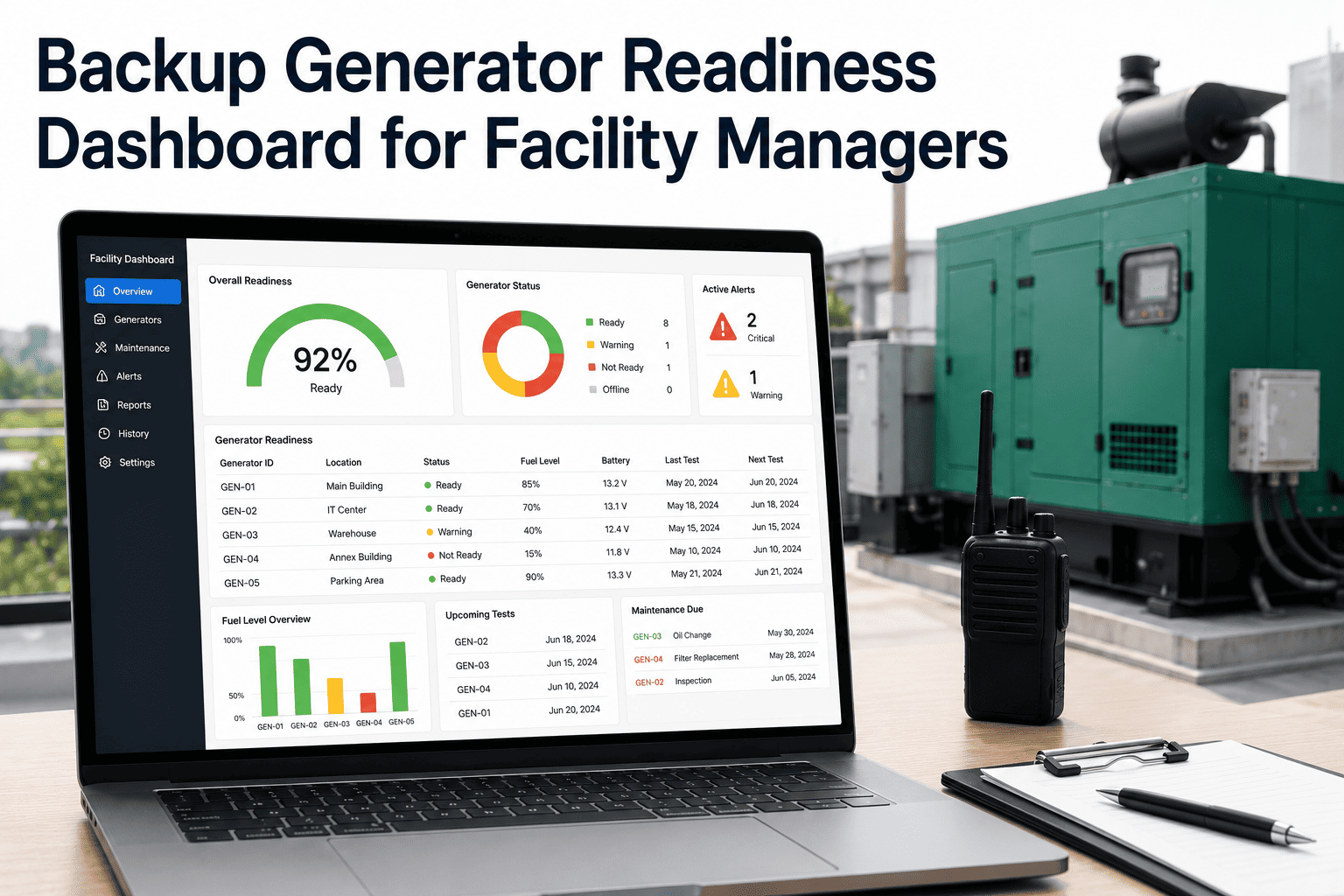
Oxmaint turns this checklist into recurring digital work orders — auto-assigned, timestamped, and audit-ready. Your technicians get mobile alerts. Your managers see real-time completion dashboards.
Generator Maintenance Cost Breakdown by Service Type
Understanding where generator maintenance dollars actually go is the first step toward optimizing spend. The table below reflects average market rates for commercial and industrial standby generators in the 100 kW to 500 kW range. Facilities using Oxmaint to schedule and track these activities report 28 to 40 percent lower total maintenance costs through better vendor accountability and zero missed intervals. Sign up to build your generator asset registry and start tracking actual spend against budget in real time.
Annual Generator Maintenance Cost Reference — 100 to 500 kW Standby Units
Service Activity
Frequency
Estimated Cost
Failure Cost if Skipped
Priority
Oil and Filter Change
Quarterly or 250 hrs
$180 – $340
$4,200 – $18,000 engine rebuild
Critical
Full Load Bank Test
Annual
$600 – $1,400
$15,000 – $147,000 outage failure
Critical
Battery Impedance Testing
Annual
$120 – $280
$2,800 – $8,400 start failure event
Critical
Fuel Polishing Service
Annual or biennial
$400 – $900
$6,000 – $22,000 injector replacement
High
Coolant Flush and Fill
Annual
$220 – $480
$3,500 – $12,000 head gasket or radiator
High
ATS Inspection and Test
Annual
$300 – $680
$1,200 – $5,500 ATS replacement
High
Belt and Hose Replacement
Every 2 years
$160 – $380
$800 – $3,200 overheating event
Standard
Air Filter Service
Quarterly
$60 – $140
$2,100 – $7,800 turbocharger damage
Standard
Costs reflect U.S. market averages for commercial-grade service providers. Actual costs vary by generator manufacturer, age, location, and service provider contract terms. Emergency after-hours labor rates typically add 80 to 150 percent to base service costs.
Maintenance Schedule: A Step-by-Step Process for Facility Managers
Building a repeatable generator maintenance process removes the dependency on individual technician memory and creates the audit-ready documentation that regulators, insurers, and hospital accreditation bodies require. Use this process as your operational foundation — then digitize every step in Oxmaint so nothing depends on a paper log that may or may not exist when you need it.
Step 01
Build Your Generator Asset Registry
Document every generator — nameplate rating, manufacturer, model, serial number, installation date, service history, and all attached components including ATS units, transfer panels, and fuel tanks. Link manufacturer service manuals and wiring diagrams to each asset record. In Oxmaint, this becomes the central source of truth that every work order and compliance report draws from.
Step 02
Set Recurring Maintenance Triggers
Create work orders that auto-generate on calendar intervals and runtime hour triggers. Weekly visual checks, monthly exercise runs, quarterly fluid services, and annual load bank tests should all generate automatically without manual scheduling. Set escalation rules so that overdue items trigger supervisor alerts after 24 hours without completion confirmation.
Step 03
Standardize Digital Inspection Forms
Replace paper inspection sheets with mobile-accessible digital forms that require technicians to enter readings — not just check boxes. Record coolant temperature, oil pressure, voltage output, and transfer time as numeric values every month. Trend data over time reveals degradation patterns three to six months before failure becomes likely.
Step 04
Manage Vendor Contracts and Purchase Orders
Link contracted service providers to specific asset records. Track contract coverage dates, included services, and response time commitments. Generate purchase orders directly from work orders so that parts procurement and vendor billing are tied to documented maintenance activities rather than verbal agreements that disappear during staff turnover.
Step 05
Generate Compliance and Audit Reports
Export service histories, exercise test records, load bank test results, and corrective action logs instantly for JCAHO surveys, NFPA 110 compliance reviews, insurance inspections, and internal audits. Audit preparation that once took days of file searching becomes a five-minute report export with complete chain-of-custody documentation.
How Oxmaint Reduces Generator Maintenance Costs for Facility Teams
Generic CMMS platforms force maintenance teams to adapt industrial manufacturing workflows to facilities use cases. Oxmaint is purpose-built for facility managers who need mobile-first simplicity, compliance documentation, and vendor management without an IT implementation project. Book a 30-minute demo and see exactly how your generator maintenance workflow maps into Oxmaint — with your asset types, your vendor names, and your compliance requirements already considered.
Auto-Scheduled Preventive Work Orders
Weekly, monthly, quarterly, and annual generator maintenance tasks generate automatically and route to the right technician with mobile push notifications. No manual scheduling. No missed intervals. Completion timestamps create automatic audit trails.
Zero Missed PMMobile Alerts
Digital Inspection Forms with Numeric Readings
Technicians complete structured mobile forms that capture voltage, oil pressure, coolant temperature, and transfer times as data — not checkboxes. Trend views flag values drifting toward failure thresholds before they arrive.
Trending DataEarly Warning
Instant Compliance Report Export
Generate NFPA 110 exercise logs, load bank test records, corrective action reports, and complete service histories in one click. Share PDF or CSV exports with JCAHO surveyors, insurance auditors, or executive leadership without searching through filing cabinets.
NFPA 110JCAHO Ready
Vendor and Contract Management
Assign vendors to assets, track service contracts, monitor response commitments, and compare actual versus contracted service delivery. Generate purchase orders from work orders and eliminate the verbal agreements that create billing disputes and compliance gaps.
Contract TrackingPO Generation
Before Oxmaint, our generator service records lived in three different places — a binder in the mechanical room, an Excel file on one technician's laptop, and whatever the contractor emailed us. During our last JCAHO survey, we pulled a complete two-year service history in under four minutes. That has never happened in 11 years of facility management here.
Director of FacilitiesRegional Healthcare System, Midwest
Get Started Today
Cut Generator Maintenance Costs — Without Cutting Corners
Oxmaint gives facility managers a complete generator maintenance platform: auto-scheduled work orders, digital inspection forms, vendor management, parts tracking, and one-click compliance reports. Set up your first generator asset in under 10 minutes.
How much does generator preventive maintenance cost annually for a commercial facility?
Annual preventive maintenance costs for commercial standby generators in the 100 to 500 kW range typically run between $2,400 and $6,800 per unit when all intervals are properly maintained — including quarterly oil changes, fuel testing, monthly exercise runs, and an annual load bank test. Emergency reactive maintenance for the same units averages $8,000 to $45,000 per incident, excluding downtime and regulatory penalties. Facilities that use a structured digital maintenance system consistently spend in the lower range because they catch small issues before they require major intervention. Sign into Oxmaint to track your actual generator maintenance spend against industry benchmarks and identify where your budget is being consumed.
What is NFPA 110 and how does it affect generator maintenance requirements?
NFPA 110 is the Standard for Emergency and Standby Power Systems, which defines inspection, testing, and maintenance requirements for generators that serve emergency loads in healthcare facilities, life safety systems, and critical infrastructure. It mandates monthly exercise runs under load, annual full load testing, and documented service records for every inspection. Failing to comply with NFPA 110 is a primary source of deficiencies in JCAHO healthcare surveys and can trigger equipment shutdown orders from authorities having jurisdiction. Documentation requirements under NFPA 110 are where most facilities fail during audits — not because they skipped maintenance, but because they cannot prove they performed it.
What causes most generator failures during actual power outages?
Battery failure is the number one cause of generator start failures during actual outage events, accounting for approximately 40 percent of failures. The battery charger maintains float voltage during standby, but internal cell resistance increases gradually over time and may not be detected until the starting load exceeds what degraded cells can deliver. Fuel contamination — primarily microbial growth and water accumulation in stored diesel — ranks second, followed by coolant system failures from deferred maintenance. All three failure modes are highly detectable with routine testing and are preventable with a structured maintenance program. The pattern in every post-failure investigation is the same: the failure mode was present months before the event, but no one was looking for it systematically.
How does a CMMS help reduce generator maintenance costs?
A CMMS like Oxmaint reduces generator maintenance costs through four specific mechanisms: eliminating missed PM intervals that lead to emergency repairs, creating vendor accountability by tying contractor invoices to documented work orders, enabling parts inventory management that prevents emergency procurement premiums, and generating the compliance documentation that prevents regulatory fines and insurance disputes. Facilities using a CMMS for generator management report 28 to 40 percent lower total maintenance costs within two years, primarily because they shift from reactive to predictive maintenance postures. Book a demo to see exactly how Oxmaint maps to your generator fleet — including multi-site facilities managing dozens of units across different locations.
How often should generator load bank testing be performed?
NFPA 110 requires annual load bank testing at full rated capacity for generators serving Level 1 and Level 2 emergency systems. However, generators that consistently run under-loaded during monthly exercise runs — a condition called wet stacking in diesel units — may require more frequent load bank testing, typically quarterly, to prevent carbon buildup in exhaust systems and cylinder glazing. Healthcare facilities accredited by JCAHO or DNV must document load bank test results with actual instrument readings, not just pass or fail notations. Facilities that cannot demonstrate full-load test results risk losing accreditation during survey cycles.
Can Oxmaint manage generator maintenance for multi-site facility portfolios?
Yes. Oxmaint is designed for facility managers overseeing multiple buildings, campuses, or regional portfolios. Each site maintains its own asset registry, work order queue, and compliance documentation while corporate or regional managers see consolidated dashboards showing completion rates, overdue items, and cost trends across the entire portfolio. Multi-site organizations use Oxmaint to standardize maintenance procedures across locations while still allowing site-specific vendor assignments and reporting. Create your free account and add your first generator assets today — scaling to additional sites requires no additional implementation work.