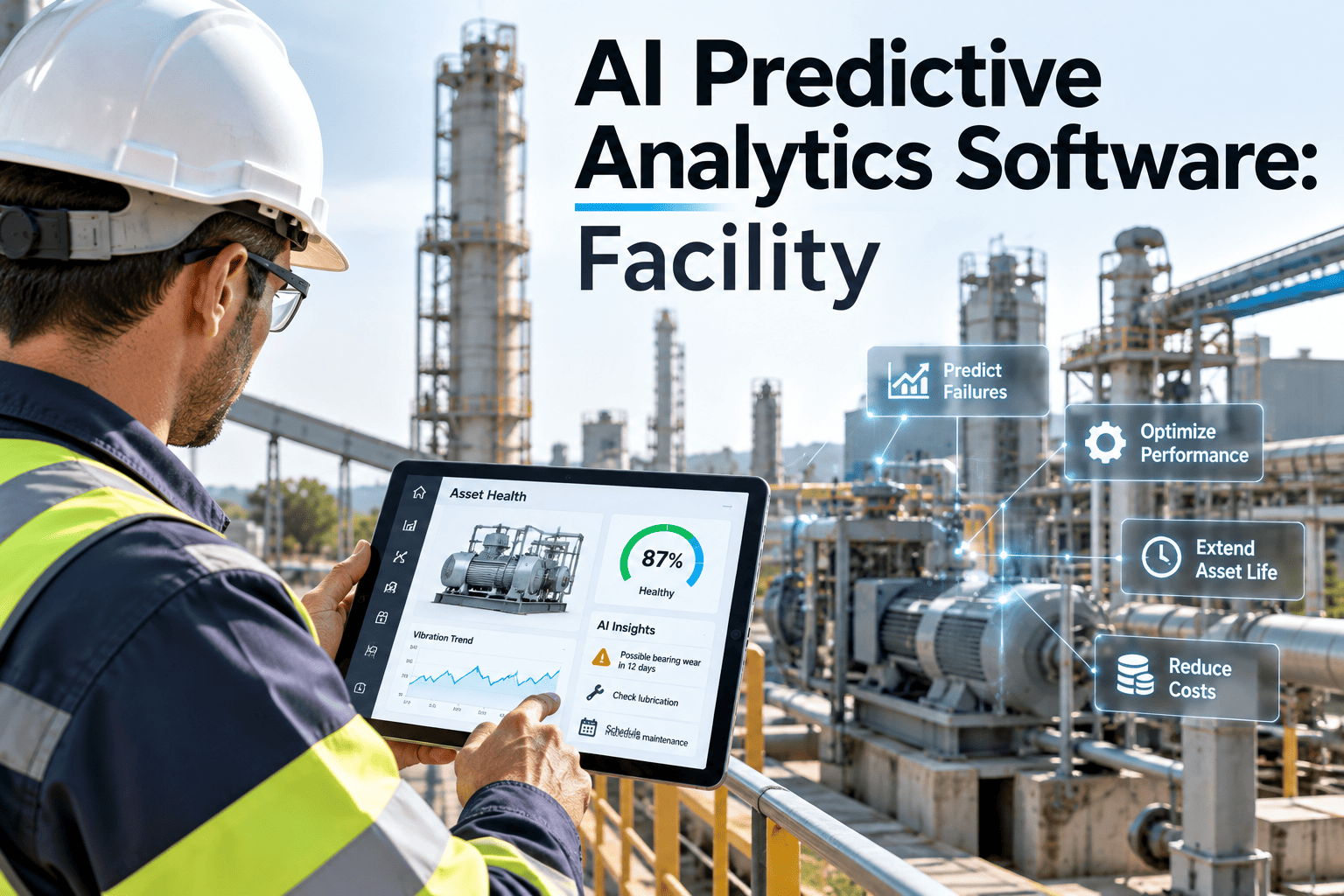
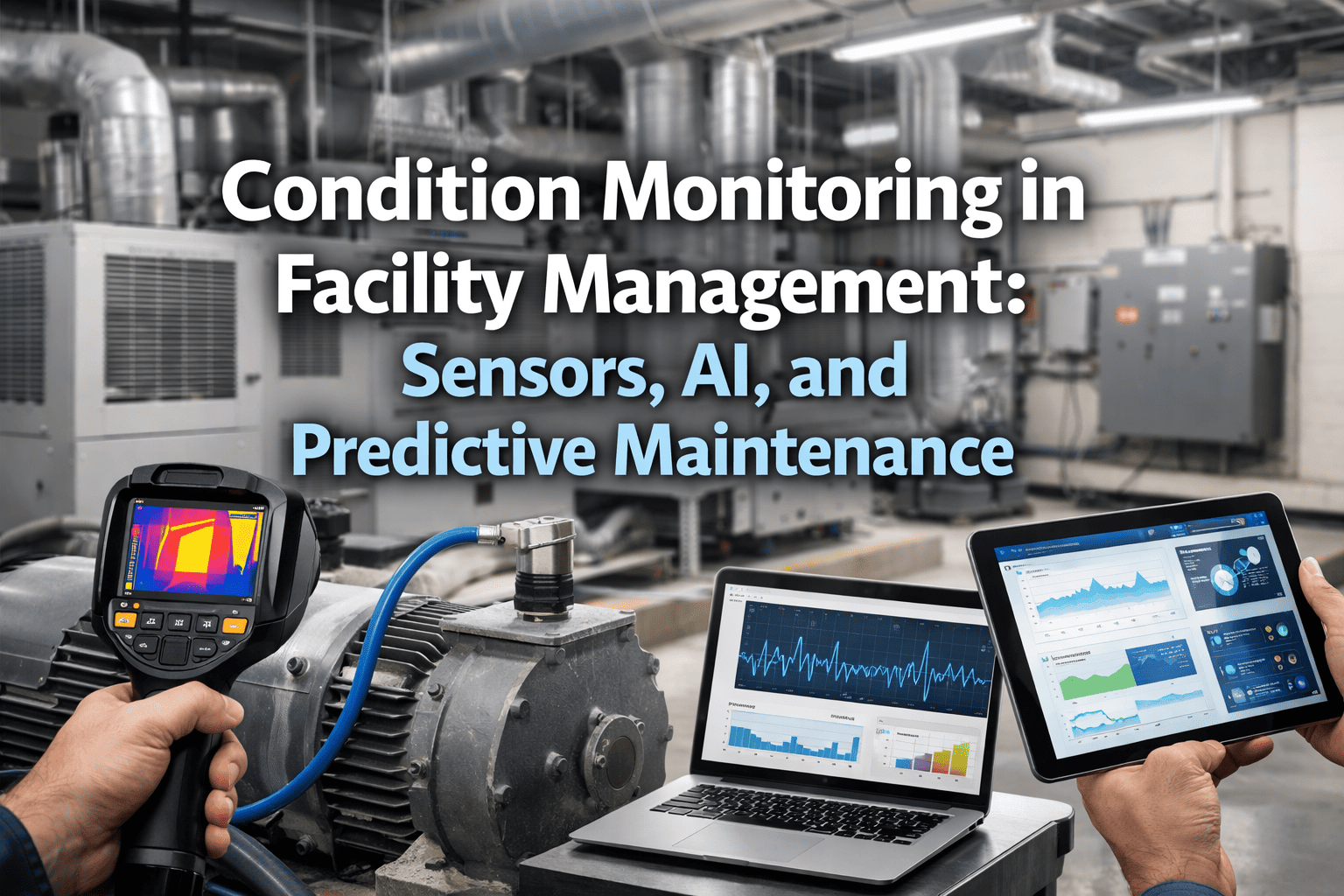
Every minute of unplanned equipment downtime costs industrial facilities an average of $125,000 per hour across industries, and for automotive plants, that figure now exceeds $2 million per hour. Traditional maintenance approaches — reactive fixes after breakdowns and calendar-based preventive schedules — leave operations vulnerable to costly surprises. IoT-enabled preventive maintenance powered by AI prediction changes the equation entirely. By connecting sensors to every critical asset and feeding real-time data into machine learning models, facilities can anticipate failures days or weeks before they happen, cutting maintenance costs by up to 40% and reducing unplanned downtime by 50%.Oxmaint CMMS integrates IoT sensor data, AI-driven analytics, and automated work order generation into a single platform — transforming your maintenance strategy from reactive to predictive. Schedule a demo to see it in action.
Sensors
Monitors
Gauges
Analyzers
Sensors
Detectors
The Maintenance Evolution: From Reactive to AI-Predictive
Maintenance strategies have evolved through four distinct generations, each delivering progressively better outcomes. Understanding where your facility stands today — and where IoT + AI can take you — is the first step toward eliminating unplanned downtime. Most facilities still rely on preventive maintenance schedules that either service equipment too early (wasting resources) or too late (risking breakdowns). AI-powered prediction closes that gap by maintaining assets based on actual condition, not arbitrary calendars. Explore Oxmaint Preventive Maintenance features to see how the platform bridges traditional PM with predictive intelligence.
Reactive Maintenance
Fix it when it breaks. Highest cost, maximum downtime, safety risks. Still used by 57% of facilities for some equipment.
Preventive Maintenance
Time-based schedules regardless of condition. Used by 80% of maintenance teams. Reduces failures but causes 30% unnecessary service events.
Condition-Based Maintenance
Periodic measurements assess asset health. More efficient but still requires manual inspections and misses fast-developing faults.
AI-Predictive Maintenance
Continuous IoT monitoring + ML algorithms predict failures days or weeks ahead. Reduces costs by 40%, downtime by 50%, and extends asset life by 20%.
Move Beyond Calendar-Based Maintenance
Oxmaint connects your IoT sensors to intelligent work order automation — so your team fixes problems before they cause downtime.
How IoT + AI Predictive Maintenance Works
The architecture of an IoT-enabled predictive maintenance system follows a clear data flow: sensors collect, edge devices filter, cloud platforms analyze, and your CMMS acts. Each layer adds intelligence, turning raw vibration readings and temperature data into prioritized work orders with parts lists and estimated time to failure. The entire loop — from anomaly detection to technician dispatch — can happen in minutes, not days.
Sense
IoT sensors monitor vibration, temperature, pressure, current draw, oil quality, and acoustic emissions in real time — 24/7/365.
Process
Edge computing devices filter noise and pre-process data locally, reducing bandwidth requirements by up to 90% while catching urgent anomalies instantly.
Analyze
AI and ML models analyze patterns across historical and real-time data, predicting failures with up to 90% accuracy and estimating remaining useful life for each component.
Act
Oxmaint CMMS auto-generates prioritized work orders with failure type, recommended action, parts required, and optimal scheduling window.
Key IoT Sensor Types for Predictive Maintenance
Different failure modes require different sensing technologies. A comprehensive IoT monitoring strategy covers the six primary sensor categories below. The goal is not to instrument everything at once — it is to start with your most critical assets and expand coverage based on ROI data. Oxmaint Asset Management helps you prioritize which assets to monitor first based on criticality scoring and failure history.
Vibration Sensors
Bearing wear, imbalance, misalignment, looseness, gear mesh faults. Most widely used — vibration monitoring represents the largest PdM market segment.
Temperature Sensors
Overheating, insulation breakdown, coolant failures, friction-induced heat, electrical faults. IR thermal imaging catches developing hotspots.
Pressure Sensors
Leaks, blockages, filter degradation, valve failures, pump cavitation. Critical for hydraulic, pneumatic, and process systems.
Current / Power Sensors
Motor winding faults, phase imbalance, overloading, power quality issues. Current signature analysis reveals developing electrical failures.
Oil Analysis Sensors
Metal particle contamination, moisture ingress, viscosity changes, additive depletion. Inline sensors enable continuous monitoring vs. periodic lab samples.
Acoustic / Ultrasonic
Compressed air leaks, partial discharge in electrical systems, early-stage bearing faults, steam trap failures. Catches issues before vibration sensors can.
AI Prediction Models: What Happens Behind the Dashboard
The intelligence in predictive maintenance comes from machine learning models that learn what normal operation looks like for each asset, then flag deviations that indicate developing failures. Modern AI platforms use ensemble approaches — combining multiple model types for higher accuracy. Here is what runs under the hood when Oxmaint Analytics processes your sensor data:
Anomaly Detection
Establishes baseline operating profiles for each asset. Flags statistical deviations in vibration spectra, temperature trends, or current draw that fall outside learned normal ranges.
Remaining Useful Life (RUL)
Estimates how many operating hours remain before a component reaches failure threshold. Uses degradation curves trained on historical failure data to predict time-to-failure.
Fault Diagnosis
Identifies the specific failure mode developing — bearing inner race defect, rotor bar crack, seal degradation — so technicians arrive with the right parts and procedures.
Schedule Optimization
Balances predicted failure windows against production schedules, parts availability, and technician workloads to recommend the optimal maintenance window.
Ready to Connect Your Assets to AI Intelligence?
Oxmaint integrates with leading IoT sensor platforms to deliver predictive insights directly into your maintenance workflows — no data science team required.
ROI of IoT-Enabled Predictive Maintenance
The financial case for IoT-enabled predictive maintenance is compelling across every metric that matters. According to industry research, 95% of companies that adopt predictive maintenance report positive ROI, with 27% achieving full payback within the first year. Here is how the numbers break down:
Implementation Roadmap: 5 Steps to IoT-Predictive Maintenance
Transitioning to IoT-enabled predictive maintenance does not require instrumenting your entire facility overnight. The most successful implementations follow a phased approach — starting with critical assets, proving value quickly, and expanding based on measured ROI. Oxmaint Inspection Management helps you identify high-criticality assets and build the business case for sensor deployment.
Assess and Prioritize
Audit your asset base. Identify the top 10-20% of critical assets responsible for the most downtime and highest repair costs. These are your pilot candidates. Rank by criticality score: failure impact times failure frequency.
Deploy IoT Sensors
Install wireless sensors on pilot assets — vibration, temperature, and current monitoring cover 80% of common failure modes. Choose industrial-grade sensors rated for your operating environment (IP67+, high-temperature, ATEX if needed).
Connect to Oxmaint CMMS
Integrate sensor data feeds into Oxmaint. The platform ingests data from all major IoT gateways and sensor platforms, normalizes it, and begins building baseline operating profiles for each monitored asset.
Train AI Models (2-4 Weeks)
ML models need 2-4 weeks of operational data to establish baselines. During this learning period, the system identifies normal patterns and starts flagging early anomalies. Within 7 days, initial failure patterns emerge.
Scale Based on Results
Measure pilot results — downtime reduction, cost savings, prevented failures. Use proven ROI data to justify expanding sensor coverage to additional assets and production lines.
Turn Every Sensor Reading Into a Smarter Maintenance Decision
Oxmaint connects your IoT sensors to intelligent maintenance workflows — from automated anomaly alerts and AI-driven failure predictions to auto-generated work orders with parts lists and scheduling optimization. Join the 95% of predictive maintenance adopters achieving positive ROI.
Frequently Asked Questions
What is IoT-enabled preventive maintenance with AI prediction?
IoT-enabled preventive maintenance combines Internet of Things sensors (vibration, temperature, pressure, current) with artificial intelligence and machine learning algorithms to continuously monitor equipment health and predict failures before they occur. Unlike traditional preventive maintenance that follows fixed time-based schedules, this approach uses real-time condition data to determine exactly when maintenance is needed — eliminating both unexpected breakdowns and unnecessary service events. The AI models learn normal operating patterns for each asset and flag anomalies that indicate developing faults, giving maintenance teams days or weeks of advance warning.
How much can IoT predictive maintenance reduce costs?
According to McKinsey research, companies implementing IoT-driven predictive maintenance can reduce maintenance costs by up to 40% and cut unplanned downtime by up to 50%. Additional savings come from extending equipment lifespan by 10-20%, reducing spare parts inventory costs by approximately 10%, and eliminating the estimated 30% of preventive maintenance tasks that are performed unnecessarily under calendar-based schedules. Industry studies show that 95% of predictive maintenance adopters report positive ROI, with 27% achieving complete payback within the first year of implementation. Each dollar invested in preventive strategies saves an average of $5 in future repair costs.
What sensors do I need to get started with IoT predictive maintenance?
For most industrial facilities, starting with vibration, temperature, and current sensors covers approximately 80% of common equipment failure modes. Vibration sensors detect bearing wear, imbalance, and misalignment in rotating equipment. Temperature sensors catch overheating, insulation breakdown, and friction issues. Current sensors reveal motor winding faults and power quality problems. As you expand, add pressure sensors for hydraulic/pneumatic systems, oil analysis sensors for gearboxes and engines, and ultrasonic sensors for leak detection and electrical discharge monitoring. Start with your 10-20 most critical assets and scale from there.
How long does it take to implement IoT predictive maintenance?
A pilot deployment on 5-10 critical assets can be operational within 4-6 weeks. This includes 1-2 weeks for sensor installation and connectivity, 1 week for CMMS integration and data validation, and 2-4 weeks for AI model training and baseline establishment. Initial anomaly detection capabilities emerge within the first week of data collection, with prediction accuracy improving continuously as the models learn from more operational data. Full facility-wide deployment typically follows a phased approach over 3-6 months, guided by ROI data from the pilot phase.
Can Oxmaint CMMS integrate with existing IoT sensors and platforms?
Yes. Oxmaint is designed to integrate with all major industrial IoT sensor platforms and gateways. The platform supports data ingestion from wireless vibration sensors, temperature monitors, PLC/SCADA systems, and third-party IoT platforms through standard APIs and industrial protocols. Oxmaint normalizes incoming sensor data, maps it to individual assets in your maintenance database, and applies AI analytics to generate actionable maintenance insights — including automated work order creation, failure predictions, and remaining useful life estimates — all accessible from a single dashboard on desktop or mobile.