Maintenance Budgeting & Cost Control for Steel Plants
By shreen on March 11, 2026
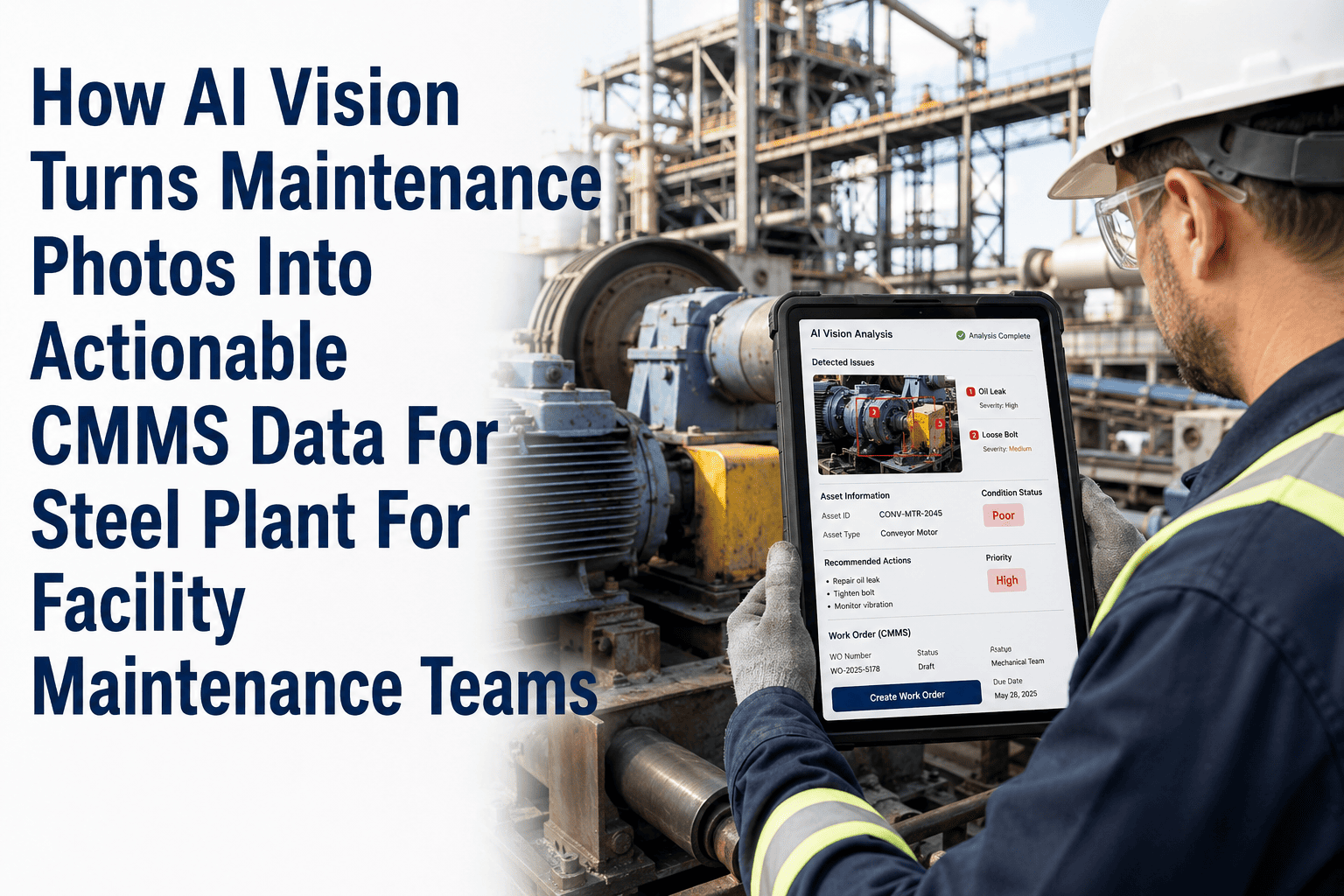
A large integrated steel plant running two blast furnaces and a five-stand hot strip mill discovered during an annual audit that 38% of its $24 million maintenance budget was consumed by emergency breakdowns — unplanned caster roll failures, blast furnace tuyere burnouts, and BOF lance replacements that could have been prevented with structured preventive scheduling. Spare parts inventory carried $3.8 million in dead stock while critical spares for the sinter plant sat on 12-week backorder. After implementing a digital maintenance budgeting system through Oxmaint CMMS — Sign Up Free, the plant reallocated $4.2 million from reactive spending to planned maintenance within 14 months, cut emergency work orders by 52%, and achieved 96.3% budget forecast accuracy across all production areas.
38%
Of total steel plant maintenance budgets consumed by unplanned emergency breakdown repairs across blast furnaces, casters, and rolling mills
$180/ton
Average maintenance cost per ton of crude steel produced — plants with digital cost tracking reduce this to $112/ton within 18 months
52%
Reduction in emergency work orders after shifting from reactive budgeting to planned maintenance allocation with CMMS integration
Why Traditional Maintenance Budgeting Fails in Steel Operations
Steel plant maintenance budgets built on historical averages and spreadsheet extrapolations consistently miss reality. Blast furnace campaigns vary by 2–3 years based on refractory wear patterns, caster segment life depends on steel grade mix rather than calendar time, and rolling mill stand rebuilds correlate with tonnage throughput — not fiscal quarters. Plants still budgeting maintenance by department-level line items rather than equipment-level cost drivers overspend by 22–30% annually while simultaneously underfunding the critical assets that cause the most expensive failures. Book a demo to see equipment-level budget tracking that eliminates these blind spots.
Spreadsheet-Based Budgeting
−
Flat-rate annual allocations that ignore campaign cycles — blast furnace reline budgets spread evenly across 5 years instead of concentrated in the reline year
−
No visibility into cost-per-ton by production area — caster maintenance costs buried inside "rolling operations" line items
−
Spare parts budget disconnected from PM schedules — inventory purchased based on last year's consumption, not next year's planned work
−
Emergency spending uncapped with no automatic reallocation from deferred preventive work budgets
CMMS-Driven Budget Control
+
Campaign-aligned budget phasing that front-loads reline years and adjusts quarterly based on refractory inspection data
+
Real-time cost-per-ton tracking by equipment group — isolating caster, melt shop, rolling, and utility maintenance costs individually
+
Parts procurement linked to PM calendar — purchase orders auto-generated 8 weeks before scheduled maintenance events
+
Emergency spend triggers that flag budget variances above 10% and auto-escalate to maintenance leadership with root-cause tagging
Key Insight
$4.2M
Annual savings realized when a 4 MTPA integrated steel plant shifted from reactive to planned maintenance budgeting — achieved by reducing emergency work orders from 38% to 16% of total maintenance spend and eliminating $1.6M in dead spare parts inventory through demand-driven procurement.
Each section below addresses a critical cost control domain for steel plant maintenance operations. Facilities using Oxmaint's budget tracking modules — Sign Up Free map every work order to a budget category, equipment asset, and cost center automatically — creating the granular visibility needed to forecast accurately and control spending in real time.
BFA
Blast Furnace & Ironmaking Budget Allocation
Blast furnace maintenance represents 25–30% of total plant maintenance spend, driven by refractory relining campaigns ($8–15M per reline), tuyere and cooler replacements, and casthouse equipment overhauls. Budget accuracy depends on tracking refractory wear rates against campaign tonnage — not calendar time.
Refractory campaign cost tracking — monitor hearth wear rates per 10,000 tons of hot metal to predict reline timing within a 3-month window
Tuyere replacement budgeting — average 2–4 tuyere failures per month at $18,000–$35,000 per event including installation labor and lost production
Cooling system maintenance allocation — stave cooler and plate cooler replacement budgets based on thermal fatigue inspection data
Casthouse equipment lifecycle costing — tilting runners, torpedo ladle maintenance, and slag granulation system overhauls scheduled by operating hours
Flags reline budget underfunding before campaign end approaches
Identifies tuyere failure cost trends indicating burden distribution problems
SMS
Steel Melt Shop Cost Management
BOF and EAF melt shop maintenance budgets must account for converter vessel relining ($2–4M per campaign), lance and sub-lance replacements, ladle maintenance cycles, and alloy addition system upkeep. Cost-per-heat tracking reveals which equipment drives the highest per-unit maintenance burden.
BOF vessel lining cost-per-heat analysis — track refractory cost against heat count to optimize campaign length vs. relining expense
Ladle turret and slide gate budgeting — consumable costs per cast sequence with automatic reorder triggers at minimum stock levels
Secondary metallurgy equipment allocation — RH degasser, LF station, and CAS-OB maintenance budgets linked to production grade mix
Detects rising cost-per-heat trends before budget overruns materialize
Links ladle consumable spend to casting sequence performance
CCM
Continuous Caster Budget Optimization
Caster maintenance directly impacts product quality and yield. Segment roll replacement, mold oscillation system overhauls, spray nozzle campaigns, and strand guide alignment create recurring cost cycles that must be budgeted against casting tonnage — not calendar intervals.
Segment roll lifecycle costing — budget roll replacements per 50,000 tons cast with hardness and profile degradation data from online measurement
Mold copper plate and nickel coating budget — track mold life by heat count and steel grade to optimize replacement timing
Secondary cooling maintenance spend — nozzle replacement schedules tied to water quality data and spray pattern verification results
Correlates segment roll costs with slab quality defect rates
Prevents mold overrun by tracking copper plate wear against grade mix
HRM
Hot Rolling Mill Maintenance Spend Control
Hot strip mills generate 20–25% of plant maintenance costs through work roll consumption, hydraulic system maintenance, descaling header replacements, and coiler mandrel rebuilds. Roll shop economics alone can swing annual budgets by $1–2M depending on grade mix and campaign management.
Work roll cost-per-ton optimization — track roll consumption by stand position and steel grade to minimize grinding losses and maximize campaign length
Hydraulic system PM budget alignment — servo valve replacements, AGC cylinder rebuilds, and oil filtration costs tracked against rolling hours
Annual shutdown budget planning — itemized cost estimates for scheduled mill outages with contractor labor and critical spare pre-positioning
Identifies roll shops exceeding cost-per-ton benchmarks by stand
Flags hydraulic system spend spikes indicating contamination issues
SPR
Spare Parts Inventory & Procurement Cost Control
Steel plant spare parts inventories typically carry $5–12M in stock, yet 20–30% consists of dead inventory — parts for decommissioned equipment, over-ordered items, and obsolete specifications. Simultaneously, critical spares for production-limiting equipment sit on 8–16 week lead times, forcing expensive expedited procurement during breakdowns.
ABC classification-based stocking strategy — critical spares (A-items) maintained at 95% service level, B-items at 85%, C-items procured on demand
PM-driven procurement scheduling — purchase orders auto-generated from planned work orders with lead-time buffer calculations
Dead stock elimination program — quarterly reviews flagging inventory with zero consumption over 24 months for disposition or return
Flags critical spare stockouts before they impact production
Identifies procurement cost inflation trends by vendor and part category
Stop bleeding maintenance budget on avoidable breakdowns. Steel plants using Oxmaint track every dollar from work order to cost center — giving maintenance managers the data to defend budgets and finance teams the visibility to approve them.
How Oxmaint Delivers Maintenance Budget Visibility
Traditional ERP systems track maintenance costs at the purchase order level — useful for procurement but useless for understanding which equipment drives cost. Oxmaint connects every cost to a specific asset — Sign Up Free, work order type, failure mode, and production area, creating the cost intelligence that steel plant maintenance managers need to plan accurately and control spending proactively.
Equipment-Level Cost Tracking
Every work order captures labor hours, parts consumed, contractor charges, and production impact — rolled up by individual asset, area, and cost center for real-time budget monitoring across the entire plant.
Asset CostingBudget Analytics
Planned vs. Actual Variance Dashboards
Monthly and quarterly variance reports compare budgeted maintenance spend against actuals by production area — with drill-down to individual work orders that caused overruns and automatic variance flagging at configurable thresholds.
Variance AnalysisDashboards
Failure-Mode Cost Attribution
Tag every corrective work order with a standardized failure code — then analyze which failure modes drive the highest costs per production area. Plants using this data redirect preventive budgets to address the root causes behind their most expensive breakdowns.
Root Cause AnalysisCost Attribution
Shutdown Planning & Cost Estimation
Build itemized shutdown budgets with task-level cost estimates, contractor labor rates, and critical spare requirements — then track actuals against estimates in real time during the outage to prevent cost overruns before they accumulate.
Outage PlanningCost Control
Budget Allocation by Steel Plant Production Area
Understanding typical maintenance cost distribution helps identify where budget optimization delivers the greatest impact. Plants tracking these allocations through Oxmaint's cost center structure — Sign Up Free achieve 96% budget forecast accuracy vs. the industry average of 72%.
28%
Ironmaking
Blast furnace, sinter plant, coke ovens, raw material handling
23%
Steelmaking
BOF/EAF, secondary metallurgy, continuous casting
22%
Rolling Mills
Hot strip mill, cold rolling, plate mill, roll shop operations
15%
Utilities
Power generation, water treatment, gas recovery, compressed air
We went from defending a maintenance budget we couldn't explain to presenting cost-per-ton data that finance actually trusts. The shift from annual budget battles to monthly variance reviews changed how leadership views maintenance — from a cost center they want to cut to an investment they want to optimize.
Take Control of Your Steel Plant Maintenance Budget
Join maintenance leaders at steel plants worldwide using Oxmaint to track costs by equipment, predict budget needs by campaign cycle, and eliminate the emergency spending that erodes margins.
What is a realistic maintenance cost benchmark for steel plants?
Integrated steel plants typically spend $120–$180 per ton of crude steel on maintenance, depending on age, equipment condition, and product mix. Best-in-class plants with mature preventive programs and digital cost tracking operate at $95–$115 per ton. Sign Up for Oxmaint to benchmark your cost-per-ton against these targets by production area.
How do you budget for blast furnace reline campaigns?
Reline budgets should be built as separate capital maintenance projects — not absorbed into annual operating budgets. Track refractory wear rates continuously, set aside accruals based on remaining campaign life, and maintain a detailed reline scope estimate updated quarterly. Most plants budget $8–15M per reline depending on furnace size and scope.
How quickly does CMMS-based budgeting show measurable results?
Plants typically see first-quarter improvements in budget accuracy within 3–4 months of implementation as work order cost capture reaches 90%+ compliance. The larger savings — emergency work reduction and spare parts optimization — materialize over 12–18 months as the data foundation enables predictive budgeting. Book a demo to see a typical steel plant implementation timeline.
Can Oxmaint integrate with existing ERP systems like SAP PM?
Yes. Oxmaint integrates with SAP PM, Oracle EAM, and other ERP maintenance modules through standard APIs. The CMMS handles operational maintenance execution and cost capture at the work-order level, while cost data flows to ERP for financial consolidation and reporting. Sign Up Free to explore integration options.
What percentage of maintenance budget should go to preventive vs. corrective work?
World-class steel plants target a 70/20/10 split — 70% planned preventive and predictive work, 20% planned corrective work identified through inspections, and 10% or less reactive emergency work. Plants currently above 25% reactive work should prioritize shifting budget allocation toward preventive programs for the equipment groups with the highest emergency repair costs.
Budget Smarter. Maintain Better. Produce More.
Oxmaint gives steel plant maintenance managers the tools to forecast accurately, track spending in real time, and prove maintenance ROI to leadership — all from a single platform.