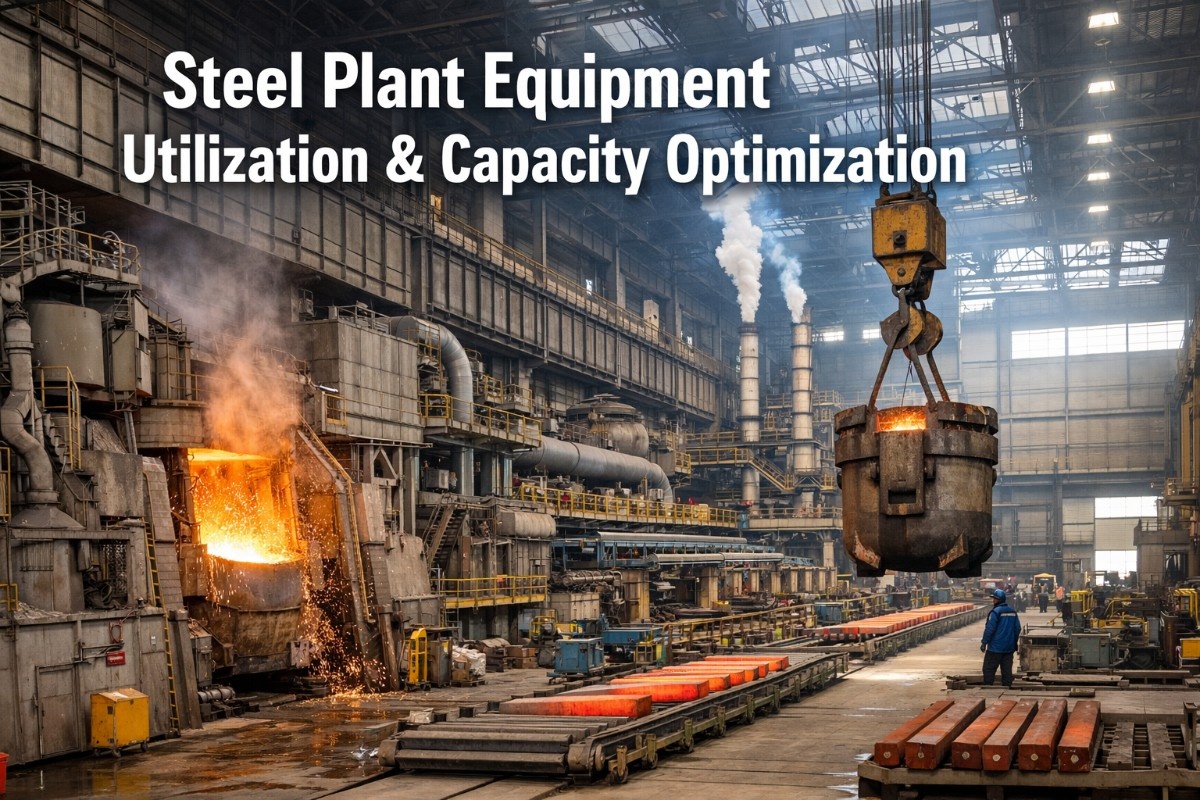
Steel plants running on manual production schedules lose an average of 22 shift-hours per week to sequencing conflicts, furnace idle time, and unplanned rolling mill changeovers. A 1.5 million ton/year integrated steel plant tracked $3.8 million in annual throughput losses directly to scheduling gaps — heats arriving at the caster out of sequence, ladle turnaround delays cascading into EAF hold times, and rolling campaigns interrupted by uncoordinated slab yard logistics. After implementing digital production scheduling through Oxmaint CMMS — Sign Up Free to get started, the plant reduced scheduling-related delays by 47%, increased caster utilization from 78% to 91%, and eliminated manual schedule reconciliation across melt shop, caster, and rolling mill departments entirely.
What Is Scheduling in Production? Complete Guide for Steel Plants
Master heat sequencing, rolling campaign planning, and real-time schedule optimization — coordinating every process from melt shop to dispatch through a unified digital platform.
Why Manual Production Scheduling Fails in Steel Plants
Steel production scheduling is fundamentally different from discrete manufacturing. Every heat has a chemistry target, a temperature window, and a time constraint — miss any one and the entire downstream sequence breaks. Manual scheduling using spreadsheets and whiteboards cannot handle the real-time variability of EAF tap-to-tap times, ladle metallurgy holds, and caster speed adjustments. Plants still relying on paper-based scheduling accept throughput losses that a digital scheduling platform eliminates — Book a Demo to see how.
Core Components of Steel Plant Production Scheduling
Effective production scheduling in steel plants spans six interconnected domains — from raw material readiness through final product dispatch. Each domain feeds the next, and a delay in any single area cascades through the entire production chain. Facilities managing these workflows through Oxmaint's integrated CMMS — Sign Up Free coordinate all six domains from a single scheduling dashboard.
Coordinates EAF charge scheduling, scrap mix optimization, and tap-to-tap cycle timing. Digital scheduling calculates optimal heat sequences based on chemistry targets, energy pricing windows, and downstream caster availability.
Manages secondary refining sequences including alloy additions, degassing holds, and temperature adjustments. Each ladle treatment step has a time window — exceed it and the heat misses its caster slot, creating a cascade of delays.
The continuous caster is the scheduling bottleneck in most steel plants — it runs continuously and cannot wait. Heat arrival timing, tundish changes, and width transitions must be sequenced to minimize transition losses while maintaining strand quality.
Rolling campaigns must balance customer order priorities, slab inventory age, and mill capability constraints. The schedule determines coil width sequences, gauge transitions, and roll change timing — each decision affects yield, quality, and throughput.
Coordinate melt shop, caster, and rolling mill schedules from one platform. Oxmaint eliminates the communication gaps and manual reconciliation that cost steel plants millions in lost throughput every year.
The Production Scheduling Process — Step by Step
Steel plant scheduling follows a hierarchical process that translates customer orders into executable production sequences. Each step feeds the next — and any break in the chain creates delays that compound exponentially through downstream operations.
Order Aggregation and Prioritization
Customer orders are grouped by grade, width, gauge, and delivery deadline. Priority scoring weighs contract penalties, customer tier, and production efficiency — ensuring high-value orders get preferred scheduling slots while maximizing furnace and caster utilization across the order book.
Heat Sequence Generation
The scheduling engine builds optimal heat sequences that minimize chemistry jumps between consecutive casts. Compatible grades are grouped into casting sequences of 8–12 heats, with transition heats planned at grade boundaries to protect product quality and reduce downgraded material.
Resource Constraint Validation
Generated sequences are validated against real-time resource availability — ladle fleet status, EAF electrode life, tundish inventory, roll stand condition, and crew schedules. The system identifies conflicts before they reach the production floor and suggests alternatives.
Cross-Department Synchronization
Approved schedules are published simultaneously to melt shop, caster, slab yard, and rolling mill teams. Every department sees the same timeline with their specific tasks highlighted — eliminating the misalignment that occurs when departments build independent schedules.
Real-Time Execution and Re-Sequencing
During production, the schedule updates dynamically based on actual tap times, temperature readings, and equipment status. When deviations occur — a heat running long, a ladle failing inspection — the system re-sequences downstream operations within 90 seconds and notifies all affected teams.
Scheduling Capabilities That Transform Steel Plant Operations
The right digital scheduling platform doesn't just digitize your existing process — it introduces capabilities that were impossible with manual planning. These features directly address the scheduling challenges unique to integrated steel production and connect seamlessly to your Oxmaint CMMS environment — Sign Up Free.
What Sets Steel Plant Scheduling Apart from General Manufacturing
Continuous Process Constraints
Unlike discrete manufacturing where a machine can wait, a continuous caster cannot stop without destroying the strand. Every upstream delay directly impacts caster throughput — making time synchronization across departments existentially critical.
Chemistry-Driven Sequencing
Heat sequences must respect metallurgical rules — maximum allowable chemistry jumps between consecutive casts, grade compatibility matrices, and tundish contamination limits. No general-purpose scheduler handles these constraints natively.
Temperature as a Scheduling Variable
Steel loses 1–2°C per minute during transport and treatment. Every scheduling decision — ladle hold time, LMF treatment duration, caster delivery timing — must account for temperature loss or risk off-spec product and caster breakouts.
Equipment Interdependency Chains
A single EAF feeds multiple casters through shared LMF stations. Ladle fleets rotate between furnace and caster. Slab yards buffer between casting and rolling. Scheduling must track every shared resource simultaneously — something manual systems simply cannot do.
"We went from 3 daily scheduling meetings with 12 people each to a single dashboard that everyone trusts. Our caster sequence adherence went from 71% to 94% in the first quarter after deployment."
— Production Planning Manager, 2M ton/year Integrated Steel Plant
Frequently Asked Questions
Stop Losing Throughput to Scheduling Gaps
Every hour of caster idle time, every missequenced heat, and every uncoordinated roll change is recoverable revenue. Oxmaint gives steel plant schedulers the real-time visibility, automated sequencing, and cross-department coordination they need to run at peak utilization.