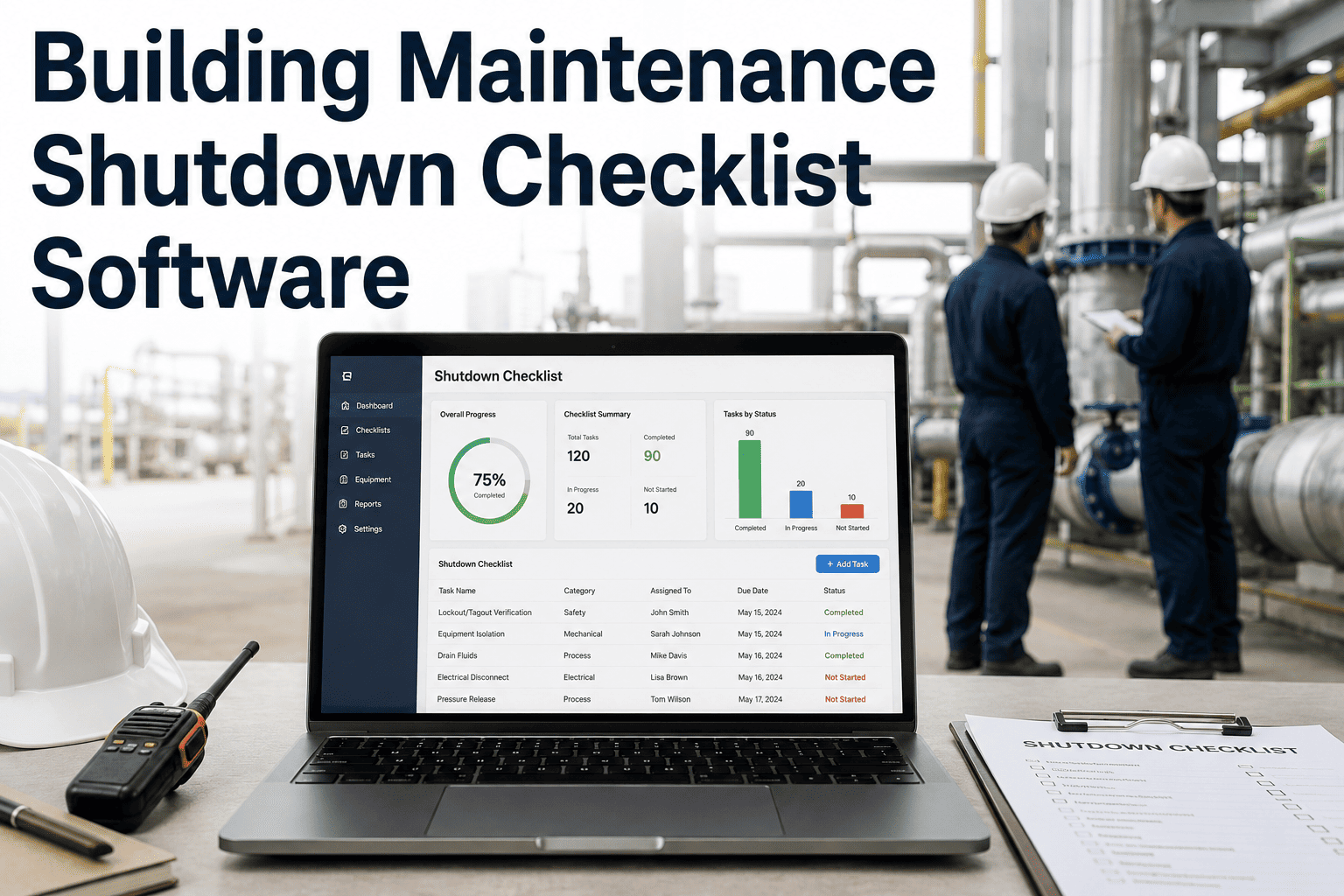
Every facility manager knows the anxiety of pressing the "start" button after a planned shutdown. The numbers justify that anxiety — research shows that nearly 50 percent of all safety incidents in industrial facilities occur during startup and shutdown processes, and 70 percent of major accidents happen during these non-routine operations. A poorly managed restart can trigger equipment failures, chemical releases, safety incidents, and production losses that dwarf the cost of the shutdown itself. The difference between a flawless restart and a catastrophic one comes down to documented procedures, verified checklists, and real-time tracking of every task. Oxmaint CMMS Schedule a demo to see how it works for your facility.
Verify & Inspect
Power, Water, Air
Sequential Start
Load & Stabilize
Full Production
The Post-Shutdown Startup Sequence: Getting It Right
Restarting a facility after maintenance is not simply reversing the shutdown sequence. Systems must come online in a specific order — upstream utilities first, then process equipment, then production loads — because downstream systems depend on upstream services. Skip a step or reverse the order, and you risk equipment damage, safety incidents, or extended downtime. Here is the proven five-phase sequence that every shutdown management program should follow:
Pre-Startup Safety Review (PSSR)
Before any equipment is energized, conduct a formal pre-startup safety review. Verify all maintenance work orders are closed, LOTO (lockout/tagout) devices removed by authorized personnel only, confined space permits closed, safety systems tested (emergency stops, interlocks, alarms), and all personnel accounted for and briefed on the startup plan.
Utility Systems Restoration
Restore utilities in the correct dependency order: electrical power first, then instrument air, then cooling water, then steam, then process water. Verify each utility reaches stable operating parameters before moving to the next. Check environmental controls — ventilation, dust collection, fume extraction — to confirm they are operational before any process startup.
Individual Equipment Startup
Start individual equipment separately before integrating into process. Run motors uncoupled to verify rotation and vibration. Check pump seals, bearing temperatures, and alignment. Apply loads gradually — never full-load a motor or compressor on first start. Document all readings and compare against baseline values recorded before shutdown.
Process Loading & Stabilization
Introduce process materials gradually. Monitor temperatures, pressures, flows, and levels continuously during ramp-up. Watch for abnormal conditions: unusual vibrations, unexpected temperature spikes, pressure deviations, or abnormal sounds. Hold at intermediate load levels and verify stability before progressing to full production rates.
Production Handover & Monitoring
Once all systems reach normal operating parameters, formally hand over from the startup team to operations. Continue enhanced monitoring for 24-72 hours post-startup. Document any anomalies found during startup for the post-shutdown report and future planning. Close the startup work order package in your CMMS.
Automate Your Startup Checklists
Oxmaint sequences every startup task, assigns it to the right technician, tracks completion in real time, and blocks the next phase until all prerequisites are verified.
Critical Pre-Startup Checklist: What to Verify Before Energizing
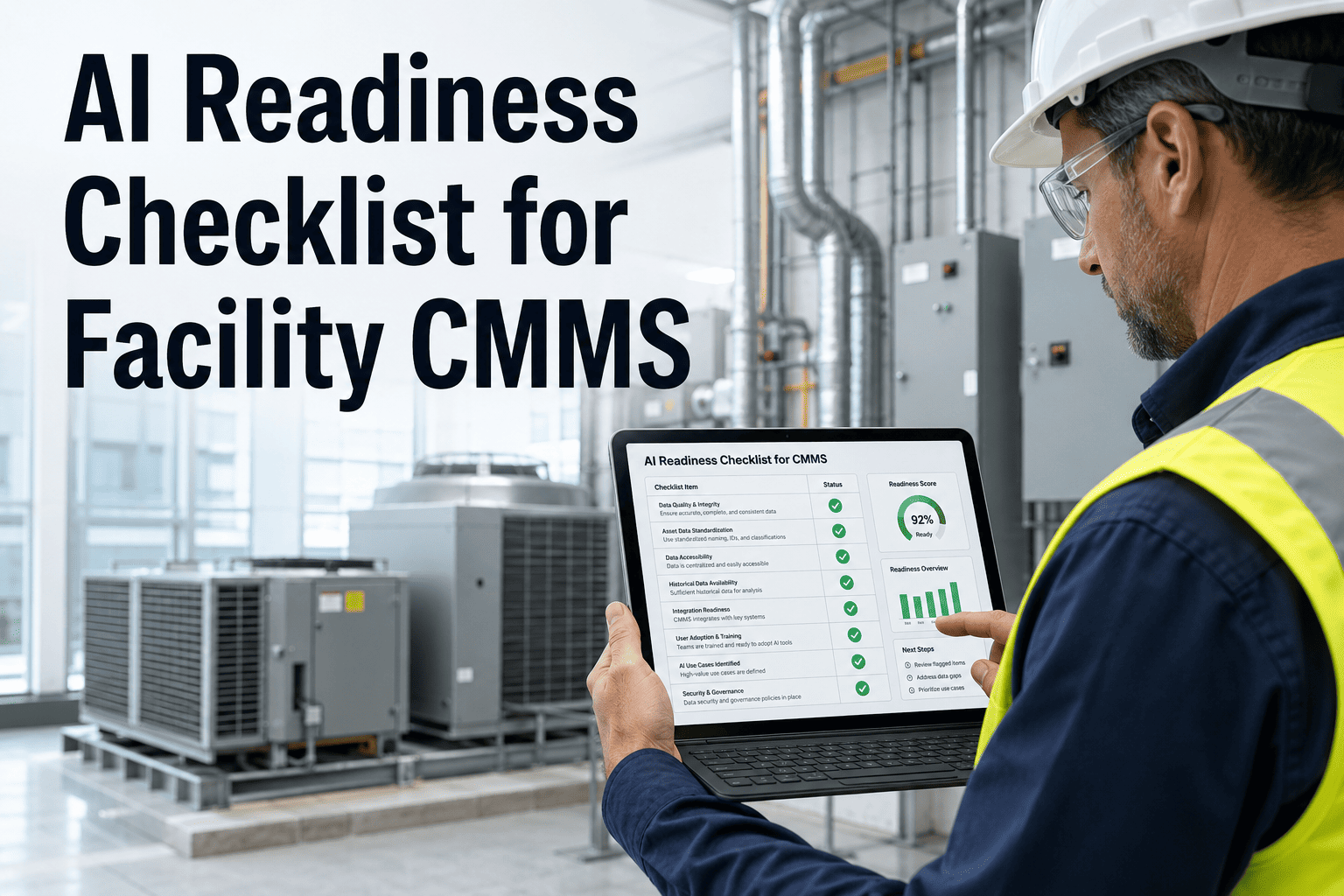
The pre-startup safety review is where most facilities either prevent or enable incidents. The Chemical Safety Board found that inadequate operating procedures and preventive maintenance are among the top contributors to process safety accidents. Here is what your PSSR checklist must cover — and what Oxmaint inspection management tracks automatically:
- All LOTO devices removed and verified
- Confined space permits closed out
- Hot work permits expired and cleared
- Emergency stop systems tested and functional
- Fire suppression systems active and tested
- Gas detection systems calibrated and online
- Safety showers and eyewash stations verified
- All work orders completed and signed off
- Scaffolding and temporary equipment removed
- Tools and debris cleared from equipment
- Flanges torqued and bolt-up verified
- Valve lineups checked against P&IDs
- Calibration records current for all instruments
- Spare parts inventory reconciled
- Ventilation and air handling operational
- Environmental monitoring active
- Discharge permits current and compliant
- Microbial testing (shutdowns > 30 days)
- Water system flushing completed
- Indoor humidity below 50% (CDC guideline)
- Startup notification to regulatory agencies filed
- Startup briefing conducted for all shifts
- Roles and responsibilities assigned
- Emergency response team staged
- Contractor orientation refresher completed
- Communication channels tested (radio, PA)
- Operating procedures reviewed and accessible
- Medical/first aid resources on standby
Risk Escalation: What Goes Wrong Without Proper Procedures
Poor startup procedures do not just cause minor delays — they create cascading failures that escalate from inconvenience to catastrophe. The EPA has documented multiple fatal incidents directly caused by startup procedure failures. Here is how risk escalates when tracking and procedures break down:
Controlled Startup
Every task tracked in CMMS with digital checklists. Pre-startup safety review completed and signed off. Utility systems verified stable before equipment energization. Gradual loading with continuous monitoring. Result: On-time restart, zero incidents, production resumes at planned rate.
Shortcuts Appearing
Pressure to resume production leads to skipped checklist items. LOTO removal not fully verified. Utility systems not at stable parameters when equipment started. Paper-based tracking missing sign-offs. Result: Minor equipment issues, 4-12 hours additional downtime for corrections.
Procedure Breakdown
Startup sequence not followed — equipment started before utilities stabilized. Safety interlocks bypassed to speed restart. No formal PSSR conducted. Operators unfamiliar with revised procedures after equipment modifications. Result: Equipment damage, near-miss safety incidents, $50K-$500K in repair costs.
Catastrophic Failure
Valve lineup errors during startup cause process releases. Wrong equipment energized due to incomplete LOTO clearance. No management of change review for modifications made during shutdown. Result: Chemical releases, explosions, fatalities, regulatory enforcement actions, millions in losses, and extended plant closure.
How Oxmaint CMMS Manages Your Post-Shutdown Startup
A digital work order management system transforms startup procedures from paper-based guesswork into a controlled, auditable sequence. Here is exactly how Oxmaint handles each critical aspect of your facility restart:
Sequenced Task Enforcement
Define mandatory task sequences that prevent Phase 3 tasks from starting until Phase 2 is 100% complete. No one can skip utility verification to rush equipment startup.
Role-Based Task Assignment
Automatically assign startup tasks to the right technician based on skill, certification, and availability. Track who completed each step with timestamped digital sign-offs.
Real-Time Progress Dashboard
See exactly where your startup stands: how many tasks are complete per phase, which are in progress, which are blocked, and who is responsible. No more walking the plant to check status.
Automated Safety Alerts
Trigger alerts when critical prerequisites are not met — LOTO clearance incomplete, safety system test not recorded, or environmental readings out of range. Prevent unsafe startups before they happen.
Audit-Ready Documentation
Every startup generates a complete audit trail: who did what, when, with what readings, and who approved it. Ready for OSHA PSM audits, ISO certifications, and insurance reviews without scrambling for paperwork.
Historical Comparison & Learning
Compare this startup against previous ones: was it faster or slower? Where were the bottlenecks? Which equipment required rework? Use analytics and reporting to continuously improve your turnaround process.
Bring Every System Back Online — Safely and On Schedule
Oxmaint gives your startup team sequenced digital procedures, real-time progress tracking, automated safety gates, and a complete audit trail for every post-shutdown restart. Eliminate the chaos, prevent incidents, and get back to production faster.
Frequently Asked Questions
What is a Pre-Startup Safety Review (PSSR)?
A Pre-Startup Safety Review is a formal verification process required by OSHA's Process Safety Management standard (29 CFR 1910.119) before starting up new or modified equipment. It confirms that construction and equipment are installed according to design specifications, safety and operating procedures are in place and adequate, a process hazard analysis has been performed and recommendations addressed, and training of operating personnel has been completed. The PSSR must be completed before introducing hazardous chemicals or energizing equipment. Oxmaint automates this process with digital checklists that track every verification step with timestamps and sign-offs.
What is the correct startup sequence after a facility shutdown?
The correct sequence follows the dependency chain: utilities first (electrical power, instrument air, cooling water, steam, process water), then safety systems (fire suppression, gas detection, emergency stops, interlocks), then individual equipment (motors, pumps, compressors — started uncoupled first), then process loading (gradual introduction of process materials with continuous monitoring), and finally production handover with enhanced monitoring for 24-72 hours. Each phase must be verified complete before the next begins. Skipping this sequence — especially starting equipment before utilities stabilize — is a leading cause of startup incidents.
Why are startup and shutdown operations more dangerous than normal operations?
Research indicates that although industrial plants are shut down for less than 5% of total operating time, approximately 70% of major accidents occur during these non-routine operations. Several factors drive this: equipment operates outside normal parameters during transitions, personnel perform unfamiliar tasks they may only do once a year, multiple contractors and disciplines work simultaneously in close proximity, pressure to resume production encourages shortcuts, and modifications made during shutdown may introduce unrecognized hazards. Additionally, after extended shutdowns, equipment may have deteriorated from moisture, corrosion, or dust accumulation, creating hidden hazards that only manifest during restart.
How does CMMS software help prevent startup incidents?
A CMMS prevents startup incidents in four key ways: Procedure enforcement — digital checklists ensure every step is completed in sequence with no items skipped. Real-time visibility — supervisors see live progress across all startup phases so problems are caught immediately. Accountability — every task completion is timestamped with the responsible person's digital sign-off, eliminating "I thought someone else did it" situations. Historical learning — data from previous startups identifies recurring problems, slow phases, and equipment that consistently needs rework, enabling continuous improvement of the startup process.
What special precautions are needed for startups after extended shutdowns (30+ days)?
Extended shutdowns introduce additional hazards that short shutdowns do not: Microbial growth — mold, bacteria, and biofilm can develop in water systems, HVAC ducts, and cooling towers. The CDC recommends maintaining indoor humidity below 50% and flushing all water systems before restart. Corrosion and degradation — moisture ingress can damage electrical insulation, corrode metalwork, and degrade seals and gaskets. Personnel turnover — experienced staff may have moved on during the shutdown, requiring retraining and requalification of new personnel. External changes — feed compositions, utility properties, or regulatory requirements may have changed during the shutdown period. All these factors require additional inspection and verification steps in your startup procedure.