Over 60% of RCM initiatives fail to maintain relevance after two years — not because the methodology is flawed, but because the analysis stays disconnected from operational data and maintenance execution. Reliability-Centered Maintenance, originally developed for aviation in the 1960s and now a foundation of industrial maintenance strategy, is not a one-time workshop. It is a continuous, structured process that asks seven specific questions about every asset and uses the answers to select the optimal mix of reactive, preventive, condition-based, and proactive maintenance. When RCM is properly connected to a CMMS and AI-driven monitoring, facilities report 40% reduction in unplanned downtime, 25% lower maintenance material costs, and the ability to prevent failures that would cost $20,000+ per hour in production loss. This guide covers the complete RCM framework for facility systems — seven questions, FMEA integration, AI tools, and CMMS execution. Book a demo to see how Oxmaint powers RCM-driven maintenance across your facility.
Maintenance Strategy
Predictive Maintenance AI
2026 Guide
40%
Reduction in unplanned downtime — mature RCM programs
25%
Lower maintenance material costs vs. reactive programs
60%
RCM initiatives that fail — when disconnected from live data
95%
OEE achieved by facilities running full RCM frameworks
The Core Concept
What RCM Does — and What It Is Not
What RCM Is
A structured decision process that determines the most cost-effective maintenance strategy for each asset — based on its function, failure modes, and the consequences of those failures. It produces an optimal mix of maintenance types, not a single approach for everything.
What RCM Is Not
RCM is not "do more PM on everything." Some non-critical assets should run to failure — planned replacement is cheaper than PM. RCM identifies which assets warrant condition monitoring, which need PM, and which can safely fail without consequence.
RCM Maintenance Mix
Critical assets with safety impact: predictive + preventive. High-cost failure assets: condition-based monitoring. Non-critical, redundant assets: run-to-failure. The right strategy per asset, not one strategy for all.
The 7 Questions
RCM's Seven Questions — Applied to Every Facility Asset
Q1
What is the asset supposed to do, and what are its performance standards?
Example — Chiller: Maintain chilled water supply at 7°C ±0.5°C, minimum 400 TR capacity, 99.2% availability during occupied hours.
Q2
In what ways can it fail to provide the required functions?
Example — Chiller: Capacity below 400 TR; supply temperature above 7.5°C; full failure (trip); vibration-induced noise exceeding 85 dBA.
Q3
What causes each functional failure? (Failure modes)
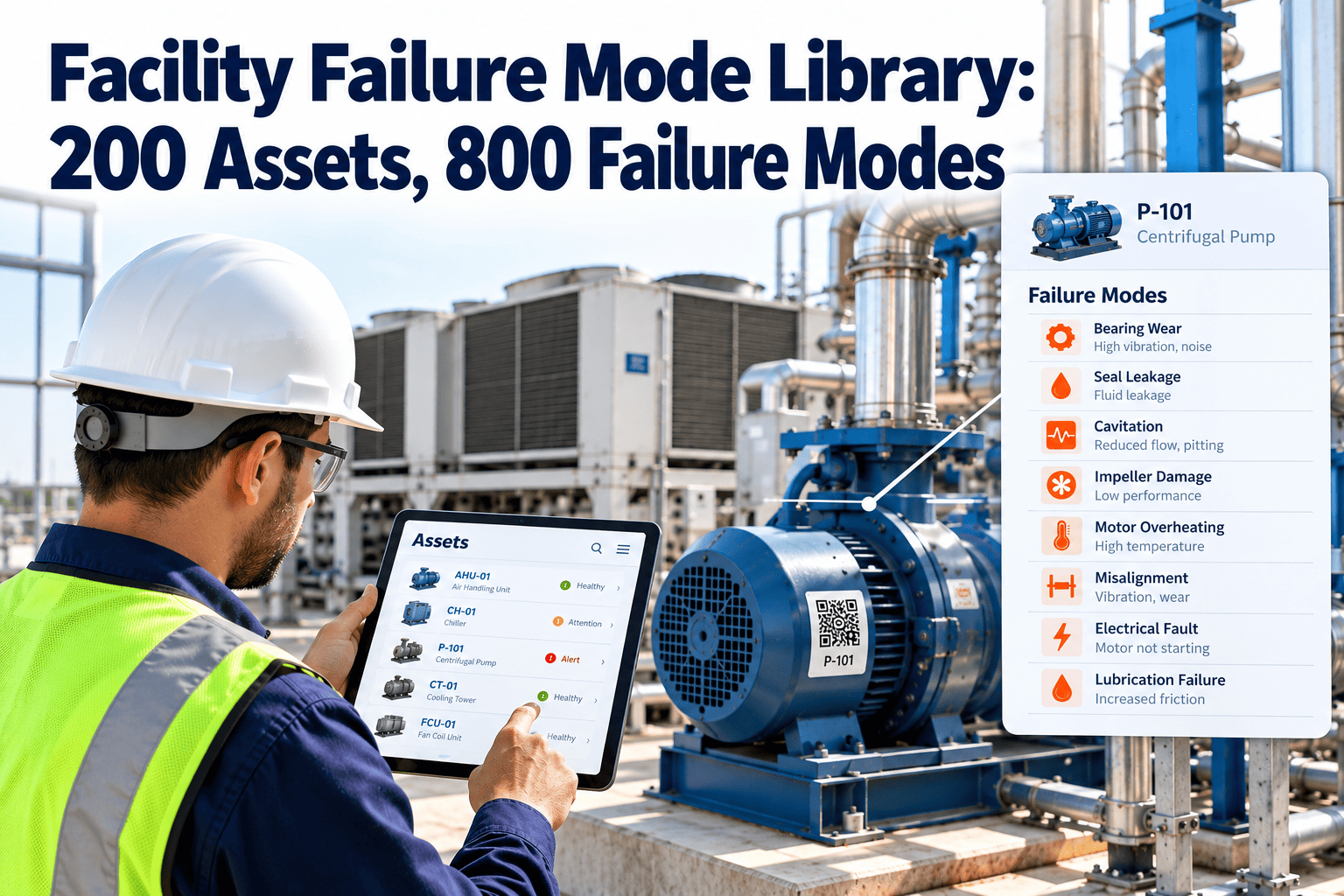
Example — Chiller: Refrigerant charge loss; condenser fouling; compressor bearing wear; expansion valve malfunction; sensor drift.
Q4
What happens when each failure occurs? (Consequences)
Example — Chiller: Loss of occupant comfort; production environment temperature exceedance; regulatory non-compliance; emergency contractor cost.
Q5
Does each failure matter? (Consequence assessment: safety, operational, economic, hidden)
Example — Chiller: Full capacity loss = operational consequence, high economic impact. Sensor drift = hidden failure — can be detected by monitoring.
Q6
What systematic task can prevent or reduce the failure consequence?
Example — Chiller: Refrigerant monitoring monthly; condenser approach temperature trending; compressor vibration continuous monitoring; sensor calibration quarterly.
Q7
What must be done if no suitable preventive task exists?
Example — Chiller: Redesign or add redundancy if failure consequence is safety-critical and no reliable detection method exists. Or accept run-to-failure if consequence is economic and cost is acceptable.
Build Your RCM Analysis in Oxmaint — With AI That Learns From Your Failure History
Oxmaint's AI analyzes your work order history to identify recurring failure modes and recommend RCM-aligned maintenance strategies per asset. Turn your existing CMMS data into an RCM analysis that actually gets executed.
AI-Enhanced RCM
How AI Transforms RCM From Static Analysis to Living System
01
Automated Failure Mode Identification
ML algorithms analyze maintenance history, sensor data, and operational patterns to identify recurring degradation signatures — finding failure modes that manual FMEA analysis would miss because they appear too slowly or too rarely to be visible to human analysts.
02
Dynamic Risk Matrix Updates
Traditional RCM produces a static risk matrix updated every 2–5 years. AI continuously refreshes probability and consequence scores as new failure data arrives — so maintenance priorities reflect current asset condition, not a workshop from three years ago.
03
Condition-Based Work Order Generation
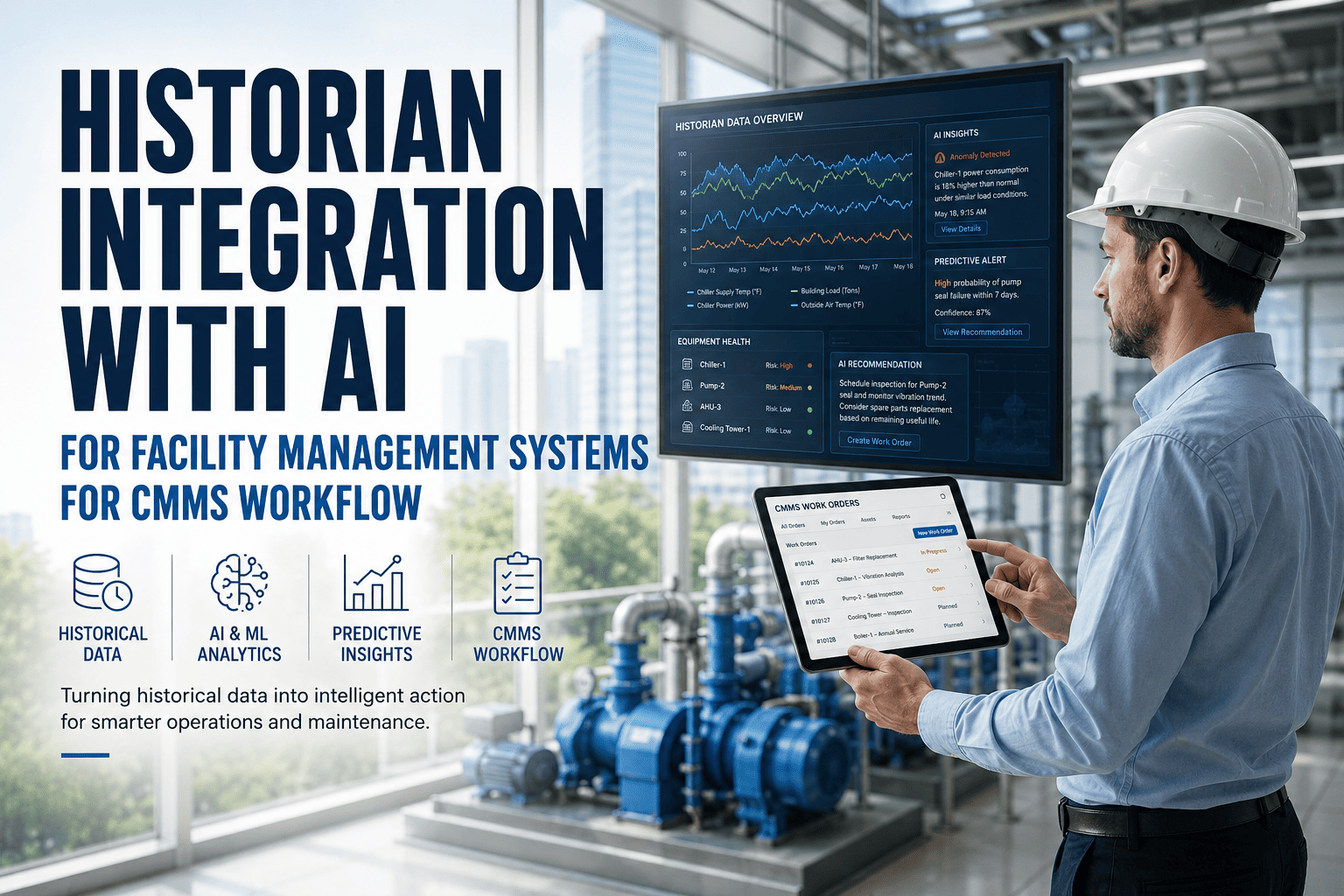
When IoT sensor data indicates a degradation pattern matching a known failure mode, Oxmaint AI generates a condition-based work order automatically — closing the loop between RCM analysis and maintenance execution in under 90 seconds.
04
Maintenance Interval Optimization
Fixed PM intervals are the most common source of over-maintenance and under-maintenance simultaneously. AI analyzes actual failure patterns to recommend condition-based intervals that deliver the intended reliability at lower labor and parts cost.
RCM for Facility Systems
Applying RCM to Common Facility Assets — Strategy by Asset Type
Expert Review
What Reliability Engineers Say About RCM in Facilities
"The most common mistake in RCM for building systems is applying the same rigour to every asset. A chiller that fails in summer during peak occupancy is a critical failure with safety, regulatory, and financial consequences. A pendant light that fails in a storage room is an annoyance. RCM tells you to spend your maintenance budget where the consequence of failure demands it — and run everything else to failure or replace on a cost-optimised schedule. That reallocation alone cuts maintenance spend by 20–25% in most facilities."
Reliability Engineering Director
Commercial Real Estate Portfolio — 42 Buildings, APAC
"Delta Airlines cut unscheduled maintenance events by 26% and reduced maintenance-driven delays by 31% in two years by linking flight sensor data, component history, and environmental conditions into one digital reliability platform. The same principle applies to facility systems. The RCM analysis is only as good as the data pipeline that keeps it live. Without a CMMS that feeds new failure events back into the model, RCM becomes a compliance document — not a reliability system."
Facilities Reliability Consultant
Healthcare & Industrial Facilities — 20+ Years RCM Implementation
Frequently Asked Questions
RCM for Facility Systems — Common Questions
How is RCM different from a standard preventive maintenance program?
A PM program applies scheduled maintenance to all assets on fixed calendar intervals. RCM starts by asking whether the failure matters, how it fails, and what the consequences are — then selects the optimal strategy per asset (predictive, preventive, condition-based, or run-to-failure). Most facilities applying RCM find that 30–40% of assets currently receiving PM do not need it — and 10–15% of assets not receiving any maintenance urgently need condition monitoring.
Book a demo to see how Oxmaint structures an RCM asset register for your facility.
What is FMEA and how does it support RCM analysis?
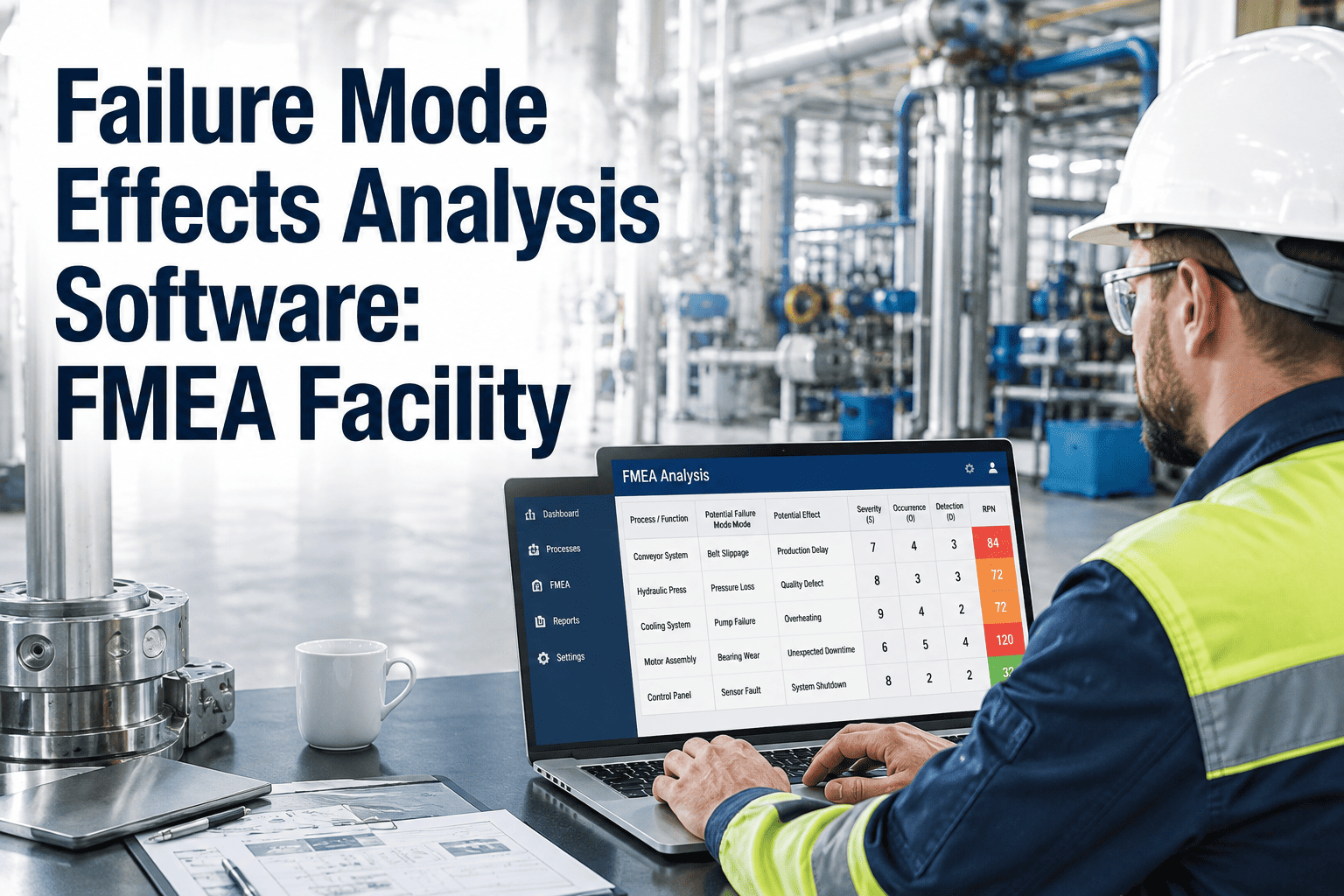
Failure Mode and Effects Analysis (FMEA) is the structured tool used within RCM to identify how each asset component can fail, what causes that failure, and what the effect is on the system and facility. FMEA feeds directly into RCM questions 3–5, providing the failure mode inventory and consequence assessment that drives maintenance strategy selection. Modern AI-assisted FMEA can accelerate the analysis from months to weeks by pattern-matching against historical work order data.
Start a free trial to see how Oxmaint structures FMEA analysis within the asset record.
How much historical data is needed before starting an RCM analysis?
RCM can start with as little as 12 months of maintenance history, though 24–36 months produces more reliable failure mode identification, particularly for slow-developing degradation patterns. Where historical data is limited, RCM uses expert knowledge, manufacturer failure data, and industry failure databases to estimate failure probabilities. AI analysis accelerates the gap-filling by identifying statistical patterns in limited datasets.
Book a demo to walk through how Oxmaint structures the initial RCM data collection for facilities with limited CMMS history.
How often should an RCM analysis be updated for facility systems?
Traditional RCM programs review the full analysis every 3–5 years. Modern AI-connected RCM updates dynamically: failure probability scores refresh automatically as new work order data arrives, condition monitoring thresholds adjust based on observed degradation rates, and new failure modes are flagged when sensor patterns diverge from historical baselines. A CMMS with active AI keeps your RCM analysis live, not static.
Start a free trial to see how Oxmaint's AI keeps facility asset reliability models continuously updated.
Stop Maintaining Everything the Same Way. Start Maintaining Every Asset the Right Way.
Oxmaint's Predictive Maintenance AI applies RCM logic to your facility asset register — identifying which assets need condition monitoring, which need PM optimization, and which can safely run to failure. Real RCM. Real execution. Real results.