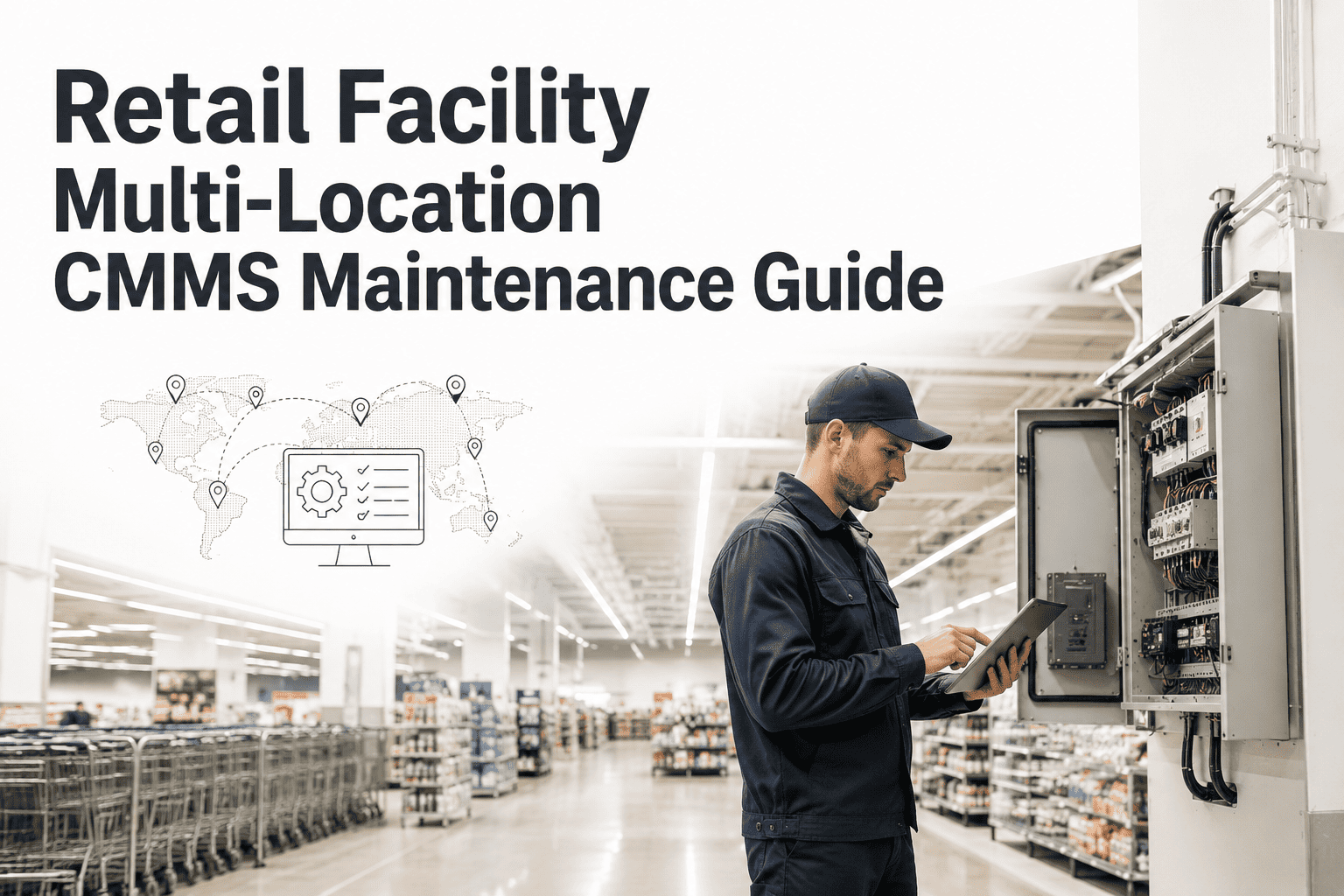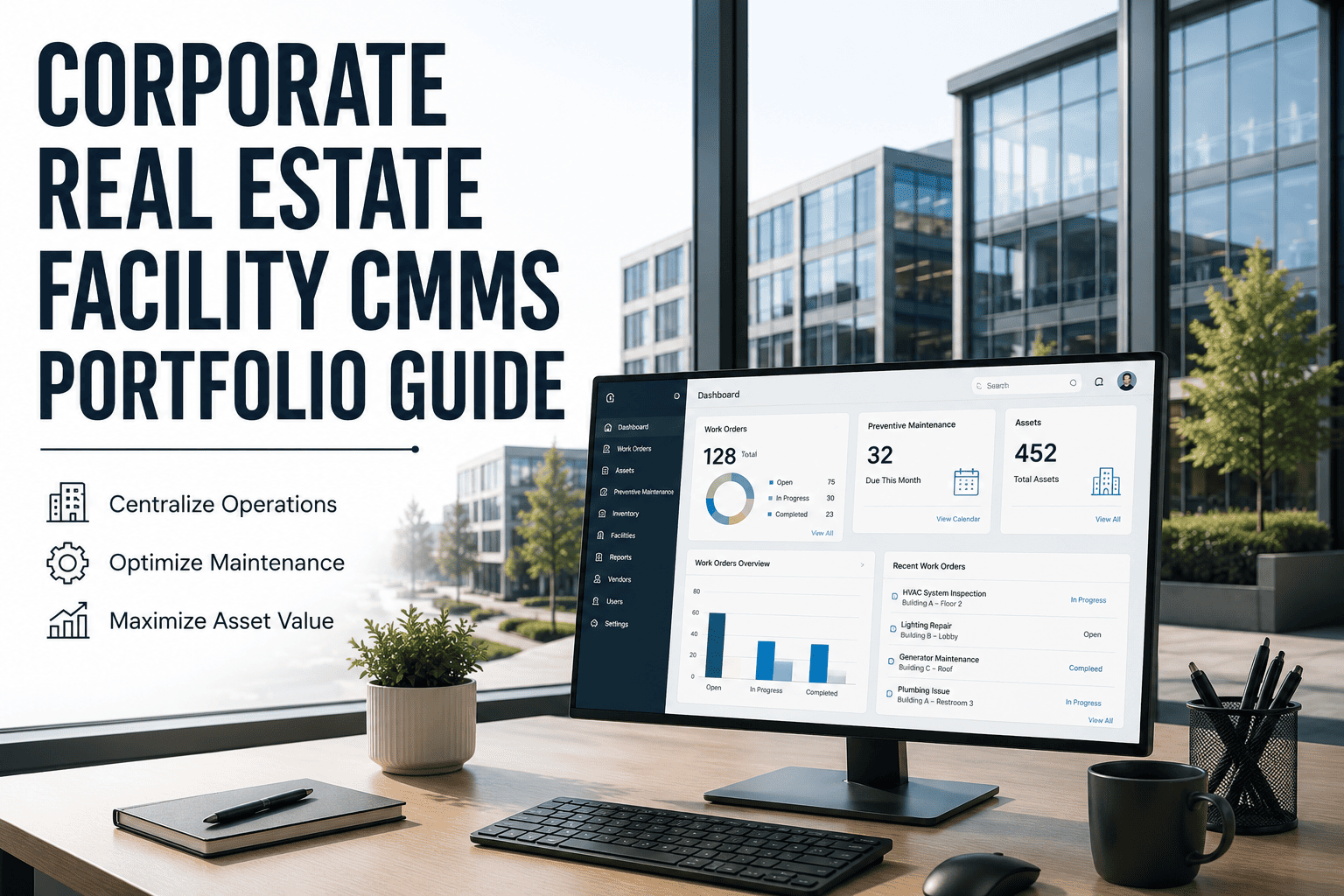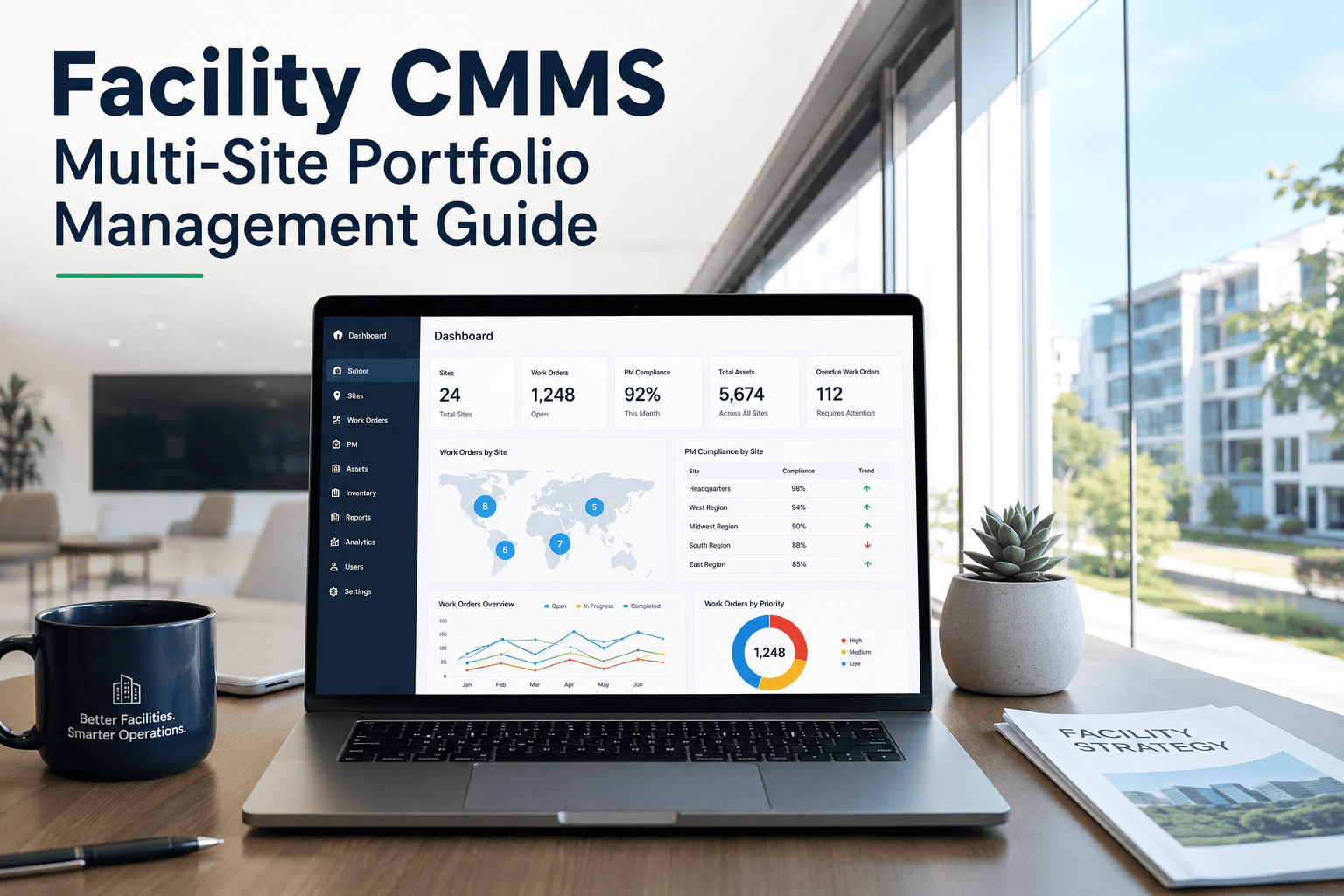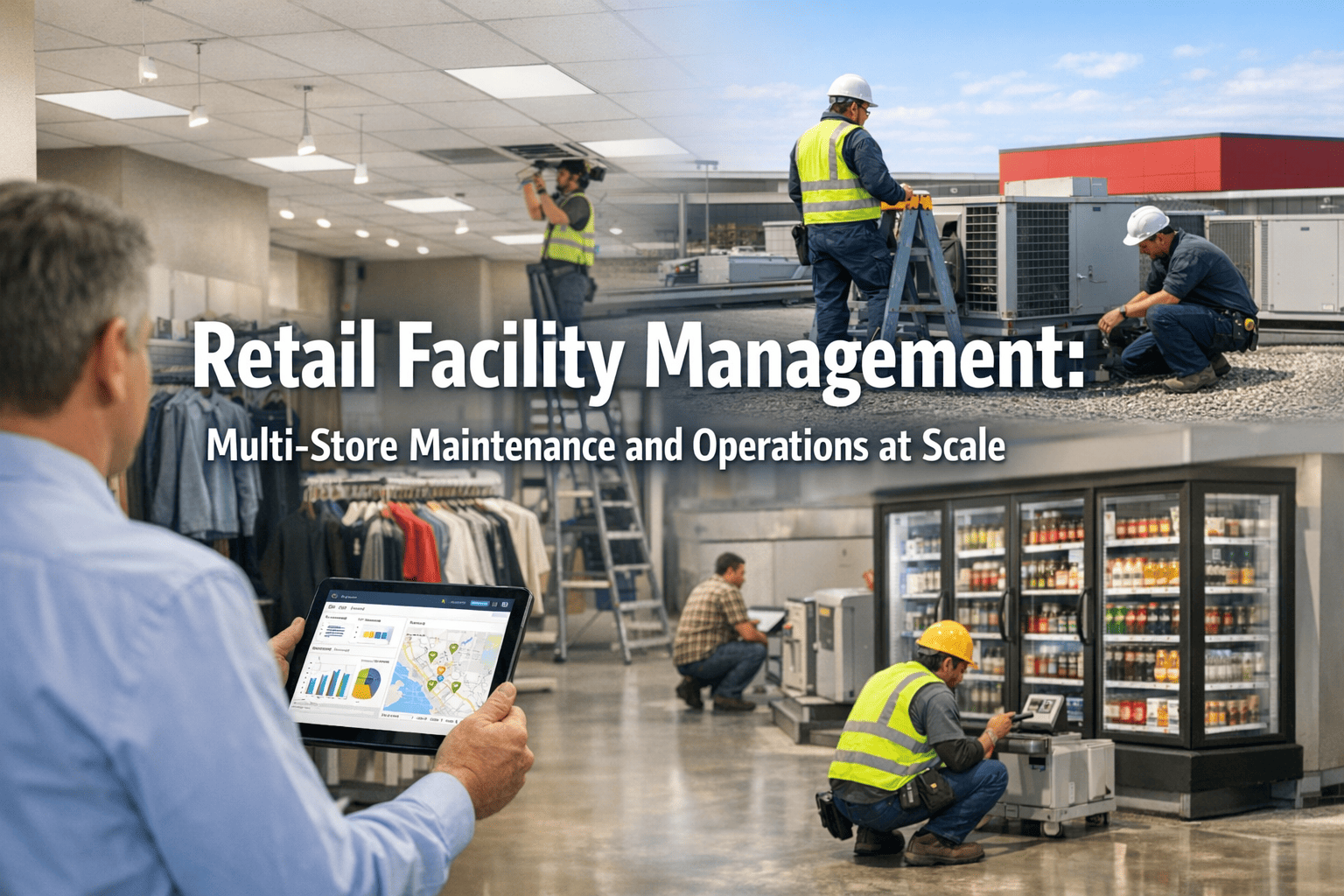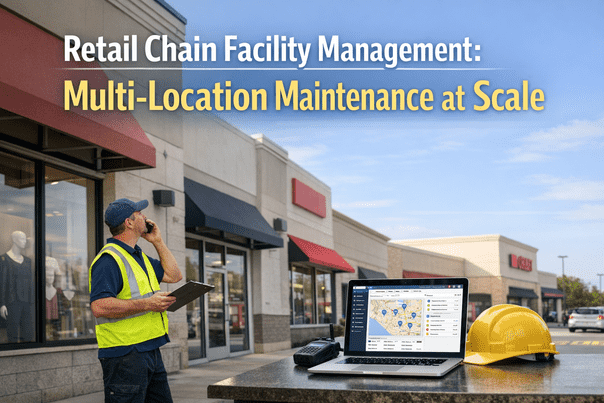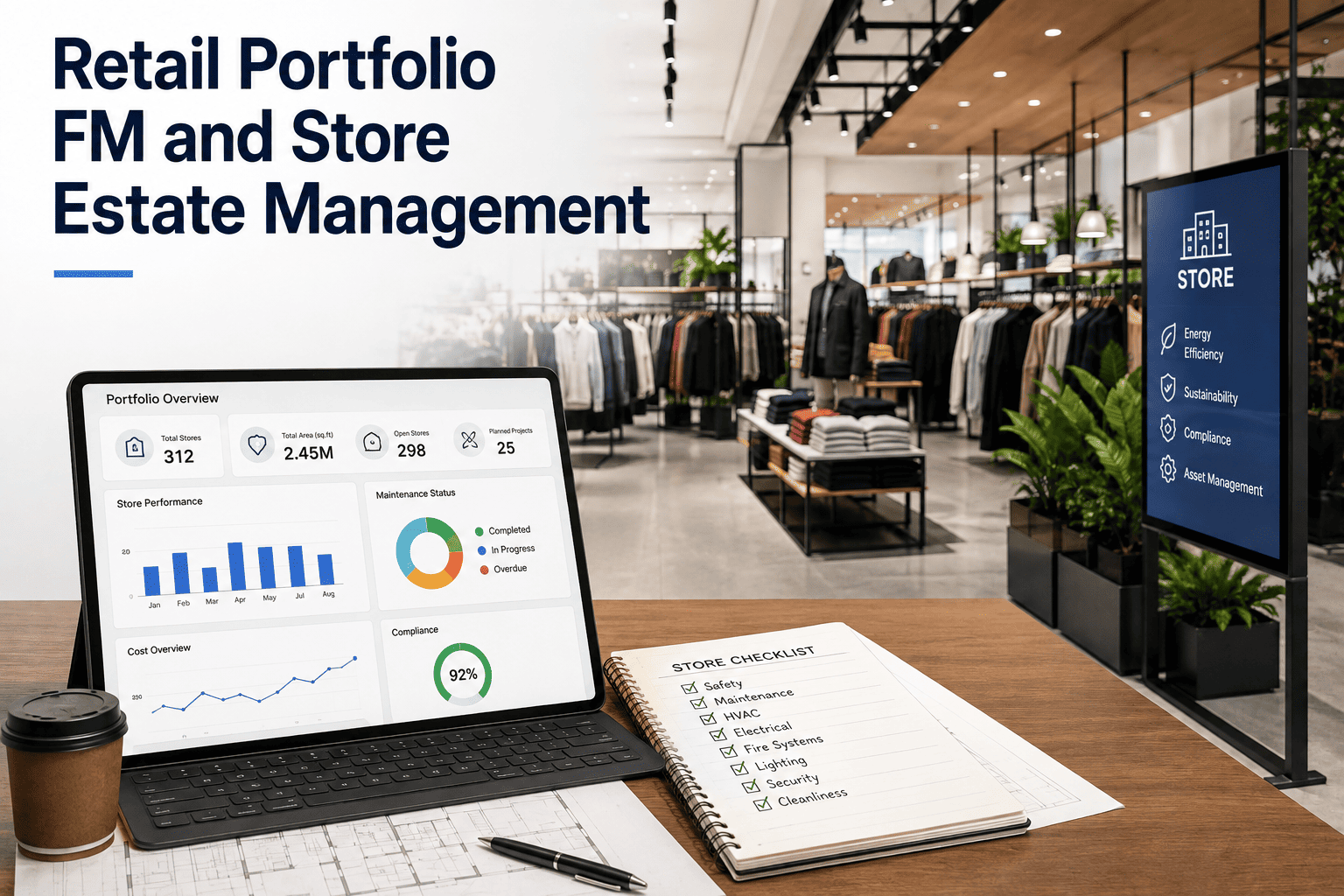
A single distribution center has one loading dock to worry about. A retail estate has hundreds of them — plus HVAC, refrigeration, lighting, and doors — spread across locations with no facilities staff on site and trading hours that rarely stop. When a walk-in cooler fails at a grocery chain or the HVAC goes down on a Saturday at a mall location, every hour of downtime is lost sales, not just a maintenance ticket. This guide covers retail portfolio facility management and store estate management: the operating model, remote dispatch process, and vendor network structure that keeps a distributed estate running with centralized visibility instead of hundreds of disconnected store calls.
Retail Facilities
Multi-Site Operations
Vendor Management
Why Retail Estates Run Differently
No on-site FM staff
Store managers report issues but rarely own equipment decisions
Constant trading hours
Little to no downtime window for planned maintenance
Downtime = lost sales
Every hour an asset is down has a direct revenue cost, not just a repair cost
Operating Model
Centralized Oversight, Distributed Execution
1
Store manager reports an issue through a standard channel
→
2
Central dispatch triages and assigns the nearest qualified vendor
→
3
Vendor completes the work and closes it out remotely
→
4
Region and portfolio-level cost and downtime data roll up automatically
Dispatch Every Store Issue From One Place
Oxmaint routes store-reported issues to the right vendor automatically and rolls every work order into portfolio-level reporting.
Vendor Network
Building a Remote-First Vendor Model
| Element | Reactive Store Model | Managed Estate Model |
|---|---|---|
| Vendor sourcing | Store manager calls a local number | Pre-qualified regional network with agreed response times |
| Pricing | Negotiated per call-out | Standing rate agreements across the vendor network |
| Visibility | Known only to that store | Logged centrally with cost and downtime tracked by asset |
| Escalation | Repeated calls until someone responds | Automatic escalation rules by asset criticality |
Asset Priority
Not Every Store Asset Carries the Same Risk
Critical
Refrigeration, POS power, entry doors — failure stops trading or spoils inventory immediately
High priority
HVAC, lighting — failure degrades customer experience and staff conditions quickly
Standard
Signage, minor fixtures — scheduled on the next regular vendor visit
Give Every Store the Same Response Standard
See how Oxmaint applies consistent priority rules and vendor dispatch across every location in your retail estate.
Frequently Asked Questions
Retail Portfolio FM — Common Questions
How does retail FM differ from managing a single large facility?
Scale comes from location count, not size — hundreds of small sites with no on-site facilities staff require centralized dispatch and vendor management rather than an in-house maintenance crew. Start a free trial to see a store-level dispatch workflow.
Who should report facility issues at a store with no FM staff?
The store manager or assistant manager, through a single standard channel that routes directly to central dispatch instead of a personal phone call to a local contractor.
How do you prevent one region's vendor problems from affecting the whole estate?
By tracking vendor performance centrally — response time and first-time-fix rate by region — so underperforming vendors get flagged before they affect trading across multiple stores. Book a demo to see vendor scorecards in practice.
What is the biggest cost driver in retail facility management?
Refrigeration and HVAC downtime, since both directly affect inventory and trading conditions, followed by reactive call-out premiums paid when there is no standing vendor agreement in place.
Can a CMMS handle hundreds of small, geographically spread locations?
Yes, when it supports store-level reporting, regional vendor dispatch, and portfolio roll-up reporting in one system. Start a free trial to see how Oxmaint scales across a distributed store estate.
Run Your Store Estate From One Dashboard
Oxmaint centralizes dispatch, vendor management, and reporting across every store in your retail portfolio.