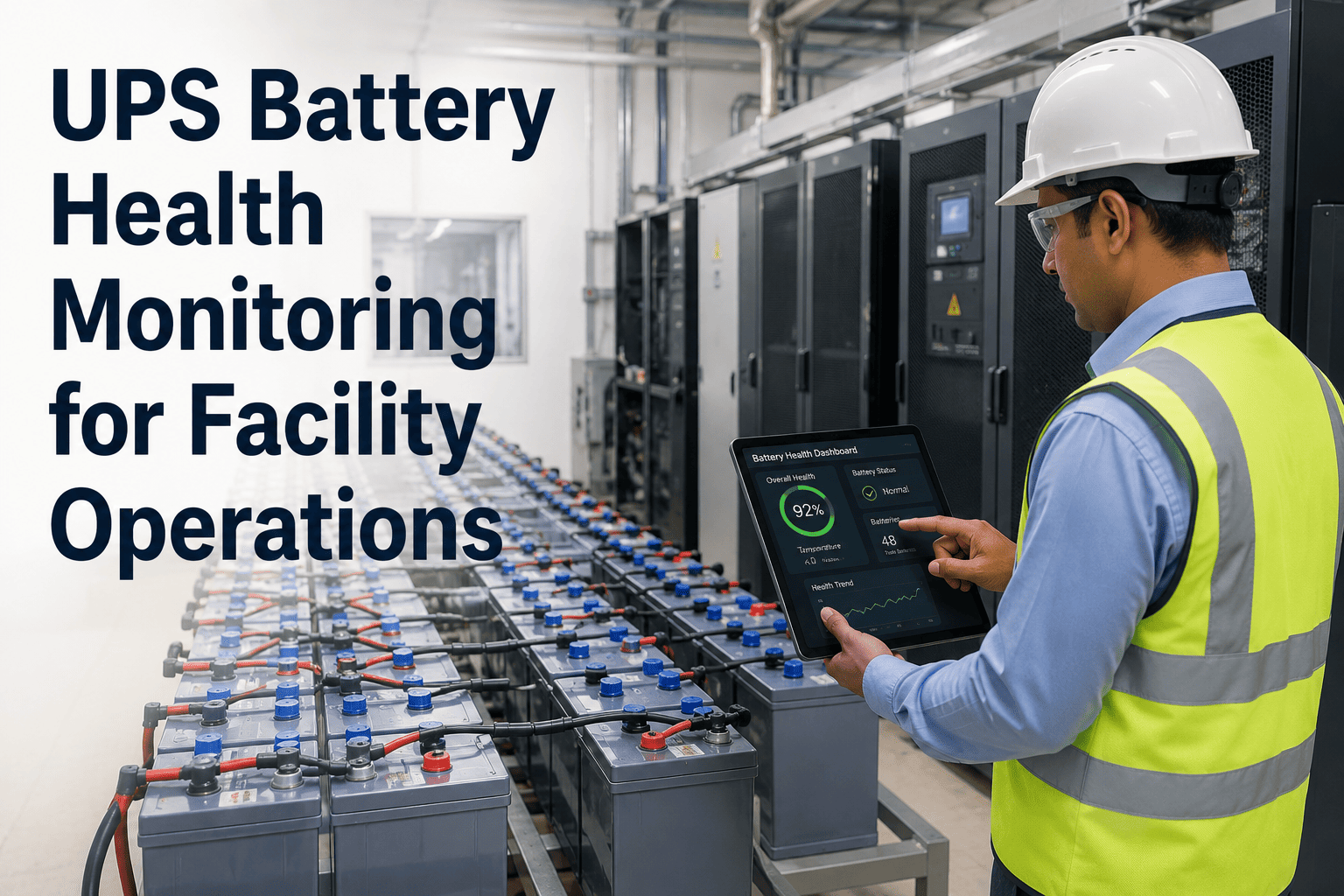
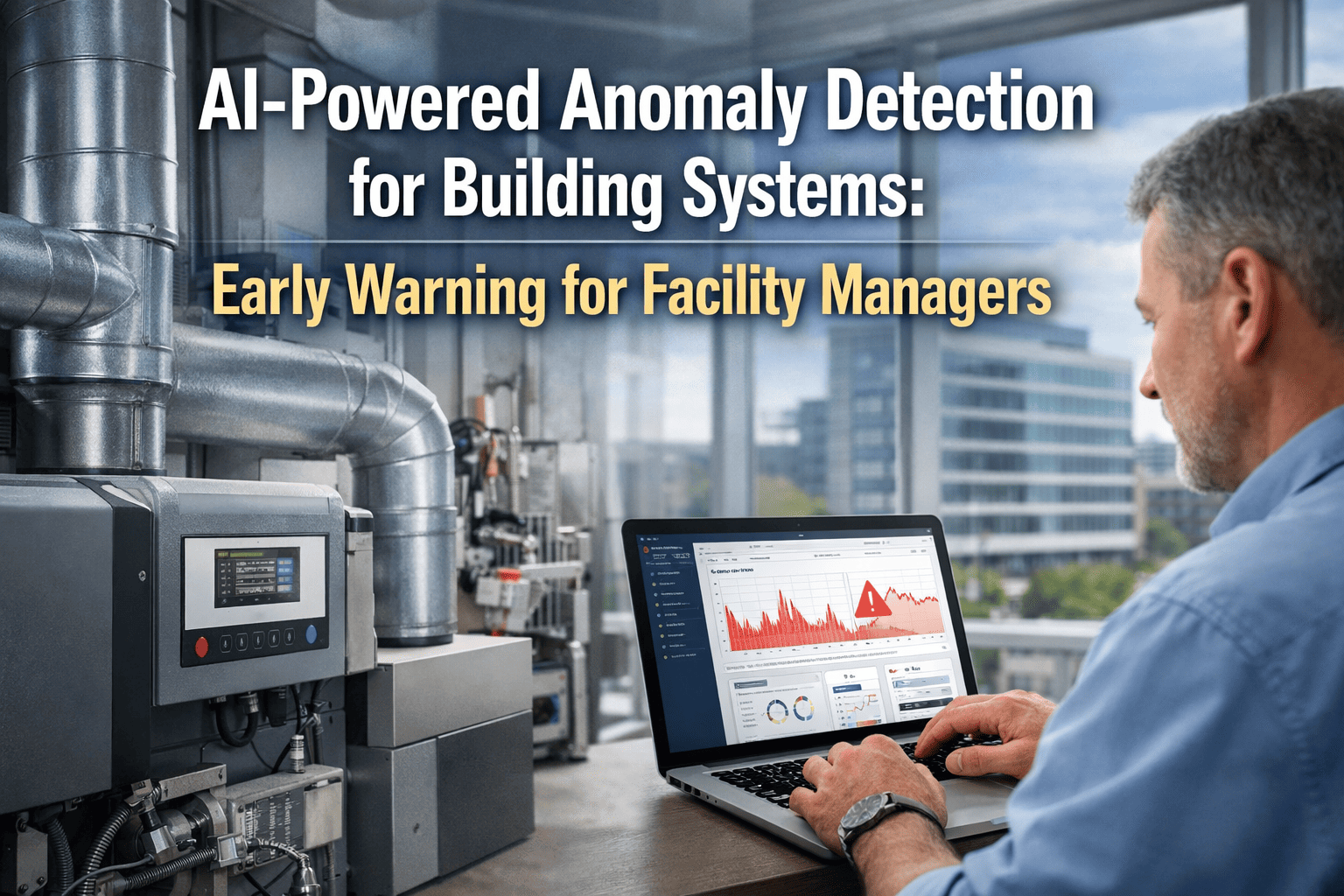
The data center monitoring dashboard shows green across all metrics at 2:47 AM—until a critical UPS unit fails without warning, taking down an entire server rack. The backup batteries, which passed their last scheduled inspection just six weeks ago, had been silently degrading. Post-incident analysis reveals subtle voltage fluctuations that started months earlier—patterns invisible to traditional monitoring but clearly detectable by AI-powered analytics. Research indicates that facilities using predictive maintenance reduce UPS failures by up to 85% compared to reactive approaches. This guide explores how AI analytics transforms UPS maintenance from scheduled guesswork into data-driven precision.
Traditional time-based maintenance schedules miss 60% of developing failures because degradation doesn't follow predictable timelines. AI analytics continuously monitors hundreds of parameters, identifying anomalies months before they become critical. Start your free OXmaint trial to implement AI-powered UPS monitoring and eliminate unexpected failures.
Understanding UPS Failure Patterns
AI Analytics: Key Parameters Monitored
AI-powered predictive maintenance analyzes dozens of parameters simultaneously, detecting patterns that human operators and traditional monitoring systems miss entirely.
| Parameter | AI Detection Method | Predictive Insight |
|---|---|---|
| Internal Resistance | Continuous impedance tracking; trend analysis | Predicts capacity loss 6-12 months ahead |
| Float Current | ML pattern recognition for abnormal charging | Identifies thermal runaway risk early |
| Cell Voltage Balance | Statistical variance analysis across strings | Detects weak cells before cascade failure |
| Temperature Delta | Thermal imaging correlation with load cycles | Spots developing hot spots and shorts |
| Discharge Curves | Deep learning comparison to baseline | Calculates true remaining capacity |
Power Electronics Monitoring
| Component | AI Analysis | Early Warning Signs |
|---|---|---|
| DC Capacitors | Ripple current analysis; ESR trending | Capacitance drop >10%; ESR increase >20% |
| IGBT Modules | Switching loss patterns; thermal cycling stress | Gate threshold drift; saturation voltage rise |
| Cooling Fans | Vibration signature analysis; RPM trending | Bearing wear detection 3-6 months early |
| Rectifier | Input current THD; power factor monitoring | Diode degradation; harmonic distortion |
| Inverter | Output waveform analysis; efficiency tracking | Waveform distortion; efficiency decline |
Manual monitoring catches only obvious failures—AI analytics identifies subtle efficiency losses that indicate component degradation. Facilities using AI-driven maintenance report 40% lower replacement costs. Sign up for free and start tracking component health with automatic anomaly detection today.
AI Prediction Models Explained
Modern AI systems use multiple algorithmic approaches to maximize prediction accuracy and minimize false positives that waste maintenance resources.
| Model Type | Application | Accuracy Range |
|---|---|---|
| Time Series LSTM | Battery capacity forecasting; load pattern analysis | 92-96% for 6-month predictions |
| Anomaly Detection | Identifying unusual behavior patterns | 97-99% anomaly identification |
| Classification Models | Failure mode categorization; root cause analysis | 88-94% failure type accuracy |
| Regression Analysis | Remaining useful life estimation | ±15% RUL prediction window |
| Ensemble Methods | Combined predictions for critical decisions | 95-98% confidence levels |
Environmental Intelligence
| Factor | AI Monitoring | Impact Prediction |
|---|---|---|
| Ambient Temperature | Correlation with battery life; cooling efficiency | Every 10°C rise halves battery life |
| Humidity Levels | Condensation risk analysis; corrosion prediction | Optimal range: 40-60% RH |
| Air Quality | Particulate tracking; filter efficiency monitoring | Contamination impact on cooling |
| Ventilation Flow | Airflow pattern analysis; blockage detection | Hot spot development prediction |
| Vibration | Structural stress monitoring; connection integrity | Mechanical failure risk assessment |
Quick Diagnostic Reference
Want this diagnostic intelligence built into your mobile device with automatic work order creation? Book a personalized demo and we'll show you how facilities cut diagnostic time by 70% with AI-powered insights.
Implementation Roadmap
| Phase | Activities | Timeline |
|---|---|---|
| Assessment | Inventory UPS assets; identify monitoring gaps; baseline current state | Week 1-2 |
| Sensor Deployment | Install IoT sensors; configure data collection; establish connectivity | Week 2-4 |
| Data Integration | Connect existing BMS/DCIM; import historical data; validate streams | Week 3-5 |
| Model Training | Train AI on historical failures; calibrate thresholds; validate accuracy | Week 4-8 |
| Optimization | Refine predictions; integrate work orders; continuous improvement | Ongoing |