AI-Driven Predictive Maintenance for Building Management Systems
Reactive maintenance costs building owners 3-9 times more than planned interventions. When HVAC systems fail during peak occupancy, chillers break down in summer heat, or elevators stop unexpectedly during morning rush, facilities teams scramble to find technicians, source emergency parts at premium prices, and manage tenant complaints—all while equipment damage compounds with every hour of delayed repair. According to Deloitte's 2024 manufacturing report, organizations using AI-driven predictive maintenance reduce unplanned downtime by up to 50% and maintenance costs by 25%.
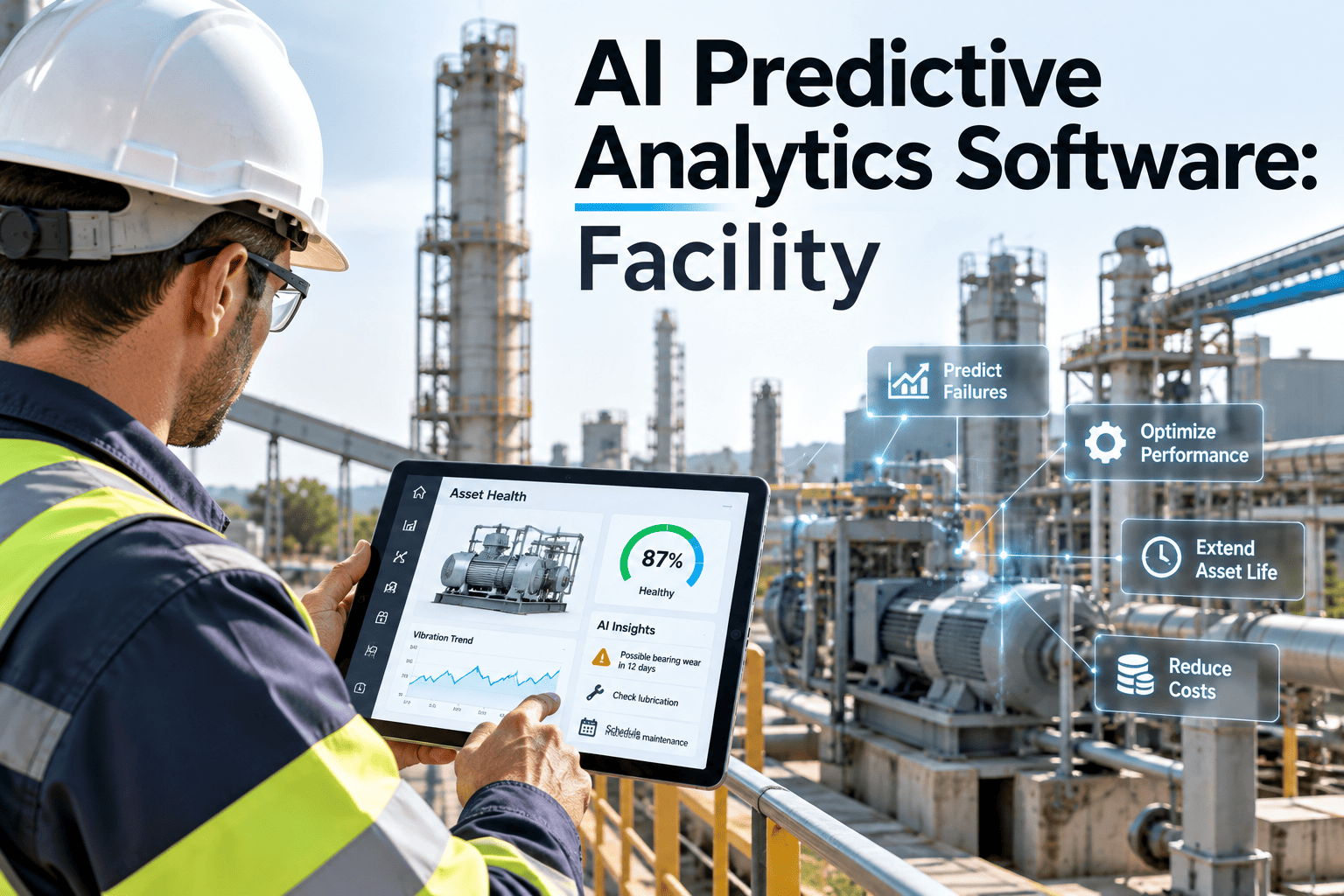
OXmaint's AI-powered predictive maintenance platform transforms building management from reactive firefighting to proactive optimization. Our machine learning algorithms analyze sensor data from HVAC systems, electrical equipment, elevators, and critical infrastructure to detect anomalies weeks before failures occur—enabling scheduled repairs during off-peak hours, optimal parts procurement, and continuous building performance improvement.
Evolution of Building Maintenance Strategies
Building maintenance has evolved through distinct phases, each offering different risk profiles, cost structures, and operational outcomes. Understanding where your facility sits on this spectrum—and the benefits of advancing to AI-driven predictive maintenance—helps justify technology investments and set realistic expectations. OXmaint supports facilities at every stage while providing clear pathways to predictive capabilities.
Traditional Approach
Reactive Maintenance
Equipment runs until failure, then repairs are made. While simple to implement, this approach results in highest costs, maximum downtime, and shortest equipment lifespan due to cascading damage from failures.
No scheduled interventions
Emergency response only
Premium parts pricing
Extended downtime periods
Unpredictable budgeting
Shortened equipment life
Higher safety risks
Tenant dissatisfaction
Scheduled Approach
Preventive Maintenance
Time-based maintenance schedules replace parts and perform services at fixed intervals regardless of actual condition. Reduces failures but often results in unnecessary maintenance on healthy equipment.
Calendar-based scheduling
Fixed maintenance intervals
Standard parts replacement
Predictable labor costs
Some unnecessary work
Condition not considered
Moderate downtime
Better than reactive
Monitoring Approach
Condition-Based Maintenance
Sensors monitor equipment health indicators (vibration, temperature, pressure) and trigger maintenance when thresholds are exceeded. More efficient than time-based but still reactive to current conditions.
Real-time sensor monitoring
Threshold-based alerts
Condition-triggered work
Better resource allocation
Reduced unnecessary work
Still somewhat reactive
Limited future visibility
Good efficiency gains
AI-Powered Approach
Predictive Maintenance
Machine learning algorithms analyze historical and real-time data to predict failures before they occur, enabling optimal maintenance timing. Maximizes equipment life while minimizing both costs and downtime.
AI-powered predictions
Failure probability scoring
Remaining life estimates
Optimal timing recommendations
Proactive parts ordering
Minimized unplanned downtime
Extended equipment lifespan
Maximum cost efficiency
Stop Equipment Failures Before They Start
OXmaint's AI analyzes your building data to predict HVAC, electrical, and elevator failures weeks in advance—reducing emergency repairs by 50% and maintenance costs by 25%.
Core Components of AI Predictive Maintenance Systems
Effective AI-driven predictive maintenance requires integration of multiple technology layers—from physical sensors collecting equipment data to machine learning models identifying failure patterns. The OXmaint platform provides all components in a unified system, eliminating integration challenges that plague multi-vendor approaches while delivering actionable predictions to maintenance teams.
IoT Sensor Network
Vibration sensors, temperature probes, pressure transducers, current monitors, and flow meters installed on critical equipment continuously stream operational data for analysis.
Data Lake Architecture
Centralized storage aggregates sensor data, maintenance history, weather patterns, occupancy schedules, and equipment specifications for comprehensive analysis.
Machine Learning Engine
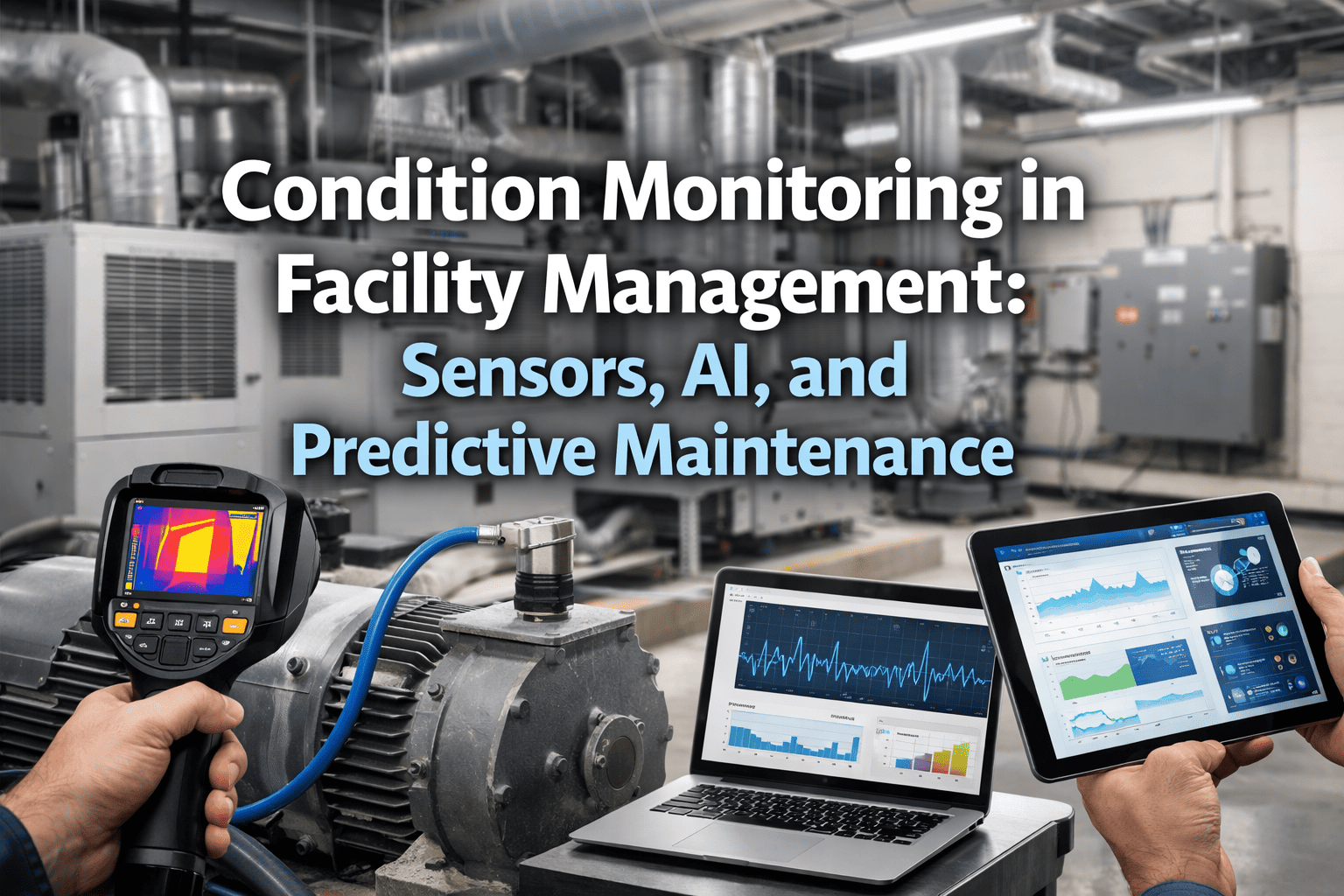
Advanced algorithms including neural networks, random forests, and anomaly detection models identify degradation patterns and predict remaining useful life of components.
Anomaly Detection
Unsupervised learning algorithms establish normal operating baselines and flag deviations indicating emerging problems before they trigger threshold alerts.
Predictive Analytics Dashboard
Visual interface displays equipment health scores, failure probability trends, recommended maintenance windows, and cost-benefit analysis for each predicted intervention.
Automated Work Orders
Predictions automatically generate work orders with optimal timing, required parts, estimated duration, and priority scoring based on failure impact and probability.
AI Predictive vs Traditional Maintenance Approaches
Failure Prediction
Traditional: No advance warning
AI: Weeks to months advance notice
Parts Procurement
Traditional: Emergency orders at premium
AI: Planned ordering at best price
Maintenance Timing
Traditional: During failures or fixed schedules
AI: Optimal windows before failure
Equipment Lifespan
Traditional: 15-20% below potential
AI: Maximized useful life
Building Management System Integration Points
AI predictive maintenance achieves maximum value when integrated with existing building management systems (BMS), capturing data from HVAC controls, lighting systems, security equipment, and vertical transportation. OXmaint integrates seamlessly with major BMS platforms including Johnson Controls, Honeywell, Siemens, and Schneider Electric through standard protocols and APIs.
Multi-System Data Integration Architecture
Unified analytics across all building systems for comprehensive predictive insights
HVAC Systems
Chillers, air handlers, VAV boxes, cooling towers—monitor compressor health, refrigerant levels, coil efficiency, and motor performance
Electrical Distribution
Switchgear, transformers, UPS systems, generators—track load patterns, power quality, thermal performance, and battery health
Vertical Transportation
Elevators, escalators, moving walks—analyze motor current signatures, door timing patterns, ride quality, and safety device status
Fire & Life Safety
Fire pumps, emergency lighting, smoke control—verify equipment readiness and predict component degradation before failures
Critical Building Systems for Predictive Monitoring
HVAC systems account for the largest portion of building energy consumption and maintenance costs. AI monitors compressor current draw, refrigerant pressures, coil differential temperatures, and airflow patterns to predict failures.
Electrical system failures cause immediate building shutdowns and safety hazards. Predictive monitoring tracks transformer oil analysis, breaker operations counts, thermal imaging anomalies, and harmonic distortion levels.
Elevator failures directly impact tenant satisfaction and ADA compliance. AI analyzes door operation timing, motor current signatures, brake wear patterns, and controller response times to predict service needs.
Connect Your BMS to AI-Powered Predictions
OXmaint integrates with Johnson Controls, Honeywell, Siemens, and Schneider Electric systems via BACnet, Modbus, and OPC-UA—no equipment replacement required.
Machine Learning Algorithms for Building Equipment
Different equipment types require different algorithmic approaches. OXmaint's AI engine employs multiple machine learning techniques tailored to specific failure modes—from vibration analysis for rotating equipment to thermal pattern recognition for electrical systems. Each algorithm continuously improves as it processes more data from your building.
Time Series Analysis
LSTM neural networks analyze sensor data sequences to identify degradation trends and predict when parameters will exceed acceptable limits based on historical patterns.
Anomaly Detection
Isolation forests and autoencoders establish normal operating baselines and flag subtle deviations that indicate emerging problems before threshold alarms trigger.
Remaining Useful Life
Survival analysis and regression models estimate when components will require replacement, enabling optimal parts procurement and maintenance scheduling.
Classification Models
Random forests and gradient boosting classify equipment condition into health categories and identify specific failure modes based on symptom combinations.
Vibration Analysis
FFT spectral analysis and convolutional neural networks detect bearing wear, imbalance, misalignment, and looseness in rotating equipment from vibration signatures.
Thermal Pattern Recognition
Computer vision models analyze thermal imaging data to detect hot spots in electrical connections, insulation degradation, and mechanical friction before visible damage occurs.
AI Learning Insight
OXmaint's machine learning models improve continuously as they process more data from your building. Initial predictions are based on industry-wide equipment failure patterns, but within 3-6 months, algorithms adapt specifically to your equipment's operating characteristics, environmental conditions, and maintenance history—improving prediction accuracy by 20-35% compared to generic models.
Implementation Roadmap for Building Portfolios
Successful AI predictive maintenance implementation requires a phased approach that builds organizational capability while demonstrating value at each stage. OXmaint provides implementation support including sensor selection, integration design, staff training, and continuous optimization to ensure your predictive maintenance program delivers measurable results.
Equipment criticality assessment and prioritization
Current maintenance data quality evaluation
BMS integration capability review
Sensor placement planning for pilot equipment
ROI model development and success metrics
Sensor installation on pilot equipment group
BMS integration and data flow verification
Historical data import and baseline establishment
Initial model training and calibration
Maintenance team training on prediction workflows
Prediction accuracy measurement and model refinement
Process integration with work order management
Expanded sensor deployment to additional systems
Advanced analytics dashboard customization
ROI documentation and stakeholder reporting
Full portfolio predictive coverage deployment
Cross-building pattern analysis and benchmarking
Energy optimization integration
Continuous model improvement and expansion
Advanced prescriptive maintenance capabilities
Typical ROI Timeline for Predictive Maintenance
Year 1
15-25%
Reduction in emergency repairs and overtime labor costs
Year 2
30-40%
Decrease in total maintenance spending as predictions mature
Year 3+
40-50%
Full optimization with extended equipment lifecycles
Real-World Predictive Maintenance Applications
AI predictive maintenance delivers measurable results across diverse building types and equipment categories. These examples illustrate how machine learning algorithms detect problems that would otherwise result in costly failures, demonstrating the practical value of predictive capabilities in building management.
Detection: AI identified increasing compressor current draw and discharge temperature trending 8% above normal baseline over 3 weeks.
Prediction: Algorithm predicted refrigerant leak causing compressor stress with 87% confidence, estimating failure within 45 days.
Outcome: Scheduled repair found pinhole leak in evaporator coil. Repair cost $3,200 vs. projected $50,200 for emergency compressor replacement during summer peak.
Detection: Motor current signature analysis detected asymmetric phase currents indicating developing winding insulation breakdown.
Prediction: Model estimated remaining insulation life at 18-25 days based on degradation rate and similar historical failures.
Outcome: Drive motor replaced during planned weekend shutdown. Avoided mid-week failure that would have stranded passengers and triggered emergency response.
Detection: Vibration spectrum analysis identified bearing defect frequency (BPFO) emerging in supply fan motor at 0.15 in/s velocity.
Prediction: Bearing failure probability model predicted 90% chance of failure within 40 days if left unaddressed.
Outcome: Bearings replaced during scheduled maintenance window. Prevented catastrophic bearing seizure that would have damaged motor shaft and housing.
Detection: Thermal imaging pattern recognition identified hot spot on main breaker connection running 23°C above ambient during normal load.
Prediction: Connection loosening progression model indicated critical temperature threshold would be reached within 2 weeks under peak load conditions.
Outcome: Connection retorqued and thermal paste applied during scheduled shutdown. Prevented potential arc flash incident and associated safety/liability exposure.
See Real Failure Predictions for Your Equipment
Upload your equipment data and get a personalized AI analysis showing which assets are at risk, predicted failure timelines, and estimated cost savings.
Frequently Asked Questions About AI Predictive Maintenance
What data does AI predictive maintenance require from building systems?
Effective AI predictive maintenance requires several data types: sensor data (vibration, temperature, pressure, current, flow rates) collected at intervals from seconds to minutes depending on equipment criticality; operational data from building management systems including setpoints, runtimes, and control signals; maintenance history including past failures, repairs, parts replaced, and labor hours; and contextual data such as weather, occupancy schedules, and equipment specifications. OXmaint can begin providing predictions with BMS data alone, then improve accuracy as additional sensor data becomes available.
How accurate are AI predictions for building equipment failures?
Prediction accuracy varies by equipment type and available data quality. For rotating equipment with vibration monitoring (fans, pumps, motors), well-trained models achieve 85-95% accuracy in predicting failures 2-8 weeks in advance. HVAC system predictions typically reach 75-85% accuracy for major component failures. Electrical system predictions depend heavily on thermal monitoring data quality. Importantly, even 70% accuracy delivers significant value—catching 7 out of 10 potential failures before they occur dramatically reduces emergency maintenance costs and unplanned downtime compared to reactive approaches.
How long does it take for AI models to become effective for a specific building?
AI models begin providing value immediately using transfer learning from similar equipment across OXmaint's portfolio. Initial predictions are based on industry-wide failure patterns for your equipment types. Within 3-6 months of data collection, models adapt specifically to your building's equipment characteristics, operating conditions, and maintenance practices. Full optimization typically occurs after 12-18 months when models have observed seasonal variations and multiple maintenance cycles. During this learning period, prediction confidence scores indicate reliability levels for each prediction.
What sensors are needed for predictive maintenance on HVAC equipment?
Essential sensors for HVAC predictive maintenance include: vibration sensors on motors, fans, and compressors (accelerometers measuring velocity and acceleration); temperature sensors on discharge air, refrigerant lines, bearings, and motor windings; pressure transducers on refrigerant circuits and ductwork; current monitors on motor feeds; and differential pressure sensors across filters and coils. Many BMS systems already collect some of this data—OXmaint identifies gaps and recommends cost-effective sensor additions that provide the highest predictive value for your specific equipment.
Can AI predictive maintenance integrate with existing CMMS and BMS platforms?
Yes, OXmaint integrates with major building management systems (Johnson Controls, Honeywell, Siemens, Schneider Electric) via BACnet, Modbus, and OPC-UA protocols, as well as through REST APIs for cloud-connected systems. Integration with existing CMMS platforms enables automatic work order generation when predictions indicate maintenance needs. Bidirectional data flow means maintenance records from your CMMS improve prediction models while OXmaint predictions automatically create and prioritize work orders in your existing workflow systems.
What is the typical ROI timeline for AI predictive maintenance in commercial buildings?
Most organizations see positive ROI within 12-18 months of implementation. First-year savings typically come from reduced emergency repair costs (15-25% reduction), lower overtime labor expenses, and avoided production/occupancy disruptions. By year two, savings expand to include optimized preventive maintenance schedules (30-40% reduction in unnecessary PM work) and better parts procurement through advance failure predictions. Long-term benefits include extended equipment lifecycles (10-20% improvement) and energy savings from optimized equipment performance. Total ROI of 5-10x investment is commonly achieved within 3 years for buildings with significant mechanical infrastructure.
How does predictive maintenance handle false positives and unnecessary alerts?
Managing alert quality is critical for maintenance team adoption. OXmaint addresses false positives through several mechanisms: confidence scoring on each prediction allows filtering by reliability level; multi-parameter validation requires multiple indicators to align before triggering alerts; feedback loops where technicians confirm or dismiss predictions improve model accuracy over time; and contextual awareness suppresses alerts during known abnormal conditions (commissioning, testing, etc.). Target false positive rates below 15% ensure maintenance teams trust and act on predictions rather than experiencing alert fatigue.
Calculate Your Predictive Maintenance ROI
Join facility managers achieving 10x ROI within 18 months. Get a personalized savings estimate based on your building portfolio, equipment inventory, and current maintenance spend.
No credit card required • AI predictions in 48 hours • Cancel anytime