Commercial vehicle weight violations are the third most common cause of out-of-service orders in North America — and unlike mechanical defects, weight violations do not announce themselves through warning lights or performance symptoms. They show up at weigh stations, at portable enforcement checkpoints, and on the invoices that arrive after citation processing. In 2024, FMCSA enforcement data shows over 420,000 weight-related violations issued to commercial vehicles — at an average fine of $2,100 per incident before legal fees and permit costs. The complexity that catches most fleets off guard is not the federal standard, which applies consistently across interstate highways. It is the patchwork of state-specific axle weight limits, bridge formula applications, seasonal restrictions, and permit requirements that vary by state, season, and route. A load that is completely legal in Texas may require permits in Louisiana, be flat-out prohibited in certain configurations in New York, and trigger different axle weight calculations in California. Fleet managers who rely on driver knowledge and static route guides to manage weight compliance are operating with a system that fails when routes change, loads shift, or enforcement priorities intensify. Start a free trial to see how Oxmaint supports fleet compliance documentation, or book a demo and see live compliance dashboards for your operation.
Fleet Compliance · Weight Regulations · 2026 Reference
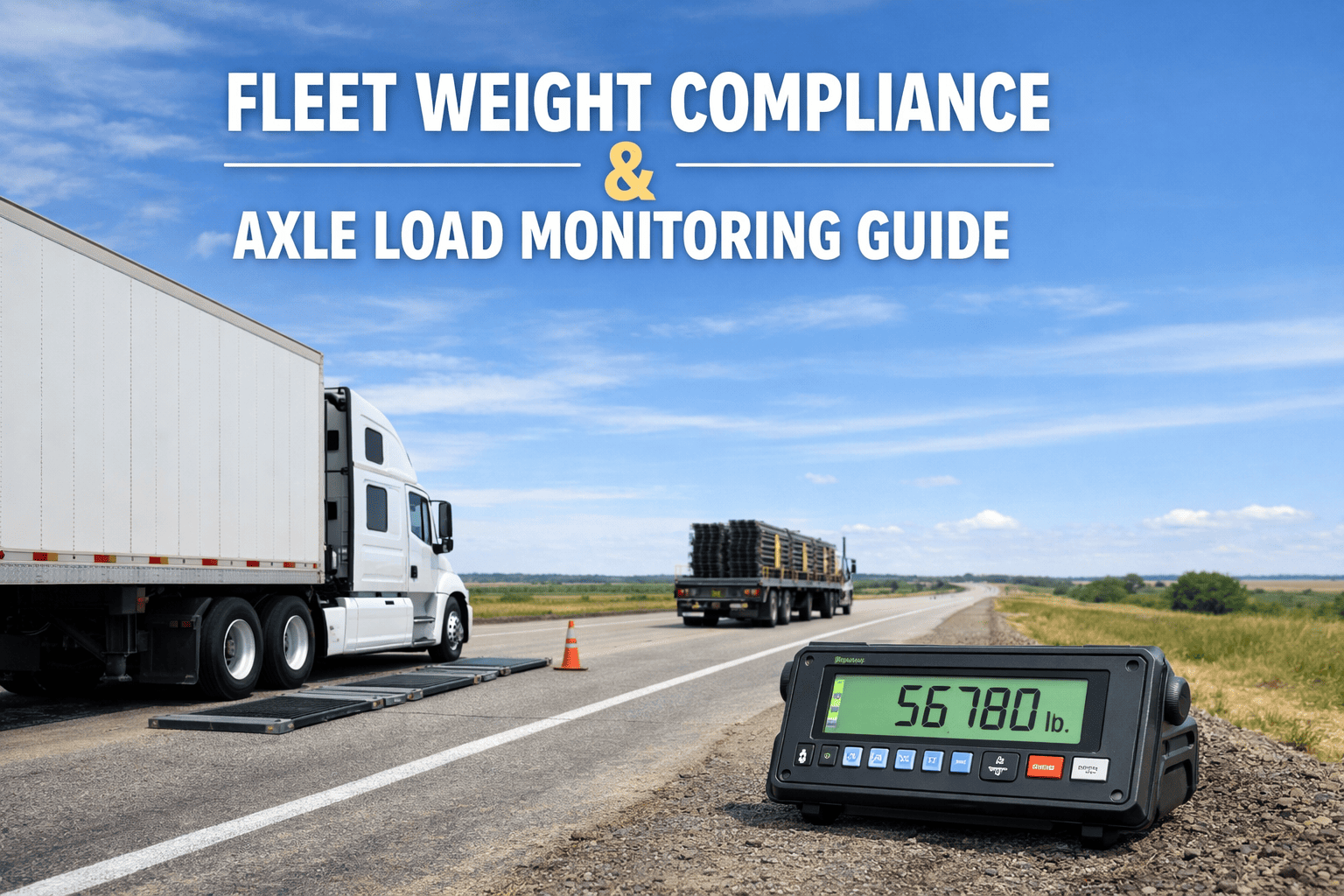
Commercial Vehicle Weight Limits by State 2026
Federal bridge formula, axle weight limits, gross vehicle weight, seasonal restrictions, and oversize/overweight permit requirements — the complete 2026 reference for fleet operators.
420K+
weight-related violations issued to commercial vehicles in 2024 — at $2,100 average fine per incident
80,000 lbs
federal gross vehicle weight limit on interstate highways — state roads may impose lower limits
34,000 lbs
maximum tandem axle weight under federal law — single axle maximum is 20,000 lbs
$16,000+
maximum penalty for gross weight violations exceeding 10,000 lbs over federal limit on interstate highways
Fleet Compliance Documentation That Travels With Every Vehicle
Oxmaint stores vehicle weight certifications, axle configuration records, permit documentation, and maintenance history per vehicle — all accessible from mobile, all exportable for roadside inspections and post-incident reviews.
Start a free trial and build your vehicle compliance records today, or
book a demo to see fleet documentation configured for your vehicle types.
Federal Weight Limits — The Baseline Every State Starts From
80,000 lbs
Gross Vehicle Weight (GVW)
Maximum combined weight of vehicle, trailer, and cargo on Interstate Highway System. State roads, county routes, and bridges may impose lower limits. Overweight permits available in all states for loads exceeding this limit on approved routes.
20,000 lbs
Single Axle Weight
Maximum weight on any single axle — including steer axles and single drive axles. Most states match this federal standard for interstate operation. Some states impose lower limits on non-interstate routes, particularly for spring load restrictions.
34,000 lbs
Tandem Axle Weight
Maximum weight on any two consecutive axles spaced within 40 inches of each other. A typical 5-axle tractor-trailer has one steer axle, two drive axles (tandem), and two trailer axles (tandem). The tandem limit applies to each group of paired axles independently.
Bridge Formula
Federal Bridge Formula B
Governs maximum weight based on the number of axles and the distance between the first and last axle in a group. Prevents concentrated loads that would damage bridge structures. Applies to all vehicles on the Interstate System and overrides simpler GVW calculations when more restrictive. W = 500 × (LN/(N-1) + 12N + 36).
State-by-State Weight Limit Reference — Key Variations from Federal Standard
| State |
Max GVW (Interstate) |
Single Axle Max |
Tandem Axle Max |
Key Variation / Restriction |
| California |
80,000 lbs |
20,000 lbs |
34,000 lbs |
5-axle combinations limited to 80K; CA Bridge Formula differs from federal in some configurations |
| Texas |
80,000 lbs |
20,000 lbs |
34,000 lbs |
Permits up to 125,000 lbs for specific heavy haul corridors; TxDOT route-based permits required |
| New York |
80,000 lbs |
22,400 lbs |
36,000 lbs |
Higher axle limits than federal — but NYC limits lower on some bridges; permit required over 80K |
| Florida |
80,000 lbs |
22,000 lbs |
44,000 lbs |
Among highest tandem axle limits nationally; Florida Turnpike has separate weight enforcement |
| Michigan |
164,000 lbs* |
24,000 lbs |
40,000–54,000 lbs |
*Highest GVW in US for designated highways with 11-axle combinations; complex axle spacing rules |
| Illinois |
80,000 lbs |
20,000 lbs |
34,000 lbs |
Strict spring load restrictions Mar–Apr; many secondary roads drop to 73,280 lbs during thaw |
| Colorado |
85,000 lbs |
20,000 lbs |
36,000 lbs |
Higher GVW on some state routes; mountain route weight restrictions apply year-round on specific passes |
| Pennsylvania |
80,000 lbs |
22,400 lbs |
36,000 lbs |
PA Turnpike has separate weight monitoring; bridge postings common on secondary state routes |
Data reflects 2025–2026 standard limits for interstate operation. State routes, county roads, and bridge postings impose lower limits in many areas. Always verify current permit requirements for overweight loads before dispatch. Seasonal load restrictions vary by year and road condition assessments.
Seasonal Weight Restrictions — The Compliance Window Most Fleets Miss
Spring Thaw
Spring Load Restrictions — March Through May
Freeze-thaw cycles weaken roadbed structure in northern states. 35+ states impose reduced weight limits on secondary roads from March through May — typically reducing allowable GVW by 20–35% on affected routes. Timing varies by state and year based on actual soil temperature readings. Violation fines during spring restriction periods are typically double the standard rate.
Most Affected: MN, WI, MI, ND, SD, MT, ME, VT, NH, IA, MN, OH, PA, NY
Construction Season
Construction Zone Weight Reductions — Varies by Project
Active highway construction zones frequently post temporary weight restrictions as pavement is removed, bridges are being repaired, or temporary roadway surfaces are in place. These restrictions are enforced with portable scales at zone entry points. Temporary weight restriction signage has the force of law — exceeding posted limits in construction zones doubles fine exposure in most states.
Enforcement: Portable weigh stations at zone entrances with no advance warning requirement
Posted Bridge Limits
Bridge Postings — Permanent Local Restrictions
Over 42,000 bridges in the US are rated structurally deficient. Posted weight limits on these structures are separate from road weight limits and must be observed regardless of the vehicle's GVW certification. A fully permitted 80,000 lb vehicle must still comply with a 40-ton (80,000 lb GVW) bridge posting — and a 15-ton posting means 30,000 lbs regardless of what the state allows on surrounding roads.
Reality: 42,000+ structurally deficient US bridges — many on secondary commercial routes
Harvest Season
Agricultural Harvest Exemptions — Fall Window
Many agricultural states grant seasonal weight exemptions during harvest season for farm commodity transport — typically September through November. These exemptions apply to specific vehicle configurations transporting qualifying agricultural products on designated routes. Commercial fleets not involved in agricultural transport cannot claim these exemptions, and route designations are strictly enforced.
States with Harvest Exemptions: IA, IL, IN, MN, OH, KS, NE, SD, ND, MO, WI
Oversize and Overweight Permits — When and How They Work
Single Trip
Route-Specific Overweight Permit
Required for any load exceeding the state's standard weight limits on a specific origin-to-destination route. The routing authority reviews the proposed route for bridge capacity, clearances, and road suitability. Permits specify exact route — deviation requires a new permit. Lead time: 1–5 business days per state traversed.
Annual Blanket
Annual or Seasonal Overweight Permit
Covers a category of loads on approved route classes without route-by-route approval. Available in most states for specific industries — construction, agriculture, energy — with predetermined weight parameters. Requires annual renewal and vehicle-specific endorsement. Significantly reduces per-trip permit cost for high-frequency heavy haul operations.
Superload
Superload / Extraordinary Permit
Required for loads exceeding 200,000 lbs GVW or loads with special dimensional requirements. Engineering review required. Escort vehicle requirements, time-of-day travel restrictions, and law enforcement coordination are common conditions. Lead time of 2–6 weeks per state. Superload permits typically require an independent engineering certification for each bridge on the route.
Interstate Coordination
Multi-State Permit Coordination
Each state on a heavy haul route requires its own permit — there is no unified federal overweight permit. A load moving from Texas to Ohio on a route through Louisiana, Mississippi, Tennessee, and Kentucky requires 5 separate permits with 5 separate routing approvals. Permit services and specialized carriers manage this coordination — single-permit thinking creates multi-state violations.
Weight Compliance — The Numbers That Matter to Fleet Operations
$2,100
average weight violation fine
per incident before legal fees and permit retroactive costs — across all violation severity levels in 2024 FMCSA enforcement data
420K+
violations issued in 2024
weight-related violations are the third most common CMV out-of-service trigger — ahead of cargo securement and lighting violations
2x
fine multiplier in restricted zones
spring load restriction period violations and construction zone weight violations are typically penalized at double the standard rate in most states
4 yrs
CSA impact duration
weight violations affect CSA scores for 24 months and appear in the carrier safety record for 4 years — elevating inspection priority and insurance premiums across the fleet
Frequently Asked Questions
What is the Federal Bridge Formula and how does it affect load planning?
The Federal Bridge Formula (Formula B) limits the weight that can be placed on any group of axles based on the distance between the outermost axles in the group. The formula is: W = 500 × (LN/(N-1) + 12N + 36), where W is the maximum weight in pounds, L is the axle spacing in feet, and N is the number of axles. This formula exists to prevent heavy loads from concentrating too much weight on bridge structures between their support points. In practice, it means a 5-axle tractor-trailer with 51 feet between first and last axle has a bridge formula maximum of approximately 80,000 lbs — matching the federal GVW limit. But configurations with shorter axle spacing can have bridge formula limits lower than 80,000 lbs, meaning the bridge formula — not the GVW limit — becomes the binding constraint. Load planners must check both GVW and bridge formula compliance for every configuration.
Can a driver be held personally liable for operating an overweight vehicle?
Yes — in most states, weight violation fines are issued to both the carrier and the driver. The driver citation creates a personal fine obligation separate from the carrier's violation. More significantly, if a driver knowingly loads a vehicle they can verify is overweight, or continues driving after a weigh station officer identifies an overweight condition, personal liability extends to criminal misdemeanor charges in some states for gross weight violations. From a CSA perspective, weight violations are attributed to the carrier's safety record but driver violations are tracked in the driver's safety measurement system (SMS) scores. Multiple driver-attributed weight violations affect the driver's FMCSA safety record and can affect CDL status in states that tie disqualification thresholds to cumulative violations.
Do weight limits apply differently to vehicles with wider tires or specialized suspensions?
Yes — some states have provisions for higher single-axle weight limits for vehicles equipped with wide-base single tires (sometimes called super singles) in place of dual tires, or for vehicles with lift axles that can be raised or lowered to redistribute weight. For example, some states allow up to 24,000 lbs per axle for wide-base single-tire configurations versus the standard 20,000 lbs. Lift axle provisions vary significantly — in some states a lift axle can be raised without changing the weight calculation, while in others the number of axles in contact with the road determines the applicable weight limit. These provisions require specific equipment certification and are documented in the state's motor carrier handbook. Carriers using these configurations must carry the relevant equipment certification documentation for roadside inspection verification.
What documentation should a driver carry for oversize or overweight loads?
A driver operating under an oversize or overweight permit must carry: (1) the valid permit document(s) — one per state on the route — showing permit number, effective dates, authorized route, maximum dimensions and weights, and any operational conditions; (2) the vehicle registration showing GVW certification; (3) commodity-specific documents if the permit is commodity-restricted; (4) escort vehicle credentials if pilot cars are required as a permit condition; and (5) any engineering certifications for superloads specifying bridge crossing conditions. The permit document must be available for immediate inspection at any weigh station, checkpoint, or roadside inspection — not stored in a carrier office system. Digital permit copies are accepted in most states, but printed copies remain the standard for jurisdictions that have not updated their roadside inspection procedures for digital documentation.
Oxmaint Fleet CMMS · Vehicle Compliance Documentation
Vehicle Weight Documentation Belongs in the Same System as Your Maintenance Records.
Oxmaint stores vehicle configuration records, axle weights, permit documentation, and maintenance history per vehicle — organized and accessible for roadside inspections, permit applications, and compliance reviews. Every vehicle in your fleet should have a complete digital record. Connect your fleet and build that foundation today.