Fleet radiator failures and engine overheating account for 23% of preventable commercial vehicle breakdowns — a figure that drops sharply in fleets with structured coolant service programs. Coolant degrades chemically over time regardless of mileage, losing its corrosion inhibitor effectiveness, its freeze-point protection, and its heat transfer efficiency. When that degradation goes unmonitored, the consequences range from a $320 thermostat replacement to a $14,000 engine rebuild. A properly timed flush, correct coolant mixing ratio, and documented service interval represent one of the highest-ROI PM tasks in any commercial fleet maintenance program. Start a free trial or book a demo to see how Oxmaint schedules and tracks cooling system service across your fleet.
FLEET RADIATOR MAINTENANCE · COOLING SYSTEM FLUSH · COOLANT SERVICE · OVERHEATING PREVENTION 2026
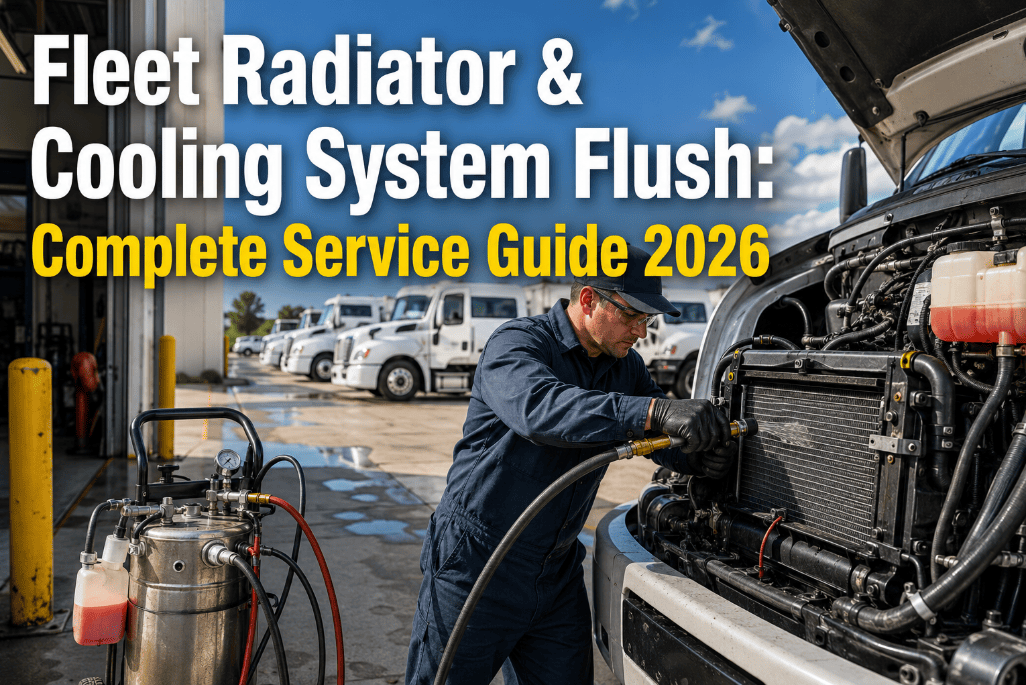
Fleet Radiator and Cooling System Flush: Complete Service Guide 2026
Coolant degradation is invisible until the engine overheats. Structured flush intervals, correct OAT or HOAT formulations, and CMMS-automated scheduling prevent 23% of fleet breakdowns tied to thermal system failures.
23%
Of preventable fleet breakdowns linked to cooling system failures
ATA/TMC breakdown data — commercial vehicle operations
$14K
Average engine rebuild cost from sustained overheating damage
vs. $180–$320 for a scheduled coolant flush service
50/50
Correct coolant-to-water mixing ratio for most commercial vehicles
Protects to -34°F and prevents silicate and OAT incompatibility
2–5 yr
Flush interval range depending on coolant type and operating conditions
HOAT and OAT formulations extend intervals vs. IAT green coolant
Every Fleet Overheat Event Was Preventable With a Scheduled Flush
When coolant reaches the end of its additive life, corrosion begins inside the cooling system — attacking aluminum radiators, water pump impellers, and cylinder head gaskets that cost far more to replace than the coolant that failed them. Oxmaint schedules and tracks every fleet cooling system service interval automatically. Start a free trial or book a demo.
Coolant Types
Coolant Formulation Guide: Which Type Does Your Fleet Use and When to Flush?
Using the wrong coolant in a commercial vehicle — or mixing incompatible types — accelerates corrosion, forms gel deposits, and can damage cooling system seals within 12 to 18 months. Matching the coolant type to the OEM specification for each vehicle class in your fleet is the starting point of any structured flush program.
IAT
Inorganic Additive Technology
Green coolant — traditional formulation
Flush Interval: Every 2 years or 30,000 miles
The oldest commercial coolant type. Silicate-based inhibitors deplete rapidly. Short flush interval makes it poorly suited for high-mileage commercial fleets. Incompatible with OAT and HOAT — mixing causes gel formation that blocks coolant passages.
Older vehicles pre-2000 | Rare in modern commercial fleets
OAT
Organic Acid Technology
Orange/red — Dex-Cool and equivalents
Flush Interval: Every 5 years or 150,000 miles
Extended-life formulation used in most GM and European commercial vehicles. Contains organic corrosion inhibitors that last significantly longer than silicates. Must not be mixed with IAT — produces deposits. Compatible with aluminum cooling components.
GM fleet vehicles | European commercial platforms | Many medium-duty
HOAT
Hybrid Organic Acid Technology
Yellow/gold — Ford, Chrysler, Asian OEM
Flush Interval: Every 5 years or 100,000 miles
Combines silicate and organic inhibitors for broad compatibility across mixed-metal cooling systems. Widely specified for Ford Transit, Ram ProMaster, and most Japanese commercial truck platforms. Do not mix with OAT without flushing.
Ford Transit | Ram fleet | Toyota and Nissan commercial
NOAT
Nitrited OAT
Blue — heavy-duty diesel engines
Flush Interval: Every 600,000 miles with SCA supplementation
Diesel-specific formulation that adds nitrite inhibitors to protect wet-sleeve cylinder liners from cavitation corrosion. Requires supplemental coolant additive (SCA) testing at regular intervals. Standard in Class 6–8 diesel commercial vehicles including Cummins and Detroit platforms.
Class 6–8 diesel trucks | Cummins, Detroit, PACCAR engines
Service Procedure
Commercial Fleet Cooling System Flush: 8-Step Service Procedure
A proper fleet radiator flush is more than a drain-and-fill operation. Done correctly, it removes accumulated scale, silicate deposits, and corrosion products that reduce heat transfer efficiency and damage water pump seals. The following procedure applies to most commercial vans and trucks — always verify against OEM service documentation for specific vehicle lines in your fleet. Want this procedure built into a digital PM checklist in Oxmaint? Start a free trial or book a demo.
01
Cold System Verification
Confirm coolant temperature is below 100°F before opening any pressurized cooling system component. Hot coolant under pressure causes severe burns. Allow 2 hours of cooling after engine shutdown minimum.
02
Coolant Sample and Freeze-Point Test
Test the existing coolant with a refractometer or test strip before draining. Document freeze-point protection, pH level, and inhibitor concentration. This data feeds the condition record and confirms flush necessity vs. additive replenishment.
03
Complete Drain at Radiator Petcock and Block Drain
Draining only the radiator petcock leaves 30 to 40% of the old coolant in the engine block. Open both the radiator drain and the engine block drain plug to achieve a complete system drain — critical for effective inhibitor replacement.
04
Flush with Distilled Water (Two Cycles)
Fill the system with distilled water, run the engine to operating temperature with heater on, drain, and repeat. Never flush with tap water — municipal water mineral content leaves scale deposits that reduce heat transfer in aluminum radiators.
05
Inspect Hoses, Clamps, and Pressure Cap
With the system empty, inspect all coolant hoses for internal collapse, swelling, cracking, or abrasion. Check all clamps for corrosion and proper tension. Test the radiator pressure cap — a faulty cap causes boil-over even with fresh coolant.
06
Fill with OEM-Specified Coolant at 50/50 Mix
Use the coolant type specified for the vehicle platform — never assume compatibility. Mix at 50/50 with distilled water for -34°F freeze protection and optimal boiling point elevation. Pre-mixed coolant is recommended for fleet consistency.
07
Bleed Air from the System
Air pockets in the cooling system cause localized overheating and water pump cavitation. Run the engine with the heater at full heat output and top up the reservoir as coolant circulates and air bleeds from the system through the overflow.
08
Document and Update CMMS Record
Record coolant type, mixing ratio, freeze-point verification, hose and cap condition, and next flush interval in the vehicle's CMMS asset record. The documented coolant type prevents compatibility errors on the next service — especially critical in mixed-fleet operations.
Oxmaint Solution
How Oxmaint Automates Cooling System Service Across Your Entire Fleet
Manual tracking of coolant flush intervals across a mixed fleet of 50, 200, or 500 vehicles — with different coolant types, different OEM intervals, and different operating conditions — is a management task that breaks down under operational pressure. Oxmaint removes that burden entirely by scheduling, routing, and documenting every cooling system service automatically. Start a free trial or book a demo to configure your fleet's cooling system intervals.
Per-Vehicle Scheduling
Coolant Flush PM by Coolant Type and OEM Interval
Each vehicle carries its coolant type and flush interval in its asset record. Oxmaint generates the flush work order at the correct interval — 2 years for IAT, 5 years for OAT/HOAT — without requiring a manager to manually track when each vehicle is due.
Digital Checklist
8-Step Flush Procedure as a Digital PM Checklist
The full flush procedure runs as a digital checklist on the technician's device — each step confirmed with pass/fail and technician notes. Freeze-point test result, coolant type used, and hose/cap condition are captured as structured data rather than free text in a paper log.
Coolant Records
Coolant Type and Mix Ratio on Every Vehicle Asset
The coolant type specified for each vehicle is stored in the asset record and appears on every cooling system work order — preventing the incompatibility mixing errors that occur in mixed-fleet operations when technicians reference memory rather than a system record.
SCA Tracking
Diesel SCA Test Intervals for Heavy-Duty Vehicles
For Class 6–8 diesel vehicles using NOAT coolant, Oxmaint schedules supplemental coolant additive concentration tests at the required mileage intervals — preventing the cavitation corrosion of wet-sleeve liners that SCA depletion causes in high-hour diesel engines.
Overheating Analysis
Link Overheat Events to Cooling System Service History
When a vehicle is brought in for overheating, the work order links to the vehicle's cooling system PM history — showing the last flush date, coolant type, and any prior hose or thermostat findings. This correlation improves root cause diagnosis and supports warranty claim documentation.
Fleet Reporting
Cooling System Compliance Report Across the Portfolio
Fleet managers see which vehicles are due for coolant service, which have overdue flushes, and which coolant types are in use across the fleet — from a single dashboard. High-risk overdue vehicles surface immediately without requiring a manual audit of individual service records.
Before vs After
Manual Coolant Tracking vs. CMMS-Automated Cooling System Management
Manual / Spreadsheet Tracking
Flush intervals tracked per technician memory or spreadsheet
Coolant type unknown at service — compatibility errors common
Freeze-point test results not captured or trended
SCA testing for diesels done irregularly — often missed
Overheating work orders not linked to coolant service history
Overdue flushes discovered only when a vehicle overheats
Oxmaint CMMS-Managed Cooling Program
Flush PM auto-generated per vehicle at OEM-specified interval
Coolant type on asset record — appears on every work order
Freeze-point result captured as structured data per service
Diesel SCA test scheduled at correct mileage intervals
Overheat events linked to cooling system PM history automatically
Overdue vehicles visible on compliance dashboard before failure
Results
Cooling System PM Outcomes for Structured Fleet Programs
23%
Breakdown Reduction Potential
Cooling system failures are the third-largest driver of commercial fleet roadside breakdowns — a category that structured flush programs eliminate at the scheduled service cost
$13K+
Avoided Engine Damage Per Event
A $180–$320 scheduled flush avoids the $14,000 engine rebuild that follows sustained overheating damage from degraded coolant and unchecked corrosion
100%
Fleet Coolant Visibility
Every vehicle's coolant type, last flush date, and next service due date visible in one dashboard — no manual audit, no spreadsheet, no missed vehicles
Zero
Coolant Mixing Errors
Coolant type stored on the asset record and displayed on every work order eliminates the compatibility errors that create gel deposits and accelerated corrosion
Questions
Frequently Asked Questions
What happens if you mix OAT and HOAT coolant in a commercial vehicle?+
Mixing OAT (orange) and HOAT (yellow/gold) coolant formulations in the same system does not cause immediate visible damage — but it degrades the inhibitor package of both coolants faster than either would degrade alone, effectively shortening the service life of the mixed fluid to that of the shorter-interval product. More critically, mixing either OAT or HOAT with IAT (green) coolant can cause silicate precipitation — forming gel-like deposits that block narrow coolant passages in aluminum radiators and heater cores. The safest rule for mixed commercial fleets is to document the exact coolant type for every vehicle and make that information visible at the point of service. Oxmaint stores coolant type on the vehicle asset record and displays it on every cooling system work order to prevent mixing errors.
Can coolant flush intervals be extended with additive replenishment?+
For conventional IAT coolant, supplemental coolant additive (SCA) packages can extend service life by 6 to 12 months beyond the standard 2-year flush interval when tested and added at the correct concentration. For OAT and HOAT extended-life coolants in light and medium-duty vehicles, the OEM generally does not recommend additive replenishment as a flush substitute — the organic inhibitor package degrades at a consistent rate and supplemental additives can introduce incompatibility. For heavy-duty diesel applications using NOAT coolant, regular SCA concentration testing at 15,000 to 25,000 mile intervals is required practice — Oxmaint schedules these as separate PM work orders linked to the vehicle's cooling system asset record.
How should coolant service be prioritized across a mixed light, medium, and heavy-duty fleet?+
For mixed fleets, the recommended approach is to segment vehicles by coolant type and interval in the CMMS and run priority-based scheduling based on overdue status and vehicle criticality. Class 6–8 diesel vehicles should receive the highest cooling system maintenance priority because the consequences of cooling system failure are most severe — potential engine damage, roadside breakdown of a revenue-generating unit, and recovery cost that can exceed $3,000 per event. Light-duty vans and pickup trucks using OAT or HOAT coolant can be scheduled on a time-based trigger (5-year interval) rather than mileage-based for lower-utilization vehicles. Oxmaint supports different PM trigger types (calendar, mileage, or engine hours) per vehicle within the same fleet, so each vehicle gets the correct flush schedule regardless of how mixed the fleet composition is.
What should be inspected during a commercial fleet cooling system flush beyond the coolant itself?+
A complete flush service is also the most efficient time to inspect the entire cooling system — the technician already has the system drained and accessible. Key inspection points include: radiator cap pressure rating and seal condition (caps lose holding pressure over time), all coolant hoses for internal collapse (squeeze test at the midpoint), upper and lower radiator hose clamp condition and tension, coolant reservoir tank for cracks or discoloration, thermostat housing for external leaks, and the heater core outlet temperature at the end of the refill procedure to confirm full system circulation. These inspection points should be structured as pass/fail checklist items in the Oxmaint flush PM work order — not left to technician judgment — so that every flush service produces both a coolant service record and a cooling system condition assessment.
Never Miss a Coolant Flush Across Your Fleet Again
Oxmaint schedules, routes, and documents every cooling system service — with coolant type on every work order, freeze-point data captured per service, and overdue vehicles visible before they overheat. Set up your fleet's cooling system intervals in week one.