
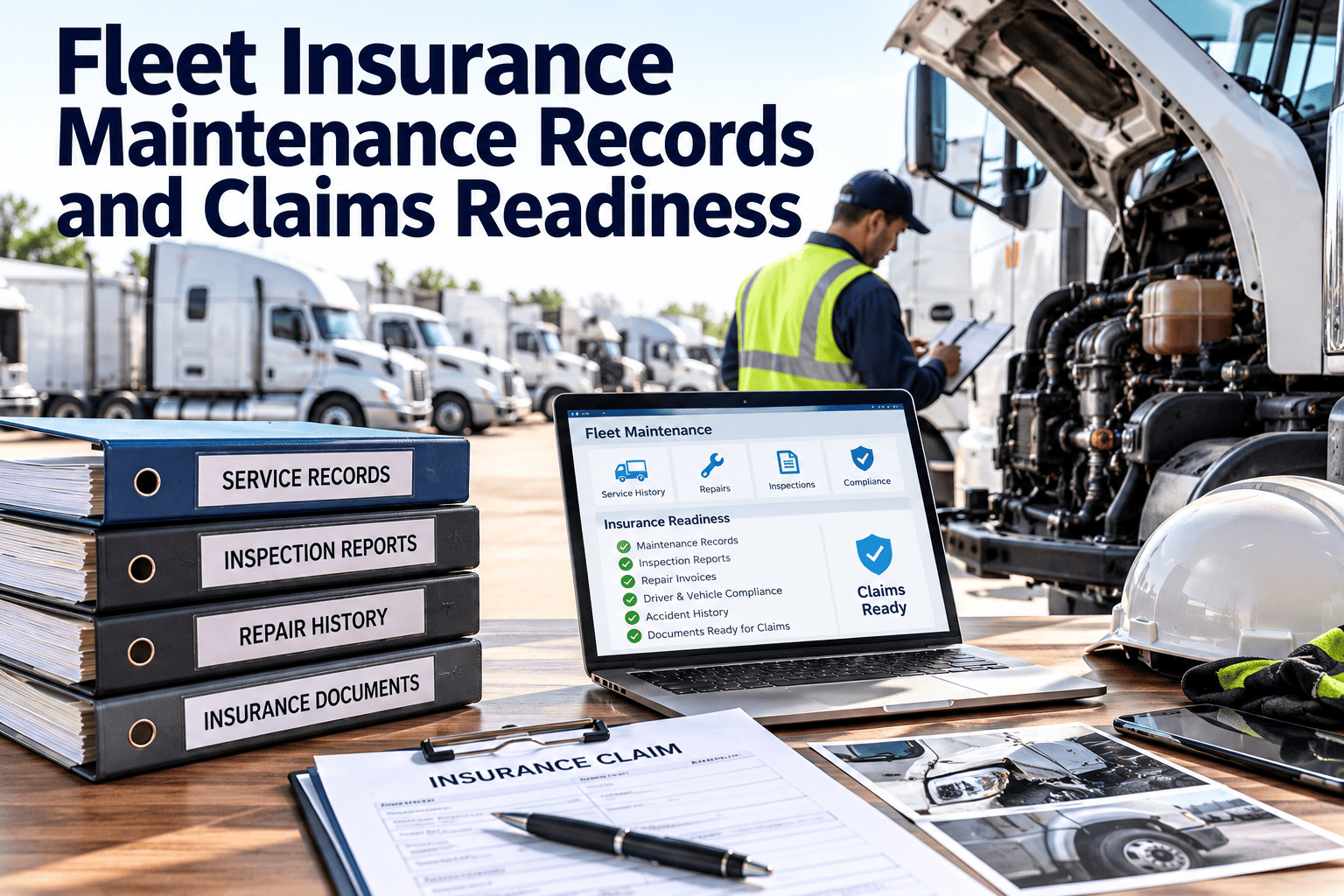
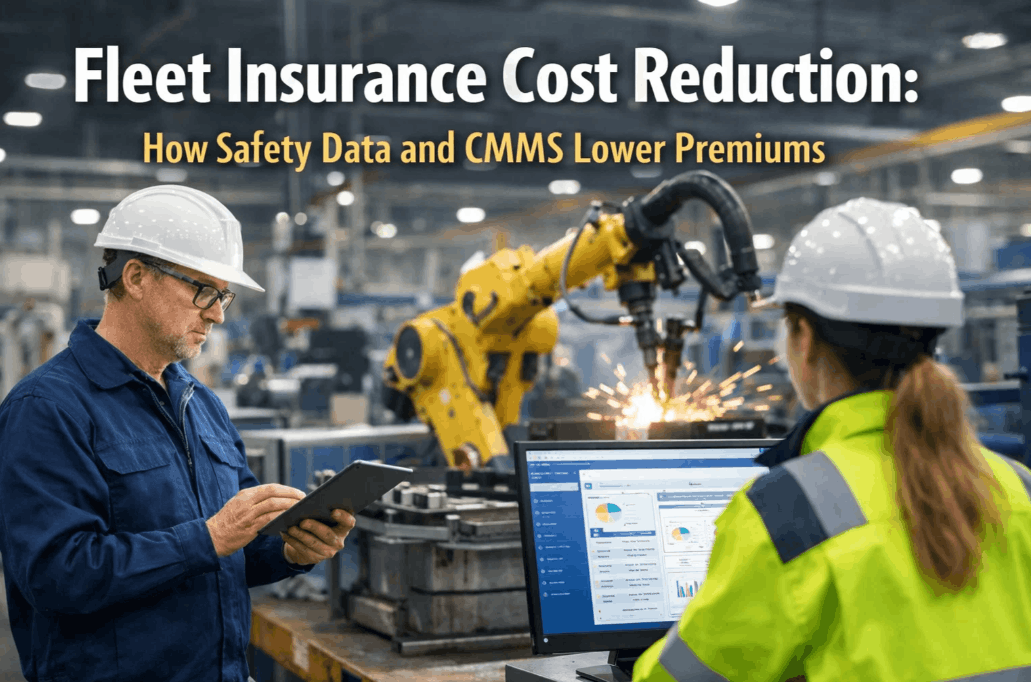
Fleet operators with comprehensive CMMS maintenance documentation pay 15–25% lower insurance premiums than fleets without structured records. Insurance underwriters view documented PM compliance, inspection histories, and digital maintenance records as evidence of a well-managed, lower-risk fleet — and they price accordingly. Beyond premiums, the speed of claims resolution is directly tied to documentation quality: fleets that can produce a complete pre-incident maintenance record within hours of an accident close claims faster, with lower dispute rates, and with measurably lower liability exposure than fleets assembling records from memory and paper logs. Start a free trial or book a demo to see how Oxmaint builds the maintenance documentation record that insurers and legal teams need.
Fleet Insurance Claims Management: Reducing Premiums with CMMS Documentation
Comprehensive maintenance records do two things for fleet insurance: they lower premiums at renewal by demonstrating a well-managed fleet, and they speed claims resolution by providing immediate, defensible evidence of vehicle condition before an incident.
Your Maintenance Records Are Your Legal Defense — Is That Defense Ready Today?
When a plaintiff attorney subpoenas maintenance records after a truck accident, the quality of what your CMMS contains determines whether you defend from a position of strength or scramble to explain gaps. Oxmaint builds that record automatically — every PM, every inspection, every repair, every technician sign-off. Start a free trial or book a demo to review the documentation standard with your team.
What Insurers Look for in Fleet Maintenance Documentation
Insurance underwriters evaluating a commercial fleet program assess risk based on evidence — not assertions. The documentation categories below are what actuaries and risk managers examine when quoting or renewing a fleet policy. Each item that your CMMS captures and can produce on demand strengthens your risk profile.
Percentage of scheduled preventive maintenance completed on time. Fleets above 90% PM compliance demonstrate proactive risk management. Below 75% signals deferred maintenance risk that underwriters price into the premium.
FMCSA-compliant driver vehicle inspection reports for every trip, every vehicle. Digital DVIR records showing brake, tire, lighting, and safety system checks — timestamped and driver-signed — are the first line of liability defense after any incident.
Complete brake inspection and service records — date, vehicle, technician, pad life, adjustment, and parts replaced — for every vehicle in the fleet. Brake failures are cited in 29% of fatal commercial truck accidents. Documentation of timely service is critical.
Tread depth measurements, rotation records, inflation checks, and replacement history by axle position and vehicle. Tire condition disputes are common in accident investigations — a documented inspection history resolves them faster than testimony alone.
Inspection records for headlights, taillights, turn signals, hazard lights, reflectors, and backup alarms — FMCSA-required items that are documented in pre-trip DVIRs and periodic PM inspections. Any malfunctioning light creates liability exposure in an accident at night.
Time from deficiency identification to corrective work order completion — measured for every safety item. Underwriters evaluate not just whether defects were found, but how quickly they were resolved. Vehicles operated with known safety defects carry significantly elevated liability.
How CMMS Documentation Accelerates Claims Resolution
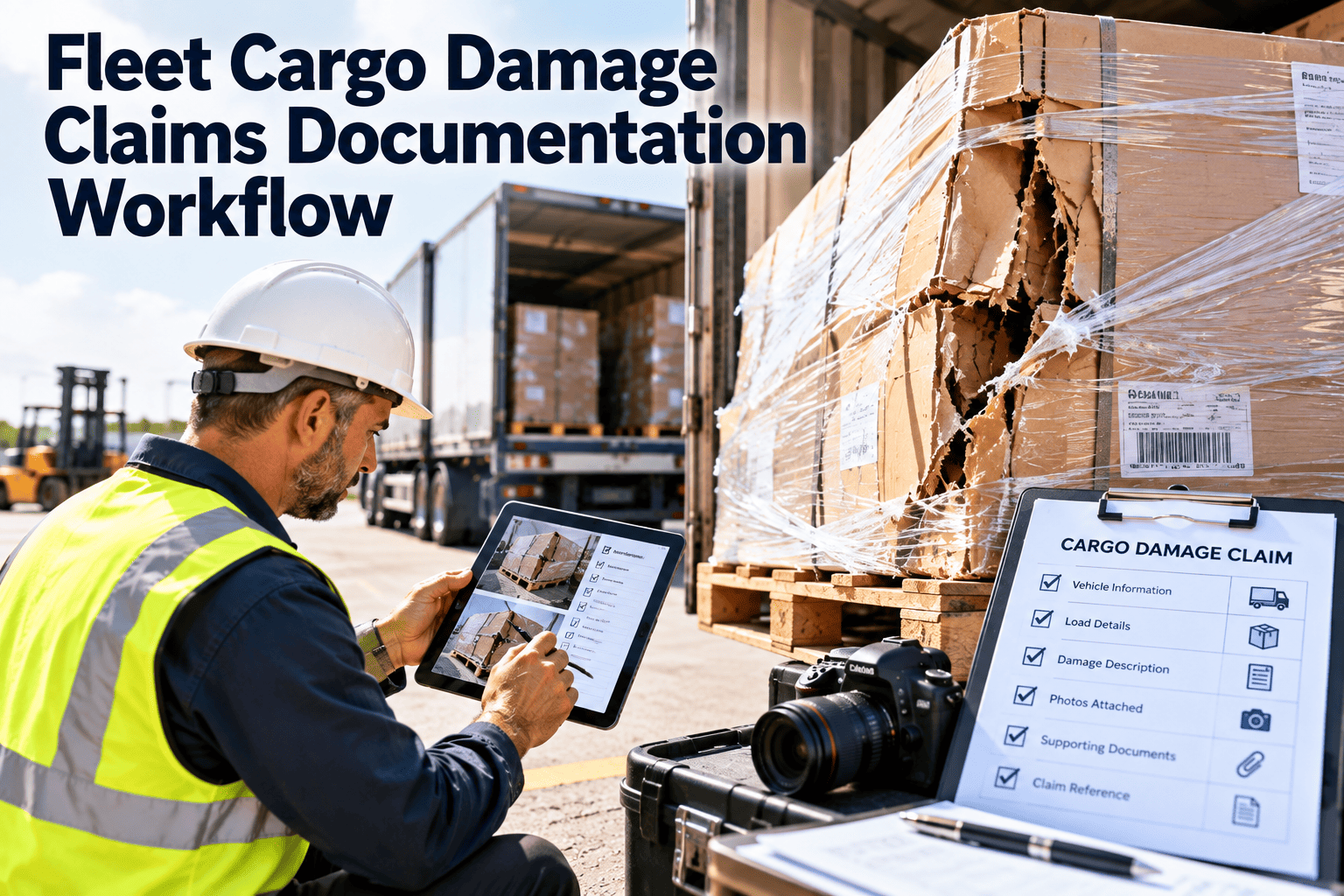
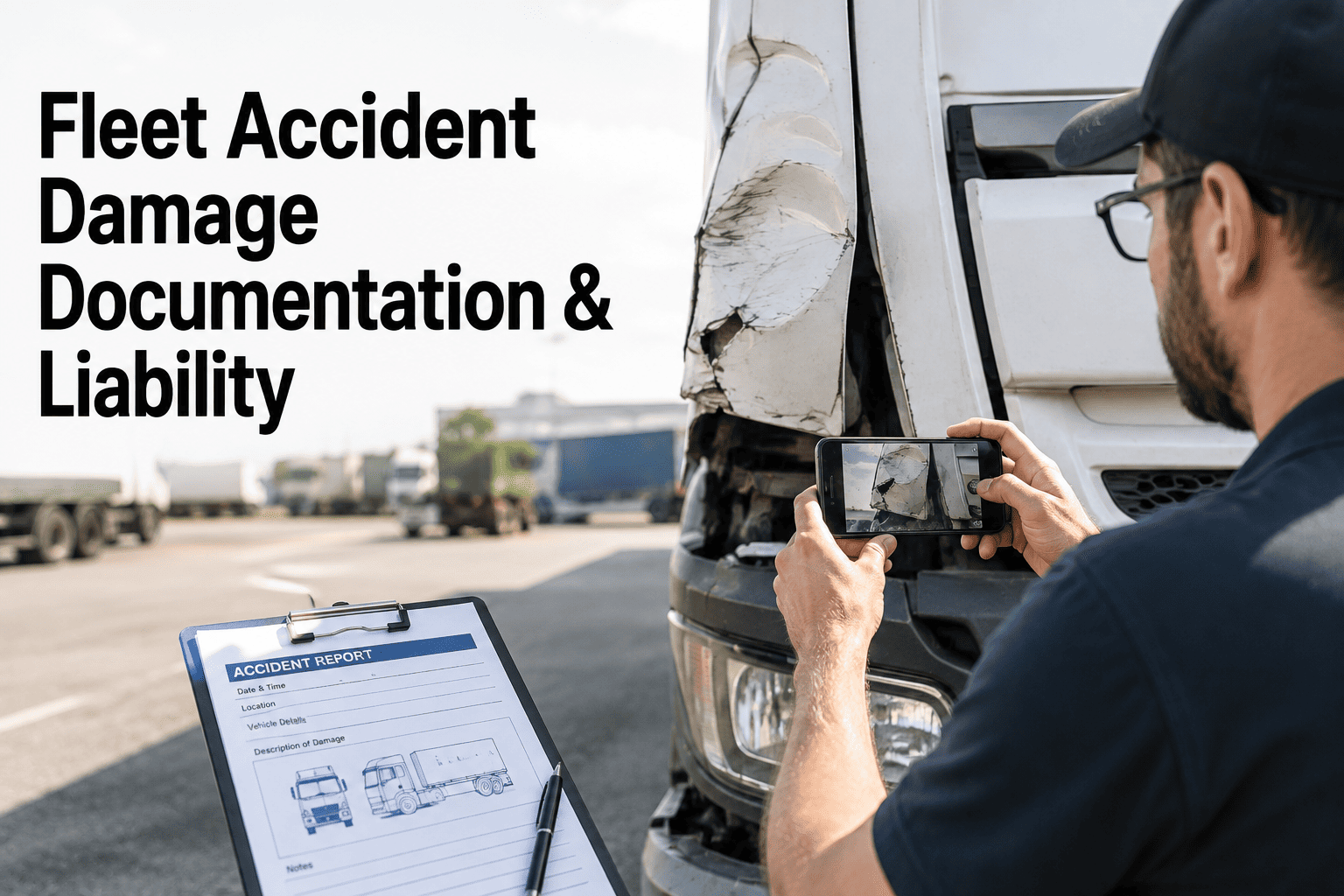
The 72 hours after a fleet incident are the most documentation-intensive in a fleet manager's workflow. The speed and quality of documentation produced in that window determines claims timeline, settlement amount, and subrogation outcome. Here is how a CMMS-documented fleet handles each stage differently from a paper-based fleet.
6 Documentation Gaps That Create Insurance and Legal Risk
The most damaging documentation gap. Any safety-related failure — brake defect, tire failure, lighting malfunction — that occurs within 30 days of a skipped PM creates a negligence allegation that is very difficult to defend without a complete service record.
A pre-trip DVIR that records a defect is worse than no DVIR if there is no corresponding corrective repair record. A documented defect without documented correction proves the operator knew the vehicle had a problem and operated it anyway — the legal definition of negligent operation.
A service log entry without a technician signature or digital identification is legally weak. Plaintiff attorneys routinely challenge unsigned maintenance records as incomplete or post-event fabrications — a signed digital record with a timestamp is substantially more defensible.
FMCSA requires brake inspection records that can demonstrate compliance with calendar-based intervals as well as mileage triggers. Records that show only mileage — without dates — create compliance gaps for calendar-triggered inspections required under 49 CFR Part 396.
An inspection report and a repair record stored in separate systems with no common identifier cannot be connected to demonstrate a closed-loop response. Insurers and attorneys need to see: deficiency found on date X, repair completed on date Y, verified by technician Z.
FMCSA requires driver vehicle inspection reports retained for 3 months and inspection, repair, and maintenance records retained for one year after the vehicle leaves the fleet. Paper records routinely disappear through office moves, staff turnover, and filing system breakdowns long before legal hold periods expire.
How Oxmaint Builds the Documentation Record Insurers and Attorneys Need
Every maintenance event in Oxmaint is timestamped, technician-identified, and permanently linked to the vehicle asset record — creating an unbroken chain of maintenance evidence that travels with the vehicle for its entire service life. This is the documentation standard that supports premium reductions, accelerates claims, and provides the strongest possible legal defense. Start a free trial or book a demo.
Every completed PM, repair, and inspection requires technician digital signature with timestamp — creating a legally defensible record that cannot be retroactively altered or questioned as post-event documentation.
Every DVIR defect and inspection finding automatically creates a corrective work order — creating the closed-loop record that demonstrates the deficiency was identified and resolved, not just noted and ignored.
Pull a complete maintenance history for any vehicle by date range, by service type, or by system — formatted for carrier submission, attorney review, or regulatory audit. No assembling records from multiple sources.
Generate fleet-wide PM compliance rate reports by percentage of on-time completion, overdue items, and service interval adherence — formatted for submission to insurance brokers during renewal to support premium negotiation.
Oxmaint retains all maintenance records indefinitely in the vehicle's digital record — beyond the minimum FMCSA retention requirements — ensuring records are available for any legal hold, historical investigation, or litigation timeline.
Drivers complete pre-trip and post-trip DVIRs on mobile — defects automatically generate maintenance alerts and work orders. Every DVIR is time-stamped, driver-signed, and linked to the vehicle's history — fully compliant with 49 CFR 396.11.
Insurance and Legal Outcomes from CMMS Documentation Programs
Fleets that submit CMMS-generated PM compliance reports to underwriters during renewal regularly negotiate premium reductions based on documented risk management
Complete digital records submitted same day vs. paper-assembled records taking days reduce time from incident to settlement — lowering total claim cost
Fleets with comprehensive documented PM programs are significantly less likely to face successful maintenance negligence allegations after an accident
Digital retention eliminates the paper record loss that creates retroactive compliance gaps — every record is accessible, searchable, and exportable on demand
Frequently Asked Questions
What FMCSA records are required and for how long?+
How do you present CMMS documentation to insurance underwriters for premium negotiation?+
Can a CMMS record actually be used as legal evidence in fleet accident litigation?+
How does Oxmaint handle vehicles that enter and leave the fleet?+
Turn Your Maintenance Records Into a Risk Management Asset
Every PM completed on time, every DVIR defect resolved, every technician signature captured — these are not just operational records. They are the documentation that reduces premiums, speeds claims, and provides legal defense when it matters most. Oxmaint builds that record automatically, on every vehicle, every day.


.png)