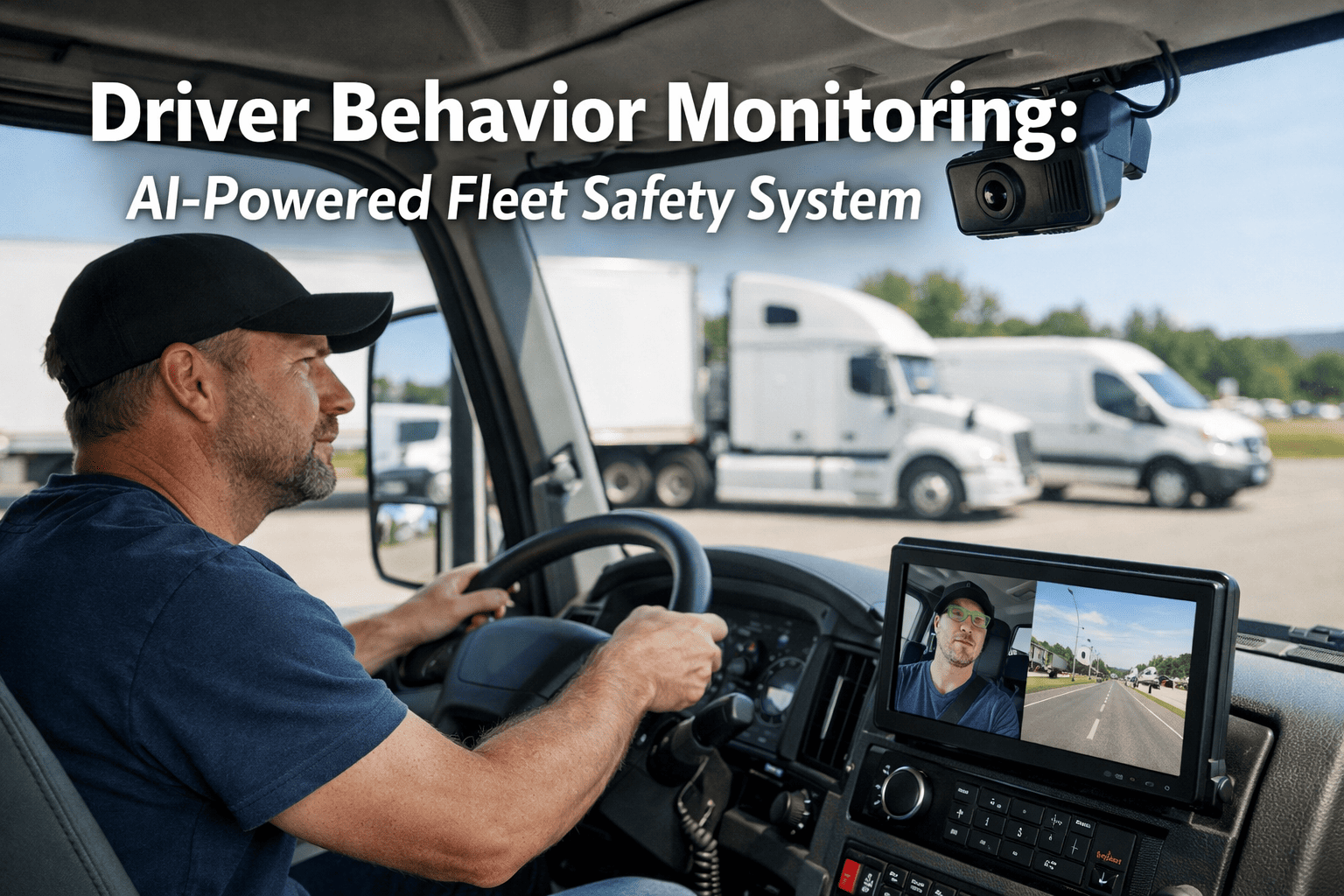
Distracted Driving Detection: AI Camera Fleet Solutions
By Jack Miller on April 11, 2026
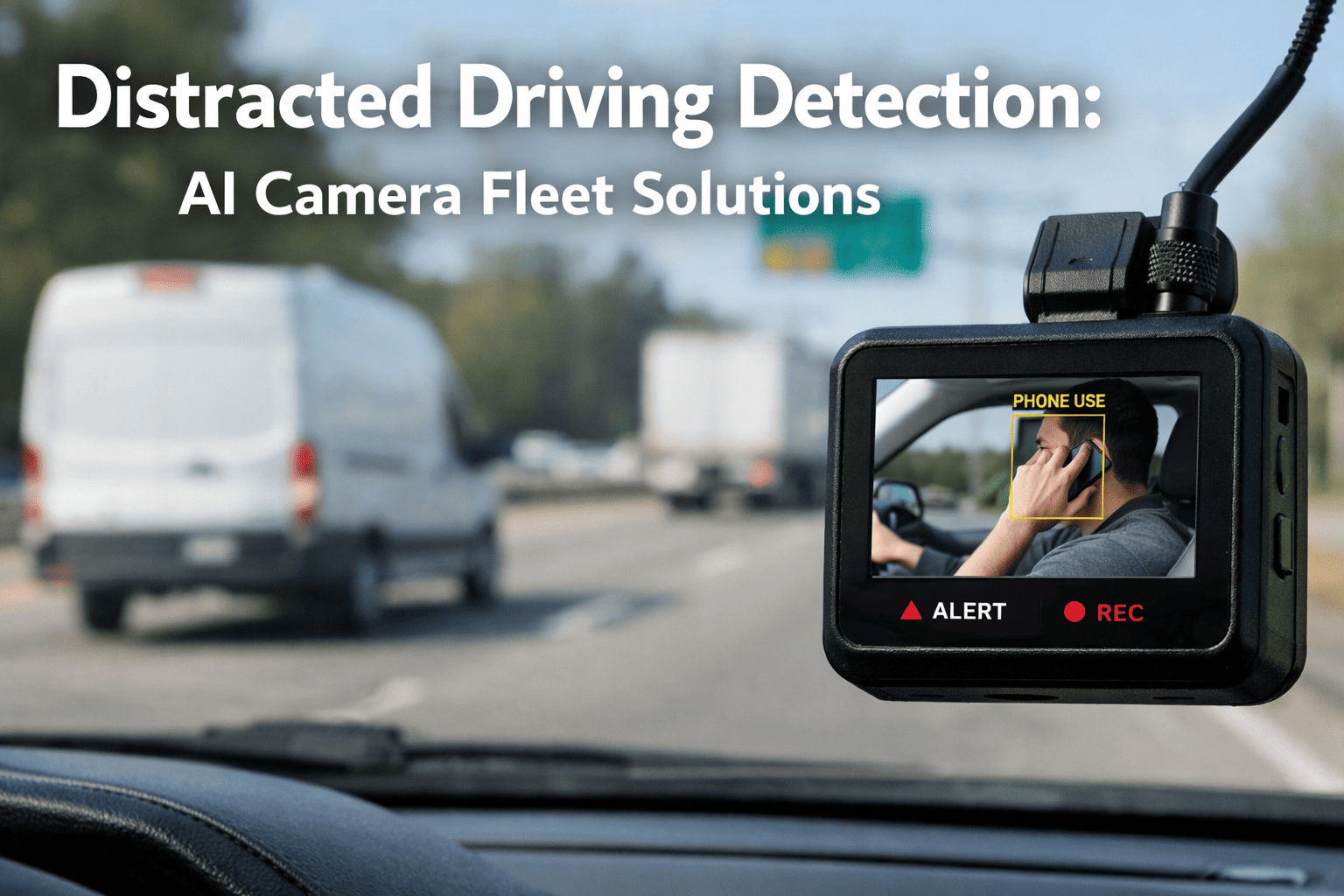
A delivery driver for a regional grocery distribution company in Phoenix was involved in a rear-end collision at 34 mph on a Tuesday afternoon that injured the occupant of the vehicle in front and totalled the delivery van. The AI dash camera footage showed the driver had been looking at his phone for 11 seconds before the impact. The phone was in his lap. He had done this 47 times in the previous 14 days — the telematics system generated no alert because it only measured hard braking events, not distraction. Every one of those 47 instances was visible on the camera feed. Not a single one had been reviewed or acted upon. Distracted driving is not an awareness problem in US commercial fleets — every driver knows the rules. It is a detection and consequence problem: when drivers know that distraction events are not monitored, they are not deterred. OxMaint AI camera distracted driving detection identifies phone use, eating, smoking, and inattention at intersections in real time — alerting the driver in the cab, flagging the event for supervisor coaching, and creating a documentary record that makes the deterrent real.
AI camera detects distraction events in real time — instant in-cab alert, coaching clip delivered within 4 hours, and full documentary record for insurance and litigation
Phoenix driver phone-use events in 14 days — undetected, uncoached, until the rear-end collision on day 15
6×
Higher collision risk — distracted driving vs focused driving at identical speed and road conditions (NHTSA)
74%
Reduction in distracted driving events at US fleets after deploying AI camera detection with in-cab alerts and coaching
Six Distraction Types OxMaint AI Camera Detects in Real Time
A telematics system that measures hard braking, speed, and acceleration cannot detect a driver looking at a phone. Only an AI camera watching the driver's face, eyes, and hands can identify distraction at the point of occurrence — while the vehicle is still moving and a corrective in-cab alert can still prevent the collision. OxMaint AI camera vision classifies all six distraction types with model accuracy above 92% in production deployment.
Phone Use — Handheld & Lap
Highest risk — 6× collision multiplier
AI detects device in hand, eyes focused downward, and head position drop associated with screen viewing — both handheld and lap-held devices. Alert fires within 2 seconds of phone-to-face or phone-to-lap detection. In-cab audio and visual alert. Clip flagged for coaching queue with timestamp and GPS location.
Driver Inattention — Eyes Off Road
Gaze tracking — forward road vs distraction
Eye-tracking AI monitors driver gaze direction continuously. Eyes-off-road events exceeding 2 seconds generate an alert. Intersection approach events — when the driver's gaze leaves the forward view during an approaching stop or turn — are flagged at the highest priority, as this is the highest-collision-risk combination of inattention and vehicle manoeuvre.
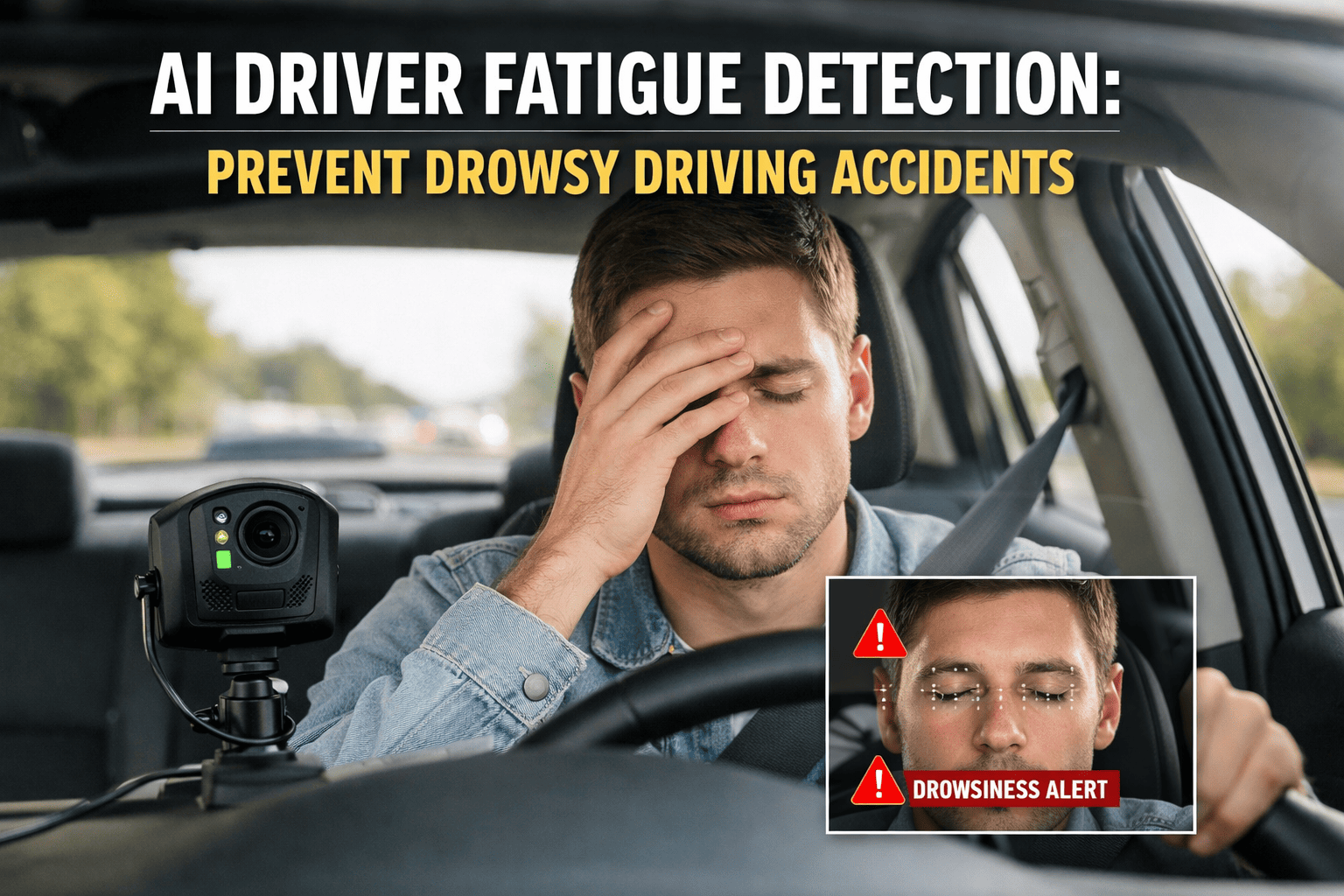
Drowsiness & Microsleep
Eye closure and head drop detection
Drowsiness AI tracks PERCLOS (percentage of eye closure) and head nod frequency — the two clinical indicators of impaired alertness used in FMCSA research. Early drowsiness signs generate a driver advisory alert. Advanced signs (3+ head drops in 10 minutes) generate an immediate supervisor alert and route diversion recommendation.
Eating & Drinking While Driving
Hand-to-mouth distraction — attention split
AI detects hand-to-mouth motion patterns associated with eating and drinking — one hand off wheel, head movement toward the hand, eyes briefly diverted. Coaching-tier event: no in-cab alert on first occurrence, clip added to coaching queue for supervisor conversation. Recurring events escalate to in-cab advisory after three occurrences in 7 days.
Smoking While Driving
Policy violation — cargo contamination risk
AI camera detects cigarette hand-to-mouth patterns and smoke detection indicators — relevant for fleets with no-smoking policies, food-grade cargo, and pharmaceutical delivery operations where smoking in the vehicle constitutes a compliance violation. Clip is stored against the driver record for HR and compliance use.
In-Cab Infotainment Interaction
Touchscreen, navigation, radio at speed
AI detects extended arm-forward movement toward dashboard screens and repeated gaze diversion to infotainment systems at speed — particularly during route navigation inputs while the vehicle is in motion. Events are logged as coaching-tier distraction for driving environments above 20 mph.
OxMaint — AI Camera Distraction Detection
Detect Every Distraction. Alert in 2 Seconds. Coach Before the Collision.
Phone use, inattention, drowsiness, eating, smoking — six categories detected in real time with in-cab alerts and coaching video delivery.
Detection vs No Detection — The Annual Liability Cost Difference
These three tiers show the annual distracted driving liability exposure for a 50-driver commercial fleet — calculated from FMCSA collision data, US commercial auto insurance actuarial benchmarks, and jury verdict data for distracted driving litigation in US federal and state courts. OxMaint AI camera detection moves fleets from the unmonitored tier to the actively managed tier from day one of deployment.
No Distraction Monitoring
Telematics only — phone use undetected
At-fault distraction collisions per year — 50 drivers
2.8 avg
Average liability per at-fault distraction collision
$148,000–$1.4M
Commercial auto insurance premium (50 drivers)
$84,000–$140,000/yr
Annual risk-adjusted cost premium
$500K–$4.2M
Basic Dash Camera
Road-facing only — driver not monitored
At-fault distraction collisions per year — 50 drivers
2.1 avg
Documentary record of distraction before collision
At-fault distraction collisions per year — 50 drivers
0.7 avg
Documentary record — proactive programme evidence
Complete per driver
Commercial auto insurance premium (50 drivers)
$38,000–$68,000/yr
Annual saving vs no monitoring
$46K–$72K premium alone
Technology Stack Behind OxMaint AI Distraction Detection
OxMaint distracted driving detection is powered by four connected technologies — the AI camera that detects the event, the OBD system that provides vehicle context, the digital twin that tracks each driver's distraction pattern over time, and the coaching platform that turns detection into behaviour change. Connect your fleet cameras through OxMaint to activate all four.
AI Camera Vision — 6-Category Detection
OxMaint integrates with Samsara AI cameras, Lytx DriveCam, Netradyne, and Mobileye — all using driver-facing and road-facing lens configurations. AI models trained on 200M+ real-world distraction event images classify phone use, inattention, drowsiness, eating, smoking, and infotainment interactions with 92%+ production accuracy. In-cab audio and visual alerts fire within 2 seconds.
OBD Context — Speed & Location at Event
OBD data provides vehicle speed, road type, and GPS location at the moment of every distraction event — enabling OxMaint to score severity by context. A phone-use event at 65 mph on a highway is scored differently from the same event in a parking lot. Context-adjusted scoring ensures coaching prioritises the genuinely high-risk events rather than all events equally.
AI Digital Twin — Distraction Pattern Modelling
OxMaint builds a distraction behaviour profile for every driver — tracking time of day, route type, and load condition patterns associated with distraction frequency. The digital twin predicts which routes and conditions produce the highest distraction risk for each driver, enabling pre-trip coaching reminders before the driver enters their highest-risk operating context.
SAP & HR Integration — Compliance Documentation
OxMaint distraction events and coaching records sync with SAP HR and HRIS systems — creating an official employee performance and safety record without manual data entry. Every coaching clip delivery, driver acknowledgment, and supervisor conversation is logged in both OxMaint and the HR system simultaneously, providing the dual documentation trail insurance and legal teams require.
"In the first 30 days after deploying OxMaint AI cameras, we found our top driver by OBD score had 28 phone-use events in one week. He had no idea we could see it. After his first coaching clip, zero in the following 3 weeks. Our insurance carrier asked what changed when our loss run improved — we showed them the OxMaint distraction data and our premium dropped $31,000."
— VP of Safety, Regional Grocery Distributor · 68 drivers · Arizona, USA
Frequently Asked Questions
Q1Does OxMaint AI camera detection work on all vehicle types — vans, box trucks, and semi-tractors?▼
Yes — OxMaint integrates with dual-facing camera systems compatible with all commercial vehicle cab configurations including cargo vans, box trucks, day cabs, and sleeper cabs. Camera mounting positions are configured per vehicle type to ensure driver-facing lens coverage is maintained across different cab heights and dashboard layouts.
Q2How are distraction events communicated to drivers — does the in-cab alert feel punitive?▼
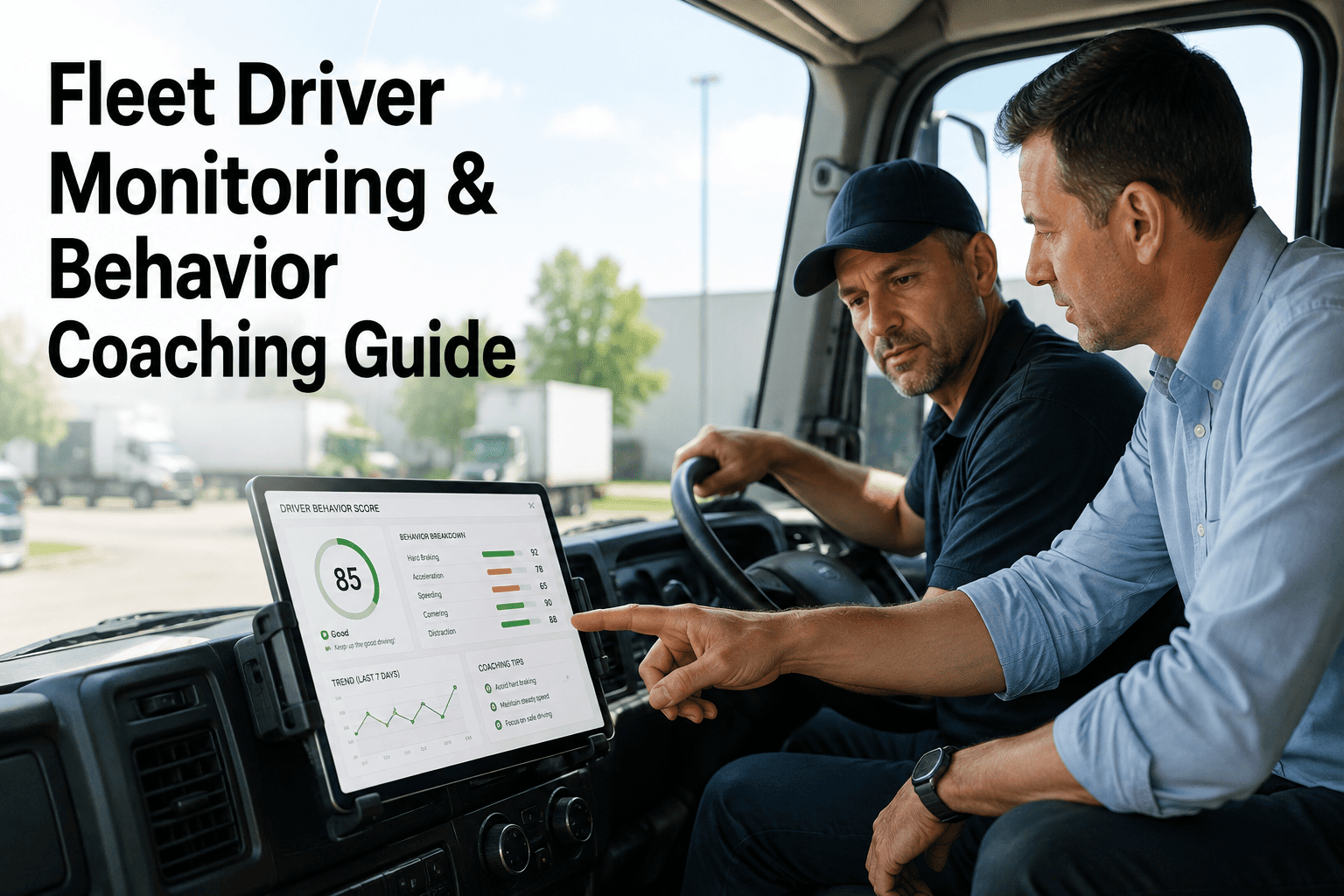
In-cab alerts use a non-aggressive audio tone and a brief dashboard indicator — not a siren or harsh buzzer. OxMaint alert tone configuration is adjustable per fleet policy. Most fleets report that drivers accept in-cab alerts positively when the alert programme is introduced with transparent communication about its safety purpose and the driver's ability to see their own event history in the mobile app.
Q3Can distraction event footage be used as evidence in litigation after a collision?▼
Yes — OxMaint stores camera footage with GPS timestamp, vehicle speed, and driver ID metadata that meets US federal court evidentiary standards. Both the collision event footage and the pre-collision distraction history (showing the pattern of events and coaching responses) are admissible. Fleets with active coaching programmes use this record to demonstrate due diligence and reduce punitive damage exposure.
Q4What is the false positive rate — how often does OxMaint flag events that are not real distraction?▼
OxMaint's production AI models achieve a false positive rate below 4% for phone use detection and below 6% for inattention events across validated US fleet deployments. False positives are flagged by drivers in the mobile app with a single tap — false positive reports feed the model retraining cycle and improve accuracy over time for each fleet's specific operating environment.
Q5Does OxMaint distraction detection comply with US state laws on driver monitoring?▼
OxMaint's driver monitoring system is designed for commercial fleet compliance — monitoring is performed in the driver's workplace (a commercial vehicle operated for business purposes), which falls outside the privacy protections applicable to personal vehicles in all 50 US states. Fleets are advised to include driver monitoring disclosure in employment agreements, which OxMaint provides template language for.
OxMaint — AI Distraction Detection
47 Phone Events Before the Collision. See Them First.