Picking a depot charger vendor feels like a hardware decision until the invoices start arriving — network subscription fees, firmware lock-in, and a support line that takes three days to dispatch a technician while your vans sit idle. ABB, Kempower, Wallbox, and ChargePoint each solve a different piece of the fleet charging problem, and the wrong pick shows up as downtime six months after installation, not on the spec sheet. Most procurement teams compare peak kW output and call it done, then discover the real differences only after the depot is already built. OxMaint gives fleet teams one place to monitor charger uptime, dispatch technicians, and track vendor SLA performance regardless of which hardware sits at the depot. Start your free OxMaint trial to see depot charger monitoring in action, or book a 30-minute specialist demo to walk through a vendor evaluation with our team.
EV Fleet Charger Vendors: ABB, Kempower, Wallbox, ChargePoint Compared
Power output is the easy comparison. Uptime, network fees, and fleet integration are what actually determine whether your depot charging works on day 400, not just day one. This guide breaks down where ABB, Kempower, Wallbox, and ChargePoint actually differ, so the decision holds up long after the installation crew leaves.
Four Vendors, Four Different Depot Strengths
No single vendor wins on every dimension. Fleets that pick well match the vendor's strength to their actual depot layout, duty cycle, and internal fleet management stack — not the vendor with the loudest power rating claim. The snapshot below is a starting point for narrowing a shortlist, not a final recommendation, since the right answer depends heavily on site-specific factors covered later on this page.
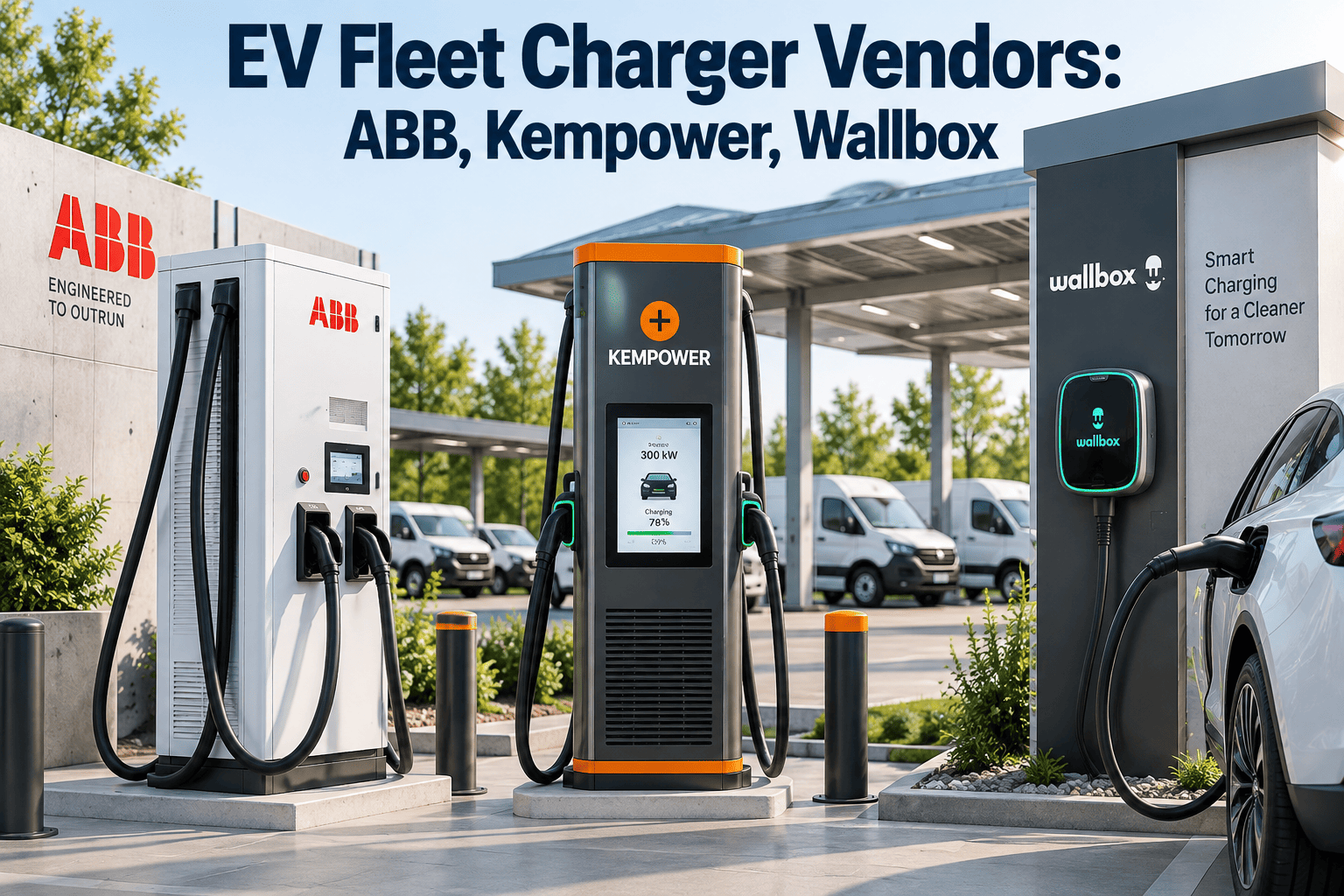
Known for exceptional build quality and a global service network, ABB's modular DC fast platforms scale power output as battery technology advances, making it a strong fit for heavy trucks and buses needing rapid midday top-offs.
A centralized power unit distributes energy to lightweight satellite charging pedestals, removing bulky power electronics from vehicle lanes. Kempower reports uptime figures above 99% across large global deployments.
Wallbox's energy management software balances power draw across multiple chargers and can integrate directly with on-site solar or battery storage, appealing to fleets chasing lower energy costs alongside charging capacity.
A dominant network operator with a sophisticated cloud management platform, ChargePoint specializes in tying charging data directly into existing fleet telematics and fuel cards for a smoother transition from combustion, which matters most to fleets that already run mature reporting and compliance workflows around diesel.
Depot Fit, Fees, and Integration at a Glance
Power ratings look similar across vendors on paper. The real differentiation shows up in ongoing network subscription costs, how open the platform is to third-party fleet tools, and how the vendor structures uptime commitments. Use this table as a starting shortlist, then confirm every figure directly against a written quote for your specific depot, since regional pricing and hardware availability shift often.
| Vendor | Power Range | Depot Design | Fleet Integration |
|---|---|---|---|
| ABB | 24 kW – 350 kW+ | Standalone high-power cabinets | Open OCPP, global support network |
| Kempower | Modular, satellite-distributed | Centralized power unit, compact lanes | Strong overnight load-balancing for depots |
| Wallbox | Level 2 through modular DC | Flexible, scalable per site demand | Native solar and storage integration |
| ChargePoint | 62 kW – 500 kW modular | Scales without hardware replacement | Deep telematics and fuel-card integration |
Mixed-vendor depots are common once a fleet scales past its pilot site. OxMaint tracks uptime, fault history, and technician dispatch across ABB, Kempower, Wallbox, and ChargePoint hardware in a single view, so nobody has to log into four separate portals.
A Five-Step Process for Choosing a Depot Charger Vendor
Fleets that run a structured evaluation before signing avoid the two most common regrets: undersized power for future fleet growth, and a network subscription that locks them out of the tools they already use. None of these steps are unusual on their own — the value comes from doing all five in order, instead of skipping straight to a hardware quote.
Start with how long vehicles actually sit at the depot and how much energy they need replaced per shift. A dispatch-heavy route needs faster power than an overnight-parked fleet, and this decision drives every other choice below.
Ask each vendor for uptime data from deployments similar in size and climate to your own, not marketing averages. Reliability, not peak power, is what determines whether drivers can depend on the depot every morning.
Open communication standards keep a fleet from being locked into one vendor's software stack permanently. Confirm the hardware supports OCPP so charging data can flow into whatever fleet management platform is used today or tomorrow.
Install a small number of units at one depot for sixty to ninety days before committing fleet-wide. Real-world dwell times, driver behavior, and support responsiveness reveal issues no spec sheet will show.
Lock in a written uptime guarantee and a defined response window for outages before signing, not after. Without a measurable SLA, a vendor's reliability claims have no contractual weight when a charger goes down.
Four Mistakes Fleets Make When Selecting a Vendor
These four mistakes recur across fleet electrification projects, regardless of vendor chosen, and almost all of them are avoidable with the evaluation steps above. Fleet teams that review this list before finalizing a purchase order consistently report fewer surprises during the first year of operation than teams that skip straight from demo to signature.
Choosing power output for the current fleet size instead of a three-year growth plan forces a costly hardware swap the moment new vehicles arrive.
Hardware price is only part of the total cost. Ongoing network subscription and software fees can outweigh the initial purchase price over a five-year period.
Committing to a closed platform without OCPP support makes it difficult to switch vendors or unify data later, even when a better-fit vendor emerges.
Relying on drivers to report a dead charger means outages often go unnoticed until a shift is already delayed, especially across mixed-vendor depots.
The Real Cost of a Depot Charger Runs Past the Invoice
Two chargers with identical power ratings can land at very different five-year costs once installation, ongoing fees, and downtime are counted honestly. Fleets that compare only the sticker price end up surprised by the second and third year of ownership, when the recurring costs finally outweigh the original hardware decision. Building this comparison before signing, rather than after the first annual invoice arrives, is what separates a well-planned depot rollout from an expensive lesson.
Trenching, panel upgrades, and utility coordination frequently cost more than the charger hardware itself, especially at older depots never wired for high-power loads. Get a site-specific estimate before comparing vendor list prices, since two depots down the street from each other can face very different electrical costs.
Cloud dashboards, driver payment processing, and fleet reporting tools are usually billed per port, per month. Over five years this subscription can rival or exceed the original hardware spend, particularly on premium network platforms.
Uncoordinated overnight charging across a full fleet can spike demand charges dramatically. Vendors with strong load-balancing software often pay for the software premium many times over through avoided peak-demand penalties.
A charger that goes down without anyone noticing until a driver arrives to an empty battery is the most expensive failure mode of all, since it delays revenue-generating routes, not just a repair invoice.
A vendor comparison built only on kW ratings and unit price will consistently favor the wrong hardware. Model the five-year cost across installation, subscriptions, energy management, and downtime risk before signing, and the ranking of ABB, Kempower, Wallbox, and ChargePoint often changes once the full picture is on the table, sometimes reversing the choice a spec-sheet-only comparison would have produced.
What Depot Layout Decisions Affect Vendor Choice
The physical realities of a depot often narrow the vendor shortlist before pricing even enters the conversation. Site constraints that seem minor on a walkthrough can rule out an otherwise attractive vendor once the electrical and civil work is scoped in detail. Walking the site with these four questions in hand before requesting quotes saves a fleet from redesigning its shortlist midway through procurement.
Older facilities were rarely wired for the load a full fleet of depot chargers requires. A utility service upgrade can take months to schedule, so this should be the first call made, not the last.
Standalone high-power cabinets need clearance that cramped depots simply do not have. Satellite or pedestal-based designs free up lane space by moving the bulky power electronics elsewhere on site.
A depot sized precisely for today's vehicle count leaves no room for expansion without a second construction project. Modular platforms that scale power without replacing hardware avoid that repeat expense.
Fleets planning solar or battery storage alongside their charging build should confirm the vendor's software can integrate with those systems now, rather than retrofitting compatibility after the fact.
Frequently Asked Questions
These are the practical questions fleet managers ask once they move past comparing spec sheets and start actually scoping a depot build, negotiating a contract, or explaining the decision to finance and operations teams.
Can a fleet mix charger vendors within the same depot?
How much power does a depot actually need per vehicle?
What uptime figure should a fleet expect from a strong vendor?
Is a pilot deployment really necessary before a full rollout?
How does OxMaint fit alongside a charger vendor's own software?
Pick the Right Vendor. Keep Every Charger Running After You Do.
OxMaint gives fleet maintenance teams one dashboard for uptime, fault alerts, and technician dispatch across every depot charger brand, so the vendor decision you make today keeps paying off years into the deployment, without adding another portal for your team to check every morning. Most fleets are live within two weeks.