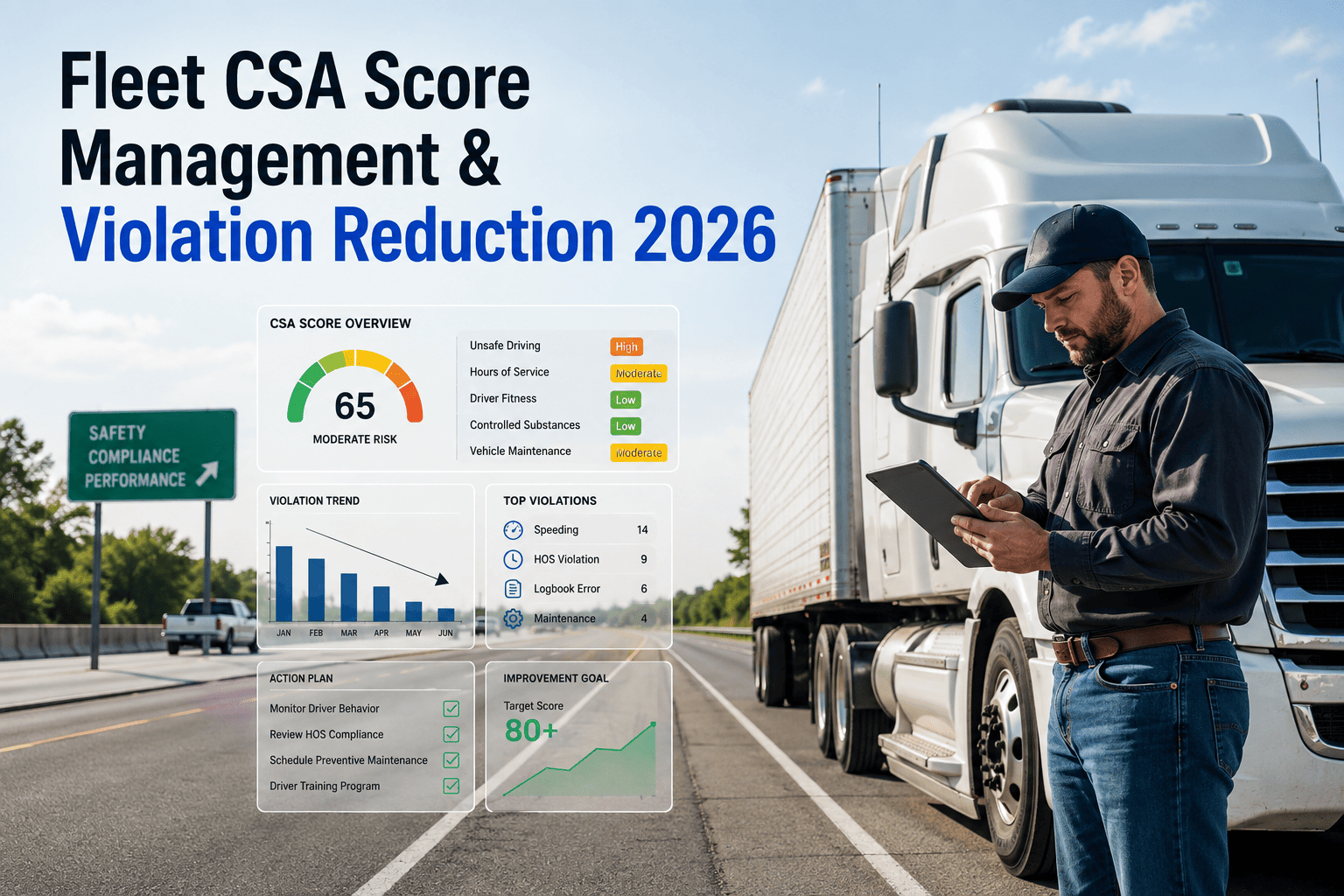
Fleet CSA score management is the difference between retaining profitable freight contracts and watching them walk to a competitor with a cleaner safety profile. A rising CSA score inflates insurance premiums by 20–40%, triggers targeted DOT interventions, and can disqualify your fleet from serving top-shippers who enforce strict safety cutoffs. The most effective fleet CSA violation reduction programs combine real-time violation tracking, root-cause analysis, and proactive maintenance workflows — exactly what OxMaint's AI-powered CMMS delivers for safety and reliability teams. Stop reacting to inspection data and Start Free Trial to turn CSA score management into a measurable, defensible safety improvement program.
Is a Rising CSA Score Quietly Draining Your Margins?
Every preventable violation pushes insurance premiums higher, erodes shipper trust, and invites DOT scrutiny. OxMaint turns fleet CSA violation reduction into a data-driven workflow — tracking root causes, automating corrective action, and proving compliance before auditors ask.
What a Single CSA Violation Actually Costs Your Fleet
A roadside out-of-service (OOS) violation carries a direct fine of $250–$1,200, but the downstream cost of fleet CSA violations often dwarfs the citation itself.
Fine + tow + driver downtime + re-dispatch + late-delivery penalties. A single brake OOS on a 53' reefer in Arizona can hit $4,500 when cargo spoilage is included.
When the Unsafe Driving or Vehicle Maintenance BASIC crosses the alert threshold, underwriters re-rate the policy. A 200-power-unit fleet can see $180K–$360K in additional annual premium.
Top 100 brokers and shippers now filter carriers by CSA percentiles. Crossing the 65th percentile in two BASICs can lock a fleet out of $2M–$5M in annual freight revenue.
How to Reduce Fleet CSA Violations at the Source
CSA score reduction is not about contesting citations after the fact — it is about eliminating the defect before the truck leaves the yard. Use this framework to map every violation back to a correctable process.
Violation Capture & Categorization
Log every roadside inspection, violation, and OOS order by FMCSA BASIC category — Vehicle Maintenance, Unsafe Driving, Hours-of-Service, Driver Fitness, Controlled Substances, Crash Indicator, and Hazardous Materials. Tag each entry with VIN, driver ID, route, and inspector DOT number so patterns surface within days, not months.
Root-Cause Defect Analysis
Connect each maintenance-related violation to the asset's service history. Was a brake-adjustment violation preceded by a skipped PM interval? Did a lighting violation trace to a recurring wiring fault on one trailer? OxMaint links the violation record directly to the work order history so the root cause is provable and the corrective action is immediate.
Targeted Corrective Workflow
Auto-generate a corrective work order the moment a violation is logged. Route it to the assigned technician with the defect description, required parts, and a deadline that precedes the truck's next scheduled dispatch. Close the loop with a digital sign-off and photo evidence stored in the asset record.
Predictive Trend & KPI Monitoring
Track per-asset and per-driver violation rates against rolling 3-month and 12-month baselines. OxMaint's analytics flag a vehicle that has accumulated three maintenance-related citations in 90 days — long before it triggers a DOT intervention letter — so you can pull the unit for a full inspection and break the pattern.
Fleet CSA Improvement in Practice: A 180-Truck Regional Carrier
A regional dry-van carrier operating 180 power units across the Midwest was spending $42,000 annually on violation fines and had crossed the 70th percentile in Vehicle Maintenance — jeopardizing a contract representing 18% of annual revenue. Here is what changed when they replaced spreadsheets with a structured CSA management workflow in OxMaint.
| Metric | Before OxMaint (Spreadsheets) | After OxMaint (12 Months) | Impact |
|---|---|---|---|
| Vehicle Maintenance BASIC percentile | 72nd (Alert threshold) | 44th | Out of alert zone |
| Maintenance-related OOS violations / quarter | 14 | 4 | −71% reduction |
| Avg. time from violation to corrective work order | 6–9 days (manual entry) | Same day (automated) | 85% faster |
| Annual fine expenditure | $42,000 | $11,500 | $30,500 saved |
| Insurance renewal increase | +28% projected | +4% (held) | $210K premium avoided |
How OxMaint Drives Fleet CSA Score Reduction
OxMaint is an AI-powered CMMS and EAM platform built for maintenance and reliability teams — the same teams responsible for keeping CSA-related defects off the road. These four capabilities directly reduce violations and make your CSA score defensible.
Automated Violation-to-Work-Order Routing
Log a roadside violation and OxMaint instantly generates a corrective work order tied to the asset's record — complete with defect code, required parts, technician assignment, and a deadline. No clipboard, no lag, no lost citations.
CSA Analytics & BASIC Dashboards
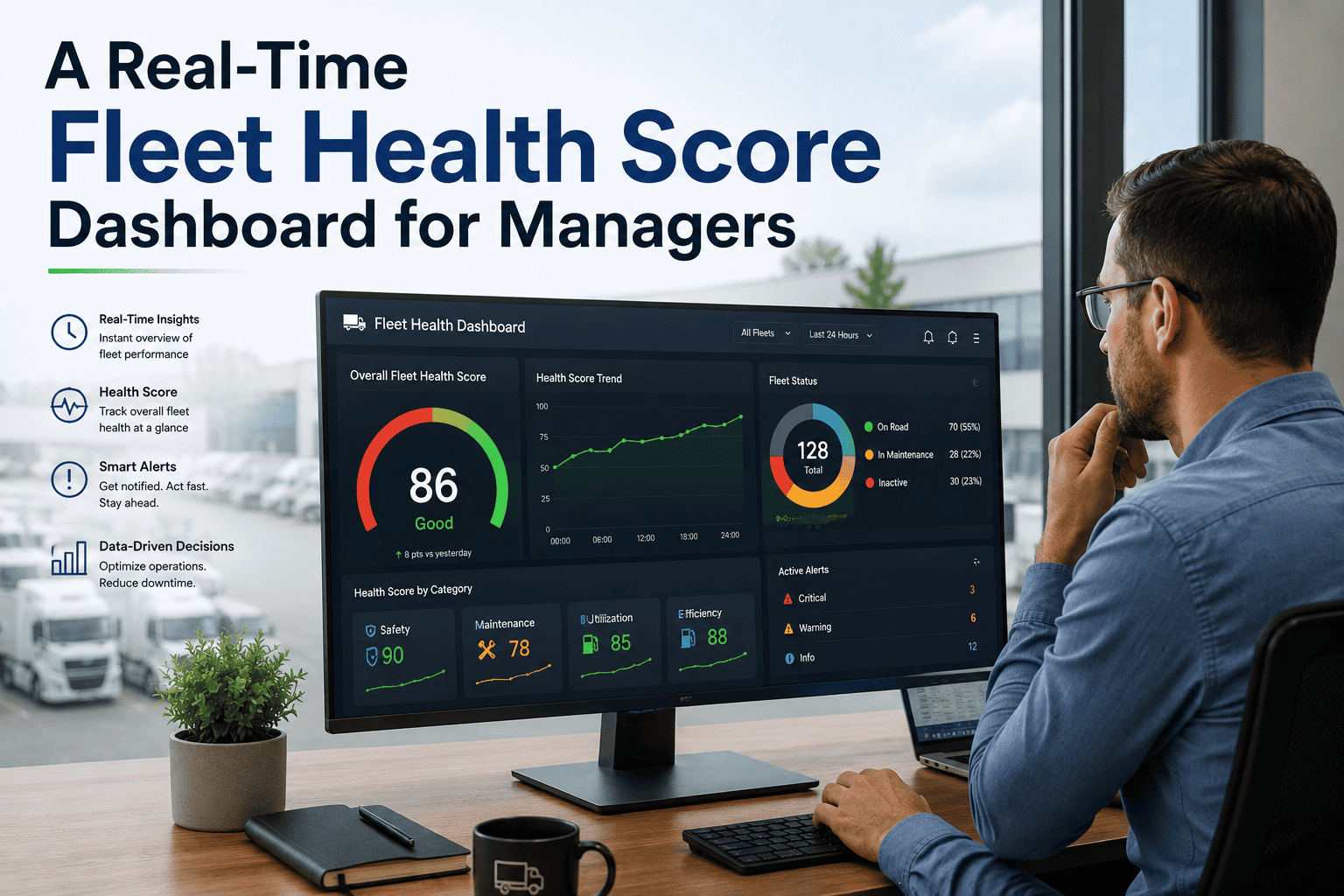
Real-time dashboards break down violations by BASIC category, VIN, driver, terminal, and time period. Trend lines show whether your Vehicle Maintenance score is improving or deteriorating — and which assets are driving the regression.
Preventive Maintenance Scheduling
Most maintenance-related violations — brakes, lights, tires, suspension — are preventable with on-time PM. OxMaint's PM engine schedules and tracks every interval by mileage, hours, or calendar, ensuring no inspection slips past its due date.
Audit-Ready Compliance Records
Every work order, inspection, parts replacement, and corrective action is timestamped and stored in the asset's lifecycle record. When a DOT auditor or shipper requests proof of your maintenance program, export a complete history in minutes.
See OxMaint on Your Assets — Book a 30-Minute Demo
We will load your top 10 violating units into a live workspace and show you exactly how the violation-to-work-order workflow, BASIC dashboards, and PM engine would have prevented them.
Fleet CSA Score Management — Frequently Asked Questions
What is a fleet CSA score and how is it calculated?
The CSA (Compliance, Safety, Accountability) score is an FMCSA safety measurement system that ranks carriers across seven Behavior Analysis and Safety Improvement Categories (BASICs) based on roadside inspection violations, crash data, and intervention history. Scores are expressed as percentiles — the lower the percentile, the safer the carrier relative to peers with similar inspection volume.
How can I reduce my fleet CSA violations fast?
The fastest path to CSA violation reduction is connecting every maintenance-related citation to an immediate corrective work order, tightening PM intervals on high-defect assets, and using real-time dashboards to spot repeat-offender units. Most fleets see a 30–50% drop in maintenance-related OOS violations within 90 days of implementing a CMMS like OxMaint. Start Free Trial to begin tracking today.
Which CSA BASICs are most affected by maintenance management?
The Vehicle Maintenance BASIC is the most directly influenced by your maintenance program — it captures brake, lighting, tire, suspension, and frame violations. However, poor maintenance also contributes to the Crash Indicator and Unsafe Driving BASICs, because defective equipment increases accident risk and erratic driving behaviors that roadside officers cite.
Does CSA score affect insurance rates and freight contracts?
Yes — significantly. Insurers re-rate premiums when a fleet crosses BASIC alert thresholds, typically increasing costs 20–40%. Major shippers and brokers filter carriers by CSA percentiles, and many enforce a hard cutoff at the 65th or 70th percentile; exceeding it can disqualify you from loads representing millions in annual revenue.
Can OxMaint CMMS help with CSA score management and audit defense?
Yes. OxMaint logs every violation, auto-generates corrective work orders, and stores the full maintenance lifecycle — PM records, parts replaced, technician sign-offs, and inspection photos — in a single auditable asset record. When a DOT auditor or shipper requests documentation, you export a complete, timestamped history in minutes. Book a Demo to see the audit workflow live.
Stop Letting Preventable Violations Erode Your Fleet's Margins
Deploy a defensible CSA score management program in days — not months. OxMaint's AI-powered CMMS turns violation tracking, root-cause analysis, and preventive maintenance into a single, audit-ready workflow that lowers your BASICs and protects your contracts.
Free 14-day trial · No credit card




.png)