
Fleet safety management in 2026 is no longer just about compliance checkboxes and annual training refreshers — it has evolved into a comprehensive Environmental, Health, and Safety (EHS) discipline that treats driver safety, vehicle maintenance, regulatory compliance, and operational risk as interconnected elements of a single integrated system. Modern fleet operations generate massive safety data streams from telematics, dashcams, collision avoidance systems, driver behavior monitoring, maintenance logs, and regulatory inspections. Without intelligent EHS management systems to process this information, fleet operators are essentially managing safety blindfolded. The organizations achieving world-class safety performance in 2026 share common characteristics: systematic incident investigation protocols, proactive driver coaching based on real-time data, vehicle safety inspections integrated with maintenance workflows, and digital compliance documentation that withstands regulatory scrutiny. This is where modern Fleet EHS Management Systems transform safety from reactive crisis response into strategic operational excellence.
Why Fleet EHS Management Requires Specialized Systems
Commercial fleet operations face unique EHS challenges that generic safety management systems cannot address. Driver behavior creates safety risk that extends beyond your facilities into public roadways where incidents involve third parties, regulatory liability, and brand reputation damage. Vehicle mechanical failures endanger drivers and the public while triggering complex DOT, FMCSA, and state-level compliance obligations. Environmental responsibilities include proper disposal of fluids, tires, batteries, and hazardous materials generated through vehicle maintenance. Occupational health spans driver fatigue management, ergonomic considerations for long-haul operators, exposure to extreme temperatures, and technician safety working around high-voltage EV systems and heavy equipment. A comprehensive Fleet EHS Management System integrates all these dimensions into a unified platform where safety data flows seamlessly between driver management, vehicle maintenance, compliance tracking, and executive reporting. Organizations ready to implement this level of integration can sign up for OxMaint to centralize their fleet safety workflows immediately.
Traditional Safety Management vs Integrated Fleet EHS Systems
Core Components of Fleet EHS Management Systems
Effective Fleet EHS Management Systems integrate seven core functional areas that work together to create comprehensive safety coverage. Incident management and investigation tools capture collision details, near-miss events, and property damage with structured root cause analysis workflows that identify contributing factors and track corrective actions through closure. Driver safety and behavior monitoring integrates telematics data, dashcam footage, and safety score algorithms to coach drivers proactively rather than waiting for incidents. Vehicle safety inspections and maintenance connect pre-trip DVIRs, periodic inspections, and maintenance work orders ensuring mechanical defects are addressed before they cause safety events. Training and certification management automates scheduling, tracks completion, maintains records, and alerts managers when renewals approach. Compliance and regulatory tracking maintains DOT numbers, hours-of-service logs, drug testing records, and state-specific requirements with automated deadline monitoring. Environmental compliance documents hazardous material handling, waste disposal, spill response procedures, and emissions reporting. Safety metrics and analytics aggregate data across all modules providing executive visibility into leading and lagging safety indicators. When these components operate within a unified platform like OxMaint, fleet safety becomes a systematic process rather than a collection of disconnected activities — book a demo to see how these modules integrate.
How Integrated EHS Systems Connect Fleet Safety Operations
Telematics, dashcams, mobile DVIRs, and maintenance logs generate continuous safety data streams
AI algorithms identify high-risk patterns in driver behavior, vehicle condition, and operational practices
Automated alerts trigger coaching sessions, maintenance work orders, and compliance actions before incidents occur
Safety metrics, trend analysis, and benchmarking drive systematic program enhancements and policy updates
Driver Safety Management and Behavior Coaching
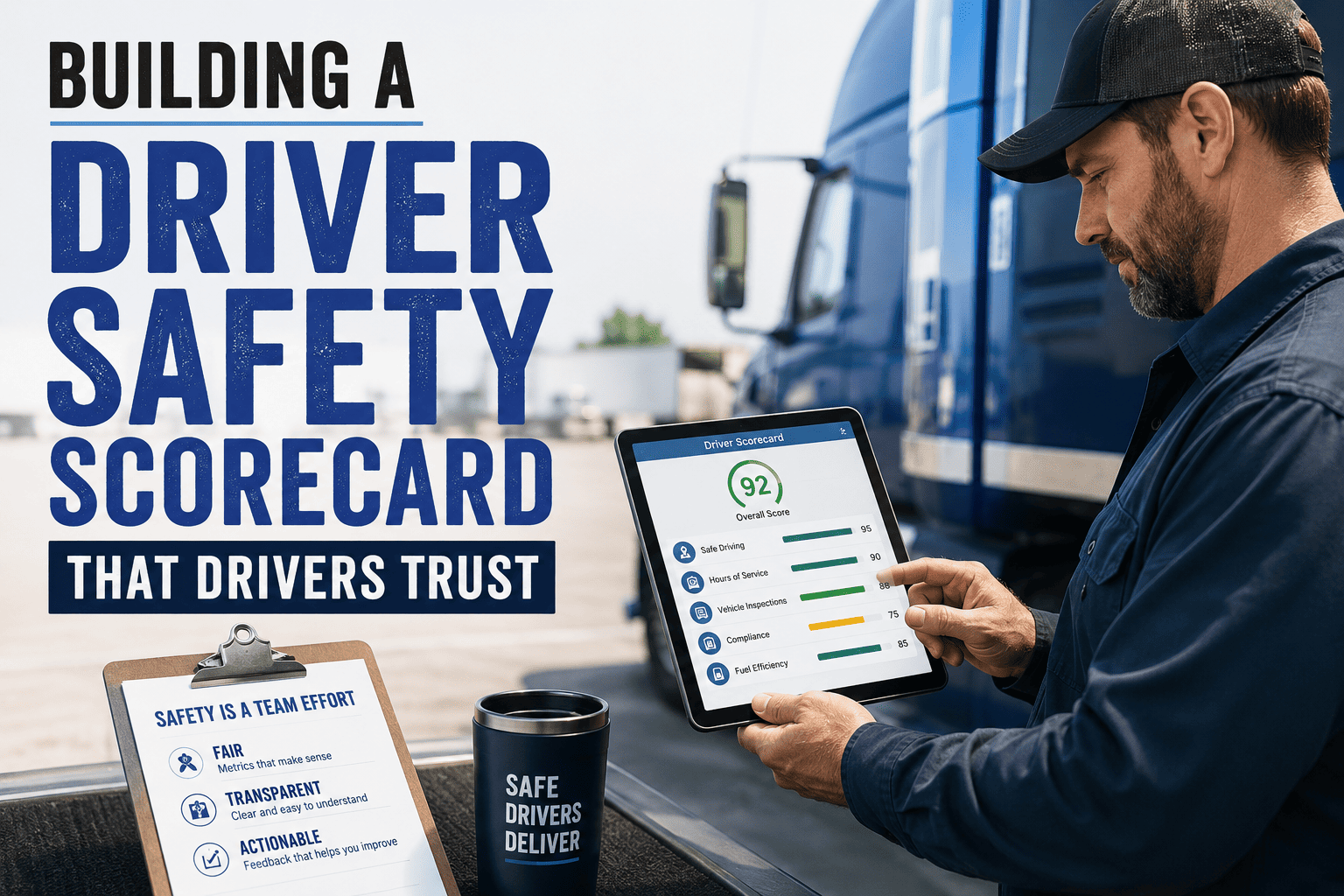
Driver behavior represents the largest controllable safety risk in fleet operations, accounting for 80-90% of preventable collisions according to NHTSA data. Modern driver safety management moves beyond post-incident discipline to proactive coaching based on real-time behavior data. Telematics systems monitor harsh braking, rapid acceleration, speeding, seat belt use, and distraction events, generating driver safety scores that identify coaching opportunities before collisions occur. Dashcam systems with AI-powered event detection capture and categorize risky behaviors — following too closely, rolling stops, cell phone use, drowsy driving — providing objective video evidence for coaching conversations rather than relying on driver self-reporting or accident reconstruction. Progressive coaching programs escalate interventions based on frequency and severity: informational notices for minor first-time events, one-on-one coaching sessions for patterns, formal performance improvement plans for persistent issues, and ultimate disqualification for drivers unable or unwilling to operate safely. The key to effective driver safety management is timeliness — coaching within 24-48 hours of an event while details are fresh is exponentially more effective than quarterly performance reviews. Fleets implementing systematic driver coaching report 40-50% reductions in preventable collisions within the first year.
Key Technologies for Driver Safety Management
Telematics Monitoring
GPS-based tracking captures speed, harsh events, idling, and route adherence generating continuous driver performance data for coaching and trend analysis.
AI Dashcam Systems
Forward and driver-facing cameras with edge AI detect distraction, drowsiness, following distance violations, and collision events with video evidence.
Safety Scoring Algorithms
Multi-factor models synthesize telematics and dashcam data into composite driver safety scores enabling data-driven coaching prioritization.
Coaching Workflows
Automated coaching assignment, documentation templates, acknowledgment tracking, and effectiveness measurement close the loop on driver safety interventions.
Vehicle Safety Inspections and Maintenance Integration
Vehicle mechanical failures create safety risks ranging from minor breakdowns to catastrophic events like brake failures and tire blowouts. Systematic vehicle safety inspections identify defects before they cause incidents, but only if inspections connect to maintenance workflows ensuring identified issues are actually repaired. Digital Driver Vehicle Inspection Reports (DVIRs) replace paper checklists with mobile apps guiding drivers through comprehensive pre-trip and post-trip inspections with photo requirements for defects. When drivers identify safety issues, the DVIR automatically generates maintenance work orders, assigns technicians, verifies parts availability, and tracks repair completion — creating closed-loop accountability that paper systems cannot match. Vehicle-out-of-service protocols ensure vehicles with critical defects cannot be dispatched until repairs are completed and verified. Periodic inspection tracking ensures vehicles receive required annual, semi-annual, and quarterly inspections per DOT and FMCSA regulations with automated scheduling and completion verification. Maintenance-related safety metrics track mean time between failures, repeat defects, inspection compliance rates, and out-of-service percentages enabling fleet managers to identify systemic issues requiring vehicle replacements or maintenance process improvements. Organizations ready to digitize vehicle safety inspections can sign up for OxMaint to implement mobile DVIRs and maintenance integration immediately.
Impact of Integrated Vehicle Safety and Maintenance Systems
Ready to Transform Your Fleet Safety Program?
OxMaint brings driver safety management, vehicle inspection workflows, compliance tracking, and incident management into one intelligent EHS platform built specifically for commercial fleet operations.
Compliance Management and Regulatory Tracking
Fleet safety compliance spans federal DOT and FMCSA regulations, state-specific requirements, industry standards, and customer safety expectations. Manual compliance management using spreadsheets and filing cabinets cannot scale to modern fleet complexity where hundreds of requirements apply across diverse vehicles, drivers, and operating territories. Comprehensive EHS systems automate compliance tracking across all domains: driver qualification files maintain licenses, medical certificates, training records, and background checks with expiration alerts; hours-of-service compliance integrates ELD data with violation detection and coaching workflows; drug and alcohol testing programs track random pool selection, testing completion, and results management; vehicle registrations, inspections, and permits receive automated renewal reminders; hazmat endorsements and specialized certifications are monitored for drivers operating regulated vehicles; state-specific requirements like California's pull notice program are tracked systematically. Audit readiness becomes continuous rather than a crisis event — compliance reports generate instantly showing complete documentation for any regulatory inspection. Fleet managers spend less time hunting for documents and more time on strategic safety improvements.
Safety Metrics, Analytics, and Continuous Improvement
What gets measured gets managed — and modern EHS systems provide unprecedented visibility into fleet safety performance through comprehensive analytics and benchmarking. Leading indicators (driver safety scores, DVIR compliance rates, training completion, near-miss reporting) provide early warning of emerging risks before incidents occur. Lagging indicators (collision frequency, severity, costs, regulatory violations, insurance claims) measure actual safety outcomes and program effectiveness. Comparative analytics benchmark performance across vehicle classes, driver tenure groups, operating territories, and shifts identifying pockets of excellence and areas requiring targeted intervention. Trend analysis reveals whether safety performance is improving, plateauing, or degrading over time. Root cause analysis aggregates data across incidents revealing systemic issues requiring policy changes, training enhancements, or operational modifications. Executive dashboards present safety KPIs in real-time enabling data-driven decision making rather than relying on anecdotal information and gut feelings. Fleet operators using comprehensive safety analytics consistently outperform industry averages by 40-60% across collision frequency, severity, and regulatory compliance metrics.
OxMaint EHS — Connecting Every Part of Fleet Safety Management
Emerging Trends in Fleet EHS Technology
Fleet safety technology continues evolving rapidly with several emerging capabilities poised to reshape EHS management in coming years. Predictive collision avoidance systems using AI analyze driver behavior, vehicle dynamics, traffic conditions, and environmental factors to issue real-time warnings preventing collisions before they occur. Fatigue monitoring systems track micro-sleep events, blink rates, and head position providing early detection of drowsy driving with alerts and mandatory rest break enforcement. Mental health and wellness programs integrated into EHS platforms address the psychological stresses of commercial driving including isolation, schedule unpredictability, and performance pressure — factors contributing to safety incidents and driver retention challenges. Augmented reality training modules provide immersive driver education on hazard recognition, defensive driving techniques, and emergency response procedures with measurable learning outcomes. Blockchain-based qualification verification creates immutable records of driver training, certifications, and safety performance that follow drivers across employers eliminating fraudulent credentials and providing complete career safety histories. Organizations implementing OxMaint today position themselves to integrate these innovations seamlessly as they mature — book a demo to explore our technology roadmap.
Fleet EHS Technology Evolution Roadmap
Frequently Asked Questions
What is Fleet EHS Management and why is it important
Fleet EHS (Environmental, Health, and Safety) Management is a comprehensive approach to managing all safety aspects of commercial vehicle operations including driver safety, vehicle safety, regulatory compliance, incident investigation, and environmental responsibility. It is critical because commercial fleets face unique safety challenges spanning public roadways, complex DOT/FMCSA regulations, high-consequence incidents involving third parties, and significant financial liability. Effective EHS management reduces collisions by 40-50%, lowers insurance costs by 20-30%, prevents regulatory violations, and protects brand reputation while creating safer working conditions for drivers and technicians.
How does digital driver safety management improve fleet safety performance
Digital driver safety management leverages telematics and AI-powered dashcams to monitor driver behavior continuously, generating safety scores that identify coaching opportunities proactively rather than waiting for incidents. The system detects harsh braking, speeding, distraction, following distance violations, and other risky behaviors, automatically assigning coaching sessions with video evidence within 24-48 hours while details are fresh. This timely, data-driven approach is far more effective than traditional quarterly reviews or post-incident discipline, achieving 40-50% collision reductions within the first year of implementation through systematic behavior modification.
Why is integration between vehicle inspections and maintenance critical for safety
Vehicle safety inspections only protect fleets when identified defects are actually repaired before causing incidents. Without integration, defects noted on paper DVIRs often disappear into filing cabinets with no accountability for completion. Digital inspection systems that automatically generate maintenance work orders, assign technicians, track repairs through closure, and prevent vehicle dispatch until critical defects are resolved create closed-loop accountability that paper systems cannot match. This integration reduces roadside out-of-service violations by 60-70% and eliminates 75% of maintenance-related safety incidents according to fleet benchmarking data.
What compliance areas do Fleet EHS systems address
Comprehensive Fleet EHS platforms manage all major compliance domains including driver qualification files (licenses, medicals, training, background checks), hours-of-service compliance via ELD integration, drug and alcohol testing program administration, vehicle registration and inspection tracking, hazmat endorsements and specialized certifications, state-specific requirements like pull notice programs, DOT/FMCSA audit readiness, and environmental compliance for hazardous material handling and waste disposal. Automated tracking with expiration alerts and audit-ready reporting transforms compliance from crisis management to systematic process.
How does OxMaint integrate driver safety, vehicle safety, and compliance into one platform
OxMaint connects all Fleet EHS components through unified data architecture where driver safety events, vehicle inspection findings, compliance deadlines, and incident investigations flow into a central system accessible to all stakeholders. When telematics detect risky driving, coaching workflows trigger automatically. When drivers identify vehicle defects during DVIRs, maintenance work orders generate instantly. When certifications approach expiration, training assignments and alerts issue proactively. Executive dashboards aggregate data across all modules providing complete safety visibility. This integration eliminates the information silos and manual handoffs that plague disconnected safety management approaches.
What ROI can fleets expect from implementing comprehensive EHS management systems
Fleet EHS systems deliver ROI through multiple channels: collision reduction (40-50% decrease in preventable incidents saving $15,000-$50,000 per avoided collision), insurance premium reduction (15-30% lower costs with demonstrated safety improvements), compliance penalty avoidance (eliminating $5,000-$50,000 per violation), reduced vehicle downtime (faster defect resolution preventing revenue loss), and improved driver retention (20-30% lower turnover saving $8,000-$12,000 per driver in recruiting and training costs). Total ROI typically ranges from 300-500% within the first 24 months of implementation for fleets of 50+ vehicles, with breakeven occurring in 4-8 months.
Build World-Class Fleet Safety with OxMaint EHS
Join forward-thinking fleet operators using OxMaint to integrate driver safety management, vehicle inspection workflows, compliance tracking, incident investigation, and safety analytics into one powerful EHS platform that actually works.


-(1).png)
.png)