.png)
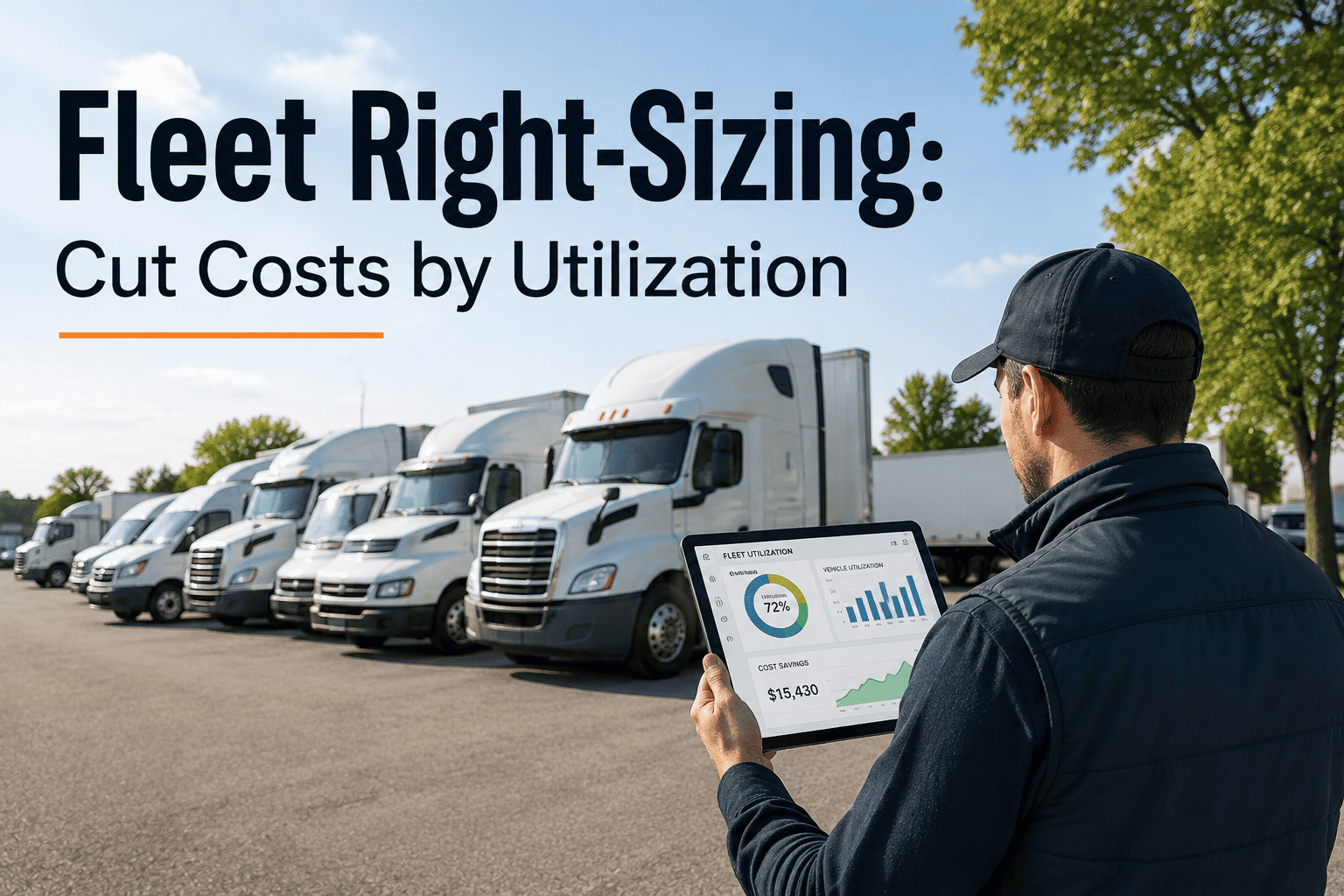
Operating too many vehicles drains capital through unnecessary depreciation, insurance, and parking costs. Operating too few vehicles creates service delays, driver overtime, and customer dissatisfaction. Fleet right-sizing is the strategic process of aligning your vehicle inventory with actual operational demand — ensuring you have exactly the capacity you need, exactly when you need it. Organizations that master right-sizing typically reduce total fleet costs by 20 to 30 percent while maintaining or improving service levels. The challenge is not just counting vehicles — it is understanding utilization patterns, forecasting demand fluctuations, and building flexible capacity models that adapt to seasonal peaks and operational changes. If your fleet has grown organically over the years without systematic evaluation, it is time to sign up for a platform that turns utilization data into actionable sizing decisions.
What Is Fleet Right-Sizing
Fleet right-sizing is the continuous process of analyzing vehicle utilization, demand patterns, and operational requirements to determine the optimal number and mix of vehicles needed to meet service objectives at the lowest total cost of ownership. Unlike traditional fleet management that focuses on maintaining existing assets, right-sizing actively questions whether each vehicle justifies its ongoing expense. This includes evaluating replacement cycles, identifying underutilized units, analyzing pooling opportunities, and forecasting future capacity needs based on business growth or contraction. For fleet managers and operations leaders, right-sizing is the difference between running a cost center and running a strategic asset that directly supports revenue generation and customer satisfaction.
Utilization Analysis
Track actual vehicle usage across time, routes, and drivers to identify chronic underperformers sitting idle more than 40 percent of available hours.
Demand Forecasting
Project future capacity requirements using historical trends, business pipeline data, and seasonal patterns to avoid over-purchasing or emergency rentals.
Pool Management
Consolidate dedicated vehicles into shared pools that serve multiple departments or routes, maximizing asset productivity without sacrificing availability.
Lifecycle Optimization
Replace vehicles at the economic sweet spot where maintenance costs exceed depreciation benefits, preventing both premature disposal and expensive over-retention.
Why Fleet Right-Sizing Matters Now
The economics of fleet ownership have shifted dramatically. Vehicle acquisition costs are up 25 to 35 percent since 2020. Insurance premiums have climbed 15 to 20 percent annually in many regions. Fuel and maintenance expenses remain volatile. At the same time, businesses face pressure to reduce carbon footprints, meet sustainability targets, and operate leaner. Simply renewing leases or replacing vehicles one-to-one no longer makes financial sense. Fleet right-sizing addresses these pressures head-on by ensuring every vehicle in your inventory is actively contributing value. Organizations that conduct annual right-sizing reviews consistently outperform peers on cost per mile, asset turnover, and driver productivity metrics. Ready to see how your current fleet stacks up? Book a demo and walk through a utilization audit with our team.
The 6-Step Right-Sizing Framework
Effective fleet right-sizing follows a structured methodology. Each step builds on the previous one, creating a data-driven roadmap from baseline assessment to optimized fleet composition.
Baseline Utilization Audit
Collect 12 months of telematics data, GPS logs, and dispatch records to calculate actual utilization rates for every vehicle. Identify units operating below 60 percent capacity — these are immediate candidates for redeployment or disposal.
Demand Pattern Analysis
Map historical demand across time dimensions — daily, weekly, seasonal — to understand peak requirements versus average load. This reveals whether capacity gaps are chronic or temporary, guiding rental versus ownership decisions.
Cost Structure Breakdown
Calculate total cost of ownership per vehicle including depreciation, financing, insurance, fuel, maintenance, and administrative overhead. Compare against rental rates and alternative capacity sources to identify cost-saving opportunities.
Scenario Modeling
Build financial models for different fleet configurations — reducing by 10 percent, shifting to rental pools, consolidating vehicle types. Quantify savings and service impacts for each scenario to support decision-making.
Implementation Planning
Develop transition roadmaps for vehicle disposal, lease modifications, and procurement adjustments. Coordinate with finance, operations, and HR to minimize disruption during fleet composition changes.
Continuous Monitoring
Establish quarterly review cycles to track utilization trends, cost variances, and service performance against targets. Right-sizing is not a one-time project — it is an ongoing discipline that adapts to changing business conditions.
Right-Sizing Impact by the Numbers
Organizations that implement systematic right-sizing programs report measurable financial and operational improvements within the first year. These outcomes are based on documented case studies across transportation, field service, and logistics sectors.
Common Right-Sizing Mistakes and How to Avoid Them
The most common mistake in fleet right-sizing is focusing exclusively on vehicle counts without examining utilization quality. A fleet with 100 vehicles at 80 percent utilization might still be oversized if peak demand only requires 85 vehicles and off-peak needs are 60. The second mistake is ignoring operational constraints — cutting vehicles to save costs sounds good until driver wait times triple and customer deliveries are delayed. The third mistake is treating right-sizing as a finance-driven exercise rather than a cross-functional initiative. Without input from operations, maintenance, and sales teams, sizing decisions miss critical context around service commitments, territory expansion, and equipment capabilities. To avoid these pitfalls, anchor your right-sizing program in real-time utilization data, validate findings with frontline managers, and use scenario modeling to stress-test capacity changes before implementation. If you want a platform that integrates utilization analytics with operational planning, sign up and explore how Oxmaint connects the dots between asset data and business outcomes.
Owned vs Leased vs Rental: Capacity Strategy Comparison
Optimal fleet sizing often involves a hybrid approach combining owned assets, leased vehicles, and short-term rentals. Each capacity source has distinct cost structures and flexibility profiles.
Owned Vehicles
Leased Vehicles
Short-Term Rentals
Optimize Your Fleet Size with Data-Driven Decisions
Oxmaint provides real-time utilization tracking, demand forecasting, and scenario modeling tools that turn fleet data into right-sizing recommendations — helping you cut costs without cutting service.
Key Metrics for Right-Sizing Analysis
Effective fleet right-sizing depends on tracking the right performance indicators. These metrics provide the quantitative foundation for sizing decisions.
Vehicle Utilization Rate
Percentage of available time that each vehicle is actively in use. Calculate as (Hours in Operation ÷ Total Available Hours) × 100. Target 65 to 75 percent for most fleet types.
Cost Per Mile or Hour
Total ownership and operating expenses divided by actual miles driven or hours operated. Tracks efficiency and identifies high-cost outliers for disposal consideration.
Peak-to-Average Demand Ratio
Compares maximum concurrent vehicle requirements to average daily needs. Ratios above 1.5 suggest rental capacity is more cost-effective than ownership for peak periods.
Idle Time Distribution
Percentage of fleet sitting unused during operational hours. Vehicles idle more than 40 percent of the time are prime candidates for pooling or elimination.
Total Cost of Ownership
Comprehensive expense tracking including acquisition, financing, insurance, fuel, maintenance, depreciation, and administrative overhead per vehicle annually.
Service Level Achievement
Percentage of dispatch requests fulfilled without delays or customer complaints. Ensures right-sizing does not compromise operational performance.
Seasonal Demand and Right-Sizing Strategies
Many fleets face seasonal demand swings that make traditional sizing approaches ineffective. Landscaping companies need 40 percent more trucks in summer. Retail delivery fleets spike during holiday quarters. Construction equipment utilization drops during winter months in northern climates. The solution is dynamic capacity planning that matches fleet composition to demand cycles. For baseline capacity, maintain owned vehicles sized to average annual demand. For seasonal peaks, establish rental agreements with local suppliers or use short-term leases timed to high-demand windows. Some organizations implement seasonal pooling where vehicles are shared across departments with complementary demand patterns — snow removal equipment used by facilities teams in winter shifts to construction projects in summer. The key is tracking monthly utilization trends over multiple years to identify reliable patterns, then building flexible capacity models that avoid year-round ownership of vehicles only needed four months annually. This approach can reduce fleet costs by 15 to 25 percent while maintaining peak season service levels.
Frequently Asked Questions
Target utilization rates vary by fleet type and operational model. For general-purpose commercial fleets, 65 to 75 percent is optimal — high enough to justify ownership costs but with buffer capacity for demand spikes and maintenance downtime. Specialized equipment may run lower (50 to 60 percent) due to project-based usage patterns. Utilization above 85 percent often signals insufficient capacity leading to driver overtime and delayed service.
Conduct comprehensive right-sizing reviews annually, with quarterly check-ins to monitor utilization trends and cost variances. Annual reviews allow sufficient data accumulation to identify patterns while remaining responsive to business changes. Organizations experiencing rapid growth, seasonal volatility, or major operational shifts should increase review frequency to quarterly full assessments.
Essential data includes telematics or GPS logs showing actual vehicle usage hours and mileage, dispatch and work order records indicating demand patterns, maintenance cost histories per vehicle, fuel consumption data, insurance and registration expenses, and depreciation schedules. Combine this operational data with business forecasts for growth or contraction to project future capacity requirements accurately.
Stakeholder resistance typically stems from fear of service degradation or loss of dedicated resources. Address this by presenting data showing actual utilization rates, demonstrating that underutilized vehicles are not contributing value. Pilot pooling programs in low-risk areas to prove shared resources can maintain service levels. Involve operations managers in sizing decisions rather than imposing finance-driven cuts. Transparency and incremental implementation build trust and acceptance.
The break-even point depends on rental rates, vehicle type, and utilization patterns. As a general rule, vehicles used more than 50 percent of available time favor ownership due to lower long-term costs despite higher capital requirements. Vehicles needed less than 30 percent of the time are more cost-effective to rent. The 30 to 50 percent range requires detailed analysis comparing total ownership costs to projected rental expenses over a three to five year period.
Yes, but it requires segmented analysis. Divide the fleet into functional categories — light-duty trucks, heavy equipment, specialty vehicles — and analyze each segment separately. Different vehicle types have distinct utilization patterns, cost structures, and replacement cycles. A mixed fleet might be oversized in passenger vehicles but undersized in heavy haulers. Segment-level analysis prevents across-the-board cuts that could harm critical capabilities.
Electric vehicles have higher upfront costs but lower operating expenses, shifting the ownership economics. Right-sizing EV fleets requires modeling total cost of ownership including fuel savings, reduced maintenance, and charging infrastructure investments. Many organizations adopt hybrid strategies — EVs for high-utilization urban routes where lower operating costs quickly offset acquisition premiums, and traditional vehicles for long-haul or low-utilization applications where capital efficiency matters more than fuel savings.
Telematics provides the granular usage data necessary for accurate right-sizing decisions. GPS tracking shows actual hours in operation versus idle time, route efficiency, and geographic utilization patterns. Engine diagnostics reveal maintenance-related downtime. Driver behavior data identifies training opportunities that can extend vehicle life and reduce replacement frequency. Without telematics, right-sizing relies on estimates and averages that miss optimization opportunities visible only in detailed operational data.
Incorporate business growth projections into demand forecasting models, but avoid pre-emptive over-purchasing. Instead, establish flexible capacity agreements like frame contracts with rental providers or lease options that can scale up on short notice. For confirmed expansion projects, time vehicle acquisitions to align with actual demand rather than speculative forecasts. Many organizations oversize fleets by 10 to 15 percent based on optimistic growth targets that never materialize — better to scale incrementally as demand proves sustainable.
Disposing of owned vehicles can trigger taxable gains or losses depending on depreciation taken versus resale value. Consult with tax advisors to time disposals strategically — sometimes staggering sales across fiscal years minimizes tax impact. Leased vehicle returns typically have no tax consequences beyond final mileage or condition penalties. Shifting to rental capacity converts capital expenses to fully deductible operating expenses, which may benefit cash flow even if total costs remain similar. Tax treatment should inform but not drive sizing decisions — operational efficiency comes first.
Right-sized fleets inherently support sustainability by eliminating unnecessary vehicles, reducing total fuel consumption and emissions. Smaller fleets concentrate resources on newer, more efficient vehicles rather than spreading budgets across aging high-emission units. Pooling and higher utilization rates mean fewer vehicles are manufactured, lowering the carbon footprint of fleet production. Organizations tracking Scope 1 and Scope 3 emissions find that fleet right-sizing is one of the most effective levers for meeting decarbonization targets without compromising operational capability.
Oxmaint delivers real-time utilization dashboards showing vehicle-level activity rates, idle time distributions, and cost per mile tracking. Demand forecasting modules analyze historical patterns and project future capacity needs. Scenario modeling tools let you simulate different fleet configurations and compare financial impacts before implementation. Automated alerts flag chronically underutilized assets for redeployment or disposal consideration. All analytics integrate with maintenance and operational data for comprehensive visibility into fleet performance and right-sizing opportunities.
Start Right-Sizing Your Fleet Today
Join fleet managers and operations leaders using Oxmaint to track utilization, forecast demand, and optimize fleet composition for maximum efficiency and minimum cost.