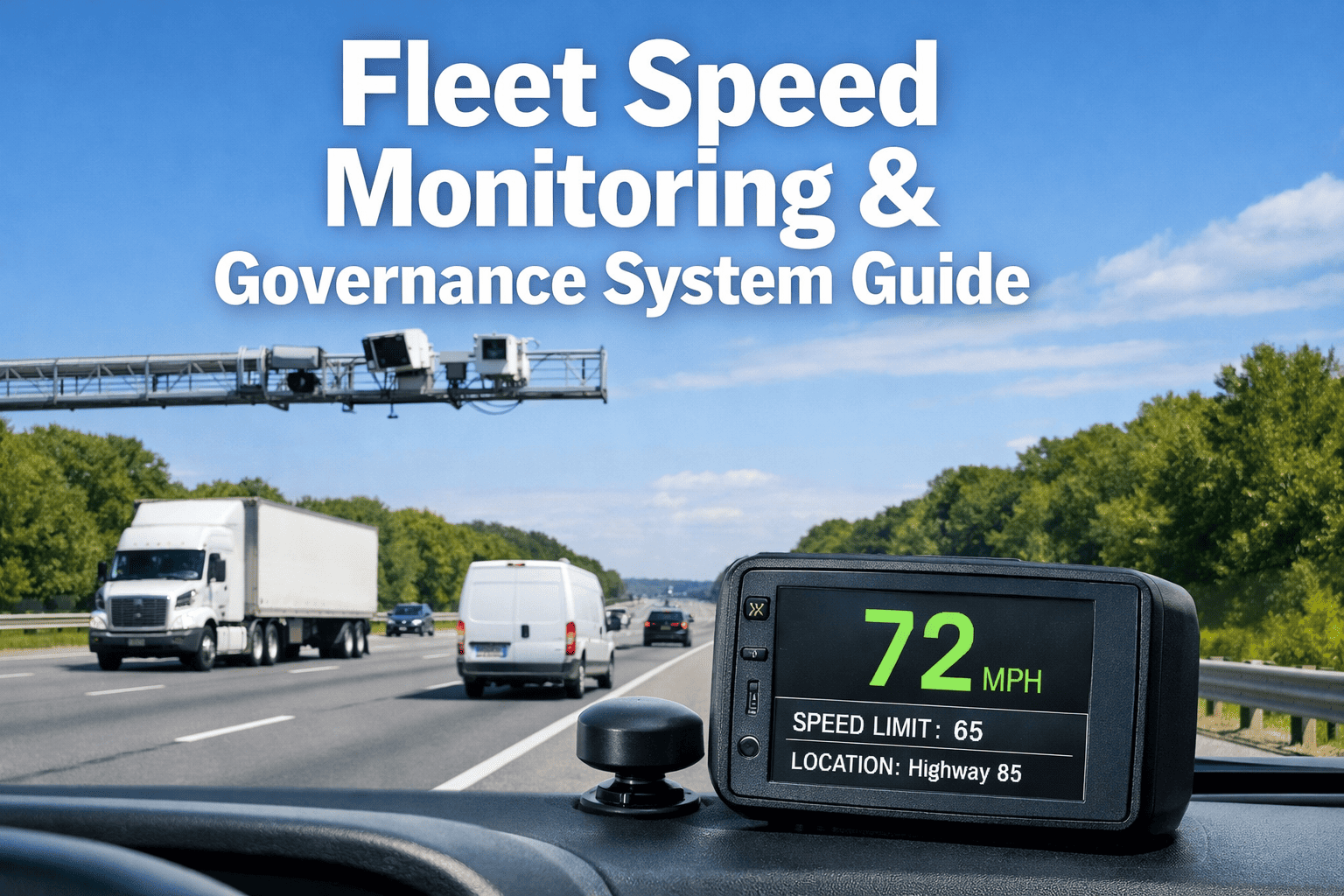
A regional grocery delivery company in Dallas was paying $340,000 a year in excess fuel costs, insurance surcharges, and accident-related expenses that all traced back to the same root cause: 31% of their drivers' total drive time was spent above posted speed limits, and nobody knew. The company had GPS on every vehicle. The data existed. What they lacked was a speed governance system that turned raw GPS speed data into driver-level alerts, coaching triggers, zone-specific compliance scores, and an insurance-grade documentation trail. When they finally deployed OxMaint speed monitoring, the first report showed three drivers spending more than 40% of their shift above the speed threshold — with the highest-speed events consistently occurring on the same two highway segments during late evening runs. OxMaint's fleet speed monitoring platform gives fleet managers real-time speed visibility, automated driver alerts, zone-specific compliance rules, and school zone enforcement — all from the GPS data your fleet already generates. Book a demo to see your fleet's speed compliance picture in real time.
See Every Driver's Speed Data — Before It Becomes a $340K Problem.
Real-time speed alerts · school zone compliance · driver scoring · coaching triggers — OxMaint
Of drive time above posted speed limit at the Dallas fleet — invisible without a speed governance dashboard
8%
Crash risk increase per 5 mph over 65 mph — NHTSA data on large commercial vehicles
$0.06
Per-mile excess fuel cost at every 5 mph above optimal cruise speed — direct bottom-line impact
Six Speed Governance Problems OxMaint Solves That Raw GPS Tracking Cannot
GPS location data tells you where a vehicle is. Speed governance tells you how fast it is travelling, how that compares to the limit at that specific location, how often a driver does it, and what to do about it. OxMaint's speed governance engine layers all six dimensions onto your existing GPS data.
01
No Speed Limit Context
Raw GPS speed means nothing without the posted limit at that exact location. OxMaint matches live vehicle speed against the current posted speed limit at the GPS coordinates — generating a violation only when the driver is actually over the applicable limit.
02
No School Zone Enforcement
School zones have reduced speed limits during specific hours — and commercial vehicle violations carry the highest penalties and liability exposure. OxMaint maintains a campus-aware geofence database that enforces school zone limits during active hours only, not 24/7.
03
No Driver-Level Speed Scoring
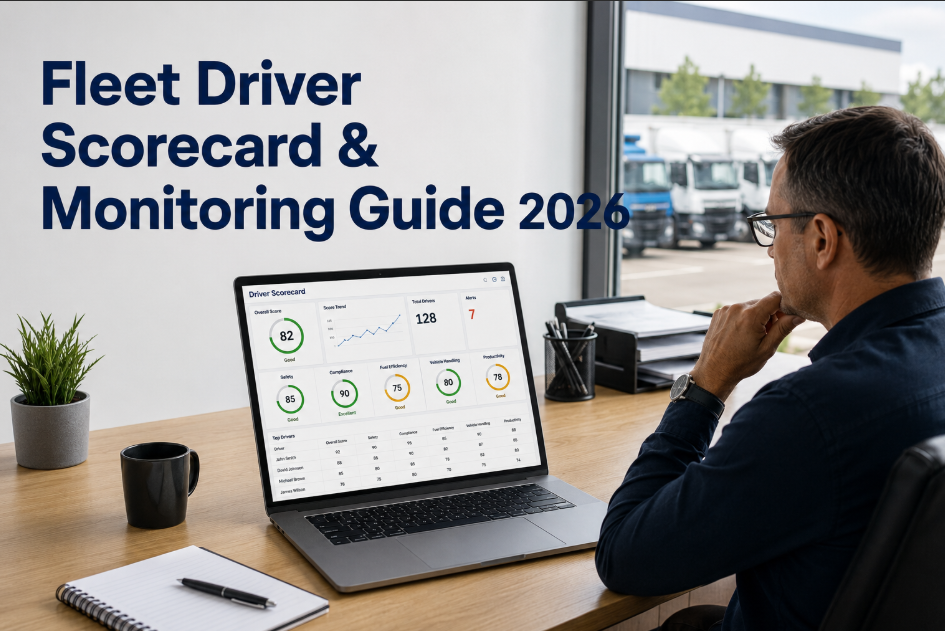
Fleet-level speed averages hide the real picture: typically 15–20% of drivers account for 70–80% of speed violations. OxMaint surfaces per-driver speed scores — events per 100 miles, % drive time over threshold, and worst single-day events — so coaching is targeted at the right people.
04
No Real-Time Driver Alert
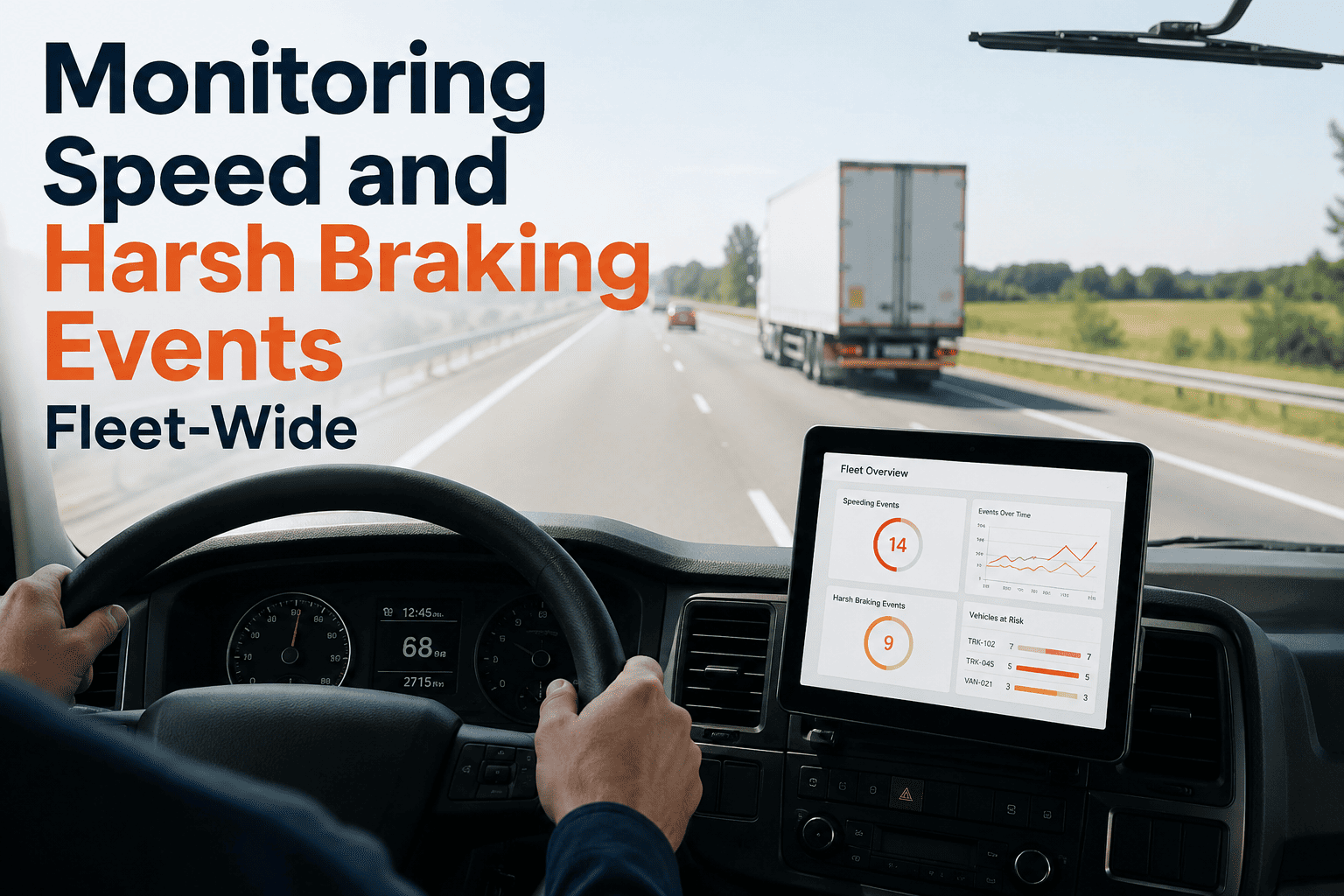
End-of-week speed reports change nothing. In-cab real-time alerts do. OxMaint triggers an in-cab audible and visual alert within 8 seconds of the driver exceeding the configured threshold — at the moment the behaviour is happening, not days later in a manager review.
05
No Route-Specific Risk Profiling
Some road segments consistently generate speed events across multiple drivers — a merging highway section at shift end, a rural straight with a 45 mph limit that drivers routinely ignore. OxMaint identifies these hotspot segments so fleet managers address route design and briefing, not just individual drivers.
06
No Insurance Documentation
Insurance underwriters require documented evidence of speed governance at renewal. OxMaint generates a 12-month speed compliance report per driver — violation frequency, coaching sessions, improvement trend — that satisfies commercial vehicle insurer submission requirements for premium review.
Speed Governance — OxMaint
Know Every Driver's Speed Score. Every Shift.
OxMaint turns your existing GPS data into a speed governance system with real-time alerts, driver scoring, and insurance-grade documentation.
Speed Compliance Benchmarks — US Commercial Fleet Data 2025
How does your fleet compare? The table below shows industry median vs top-quartile speed compliance scores across US commercial vehicle fleets — based on FMCSA carrier safety data and OxMaint telematics aggregates from US customer operations.
Speed Metric
Industry Median
Top Quartile
OxMaint Alert
Coaching Trigger
% Drive Time Over Limit
18.4%
4.2%
>12% drive time
2 consecutive shifts
Speed Events per 100 Miles
9.8 events
2.1 events
>8 events/100 mi
3 consecutive shifts
School Zone Violations/Month
3.2 per driver
0.1 per driver
Any school zone event
Single violation
Max Single-Event Overspeed
18.4 mph over
6.2 mph over
>15 mph over limit
Immediate escalation
Fleet Speed Compliance Score
61 / 100
89 / 100
<72 / 100
Score drops 8+ points
How OxMaint Speed Governance Works — The Technology Behind the Score
OxMaint's speed governance runs on four connected data layers that convert raw GPS speed into actionable driver intelligence — with real-time in-cab feedback, manager alerts, and insurance documentation generated automatically.
OBD / Telematics — Live Speed Data
OxMaint integrates with Samsara, Geotab, Verizon Connect, and Motive via API — pulling live speed data every 10–30 seconds per vehicle. Vehicle speed is compared against the posted speed limit database at the current GPS coordinates, not a single fleet-wide threshold. Highway speed events and school zone events are scored differently based on their distinct risk profiles.
OxMaint maintains a continuously updated posted speed limit database covering US, Canada, UK, and Australia road networks. Speed limits are matched at the road segment level — not the intersection or zip code level. School zone time-based limits are enforced during active hours only, with seasonal school calendar awareness to prevent false alerts during holidays and summer breaks.
AI Scoring Engine — Driver Risk Ranking
Speed events are not equal. A driver travelling 8 mph over the limit on a rural interstate for 2 minutes is a different risk profile from a driver doing 12 mph over in a school zone for 30 seconds. OxMaint's AI weights each speed event by magnitude, duration, zone type, time of day, and vehicle class — producing a risk-accurate score that reflects actual accident probability, not just violation count.
Route Hotspot Analysis — AI Digital Twin
OxMaint's AI digital twin builds a risk map of every route segment your fleet operates on — identifying roads where multiple drivers consistently generate speed events regardless of who is driving. These hotspot segments indicate a route design or briefing issue, not a driver behaviour issue. Hotspot reports are generated weekly and fed back into dispatcher route planning to route vehicles away from or specifically brief drivers on high-risk segments.
SAP / ERP Integration — Compliance Record Generation
OxMaint speed compliance records flow to SAP HR for driver file documentation and to the fleet insurance module for premium evidence. At renewal, the 12-month speed governance report — per-driver scores, coaching session records, improvement trends — is generated in the format required by major US commercial vehicle insurers. Fleets presenting this documentation receive 6–12% premium discounts at documented insurer programmes.
38%
Accident rate reduction
23%
Fuel cost reduction
12%
Insurance premium saving
8 sec
In-cab alert response time
We thought we had a fuel problem. The OxMaint speed report showed we had a speed problem that was causing the fuel problem. Three drivers were over the limit more than 40% of their shift. When we confronted them with the actual data — not impressions, the actual timestamps and speeds — the conversations were short and the change was immediate. Fuel spend dropped $28,000 in the first quarter after deployment.
— VP of Operations, Regional Grocery Delivery Fleet, Dallas TX · 62 vehicles · OxMaint customer since 2023
Frequently Asked Questions
No — OxMaint integrates with existing telematics hardware (Samsara, Geotab, Verizon, Motive) via API. Speed governance activates on existing GPS data within days of integration. In-cab alerts require a driver-facing display or mobile app on the driver's device.
OxMaint's speed limit database is updated quarterly from official road authority sources across the US, Canada, UK, and Australia. School zone and construction zone speed limits are updated in near-real-time via integration with mapping data providers that track temporary speed limit changes.
Yes — OxMaint supports per-vehicle-class speed thresholds (Class 6–8 trucks can have tighter thresholds than vans), per-zone rules (stricter school zone enforcement), and per-route rules for specific high-risk corridors. Alerts and scoring are applied against the relevant rule for each vehicle's current location and class.
Yes — the OxMaint driver mobile app shows each driver their current speed compliance score, 30-day trend, event count, and worst single events. Driver-facing transparency consistently produces faster score improvement than manager-only dashboards — most drivers improve within 2 weeks of first seeing their own data.
OxMaint generates a 12-month speed governance summary — fleet-wide compliance trend, per-driver violation history, coaching sessions conducted, and improvement data — in the format most US commercial vehicle insurers request. Fleets presenting this report at renewal typically receive 6–12% premium consideration from major carriers.