Fuel is the largest single operating cost in most commercial fleets — averaging 28 to 35% of total cost of ownership — and it is the cost category with the highest percentage of waste that can be recovered without capital investment. A 50-vehicle fleet running $0.18/mile in fuel spend is typically carrying $38,000 to $52,000 per year in recoverable waste: idle fuel consumption that serves no operational purpose, route inefficiencies that add 8 to 12% to actual miles driven vs optimal distance, and fuel price timing that pays peak-week pump prices when contract pricing or off-peak fill timing would save $0.14 to $0.22 per gallon. Oxmaint's fuel analytics module tracks every gallon consumed, connects it to the vehicle, driver, route, and time of fill, and identifies exactly where fuel spend can be reduced — typically 15 to 22% in the first 12 months without touching a vehicle. Book a demo to see your fleet's fuel waste identified by source and vehicle in the first session.
Oxmaint tracks fuel consumption per vehicle, per route, and per driver — detecting idle waste, route inefficiency, fuel theft, and mechanical fuel drain automatically. Alerts fire when any vehicle exceeds its fuel consumption baseline by 8%, giving your team a corrective action window before the overspend accumulates.
Fleet fuel efficiency analytics tracks four categories of fuel waste: idle fuel consumption (engine running with no vehicle movement — typically 16 to 24% of total fleet fuel spend), route inefficiency (actual miles driven vs optimal route distance — typically 8 to 12% excess distance), driver behavior waste (aggressive acceleration, speeding, and harsh braking that increase fuel consumption 18 to 26% vs efficient driving), and mechanical fuel drain (injector wear, tire pressure, air filter restriction, cooling system issues that reduce engine fuel efficiency below spec). Oxmaint identifies all four categories per vehicle and driver from telematics and fuel card data — ranking waste sources by dollar value so the highest-return interventions are addressed first.
Four Fuel Waste Categories — Where Your Fleet's $116K Goes
Every dollar of fleet fuel overspend falls into one of four categories. Oxmaint quantifies each category per vehicle — so fuel reduction becomes a specific action list, not a general efficiency initiative. Book a demo to see your fleet's fuel waste broken down by category and vehicle.
Engine idling burns 0.8 to 1.2 gallons per hour depending on vehicle size — with zero productive output. A delivery driver idling 45 minutes per day while waiting at customer sites burns $1,840 per year in fuel serving no operational purpose. Oxmaint tracks idle time per vehicle and per driver, generates weekly idle reports, and feeds driver coaching scores that link idle behavior to driver accountability metrics visible to supervisors in real time.
The gap between the optimal route distance and the actual route driven — caused by outdated route plans that don't account for traffic patterns, driver detours, and multi-stop sequencing that adds 8 to 12% to total miles driven. At $0.18/mile fuel cost, a 50-vehicle fleet adding 10% route waste burns $91,000 per year in excess fuel on routes that should be shorter. Oxmaint's route efficiency score tracks actual vs optimal miles per route and per driver — identifying the highest-waste routes for optimization priority.
Aggressive acceleration, excessive highway speed (fuel consumption increases 14% at 75 mph vs 65 mph), and harsh braking that converts kinetic energy to heat rather than regenerative benefit combine to increase fuel consumption 18 to 26% per vehicle compared to the fleet's most efficient drivers on the same routes. Oxmaint's driver fuel efficiency score compares each driver's fuel consumption per mile against their route peers — identifying coaching targets with dollar-value impact quantified per driver per week.
Tire pressure 10 PSI below spec increases fuel consumption 2.5% per vehicle. A restricted air filter increases fuel consumption 4 to 8%. Injector wear degrading spray pattern increases consumption 6 to 10%. Cooling system inefficiency causing elevated engine operating temperature increases consumption 3 to 5%. Oxmaint connects to telematics to monitor fuel consumption trend per vehicle — a vehicle whose fuel efficiency has declined 8%+ week-over-week gets flagged for mechanical inspection before the cause progresses to a breakdown event.
Idle Waste. Route Waste. Driver Waste. Mechanical Waste. Oxmaint Finds All Four — Per Vehicle, Per Week.
Most fleets only see total fuel spend. Oxmaint shows you which vehicle, which driver, which route, and which waste category is consuming the most — so reduction becomes a targeted action, not a general initiative. Book a demo to see your fleet's fuel waste broken down today.
Fuel Theft Detection — How Oxmaint Identifies Unauthorized Fuel Use
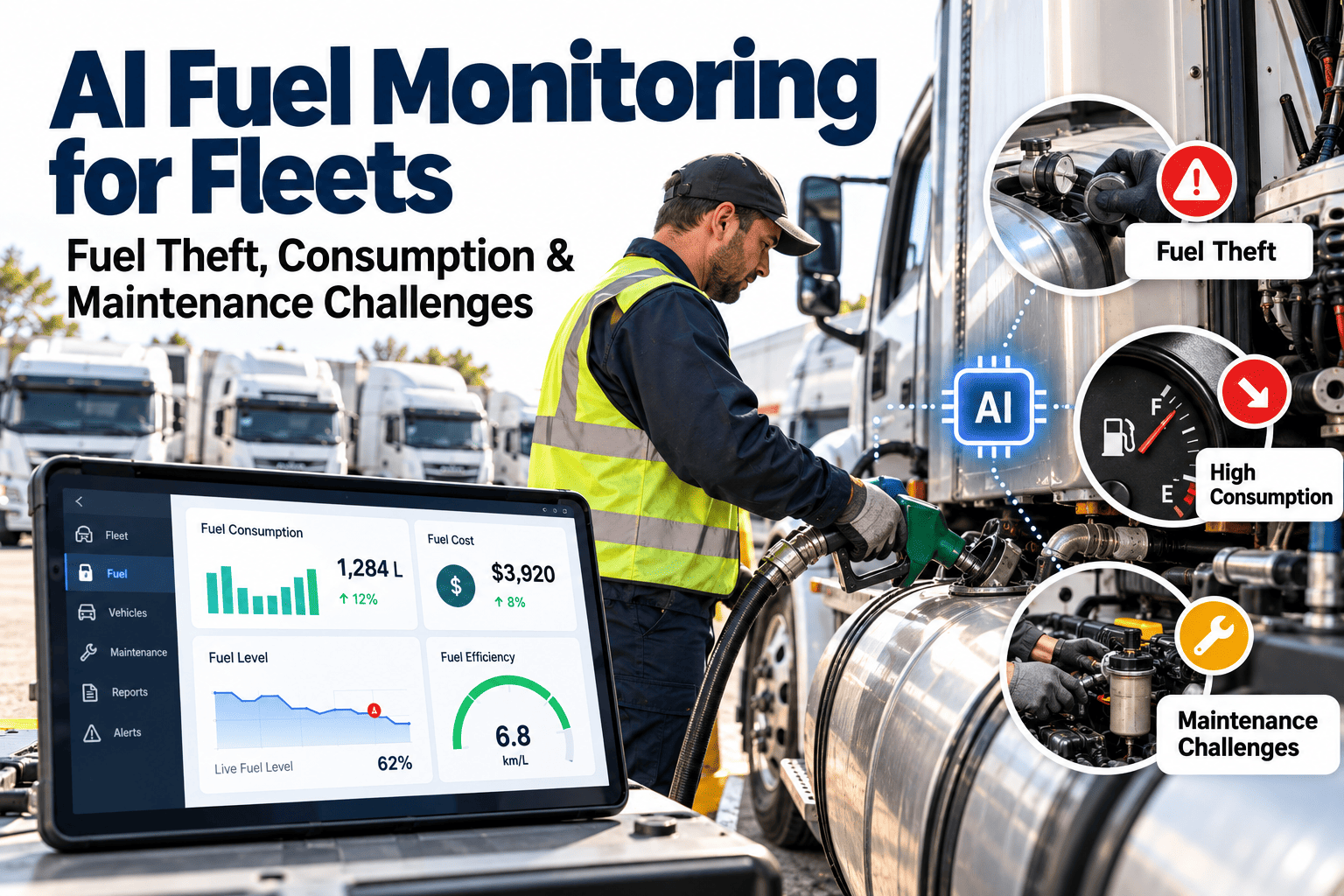
Fuel theft costs US commercial fleets an estimated $14 billion annually — and the majority of fleet operators have no systematic detection method. Oxmaint's fuel reconciliation engine catches five theft patterns automatically.
A fuel card transaction showing 48 gallons on a vehicle with a 32-gallon tank is an impossible fill — either a card swipe on a different vehicle or tank, or fraudulent use. Oxmaint cross-references every fuel card fill volume against the registered tank capacity for the vehicle the card is assigned to, generating an immediate alert when fill volume exceeds 105% of tank capacity.
A fuel card transaction at a station in Miami while the vehicle's GPS shows it was in Atlanta at the time of the fill is a clear misuse indicator. Oxmaint reconciles every fuel card fill with the vehicle's GPS position at the time of the transaction — flagging any fill where the vehicle was not within 2 miles of the fill station at the time the card was swiped.
Fuel card data showing 420 gallons purchased in the month while telematics shows only 8,200 miles driven — at fleet-average fuel efficiency that would require 287 gallons — indicates 133 gallons of unaccounted fuel. Oxmaint runs this reconciliation weekly per vehicle, flagging any vehicle where fuel card purchases cannot be accounted for by miles driven within a ±12% efficiency tolerance.
A fuel card transaction at 11:30 PM on a Saturday on a vehicle that should be parked at the depot — outside of all scheduled operations — indicates either unauthorized vehicle use or card misuse. Oxmaint flags any fuel purchase outside the vehicle's configured operating hours window, with immediate SMS alert to the fleet manager for time-sensitive investigation while the event is still traceable. Book a demo to see fuel theft detection configured for your fleet's operating hours.
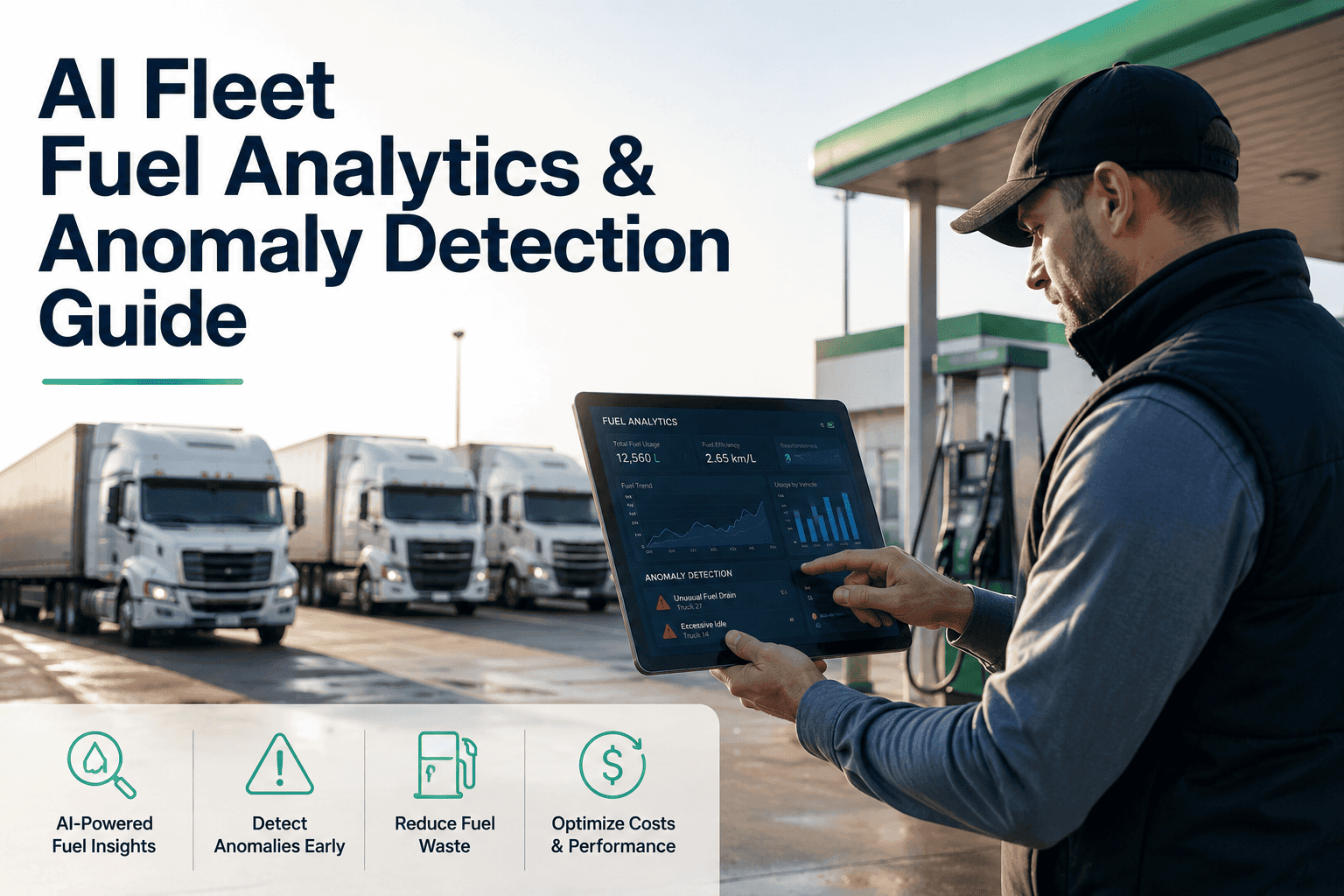
Fuel Analytics Dashboard — What Oxmaint Tracks
Six fuel KPIs tracked automatically from telematics and fuel card data — the metrics that separate fleets at $0.14/mile fuel cost from those at $0.22/mile on identical vehicle classes.
Fuel Cost Reduction Roadmap — 90-Day Action Plan
The fastest path to 15 to 22% fuel cost reduction follows a specific sequence — targeting the highest-impact waste categories first and building driver accountability over 90 days.
Connect telematics and fuel card providers to Oxmaint. Run immediate reconciliation on last 90 days of fuel card data — identifying any existing theft patterns or systematic discrepancies. Establish per-vehicle fuel efficiency baseline. Configure 8% consumption deviation alert threshold. Most fleets identify $8,000 to $22,000 in existing undetected fuel losses within the first week of reconciliation.
Publish per-driver idle time rankings with dollar-value cost attached — drivers seeing their individual idle cost in dollar terms (not percentage) respond faster than any policy memo. Set progressive idle reduction targets: 30% reduction in 30 days, 60% reduction in 60 days. Geofenced automatic engine cutoff at depot and frequent customer locations configured where operationally safe. Idle reduction is the fastest-return fuel saving available — most fleets see measurable reduction within the first pay period after driver rankings are published.
Activate weekly driver fuel efficiency scores — comparing each driver's consumption per mile against route peers. Bottom-quartile drivers (typically 14 to 22% above their route peers in fuel consumption) receive coaching conversations with specific behavioral targets: speed limit adherence, acceleration smoothing, and anticipatory braking. Oxmaint tracks score change week-over-week so coaching conversations are data-led. Book a demo to see driver fuel scoring configured for your fleet.
Use Oxmaint's route efficiency report to identify the 10 highest-waste routes — those where actual miles consistently exceed optimal by more than 10%. Work with operations to restructure stop sequencing on those routes. Simultaneously, pull the fleet-wide mechanical fuel drain report: any vehicle where consumption has increased more than 8% from baseline without a route or load explanation receives a mechanical inspection targeting tire pressure, air filter, injector condition, and cooling system. Both actions compound the gains from Phase 1 and Phase 2 for a sustained 15 to 22% total reduction.
The first Oxmaint fuel reconciliation report showed us $14,800 in fuel card charges we could not account for by miles driven. We traced $11,200 of it to a driver filling personal vehicles on the fleet card at off-route stations — something we would never have caught without the GPS-to-fill-location matching. We recovered that immediately, then cut fleet-wide fuel spend another 18% through the idle and coaching program over the next 6 months.
Frequently Asked Questions
Cut Fleet Fuel Costs 15–22%. Find $8K–$22K in Existing Theft. In 90 Days.
Idle tracking, route efficiency scoring, driver fuel coaching, and automatic fraud detection — all active from telematics integration in 48 hours. No hardware required.