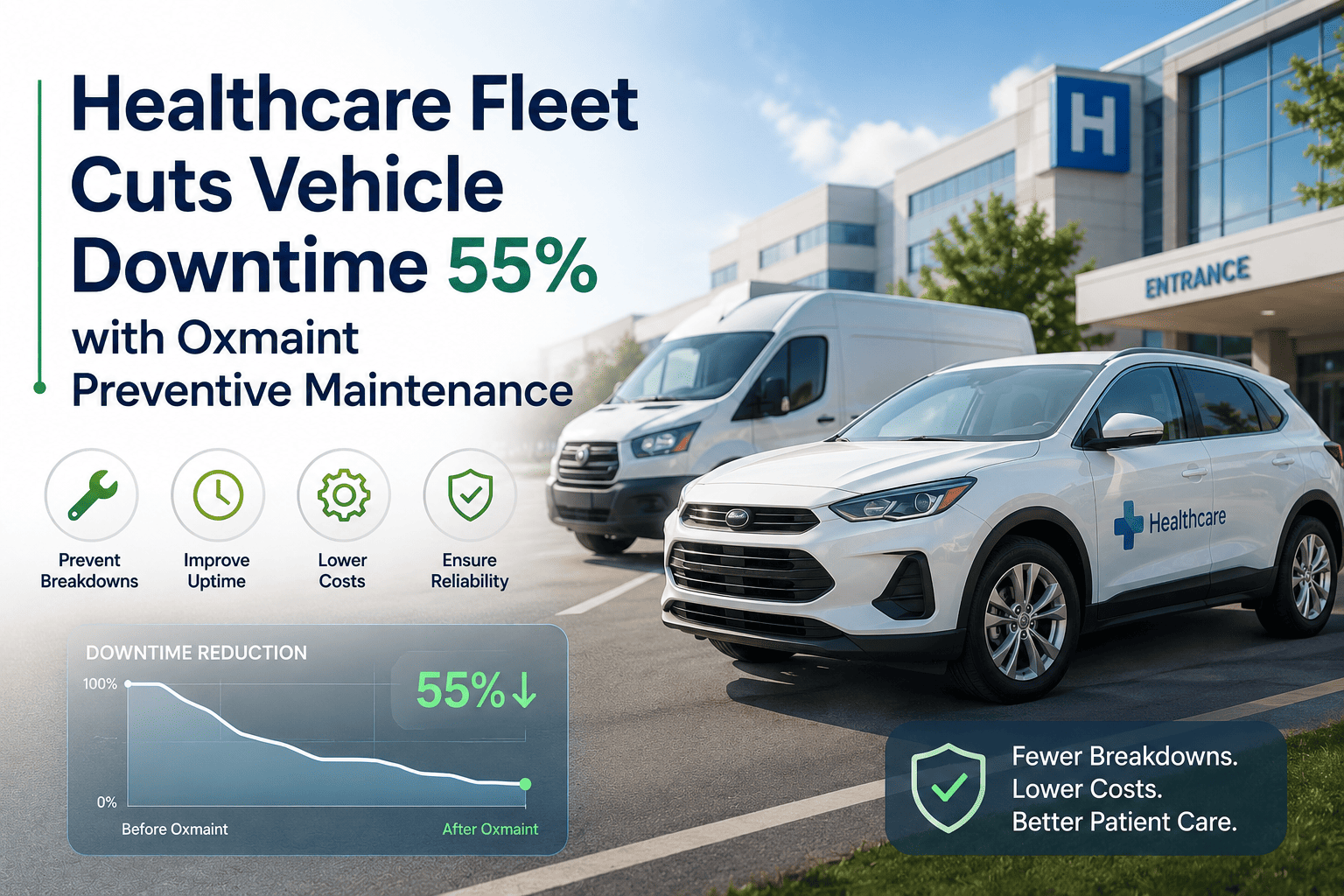
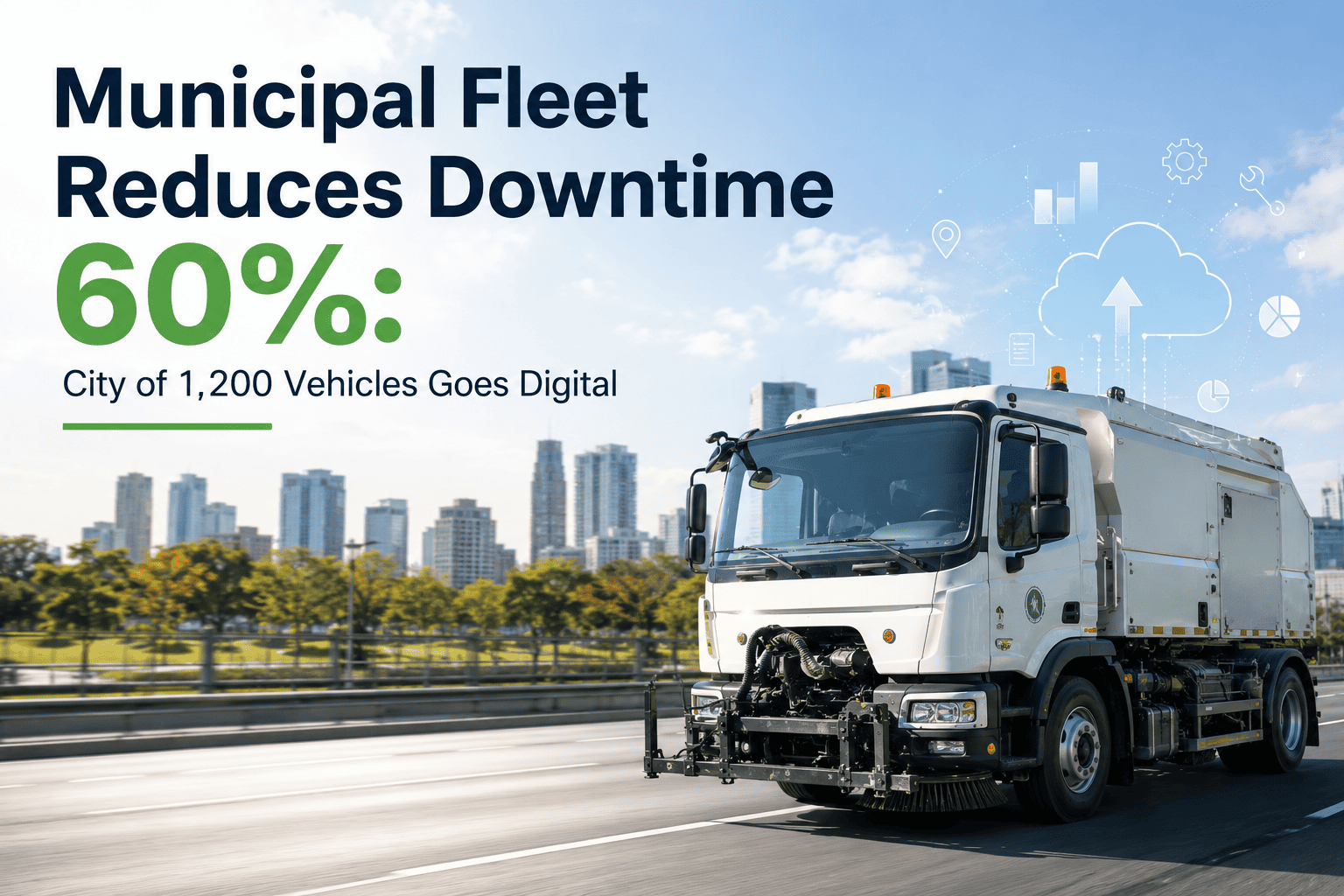
When a regional healthcare network operating 420 fleet vehicles across 12 hospital campuses needed to cut vehicle downtime and pass stringent compliance audits, their paper-based maintenance logs were costing them far more than they realized. Missed service intervals, undocumented safety checks, and reactive repair cycles were draining $1.2M annually in emergency repair costs and compliance penalties—while risking patient transport reliability. By deploying Oxmaint CMMS with mobile-first preventive maintenance, automated work orders, and real-time asset tracking, the network reduced vehicle downtime by 55%, achieved 100% compliance documentation across all campuses, and recovered operational control within 90 days. Sign Up Free to see how Oxmaint transforms healthcare fleet operations.
Could your healthcare fleet cut downtime by 55% in 90 days?
Oxmaint CMMS is purpose-built for multi-site healthcare fleet compliance, preventive maintenance scheduling, and real-time asset visibility—without the paperwork.
The Challenge: Healthcare Fleet Management at Scale
Managing a 420-vehicle healthcare fleet across 12 campuses presents operational complexity that paper logs and spreadsheets simply cannot handle. The network faced four critical pain points that were directly impacting patient care delivery and organizational finances.
01
Compliance Documentation Gaps
DOT and state health authority audits revealed incomplete service records on 38% of vehicles. Retrieval of historical logs took 3–5 hours per vehicle, and 45% of inspection records were missing photographic verification required for regulatory sign-off.
02
Reactive-Only Maintenance Culture
Without a preventive maintenance schedule, 71% of vehicle repairs were unplanned. Emergency repair costs averaged $4,800 per incident versus $620 for scheduled interventions—a 7.7x cost premium absorbed entirely as operational loss.
03
No Cross-Campus Asset Visibility
Fleet managers at each campus operated in silos. There was no centralized view of vehicle health, mileage, or service history. Vehicles transferred between campuses routinely lost their maintenance records in transit.
04
Driver Inspection Non-Compliance
Paper-based pre-trip inspection forms had a completion rate below 52%. Supervisors had no real-time visibility into whether checks were performed, creating liability exposure and accelerating component wear from undetected issues.
The Solution: Oxmaint CMMS for Healthcare Fleet Compliance
Oxmaint deployed its AI-native CMMS platform configured specifically for healthcare fleet operations—connecting preventive maintenance scheduling, mobile inspection management, automated work orders, and compliance reporting into a single auditable system. Fleet managers at every campus gained live visibility into asset health, and drivers completed inspections digitally via the Oxmaint mobile app. Book a Demo to see the platform in action.
Preventive Maintenance Scheduling
Automated PM schedules based on mileage, engine hours, and calendar intervals replaced manual tracking. Service reminders triggered work orders 14 days in advance, giving technicians parts lead time and eliminating surprise breakdowns.
Mobile Inspection Management
Drivers completed pre-trip and post-trip inspections via the Oxmaint mobile app with mandatory photo capture. Inspection compliance rose to 97% within 30 days. Failed items auto-generated work orders routed to the nearest available technician.
Centralized Asset Management
All 420 vehicles registered in a single asset registry with full maintenance history, parts usage, and inspection records attached to each vehicle profile—accessible in real time from any campus.
Automated Work Order Management
Inspection findings, telematics alerts, and mileage thresholds triggered work orders automatically. Manual work order creation dropped to near zero. Technician assignment, parts procurement, and completion verification all flowed within the same digital workflow.
Safety and Compliance Reporting
One-click compliance reports generated complete audit trails for DOT, state health authority, and internal safety reviews. Every inspection, repair, and part replacement timestamped, geotagged, and linked to the responsible technician.
Predictive Maintenance Alerts
Oxmaint's AI analytics identified vehicles trending toward failure based on inspection history, repair frequency, and mileage patterns—flagging high-risk assets for proactive intervention before clinical operations were affected.
Implementation: 90-Day Deployment Across 12 Campuses
Phase 1
Days 1–30
Asset Registration and Baseline Setup
All 420 vehicles loaded into Oxmaint with complete specifications, current mileage, last service dates, and assigned campus. Preventive maintenance schedules configured per vehicle type—ambulances, patient transport vans, administrative vehicles, and support trucks.
Drivers trained on mobile inspection app in 20-minute campus sessions. QR codes affixed to each vehicle linked directly to the correct inspection checklist. Inspection completion rate reached 81% by day 30.
Outcome: Complete digital asset registry live. Inspection data flowing from all 12 campuses.
Phase 2
Days 31–60
Work Order Automation and Compliance Activation
Work order automation rules configured: failed inspection items, mileage thresholds, and technician-reported issues all auto-generated tickets without dispatcher intervention. Average work order creation time dropped from 22 minutes to under 90 seconds.
Compliance report templates configured for DOT audit format and state health authority requirements. GPS and telematics integration completed, feeding live vehicle data into the asset dashboards.
Sign Up Free to explore the compliance dashboard.
Outcome: Zero manual work order creation. First DOT audit completed in under 4 hours using digital records.
Phase 3
Days 61–90
Predictive Analytics and ROI Measurement
AI predictive maintenance models activated using 60 days of baseline data. Risk scores generated per vehicle, enabling fleet managers to prioritize the top 10% highest-risk assets each week for proactive service. Three major failures prevented in the first cycle alone.
90-day ROI report compiled: unplanned downtime incidents dropped 55%, emergency repair spending fell 61%, and the network achieved 100% compliance documentation across all campuses for the first time.
Book a Demo to walk through a similar deployment plan.
Outcome: Full predictive capability live. Positive ROI confirmed in month three.
Results: What Changed After 90 Days
55%
Reduction in Vehicle Downtime
From 8.3 avg. downtime days/vehicle/year to 3.7
100%
Compliance Documentation Rate
Up from 62% across 12 campuses
61%
Drop in Emergency Repair Spend
$1.2M annual cost recovered to $467K
97%
Driver Inspection Compliance
Up from 52% on paper-based forms
4 hrs
DOT Audit Completion Time
Down from 3–5 days of document retrieval
90 sec
Average Work Order Creation Time
Down from 22 minutes manual entry
Key Business Impact
Scroll horizontally to view full table
| Operational Area |
Before Oxmaint |
After Oxmaint |
| Vehicle Downtime per Year |
8.3 days/vehicle avg. |
3.7 days/vehicle avg. (55% reduction) |
| Compliance Documentation |
62% — manual paper logs |
100% — timestamped digital records |
| Emergency Repair Cost (Annual) |
$1.2M across 420 vehicles |
$467K — 61% reduction |
| Inspection Completion Rate |
52% — paper forms |
97% — mobile app with photo capture |
| Audit Preparation Time |
3–5 days per audit cycle |
Under 4 hours with one-click reports |
| Work Order Automation |
0% — fully manual |
94% auto-generated from triggers |
Ready to bring this level of control to your healthcare fleet?
Oxmaint CMMS is live in healthcare networks managing hundreds of vehicles across multi-campus environments. In 20 minutes, we'll show you exactly how the platform maps to your fleet size, compliance requirements, and maintenance workflows.
Frequently Asked Questions
How long does it take to deploy Oxmaint across multiple hospital campuses?
Most multi-site healthcare fleets complete full deployment within 30–45 days. Asset registration, mobile app rollout, and PM schedule configuration can be done in parallel across campuses. Basic inspection and work order workflows are live within the first week.
Does Oxmaint support DOT and state health authority compliance documentation?
Yes. Oxmaint generates audit-ready compliance reports formatted for DOT, OSHA, and state health authority requirements. Every inspection, repair, and parts record is timestamped and retrievable in under 30 seconds per vehicle.
Can Oxmaint integrate with our existing GPS and telematics systems?
Oxmaint integrates with major telematics providers including Samsara, Geotab, Motive, and Verizon Connect, as well as OEM telematics from major manufacturers. Mileage, engine hours, and fault codes flow directly into asset records and trigger PM alerts automatically.
Will drivers actually complete mobile inspections consistently?
Healthcare fleets using Oxmaint routinely achieve 95%+ inspection completion rates. The mobile app completes a full pre-trip check in under 4 minutes with single-tap photo capture. QR codes on each vehicle launch the correct checklist instantly—no searching or login friction.
How does predictive maintenance work for a mixed healthcare fleet?
Oxmaint AI analyzes inspection history, repair frequency, telematics data, and mileage trends to generate a risk score per vehicle. Fleet managers review a prioritized list weekly and schedule interventions for high-risk assets before failures impact clinical operations.
Sign Up Free to explore the predictive dashboard.
What is the typical ROI timeline for a healthcare fleet of this size?
Most healthcare fleets with 100+ vehicles reach positive ROI within 3–5 months through avoided emergency repairs and eliminated compliance penalties. A 420-vehicle network typically recovers $400K–$800K annually in combined maintenance and downtime costs.
Book a Demo to model your specific ROI.
Start managing your healthcare fleet the way this network does.
Join 1,000+ organizations using Oxmaint to reduce downtime, close compliance gaps, and take control of fleet maintenance costs—without the paperwork.