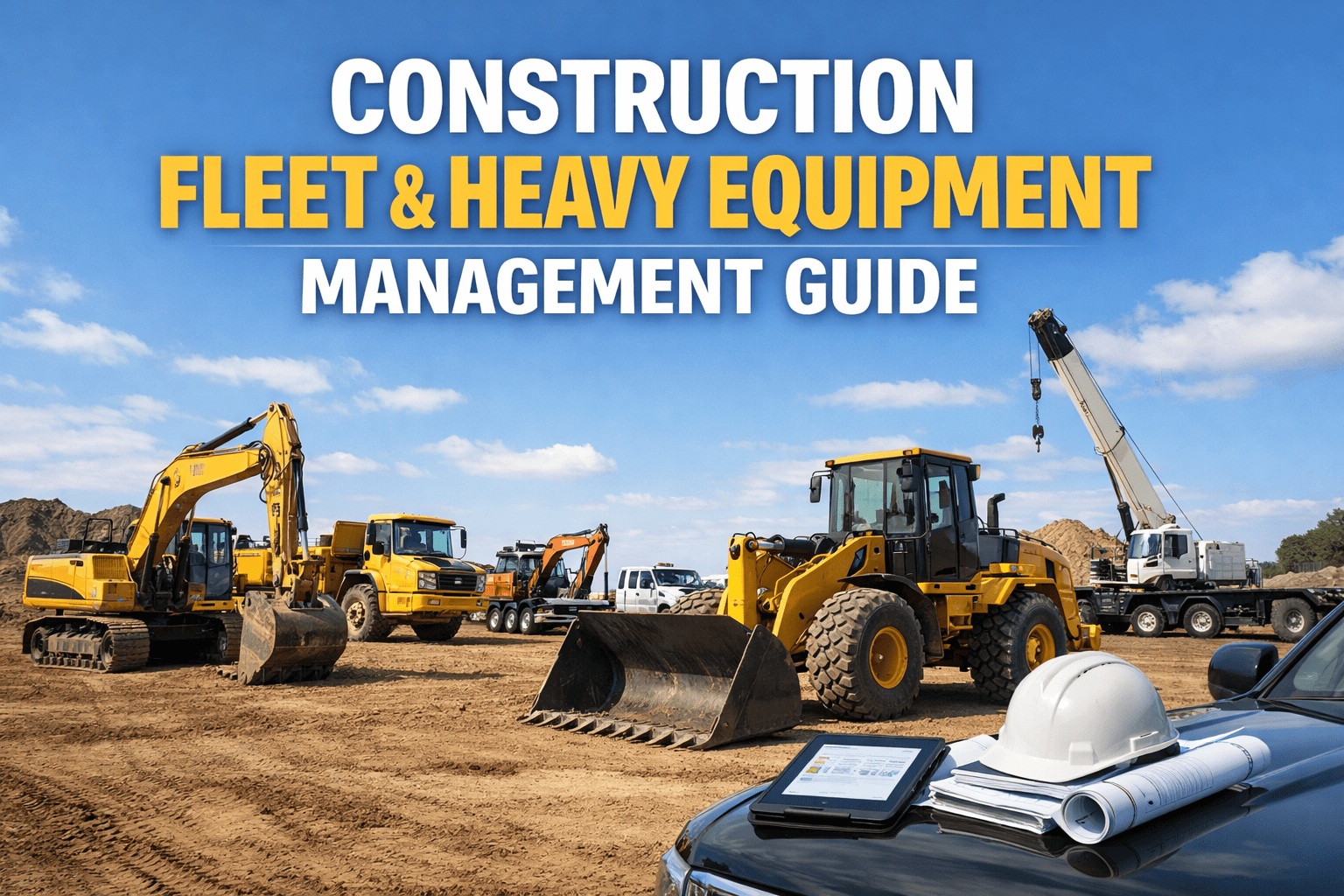
In Q1 2023, the fleet operations manager of a mid-sized construction company running 500 heavy vehicles across multi-state jobsites pulled up twelve months of maintenance records. The numbers were damaging: $3.1 million in total maintenance spend, 58% of all repairs unplanned, and an average equipment downtime cost of $1,800 per hour per unit. Work orders existed on paper clipboards, PM schedules lived in spreadsheets nobody updated, and the ten highest-cost machines were invisible inside an aggregate budget line. Sign Up Free to start your own cost reduction programme. Oxmaint CMMS was deployed across all 500 vehicles and assets in a structured 90-day rollout. By month 18, total maintenance spend had fallen to $1.86 million — a 40% reduction representing $1.24 million in annual savings. This is the complete story of how that happened, what changed, and how construction fleet managers in 2026 can replicate it. Book a Demo to see the platform built for heavy equipment and construction fleet operations.
40% Maintenance Cost Reduction — Construction Fleet. Real Numbers.
500 vehicles · 18 months · $1.24M saved · Multi-state construction fleet
$1.24M
Annual maintenance cost saved — from $3.1M to $1.86M in 18 months
40%
Total maintenance spend reduction across 500 construction vehicles
52%
Reduction in unplanned downtime events — tracked per asset
The Fleet Before Oxmaint — Where the $3.1M Was Going
Before deployment, four systemic problems consumed the maintenance budget. None were unique to this fleet — they are the default state of any construction operation running maintenance on paper, whiteboards, and disconnected spreadsheets. Sign Up Free to see how Oxmaint addresses all four from day one.
58%
Reactive repair rate
Over half of all maintenance spend was unplanned — breakdowns mid-shift, emergency parts at retail rates, and jobsite delays cascading into contract penalties
5.1 hrs
Avg fault-to-response time
Operators radioed foremen, foremen called dispatch, dispatch emailed the shop — every handoff manual, slow, and undocumented
29%
PM compliance rate
Preventive maintenance schedules existed on paper but were missed, deferred, or undocumented at a rate that made the schedule meaningless across rotating jobsite crews
$0
Per-asset cost visibility
No system tracked maintenance cost per vehicle — the 15 highest-cost excavators and loaders were invisible inside the aggregate budget line each quarter
The Oxmaint Solution — CMMS Built for Construction Fleet Operations
Oxmaint provided a unified digital maintenance platform connecting asset management, work order automation, preventive maintenance scheduling, telematics integration, and AI-powered predictive analytics. Book a Demo to see the full platform configured for heavy equipment and construction assets. The platform replaced paper work orders with mobile-first digital workflows, enabled OBD and telematics auto-dispatch for fault detection, and gave the fleet manager per-vehicle cost visibility for the first time.
Digital Work Order Management
All 500 assets onboarded with full maintenance history. Work orders issued, tracked, and closed digitally — labour hours, parts, findings, and technician signatures captured per job. Paper eliminated in week three.
Preventive Maintenance Scheduling
PM schedules configured per asset class — excavators, loaders, cranes, haul trucks — with meter-based and calendar-based triggers. Automated alerts pushed to technician mobile app before due dates.
OBD and Telematics Integration
Fault codes from onboard diagnostics auto-generated Oxmaint work orders within two minutes. Fault-to-response time dropped from 5.1 hours to 19 minutes — the single largest contributor to reducing breakdown repair cost.
AI Predictive Maintenance
AI analysed telematics usage patterns and historical failure data per vehicle to optimise service intervals. Excavators on high-cycle urban demolition sites received shorter hydraulic intervals; highway haul trucks received extended drivetrain intervals. Eliminated $410,000 in unnecessary over-service.
Parts Procurement Automation
PM forecasts triggered purchase orders at contracted supplier rates — parts on the shelf before service dates. Emergency retail parts sourcing dropped from 58% of parts spend to 9%, saving $390,000 annually in procurement premium alone.
Fleet Analytics and Lifecycle Dashboard
Real-time cost-per-vehicle dashboard surfaced the top cost-consuming assets every Monday morning. Digital twin lifecycle analytics identified 14 units past economic replacement threshold — disposal and replacement saved $180,000 in avoided future repair and recovered residual auction value.
Implementation Timeline — 90-Day Deployment to Full Results
Days 1–30
Asset Onboarding and Configuration
All 500 vehicles loaded with asset history, PM schedules configured per equipment class, and telematics integration connected. 1,100+ historical work orders imported to establish per-asset cost baselines. First overdue PM alerts fired on day 5 — 97 assets with missed service immediately visible.
Days 31–60
Digital Work Orders and PM Compliance Launch
All technicians onboarded to Oxmaint mobile app across all jobsite locations. Digital work orders replaced paper clipboards. PM compliance rose from 29% to 68% within 30 days. Fault-to-response time dropped from 5.1 hours to 19 minutes via OBD auto-dispatch.
Days 61–90
AI Interval Optimisation and Parts Automation
Oxmaint AI began analysing per-vehicle telematics and failure patterns. Parts procurement automation activated — PM-triggered purchase orders replacing emergency sourcing. First AI-optimised intervals deployed for hydraulic and engine oil cycles across excavator and loader fleets. Emergency parts spend dropped 41% in month three.
Months 4–18
Compounding Savings — Full 40% Achieved
PM compliance held at 93%+. AI interval optimisation eliminated $410,000 in over-service. Lifecycle analytics identified 14 assets past economic replacement threshold — saving $180,000 in avoided repair. Unplanned repair rate dropped from 58% to 11%. Total savings: $1.24 million.
Where the 40% Came From — Cost Reduction by Category
40%
Total maintenance cost reduction
52%
Unplanned downtime event reduction
93%
PM compliance at month 6
19 min
Avg fault-to-response time (from 5.1 hrs)
We went from spending $3.1 million on maintenance — most of it reactive and invisible — to $1.86 million with 93% PM compliance across 500 machines. The equipment didn't change. The jobsites didn't change. What changed was that we finally had visibility into every asset and could act before the breakdown, not after. Oxmaint paid for itself in the first 7 weeks.
— Fleet Operations Manager, 500-vehicle Construction Fleet, Multi-state Operations · Oxmaint customer since 2023
Fleet Case Study — Oxmaint CMMS
Same Equipment. Same Jobsites. 40% Less Maintenance Spend.
The construction fleet didn't get newer machines or easier routes. They got better data, digital work orders, and AI-powered scheduling. Oxmaint delivers all three from day one.
Frequently Asked Questions
Construction Fleet ROI — Oxmaint
40% Less. Starting in 90 Days.