Telematics Data for Fleet Maintenance: Turning OBD and Sensor Data into Actionable Insights
By Alex Jordan on March 28, 2026
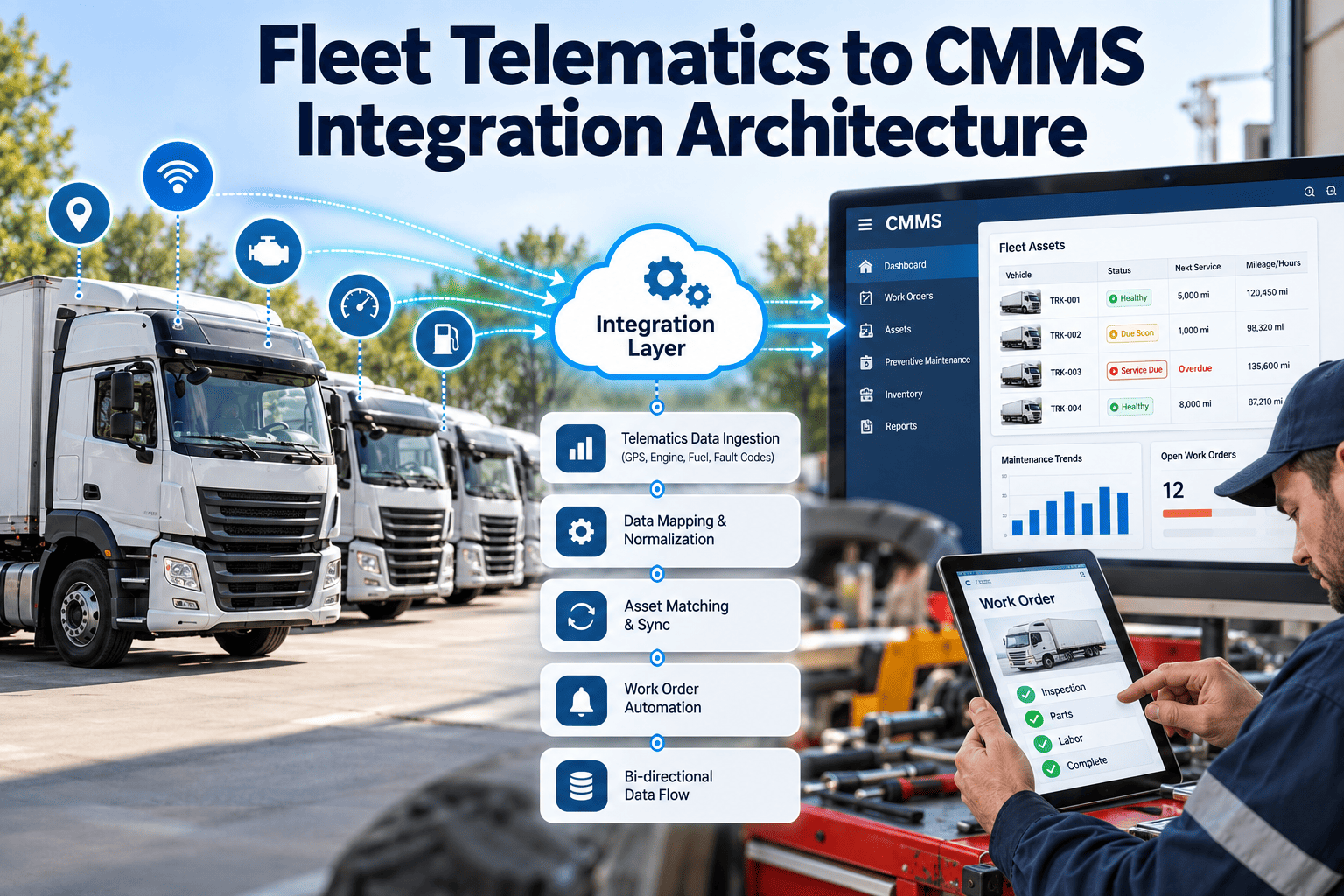
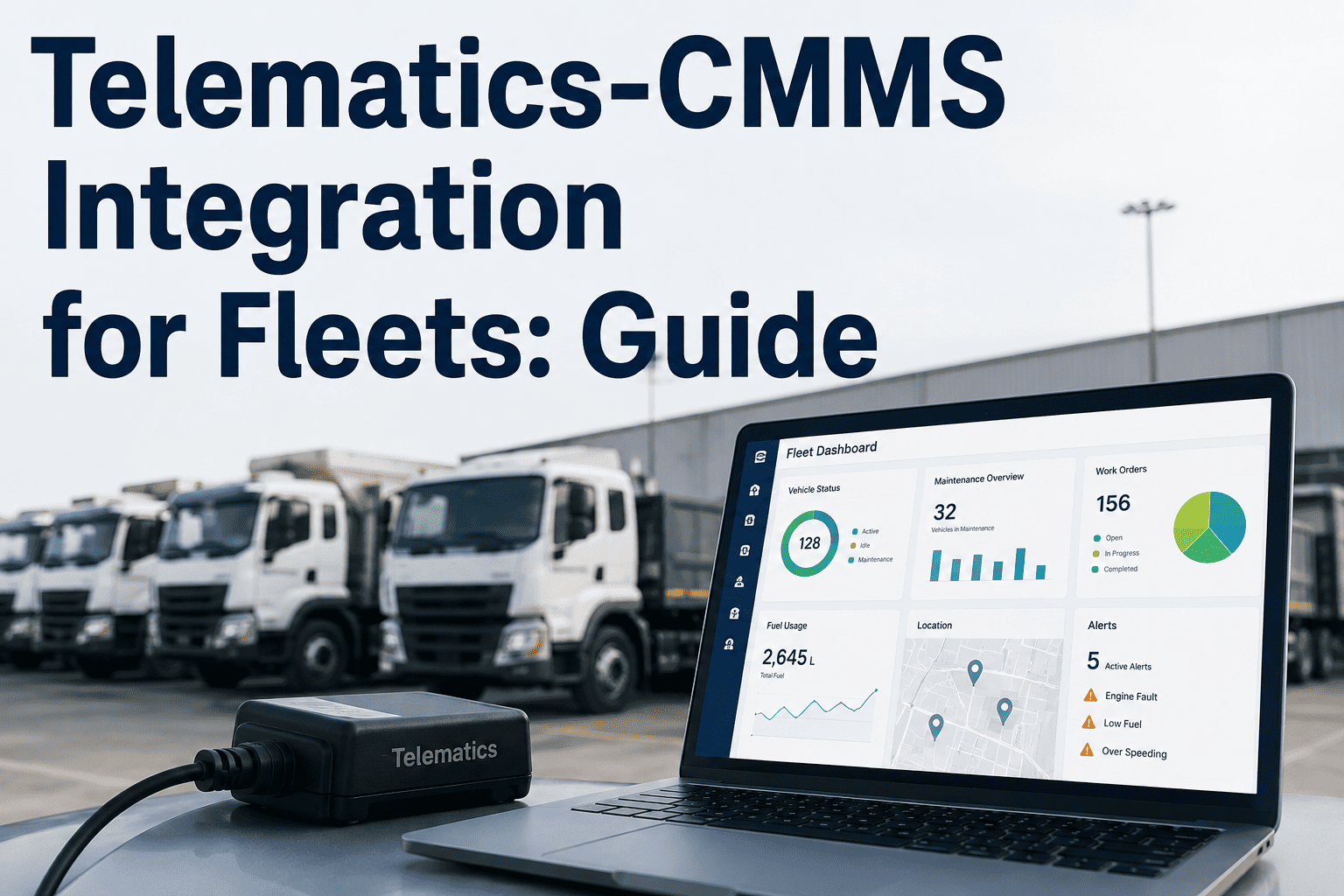
Every commercial vehicle on the road is broadcasting a continuous stream of maintenance intelligence — and most fleets are not listening. OBD-II and J1939 telematics systems generate fault codes, engine parameter readings, fuel trim values, and transmission health signals 24 hours a day, but without a CMMS integration layer, that data sits in a telematics dashboard that nobody checks until something breaks. The opportunity in telematics data is not the data itself — it is the automated action the data should trigger: a DTC fault code fires a CMMS work order, an elevated ATF temperature restricts a vehicle from heavy routes, a fuel trim deviation generates an injector inspection event before a fuel economy report triggers a budget review three months later. OxMaint's telematics integration layer connects OBD and J1939 data feeds directly to the CMMS work order engine — converting sensor outputs into scheduled maintenance actions without dispatcher or technician involvement at the trigger point.
Fleet Technology · Article · 2026
Telematics Data for Fleet Maintenance: Turning OBD and Sensor Data into Actionable Insights
Fault code interpretation, DTC-triggered work orders, engine health trending, and CMMS integration for condition-based maintenance — how to convert raw OBD data into a predictive maintenance programme that eliminates reactive breakdowns.
94%DTC fault detection accuracy with OBD-II / J1939 telematics integration
3 wksAverage advance warning window before a DTC code becomes a breakdown event
<4 hrsDTC-to-work-order response time with OBD + CMMS integration vs. 5–14 days manual
68%Reduction in unplanned breakdowns in fleets with condition-based OBD maintenance
The 6 OBD Data Categories — What Each Tells You About Your Fleet
OBD-II and J1939 telematics are not single data streams — they are six distinct categories of vehicle intelligence, each with specific maintenance applications. Most fleet operators use telematics for driver behaviour and location tracking. Fewer than 30% use it for maintenance intelligence. The six categories below are the foundation of condition-based maintenance — each one provides early warning signals that, when connected to a CMMS, convert reactive repair events into planned service windows. OxMaint integrates with all major telematics providers — Samsara, Geotab, Verizon Connect, Webfleet — and routes each data category to the correct CMMS maintenance trigger.
Diagnostic Trouble Codes
Fault Detection
P, B, C, and U-code categories covering powertrain, body, chassis, and network faults. Each DTC maps to a specific component failure mode and a recommended CMMS work order type — from immediate grounding to next-PM inspection.
Engine Parameters
Real-Time Health
Coolant temperature, oil pressure, fuel pressure, intake air temp, MAP sensor — each with normal operating ranges and threshold triggers. Parameter deviation from baseline triggers predictive work orders before fault codes are set.
Driver Behaviour
Condition Factor
Hard braking, rapid acceleration, idle time, and RPM over-rev events directly accelerate component wear. High-event drivers generate maintenance demand 30–40% faster — telematics data adjusts PM intervals per driver-vehicle pairing, not fleet average.
Fuel System Data
Efficiency Indicator
Short-term and long-term fuel trim (STFT/LTFT) values indicate injector condition, air-fuel ratio deviation, and intake system health. LTFT deviation beyond ±8% signals a fuel system maintenance requirement invisible to mileage-based scheduling.
Transmission Data
Powertrain Health
ATF temperature, torque converter slip ratio, gear selection accuracy, and solenoid performance codes. J1939-equipped commercial vehicles expose full transmission health data — enabling ATF life prediction and shift quality degradation tracking before slipping begins.
Battery & Electrical
Critical Systems
Charging system voltage, alternator output, parasitic drain, and module communication faults. Electrical failures are the leading cause of unexpected breakdowns across all vehicle classes — and the most detectable category from telematics data before complete failure.
OBD Parameter Thresholds — When Data Becomes a Work Order
The difference between a telematics dashboard and a predictive maintenance system is the threshold configuration that converts a parameter reading into an automated action. Most telematics platforms show you data. A CMMS integration acts on it — when coolant temperature exceeds 95°C sustained for 10 minutes, a monitoring work order fires automatically. When ATF temperature exceeds 108°C, a vehicle route restriction and service work order are generated without dispatcher involvement. The six parameter cards below show the threshold zones used in OxMaint's pre-configured OBD integration templates — the starting point that fleet engineers adjust per vehicle class and duty cycle. OxMaint's threshold configuration is set per vehicle type — a light van and a Class 8 tractor do not share the same coolant temperature alert.
Coolant Temperature
Normal <90°C
Warn 90–105°C
>105°C
⚡ CMMS trigger: >95°C sustained 10 min → Cooling inspection work order
Oil Pressure
Normal 25–65 PSI
Low 15–25 PSI
<15 PSI
⚡ CMMS trigger: <20 PSI at operating temp → Immediate oil system inspection
ATF Temperature
Normal <93°C
Monitor 93–110°C
>110°C
⚡ CMMS trigger: >108°C → Route restriction + transmission service work order
⚡ CMMS trigger: >88% load avg over route → Air filter + turbo inspection
Before vs. After OBD-CMMS Integration — Three Real Scenarios
The value of OBD-CMMS integration is most clearly visible in specific failure scenarios — not in aggregate statistics. The three scenarios below show exactly what happens to the same fault event in a fleet without telematics integration versus a fleet with OBD data feeding directly into OxMaint work order generation. The difference in each case is not the data — both fleets have the same OBD hardware. The difference is whether the data triggers an action automatically or waits for a human to notice it.
Without OBD-CMMS Integration
With OBD-CMMS Integration
DTC P0128 — Coolant Thermostat
Code logged in telematics app. Driver unaware. Dispatcher doesn't check app. Overheating event occurs 4 days later — $1,800 repair.
DTC auto-fires OxMaint inspection work order within 2 minutes. Technician replaces thermostat at next bay slot — $140 repair.
ATF Temp Reaches 108°C
No alert generated. Vehicle completes 3 more heavy haul runs. Transmission solenoid damage. $3,400 repair event 2 weeks later.
OBD threshold fires route restriction flag + transmission service work order. ATF changed next morning. $220 service event — no damage.
LTFT Deviation >9% (Fuel Trim)
Fuel economy decline noticed in monthly finance report. Root cause investigation takes 3 weeks. Injector cleaning overdue by 6 weeks.
LTFT threshold triggers injector inspection work order within 24 hours. Cleaned and recalibrated same week. Fuel economy restored immediately.
Telematics Integration Maturity — Which Level Is Your Fleet At?
Telematics integration is not binary — it exists on a maturity spectrum from raw data that nobody acts on to fully automated condition-based maintenance where OBD signals drive the entire PM programme without manual intervention. Most commercial fleets sit at Level 2 or 3 — they have the hardware generating the data but lack the CMMS integration layer that converts data into action. Moving from Level 3 to Level 5 is almost entirely a software and configuration challenge, not a hardware investment. OxMaint's telematics integration connects to existing hardware — the telematics devices already on your vehicles, not new investment in sensors or GPS units.
Telematics-to-Maintenance Integration Maturity
Score 5 = fully automated condition-based PM · Score 1 = no telematics use for maintenance
5
AI-Predictive · Full Automation
OBD + Digital Twin + AI models predict component failures 2–4 weeks ahead. CMMS work orders auto-generated, parts pre-ordered, technician assigned — zero manual trigger.
OBD parameters and DTC codes fire CMMS work orders automatically. Threshold alerts configured per vehicle class. PM intervals adjusted by actual sensor data vs. fixed mileage.
Profile: High performer. Most fleets reach this level within 6 months of CMMS telematics integration.
3
Telematics App · Manual Transfer
Telematics dashboard viewed by maintenance staff. Fault codes copied manually into maintenance spreadsheet or work order system. No automated integration.
Gap: Data exists but action depends on someone checking the right dashboard. Alert-to-action lag: 1–7 days. Significant event miss rate.
2
OBD Reader · Paper or Spreadsheet Log
OBD scan tool used at service events only. Fault codes cleared without work order documentation. No continuous monitoring between service events.
Gap: Faults that develop between scheduled services are invisible until driver reports a symptom or breakdown occurs.
1
Visual Inspection Only · No Telematics
No OBD integration. Maintenance decisions based on mileage intervals and driver-reported symptoms. Dashboard warning lights are the primary fault detection mechanism.
Risk: Unplanned breakdown rate 3–5× higher than telematics-integrated fleets. Every fault is discovered at or after failure.
DTC Response Time — The Integration Gap in Numbers
The average commercial fleet takes 5–14 days to act on a DTC fault code — not because they lack the information, but because there is no automated pathway from the telematics alert to the maintenance work order. A code appears in the telematics platform, waits for a maintenance manager to log in, gets manually noted somewhere, and eventually becomes a work order that may or may not have been created before the vehicle deteriorates further. OxMaint's DTC-to-work-order automation reduces this response window from days to under 4 hours — the time between the OBD alert and a technician-assigned, parts-sourced work order appearing in the maintenance queue.
DTC Fault Code — Average Response Time by Integration Approach
Paper-based manual logging
5–14 days
Spreadsheet tracking
3–7 days
Telematics app (manual review)
1–3 days
Telematics + email alerts
4–24 hours
OBD + CMMS automated
← 98% faster than paper-based
<4 hours
Technology Stack: AI Digital Twin, Camera Vision, SAP, and PLC
OBD telematics is the data foundation — but the full potential of fleet maintenance intelligence requires the technology layer built on top of it. AI Digital Twin models consume OBD data streams to build virtual vehicle models that predict component failure probability per vehicle, per component, updated continuously. AI Camera Vision adds a depot-level visual inspection layer that OBD cannot provide — detecting fluid leaks, tyre sidewall damage, and brake dust patterns that sensor data alone misses. SAP and ERP integrations close the procurement loop — when an OBD threshold triggers a CMMS work order, the parts purchase order fires in SAP automatically. PLC integrations extend the same condition-based logic to depot equipment — fuel pumps, lifts, and compressors on the same maintenance intelligence platform as the vehicles they service.
OBD-II / J1939
94%
DTC detection accuracy before breakdown
Real-time fault + parameter data. CMMS work order in <4 hrs. Covers all 6 OBD data categories.
Fluid leaks, tyre damage, brake dust — overnight depot scans. CMMS alert before next dispatch.
SAP / ERP + PLC
96%
PO automation from OBD-triggered work orders
Parts ordered from CMMS work order automatically. PLC extends condition-based logic to depot equipment.
"
We had Geotab on every vehicle for two years and never used it for maintenance — just location and driver behaviour. We connected it to OxMaint and configured DTC thresholds in one afternoon. Within the first month, three fault codes fired work orders before the vehicles had any symptoms. That's three breakdowns we didn't have.
IT & Fleet Systems Director — Regional distribution company, 88 vehicles, Texas, USA
Frequently Asked Questions
Which telematics providers does OxMaint integrate with?
OxMaint integrates with Samsara, Geotab, Verizon Connect, Webfleet, and other major OBD-II / J1939 providers via API and direct connector. DTC codes and parameter data map to CMMS work order types automatically. Start free and connect your existing telematics device.
Do we need new hardware to use OBD-triggered CMMS work orders?
No — OxMaint integrates with telematics hardware already installed on your vehicles. If your vehicles have OBD-II or J1939 telematics, the CMMS integration requires software configuration only. No new devices, no installation downtime.
How are OBD alert thresholds configured — are they preset or custom?
OxMaint provides pre-configured threshold templates per vehicle class (light commercial, Class 6, Class 8, off-road). Fleet engineers adjust thresholds per operating duty and environment. Severe duty fleets use tighter thresholds than standard duty — the configuration takes hours, not weeks.
How does SAP integration work with OBD-triggered work orders?
When an OBD threshold fires a CMMS work order, OxMaint automatically generates a purchase order in SAP for the required parts. Three-way invoice matching runs automatically when the work order closes — maintenance costs post to SAP financial records with zero manual data entry.
Your OBD Data Is Already Predicting Failures. Is Your CMMS Listening?
Connect your telematics to OxMaint and turn sensor data into scheduled maintenance — free to start, no new hardware required.